China's traditional calendar is best described as lunisolar rather than purely lunar: its months are counted by the moon while a solar framework holds the year true to the seasons, and an extra month is inserted in some years — which is why festival dates drift against the Gregorian calendar
Checked October 2026GUIDES / ESSENTIALS
Chinese Calendar 2026: Holidays, Festivals and the Crowds They Move
Two calendars run every China trip — the festival one written in lanterns and mooncakes, and the official holiday one written by the State Council. Read both, and 2026 stops surprising you.
City China11 min read8 facts labeledChecked 2026-10-30
01 · IN BRIEF
The week the city quietly emptied — and the trains filled
He lands in Shanghai in mid-February with a tidy plan: three cities, nine days, a list of breakfast places. The first morning, his chosen dumpling shop is shuttered, its owner gone home to Anhui for the New Year. The metro at rush hour is strangely gentle. But every train he tries to book for the next three days is sold out in every class, the hotel in his second city has doubled its rate, and red lanterns are hanging over streets that feel half asleep and half festival at the same time. Nothing has gone wrong with his trip. He has simply scheduled it inside the largest recurring movement of people on the planet, and nobody told him the calendar had a vote.
That is what this guide is for. China runs on two calendars at once. The first is the traditional one — lunar months, festivals, seasonal food — and it explains what a city looks and tastes like when you arrive. The second is an administrative instrument: the State Council's annual notice that fixes the year's official holiday windows and even reassigns certain weekends as working days. That document, unglamorous as it sounds, is what actually moves the trains, the prices and the crowds. Plan with the festival calendar alone and you will understand the decorations while being ambushed by the bookings. Plan with both, and the whole of 2026 becomes legible: which weeks to book early, which to avoid, and which to aim at deliberately.
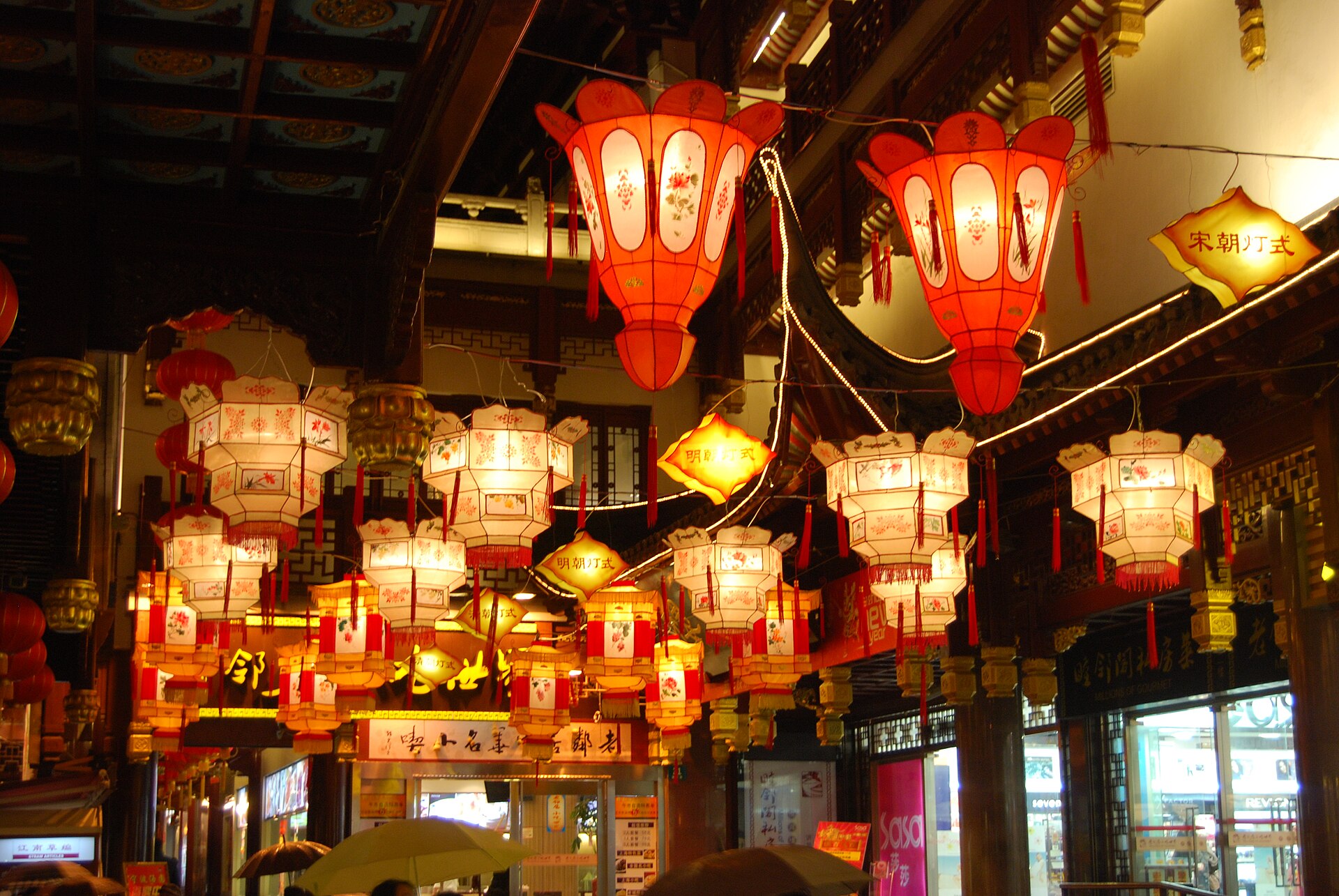
02 · SEE IT
2026, in running order
- 15–23 February — Spring Festival: the year's great homecoming. New Year itself falls on 17 February; travel swells before the break and drains back at its end
- 4–6 April — Qingming: families honour their dead, then take the first spring outings; parks, hillsides and short rail hops all fill at once
- 1–5 May — Labour Day: five days of nationwide leisure travel that has nothing to do with the moon and everything to do with the official notice
- 19–21 June — Dragon Boat Festival: zongzi in every shop window and riverside racing in the cities that stage it
- 25–27 September — Mid-Autumn Festival: mooncakes, family dinners and a full moon the whole country schedules its evening around
- 1–7 October — National Day week: the other great peak of the year; treat its trains and hotels with the same respect as Spring Festival
03 · TRY IT YOURSELF
Plan by the calendar like a local travel agent
Your ticks stay on this page only. No account or personal data is sent.
04 · THE PROOF
The facts this guide leans on
In 2026, Chinese New Year itself lands on 17 February, and the State Council's official Spring Festival holiday runs from 15 to 23 February, with 14 and 28 February designated as adjusted working days
Checked October 2026The remaining official 2026 windows are Qingming from 4 to 6 April, Labour Day from 1 to 5 May, the Dragon Boat holiday from 19 to 21 June, Mid-Autumn from 25 to 27 September, and National Day from 1 to 7 October
Checked October 2026The travel surge around a major holiday is wider than the official window: the movement toward family begins before the break starts and returns at its close, so trains tighten and prices climb on days that are not, technically, holidays at all
Checked October 2026Neither Labour Day nor National Day has lunar roots — both are fixed-date state holidays — yet the travel pressure they generate rivals or exceeds that of most traditional festivals — the official window, not the festival's fame, is the crowd forecast
Checked October 2026Qixi, Double Ninth and the Lantern Festival all carry genuine cultural weight, yet none of them appears on the official holiday list: a city may fill with lanterns, couples' promotions or autumn outings while the country's working week proceeds entirely as normal
Checked October 2026The calendar announces itself through food before anything else: qingtuan appear around Qingming, zongzi take over shop windows at Dragon Boat Festival, and mooncakes signal Mid-Autumn — seasonal eating is the most visible public clock in a Chinese city
Checked October 20262026 is a Bing-Wu year of the Horse in the traditional sixty-year cycle, which is why horses will decorate New Year displays, souvenirs and shopping malls — cultural colour for a trip, not a variable in booking it
Checked October 202605 · STEP BY STEP
How to plan a year of China travel around the calendar
- Step 1 — Lay your dates against the official table first
Before choosing cities, hotels or even a month, put your candidate window next to the six official 2026 breaks in this guide. You are sorting dates into three piles: peak windows, where everything costs more and sells out; shoulder days, where the wave is travelling but the destination itself may be calm; and ordinary weeks, where China is simply itself. The same itinerary is three different trips depending on which pile its dates land in, and no amount of cleverness later fully repairs a Spring Festival week booked by accident.
- Step 2 — Respect the wave at the shoulders of a holiday
The official window is the legal break; the human movement around it is wider. Families leave before the first holiday day to reach home, and the return surge lands on the break's final days. Practically, that means the hardest trains to buy are often the ones just before and just after the holiday — and that arriving in the middle of the window, once everyone is already where they are going, can feel surprisingly peaceful in a big city whose residents have left. Read the wave and you can sometimes ride its quiet centre.
- Step 3 — Book transport and beds on the holiday clock
Near a peak, normal booking habits fail politely and then completely. Reserve the specific trains you need as early as sales allow, treat the hotel in a small or scenic city as the scarce resource it is, and keep a second-choice departure in your pocket. Confirm the texture of a stay as well as its existence: a chain hotel runs normally through a holiday, while the family-run restaurant below it may close for a week — ask what will actually be open around you, not only whether your room exists.
- Step 4 — Design peak days light on purpose
Inside a major window, trade breadth for certainty. Book one anchor that matters — the museum with timed entry, the famous sight, the dinner you would be sorry to lose — verify its holiday reservation rules on its official channel, and let the rest of the day be a neighbourhood walked at whatever pace the crowds allow. 'Open on public holidays' is a statement about a door, not about tickets remaining. The travellers who enjoy golden weeks are the ones who stopped trying to have four of them in a day.
- Step 5 — Read the adjusted working days, the calendar's fine print
To manufacture long breaks, the official notice borrows days from neighbouring weekends — which is why, in 2026, Saturday 14 February and Saturday 28 February are working days for much of the country. For a visitor the effects are subtle but real: offices and business services follow the adjusted rhythm, commuter patterns land on unexpected mornings, and a 'weekend' plan can collide with a working city. When a date matters — a meeting, a factory visit, a government office — check it against the notice itself rather than against the shape of the week.
- Step 6 — Aim at festivals deliberately, then verify them locally
The calendar's gifts are real if you collect them on purpose: dragon-boat racing on a June river, the Lantern Festival's glow in an old town a fortnight after New Year, a Mid-Autumn evening built around the moon. But fame is national while events are municipal — not every city races boats, and displays change year to year. Choose the festival, choose a city known for it, then confirm this year's event, venue and ticketing directly before building a route around it. A verified small celebration beats a legendary one that moved.
- Step 7 — Keep a fallback inside every peak plan
Buffer is the currency peak travel trades in. Hold one unscheduled day inside any Spring Festival or National Day itinerary, favour refundable rates while the plan is young, and know your second route — the later train, the neighbouring city, the sight that needs no reservation — before you need it. The calendar is not an enemy to be beaten; it is weather to be dressed for. Travellers who plan for its pressure tend to remember the festivals. Travellers who ignore it remember the queues.
06 · WHERE THIS BREAKS
Where the advice stops working
A lunar date alone predicts almost nothing practical
Knowing that a festival falls on a given day tells you about meaning, food and decoration. It does not tell you whether schools close, whether a museum extends its hours, or whether trains sell out. Only three things decide those: the official holiday notice, the operator's own calendar, and live availability on your exact dates. Confusing the first calendar for the second is the single most common planning error this guide exists to prevent.
'National peak' does not mean everywhere peaks
Demand is route- and city-specific. Spring Festival can empty a business district's offices while overwhelming a hometown-bound rail corridor; National Day week floods headline sights while leaving some working cities oddly manageable. Use the windows as a warning system that tells you where to check harder, not as a blanket verdict on the whole country at once.
Adjusted working days confuse every assumption
A borrowed weekend cuts both ways: the Saturday that becomes a workday can make a business service unexpectedly available and a leisure venue unexpectedly quiet, while the weekday swallowed into a holiday does the reverse. Any appointment, delivery or opening hour that truly matters during a holiday period has to be confirmed against the adjusted calendar, not intuited.
Cultural events are promises made by cities, not by the calendar
The festival guarantees a date and a tradition; it does not guarantee a race, a display or a fair in the town you chose, in the year you chose. Events are staged, moved, ticketed or quietly cancelled at local level. Verify with the venue or the city, close to the date, and hold a plan for the evening that works even if the lanterns do not materialise.
Weather outranks the moon
Mid-Autumn's entire public ritual is organised around seeing the moon, and a cloudy or rainy night cancels the headline act regardless of how correctly you read the calendar. Outdoor festival plans deserve the same treatment as mountain plans: a fine evening is the celebration; a wet one needs a dinner, a teahouse or a museum late opening standing behind it.
Folklore is colour, not data
The zodiac year and the various folk charts attached to the calendar — including the so-called gender calendar — are conversation, decoration and souvenir material. They forecast nothing about crowds, prices, weather or the sex of a child, and this guide keeps them where they belong: in the part of the trip that is for enjoying, not the part that is for booking. Enjoy the horse on the lantern and the chart on the market stall; just do not ask either of them when to book a train, because that question belongs to the State Council notice and the live timetable, and to nothing else.
07 · KEEP READING
Keep the trip moving

08 · SOURCES
Sources and status
Prices, schedules and booking channels change. Recheck the details that matter before you travel.
- Gov.cn — State Council portal (2026 public-holiday notice)VerifiedPublisher of the official 2026 holiday windows and adjusted working days used throughout this guide
- State Council English portalReference ~English-language channel for State Council announcements, including annual holiday arrangements
- UNESCO Intangible Cultural Heritage — Dragon Boat FestivalReference ~UNESCO's inscription of the Dragon Boat Festival, for the cultural layer behind the June holiday