
Beijing's specialties resolve into three distinct kinds of purchase — something baked to hand around, a tea for everyday drinking, and a modest piece of folk craft for the shelf — and choosing by recipient outperforms buying the largest gift box on display
Checked October 2026GUIDES / SHOPPING
Beijing Souvenirs Worth the Suitcase Space: Counter Pastries, Jasmine Tea and Folk Craft
Skip the vacuum-packed duck. What Beijing people actually give each other is a box of counter pastries, tea chosen by drinking it, and one small piece of folk craft with a maker's name attached — here is how to buy all three like you mean it.
City Beijing12 min read8 facts labeledChecked 2026-10-30
01 · IN BRIEF
The grandmother with the paper bag
Last afternoon in Beijing, suitcase already sitting open on the hotel bed like an accusation, and you are standing in a Qianmen gift shop in front of a wall of red boxes, each one shouting harder than the last. A vacuum-sealed duck the size of a briefcase. A tea tin with a dragon doing aerobics. Somewhere behind you, the doorbell dings: a grandmother in a padded jacket walks straight past the entire display, says four words to the woman at the pastry counter, and leaves three minutes later with a small paper bag of pastries still warm through the paper and a twist of jasmine tea. Total damage: less than your taxi to the airport. She is not being frugal. She is buying the way Beijing has always bought its gifts — by category, by taste, by trust in a counter she knows.
This guide copies her. Beijing's genuine take-homes sort into exactly three buys. Pastries, meant for sharing. Tea, meant for drinking daily. And one small piece of folk craft, meant to be kept. None of them is the giant red box shouting from the window — and the famous one, the duck, is the thing you should eat in a restaurant and leave behind. What follows is the close look at each category, where locals actually buy them, the inspection checks that separate a studio piece from a souvenir-shop copy, and the customs reality waiting at the other end of the flight.
02 · SEE IT
The three-bag method, in buying order
- Bag one — Pastries to share: a shallow, rigid box built piece by piece at the counter, tasted before it is boxed. This is the office gift and the family gift
- Bag two — Jasmine tea to drink: a small sealed pack chosen by smelling the dry leaf and drinking the cup, with an ingredient list and a producer's name on it
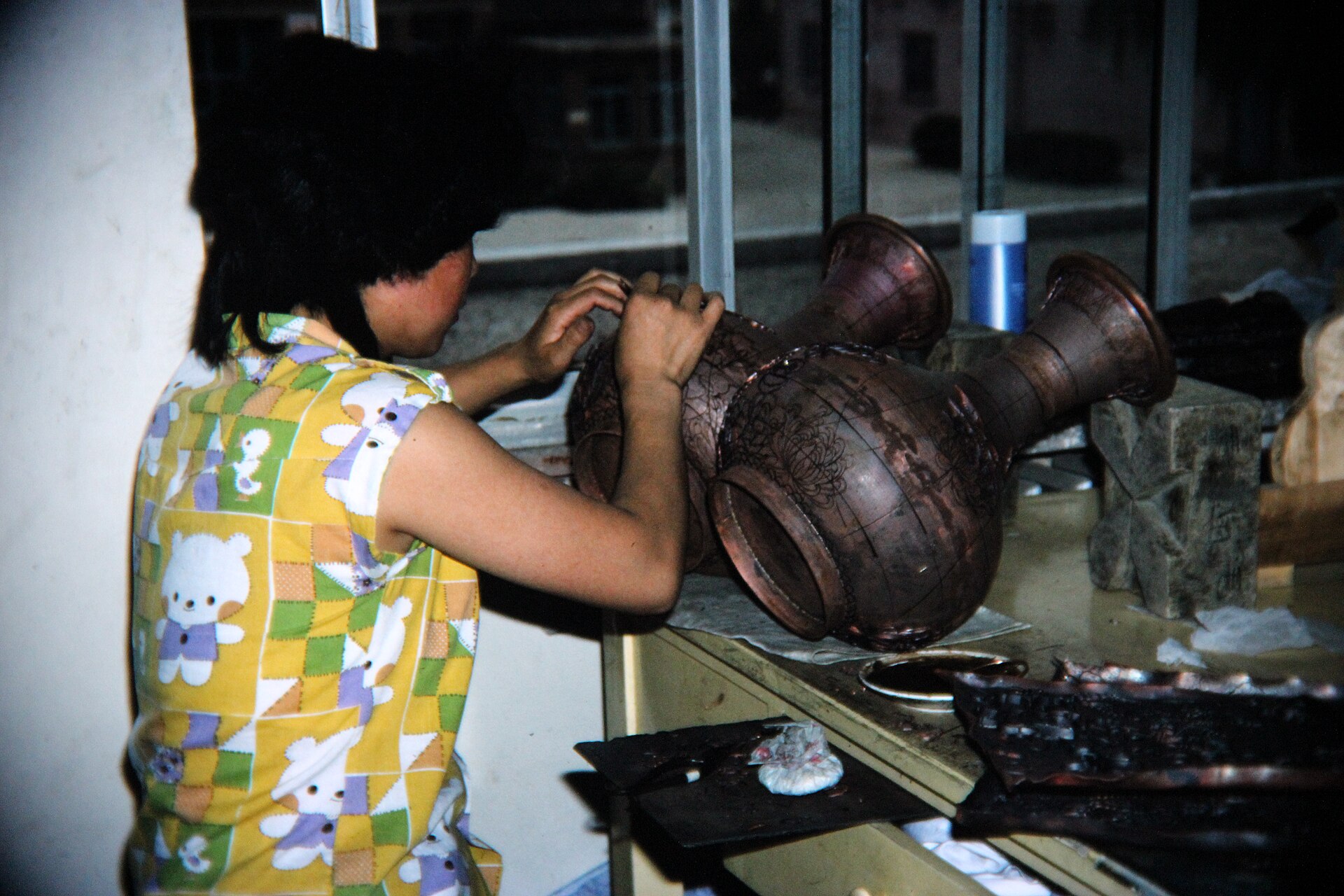
- Bag three — One craft object to keep: a painted Lord Rabbit figure or a small piece of real cloisonné, inspected in the hand and bought from someone who can say who made it
- Pastry card — Buy signal: a working counter, locals queuing, pieces sold by weight or by the piece. Skip signal: only pre-sealed giant assortments under airport lighting
- Tea card — Buy signal: two grades opened for you to compare, prices visible, the seller happy to brew. Skip signal: a single 'highest grade' story and a ceremonial tin doing all the talking
- Craft card — Buy signal: weight in the hand, a maker's name or studio, a receipt without being asked twice. Skip signal: a grand heritage story attached to an implausibly cheap object
- Not a bag — Roast duck, warm sesame pastries eaten on the spot, chilled dairy desserts: these belong to the trip itself. Eat them in Beijing; do not freight them
03 · TRY IT YOURSELF
Buy like the paper-bag grandmother
Your ticks stay on this page only. No account or personal data is sent.
04 · THE PROOF
The facts this guide leans on
The city's tourism bureau documents the Daoxiangcun 'No. 0' shop — 152 Dongsi North Street — tying that historic address both to the brand's baked range and to its jasmine tea drinks, and turning the pastry stop into part of a real neighbourhood outing rather than a detour
Checked October 2026Jasmine tea's Beijing connection runs through its tea houses and drinking culture, not its soil: the leaf in a Beijing gift pack was not necessarily grown anywhere near the city, and an honest seller will name its actual origin and producer
Checked October 2026Niushebing, the 'ox-tongue pastry', is named for its shape rather than its filling — so an English name alone tells you nothing about ingredients: lard, egg, dairy, nuts and even meat all hide inside the canon, and only the label says which
Checked October 2026Fresh counter pastries and factory-sealed gift versions of the same name can carry different storage instructions — the rule that governs your box is the one printed on your box, not a general rule for the category
Checked October 2026A Lord Rabbit figure is judged in the hand: the painting of its face, the crispness of the brushwork, whether the base stands steady and how firmly the long ears are fixed separate a studio piece from a shelf copy, and a signed artisan original is a different purchase from a tiny souvenir-shop version
Checked October 2026Cloisonné's value is its construction — coloured enamel set into metal divisions on a worked metal body — which is why a printed enamel-style image is a different object entirely, and why a decorative enamel bowl is not automatically safe for serving food
Checked October 2026Vacuum packing changes nothing at the border: a packed duck remains a meat product, and travellers entering the United States must declare all food and farm goods on arrival — US Customs and Border Protection enforces the rule, other destinations run their own lists, and a sealed pack is never by itself permission to import
Checked October 202605 · STEP BY STEP
How to buy each category properly
- Step 1 — Decide the recipient before the shop
Every souvenir mistake begins with shopping for 'Beijing' instead of for a person. Sort your list first. Colleagues and family who will share food get the pastry box. The tea drinker gets tea. The person who keeps objects gets the one craft piece. A traveller with no tea drinker at home who buys the ceremonial tin anyway has purchased packaging. With the recipient fixed, the category chooses itself, the budget sizes itself, and the shop visit turns from a browse into a short, confident transaction — the grandmother's four words at the counter were a decision made before she left home.
- Step 2 — Buy the pastries at a working counter
Daoxiangcun-style Beijing pastries are the city's default edible gift, and the format that works is a shallow, rigid box you build yourself: a few pieces each of several fillings — red bean, jujube, nut mixtures among them — tasted first wherever the counter allows it. Mind the names: niushebing describes a shape, not a recipe, so read labels or ask before assuming a pastry is vegetarian or nut-free; lard, egg and nut fillings are all common in the canon. Keep the paperwork logic straight as well: the storage guidance on a fresh counter purchase and on a sealed gift box can differ even when the pastry names match, so the instructions that govern your box are the ones printed on it. For a place with a story attached, the tourism bureau documents the brand's Dongsi 'No. 0' shop — 152 Dongsi North Street — where the baked range sits alongside jasmine tea drinks, which turns the purchase into a Dongsi outing instead of a special expedition.
- Step 3 — Buy the tea by drinking it
Jasmine tea is Beijing's drinking habit in gift form: flowers scenting green tea, brewed all day in offices and homes. Buy it the way it will be used. Smell the dry leaf. Ask for two clearly priced grades to be brewed or at least compared side by side, and choose the cup you actually enjoyed over the grade with the grander story — 'highest' and 'rarest' are sales adjectives, not flavour descriptions. Then buy smaller than your generosity wants: a modest sealed pack carrying an ingredient list and a producer's name teaches the recipient more, and stays fresher, than a presentation tin whose price was mostly carpentry. And hold no illusions about geography: the Beijing in jasmine tea is the culture that drinks it, not the hillside it grew on — an honest shop will tell you where the leaf really comes from.
- Step 4 — Buy the craft by inspection, not by story
Two objects carry Beijing folk craft best. The Lord Rabbit — tu'er ye, a painted figure with long ears rooted in the city's Mid-Autumn traditions — is judged at arm's length: look at how the face is painted, whether the brushwork is crisp or smeared, whether the figure stands stable on its base, and how the ears join the head. Ask who made it. A named maker or studio, at a maker's price, and a mass-produced shelf version are both legitimate purchases — as long as you know which one you are holding and pay accordingly. Cloisonné — jingtailan — is judged by construction: real pieces are enamel worked into metal, with the weight and coolness of metal in the hand and visible divisions between colours. A printed surface imitating enamel is a picture of the craft, not the craft. If the budget is small, a clearly described modern piece from a museum shop will satisfy longer than a suspiciously cheap object wrapped in a heritage epic. One functional warning: never assume a decorative enamel bowl is made for the table — ask before it ever holds food.
- Step 5 — Attach the shopping to the day you already have
Do not cross the city for a counter. Beijing's gift categories all live along routes you are already walking: the Dongsi shop pairs with an east-city day, established food shops and museum shops sit inside the Qianmen and hutong outings, and a museum visit doubles as the craft stop with the most reliable labelling in the city. Decide what kind of thing you are buying before you compare any two sellers of it — on price, freshness and the inspection checks above. One administrative habit protects you at famous-name shops: confirm the name printed on your receipt belongs to the shop you meant to patronise, because similar names trading on heritage packaging do not guarantee the same producer made what is in your bag.
- Step 6 — Pack it like it matters, and declare it like it doesn't
The last stage is logistics. Craft travels in a rigid box, padded around anything that protrudes — rabbit ears, enamel rims, thin handles — and rides mid-suitcase surrounded by clothes. Pastries travel flat and early in the case-packing order of your attention: check their printed storage rule against your remaining itinerary, because a chilled item and two more hotel changes are enemies. Keep labels, ingredient lists and receipts with the goods; they are the gift's documentation at home and its defence at the border. At the border, be boring: check your destination's customs and agriculture rules before you buy food gifts, declare everything edible on arrival, and remember that vacuum-sealed, gift-boxed and duty-free are three phrases that have never once meant 'automatically admitted'.
06 · WHERE THIS BREAKS
Where souvenir logic breaks down
The big red box is a packaging product
Ceremonial tins, lacquered cases and dragon artwork can cost more than their contents and prove nothing about them — a handsome tin certifies nothing about the leaf inside it, and an assortment's size says nothing about its freshness. Buy the contents on their merits, then let modest packaging do its one job, which is surviving the flight.
The duck belongs to dinner
Roast duck is one of the great restaurant meals of the world and a poor souvenir: the packaged version is a different, lesser experience and remains a meat product in the eyes of every customs regime you will meet. The same logic retires the warm sesame pastry and the chilled milk pudding to the eating hours of the trip. Honour the food by eating it where it is made.
Famous names attract imitators
Heritage brands accumulate lookalikes — shops with similar names, similar colours and similar stories that are not the same producer. The defences are dull and effective: buy from the established shop itself or a museum-grade retailer, compare the receipt name with the sign above the door, and treat a too-cheap 'original' as the copy it almost certainly is.
Storage rules do not negotiate
A pastry that needs refrigeration, bought on a morning when you change hotels twice, is a gift for the hotel bin. Match every food purchase to the rest of the itinerary — remaining days, fridge access, flight length — and when the match fails, shrink the purchase or switch the gift to tea or craft, which wait patiently and travel well.
Allergens travel home with the gift
Beijing's pastry canon runs on lard, egg, sesame, peanut and tree-nut fillings, sometimes inside names that give nothing away — the ox-tongue pastry contains no ox and announces none of its actual ingredients in English. If the recipient has allergies, the label check in the shop is the whole game: photograph the ingredient list, translate it, and when in doubt choose the tea or the rabbit instead.
Is Beijing jasmine tea actually grown in Beijing?
Generally, no — and it does not need to be. The city's claim on jasmine tea is cultural: centuries of tea houses, merchants and daily drinkers made it Beijing's cup. What you are buying is that tradition plus a specific producer's leaf and scenting work, so judge the pack by its stated origin, its producer and its taste, not by the skyline printed on the tin.
What if the budget is genuinely small?
Small is not a problem in this city; vague is. A little sealed pack of good jasmine tea, a paper bag of counter pastries eaten the same week, or one tiny Lord Rabbit with a steady base will each land better than a large cheap object pretending to be heritage. Beijing's own gift culture runs on modest, well-chosen things — the paper bag beats the briefcase.
07 · KEEP READING
Keep the trip moving
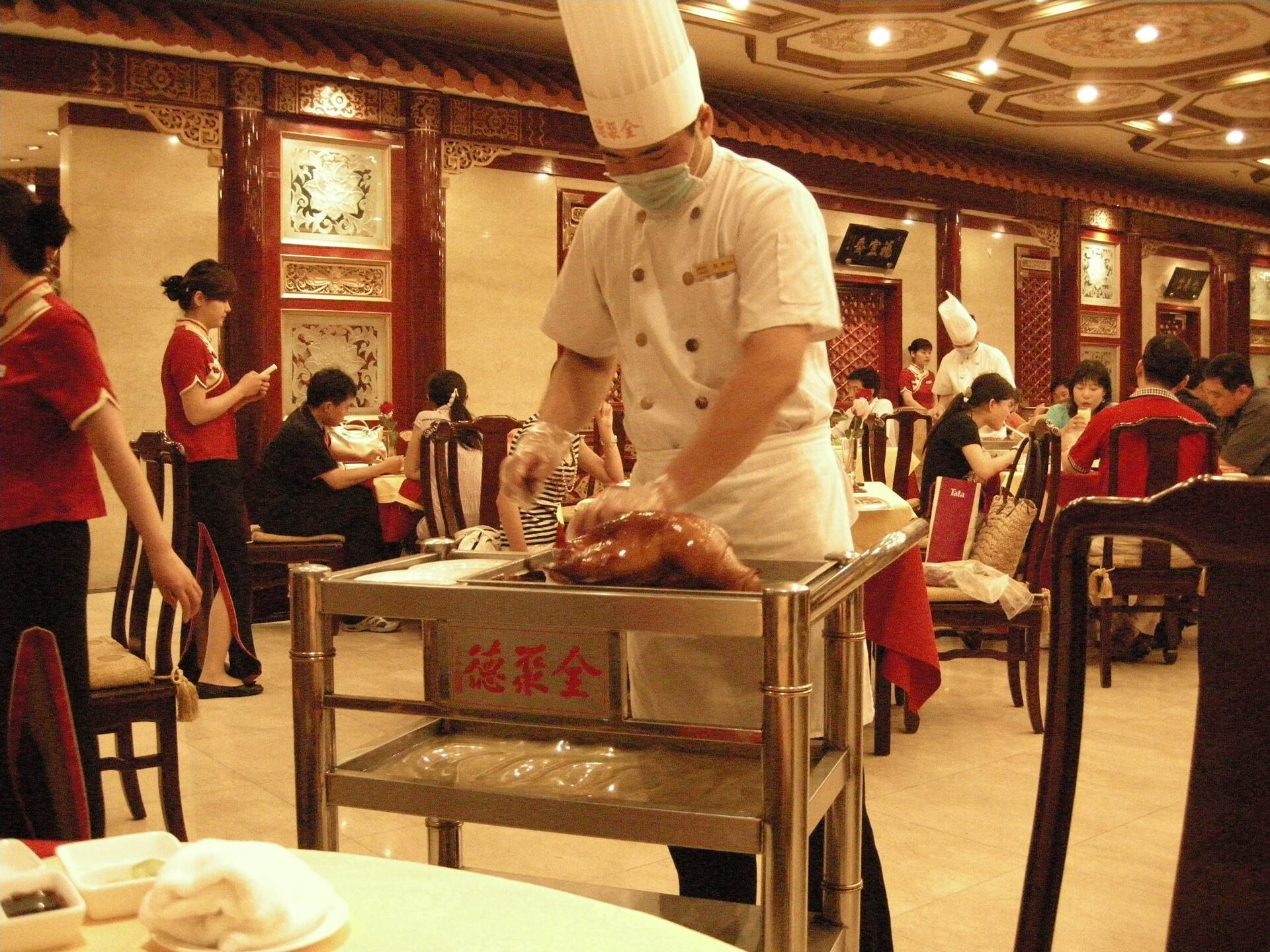 Beijing · DoBeijing Food Guide: Duck First, Then the Working ClassicsDuck carved in the right order, noodles mixed violently, breakfast folded in forty seconds — Beijing food is ritual first, recipe second.Estimate ≈
 Beijing · DoBeijing in One Day: The Imperial Core, Walked in One DirectionOne day is enough for Beijing's imperial heart if you refuse to scatter it — the palace in the morning, the hill behind it, the lakes and lanes after lunch, and the Great Wall left honourably for another trip.Verified
 Beijing · DoBeijing in 2 Days: The Forbidden City, Then the WallDay 1 walks the imperial axis while you are fresh. Day 2 leaves the city entirely — one Wall, done properly, beats three sights done tired.Reference ~
08 · SOURCES
Sources and status
Prices, schedules and booking channels change. Recheck the details that matter before you travel.
- Beijing Municipal Culture and Tourism Bureau (English)VerifiedThe bureau documentation behind the brand's Dongsi flagship — the No. 0 shop, 152 Dongsi North Street — and its pastry and jasmine-tea association
- The Palace MuseumReference ~Benchmark for clearly described museum design souvenirs — the honest alternative to implausibly cheap 'heritage' craft
- US Customs and Border Protection — Prohibited and Restricted ItemsVerifiedDeclaration requirements for food and agricultural goods entering the US; other destinations publish their own equivalent lists
- Dianping (Beijing shops and local demand signal)Reference ~Local-signal check for established pastry counters and tea shops; directional only, no rankings reproduced