
For the 2026 edition, Michelin's Shanghai coverage sits inside a broader Shanghai, Jiangsu and Zhejiang regional selection, so Shanghai restaurants now appear alongside Jiangsu and Zhejiang picks rather than in a standalone city list
Checked October 2026GUIDES / FOOD
Shanghai Michelin Guide: One Great Dinner, Booked Properly
The stars are the easy part. The real work is choosing the cuisine that fits your trip, the exact branch of the exact name, and a deposit you actually understand — here is how the Shanghai Michelin map behaves on the ground.
City Shanghai15 min read8 facts labeledChecked 2026-10-30
01 · IN BRIEF
The reservation that was in the wrong building
It is half past six on the one clear evening of a four-day trip, and the couple at the next table in the hotel lobby are having the conversation every Shanghai concierge dreads. They booked the famous name — the one from the list, the one their friends raved about — and paid a deposit weeks ago. What they did not notice is that the group runs more than one dining room under similar names, the deposit sits with the branch across the river, and the room they are standing in has no table for them. The concierge makes calls. The evening bends, expensively, around a taxi ride. Nobody cooked anything badly; the failure happened entirely at the booking screen.
That is the correct way to understand Michelin in Shanghai. The cooking at the top of this city's list is not the risky part — the logistics are. Shanghai is one of the deepest Michelin cities in China, and since the 2026 edition its restaurants are listed inside a wider Shanghai, Jiangsu and Zhejiang selection, which makes the map bigger and the branch question sharper. This guide teaches the ground game: pick one dinner on purpose, choose Chinese or Western for a reason, verify the branch and the terms before money moves, and let the rest of the trip eat like Shanghai actually eats.
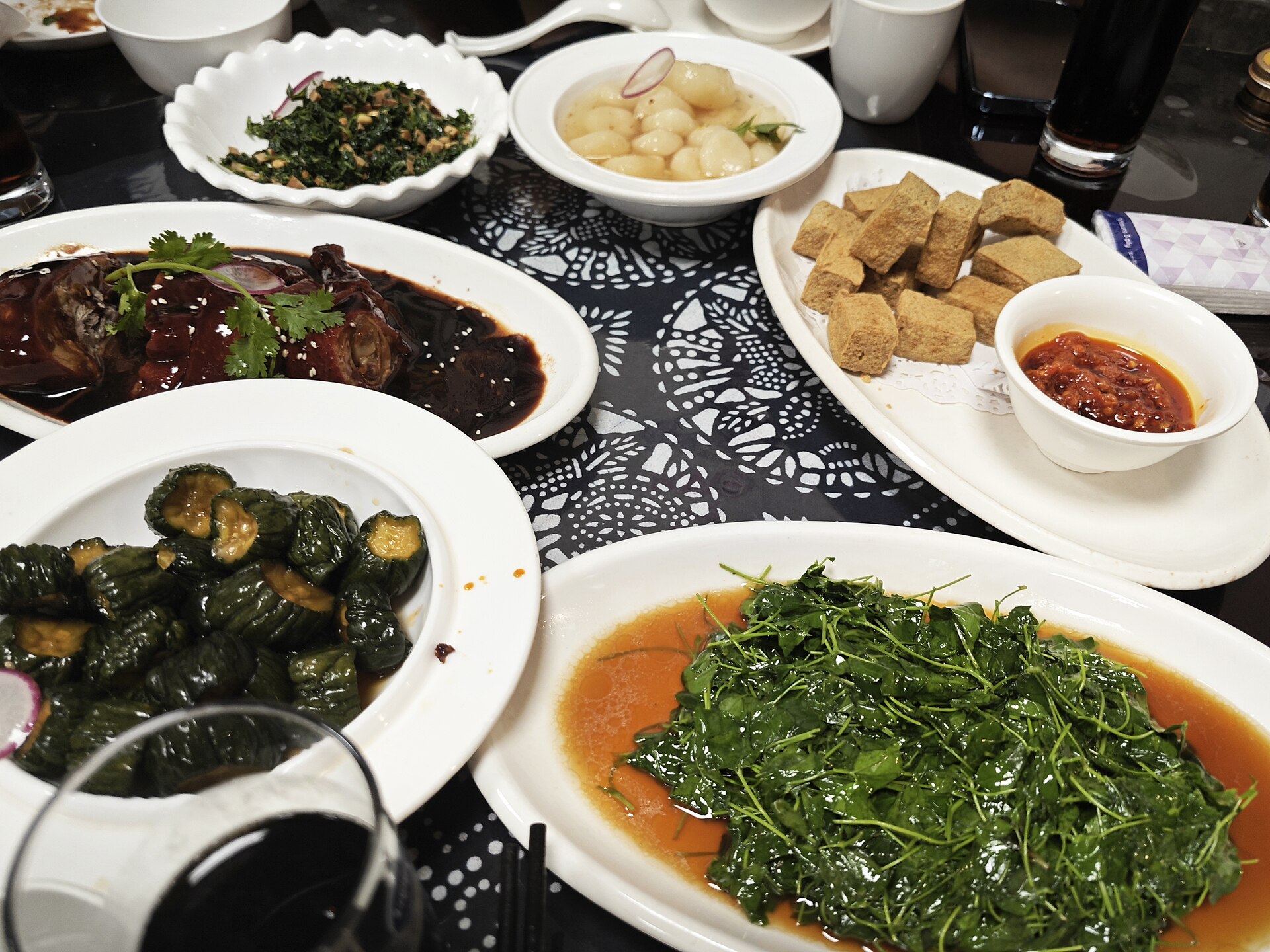
02 · SEE IT
Match the dinner to the trip, not to the ranking
- One destination dinner → a top-starred tasting menu, booked the day your travel dates become fixed
- A dinner that explains the city → refined Shanghainese, Ningbo, Taizhou or Huaiyang cooking in a polished room
- Vegetarian fine dining → a seasonal plant-based tasting menu; the calmest high-end format in the guide
- Business or anniversary → a private-room Chinese restaurant or a grand hotel dining room with a proper wine and tea programme
- A view with the meal → Bund and heritage-building dining rooms, chosen with your eyes open about how much of the bill is the window
- A food-led trip → exactly one starred dinner, then dumplings, noodles and neighbourhood rooms for everything else
- Crab season in town → consider spending the premium budget on a seasonal local table instead of a star
03 · TRY IT YOURSELF
Book it like a local who has been burned before
Your ticks stay on this page only. No account or personal data is sent.
04 · THE PROOF
The facts this guide leans on
Tai'an Table remains the name public Michelin-linked lists point to as Shanghai's three-star reference point; its current status for your dates still needs a same-season check on the official selection
Checked October 2026Shanghai's starred depth is no longer a French story: the two-star and one-star range runs across Shanghainese, Cantonese, Ningbo, Taizhou, Chaozhou, Huaiyang and Sichuan cooking as well as French, Italian, contemporary and vegetarian rooms
Checked October 2026Shanghai was Michelin's first mainland China city guide, launched in 2016 — the list here is a decade deep, which is why local diners treat it as one signal among several rather than as scripture
Checked October 2026Fu He Hui is the name visitors reliably meet first for high-end vegetarian dining in Shanghai — a plant-based tasting format that local coverage consistently places at the centre of the city's vegetarian fine-dining conversation
Checked October 2026Black Pearl, the restaurant guide published by Meituan-Dianping, is the local counterweight: Chinese diners use it as a signal for premium Chinese cooking, banquet rooms and business dinners, where Michelin's vocabulary is tasting menus and global fine dining
Checked October 2026The branch trap is structural, not careless: established Shanghai groups operate several rooms under one family name, and the award attaches to a specific address and kitchen, not to the brand — a deposit paid to the wrong branch is the most common visitor booking failure
Checked October 2026Local demand signal lives on Dianping and Rednote: list-style posts and 'was it worth it' threads show which starred rooms Shanghai diners themselves save and revisit, with one-star and value-leaning meals discussed as hard as the top of the list
Checked October 202605 · STEP BY STEP
From shortlist to seated, step by step
- Step 1 — Decide what this dinner is for
Before any list, answer one question: is this meal the main event of a day, or the reward at the end of one? A destination tasting menu — the multi-hour, chef-led format at the top of the star ladder — wants a light day before it and nothing scheduled after. A polished Chinese dinner is more forgiving: it can close a sightseeing day, host a conversation, and still send you home at a civilised hour. Couples, business tables and families all fail differently, and the failure is usually a format mismatch, not a cooking mismatch. Name the job first; the shortlist writes itself afterwards.
- Step 2 — Choose Chinese or Western on purpose
The default visitor move is to book the famous French or Italian room because it feels legible. In Shanghai that is often the wasted move. You can eat excellent European fine dining in many world cities; you can only eat top-level Taizhou seafood, Ningbo home-style cooking elevated to ceremony, or a Huaiyang banquet in a handful of places on earth, and several of them are in this guide. A refined Chinese dinner also teaches the trip: ingredients, banquet grammar, tea service, the way a Shanghai table sequences cold dishes, soup, mains and a starch at the end. Choose the Western tasting menu when the cooking itself is the hobby. Choose Chinese when the meal should explain where you are.
- Step 3 — Shortlist three names, then verify each one
Build a shortlist of three: one reach, one solid, one fallback in the same style. Then verify each against the only source that settles arguments — Michelin's own Shanghai selection — checking that the restaurant is currently listed, at what level, and at which address. Names that recur in local discussion give you the raw material: Tai'an Table at the top; Da Vittorio and 8½ Otto e Mezzo Bombana for Italian; Fu He Hui for vegetarian; Meet the Bund, the YongFu rooms and the Fu family of dining rooms (Fu 1015, Fu 1039, Fu 1088) for refined Chinese; Cheng Long Hang for crab; Lao Zheng Xing and Ren He Guan for old-school Shanghainese; T'ang Court, Bao Li Xuan and Lei Garden on the Cantonese side. Treat every name as a lead until the official page confirms the branch in front of you.
- Step 4 — Interrogate the booking before money moves
Run the checklist in the Try section as a single pass, in writing, with the restaurant's own channel or your hotel concierge: exact branch in both languages; current award status for that branch; the menu price and what it excludes; the service charge; the deposit and the exact cancellation window; the dress code; how dietary requirements will be handled; whether you are booking a private room, a counter or the main room; and the realistic door-to-door time from your hotel. Any answer that arrives as 'usually fine' should be asked again. This takes ten minutes and prevents the lobby scene this guide opened with.
- Step 5 — Fit the dinner into a two-night pattern
If you have two evenings, sequence them like a local planner would. Night one: a Shanghainese or Jiangnan dinner near your hotel — good cooking, no ceremony, early night. Day two lunch: keep it street-level and light — soup dumplings, pan-fried buns, a noodle shop — so the day has texture and the evening has appetite. Night two: the one starred or Black Pearl dinner, given the full evening. The pattern does two jobs: the premium meal lands on a palate that already knows what the city's everyday food tastes like, and a booking failure on night two still leaves a trip with one very good Chinese dinner inside it.
- Step 6 — Run the night itself properly
Arrive a few minutes early with the reservation name spelled the way the booking spells it — a romanised name and a Chinese booking name can differ, and the phone number attached to the reservation settles most doorstep confusion. If you booked a tasting menu, eat lightly at lunch and pace the pairings; the back third of a long menu is where good kitchens do their best work and tired diners stop noticing. Photograph less than you planned to. If something is wrong — a course, a charge, a table — raise it quietly and early, in the room, where it can still be fixed; premium Shanghai service culture responds well to direct, polite specificity.
- Step 7 — Handle vegetarian and dietary tables at booking stage
Shanghai is one of the kindest Chinese cities for a vegetarian fine-dining plan: a dedicated plant-based tasting menu exists at the top level, and strong kitchens will adapt courses when they know in advance. The mechanics matter more than the cuisine label — put the requirement in the reservation, repeat it on arrival, and ask specifically about stocks, shrimp paste, oyster sauce and lard, the four places animal products hide in celebratory Chinese cooking. For allergies, treat the starred room as an ally rather than a risk: a kitchen that cooks to order from a booking note is far safer than a busy casual room improvising over a wok.
06 · WHERE THIS BREAKS
Where the advice stops working
Last year's list is a rumour
Stars are awarded, held and lost on the guide's own calendar, chefs move, and rooms close or rebrand between editions. Any ranking you saved from a previous trip — including anything in this guide — is a starting hypothesis. The official selection on the day you book is the only version that can hold your deposit.
The Bund view is a line item, whether it is printed or not
Skyline and heritage-building dining rooms price the room, the terrace and the photograph into the meal. That premium can be justified, once, for an anniversary evening. It is a poor trade when the food was the point — the same budget usually buys a clearly better kitchen two streets inland. Decide in advance which of the two you are buying.
A three-hour menu before a 7 a.m. train is a planning error
Tasting menus end when they end. Stacking the longest dinner of the trip against an early departure to Suzhou, Hangzhou or the airport converts a pleasure into a countdown and the next morning into a write-off. Put the big dinner on the night with the softest following morning, every time.
Children and counters do not mix well
Long, quiet, course-by-course formats punish small children and the adults performing calm around them. If the group includes young kids, take the premium budget to a private-room Chinese lunch instead — the cooking can be just as serious, the format forgives noise, and nobody's evening depends on a six-year-old's relationship with course nine.
Online average prices are stale by construction
Menu prices, pairing prices and deposit levels move with seasons, set-menu changes and the room's own calendar. Any per-person figure quoted in a post — or implied by an old review — is a rough band, not a quote. The number that matters is the one the restaurant gives you, in writing, for your date.
Sometimes the right answer is not Michelin at all
Skip the stars without regret when the stay is one night, the group is price-sensitive, the trip is really about neighbourhoods and snack streets, or you are here in hairy-crab season and would rather aim the whole premium budget at one seasonal table. Shanghai rewards mixed levels: a dumpling lunch and one carefully chosen dinner will beat two formal dinners on most trips.
07 · KEEP READING
Keep the trip moving
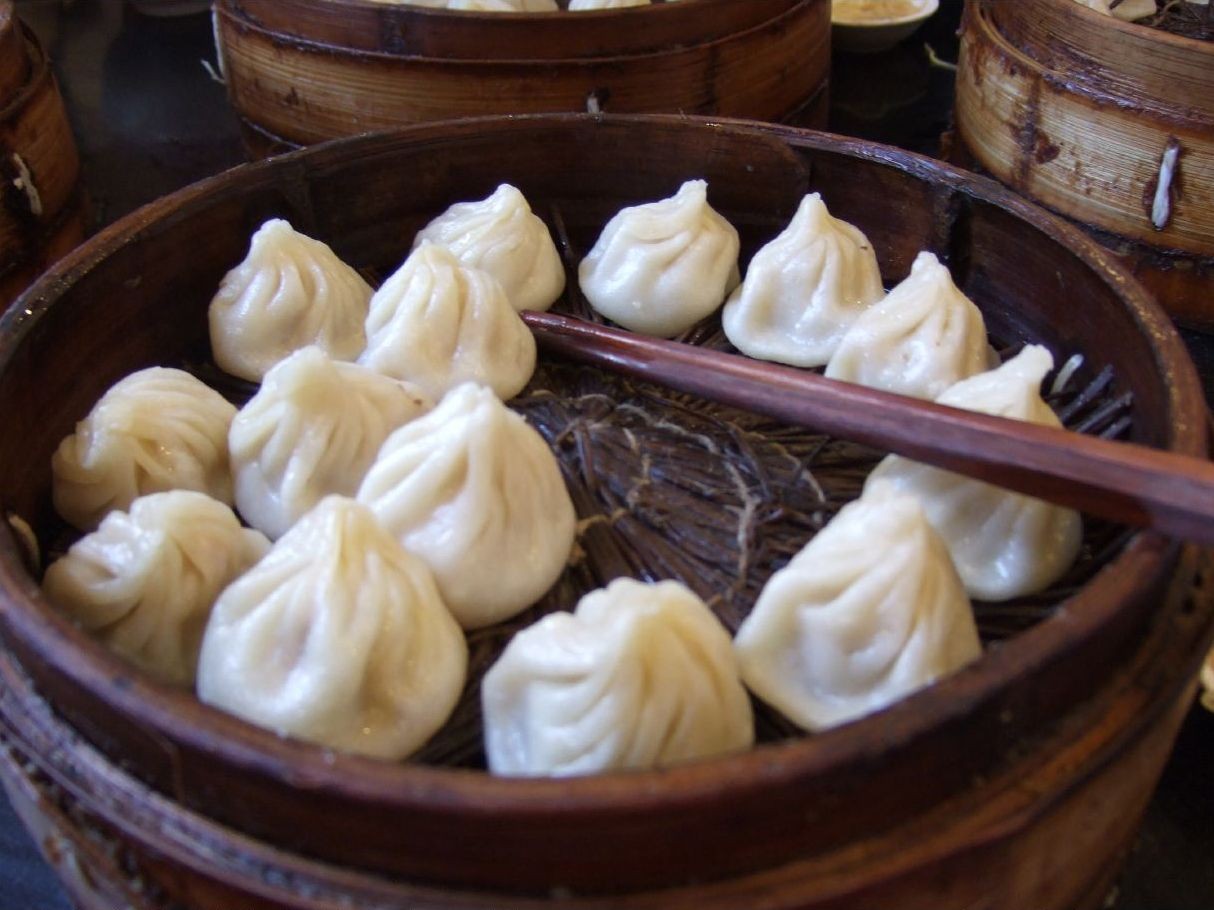 Shanghai · DoShanghai Food Guide: What Locals Actually Eat, and How to Eat ItSoup dumplings are the postcard. The real Shanghai table is pan-fried buns at dawn, dark glossy braises, river shrimp, a spring soup — and knowing the order to put them on the table.Reference ~
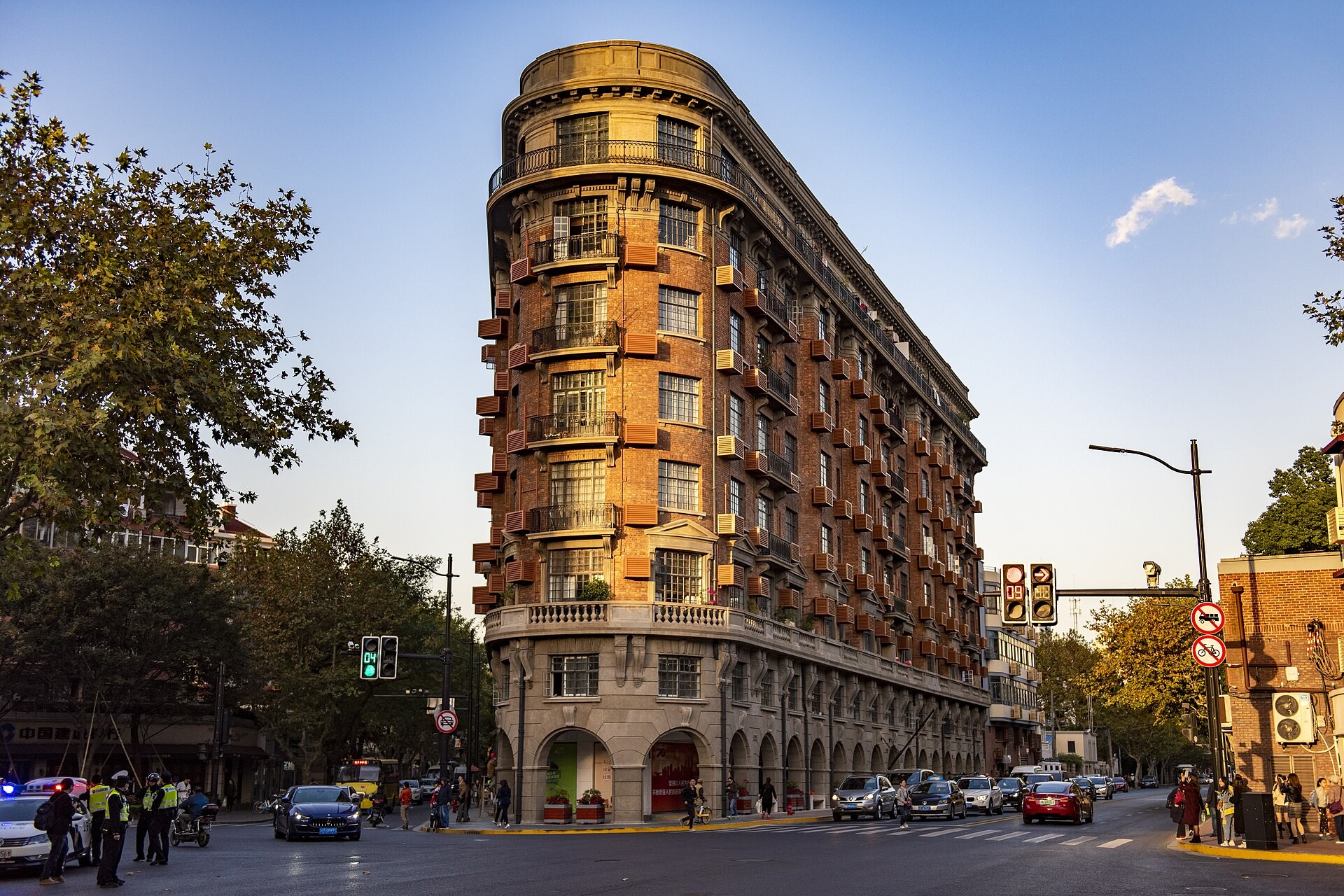 Shanghai · DoShanghai in 2 Days: Icons on Day 1, Neighbourhoods on Day 2Day 1 collects the postcard. Day 2 spends it — plane-tree streets, long lunches, and the Shanghai residents actually live in.Reference ~
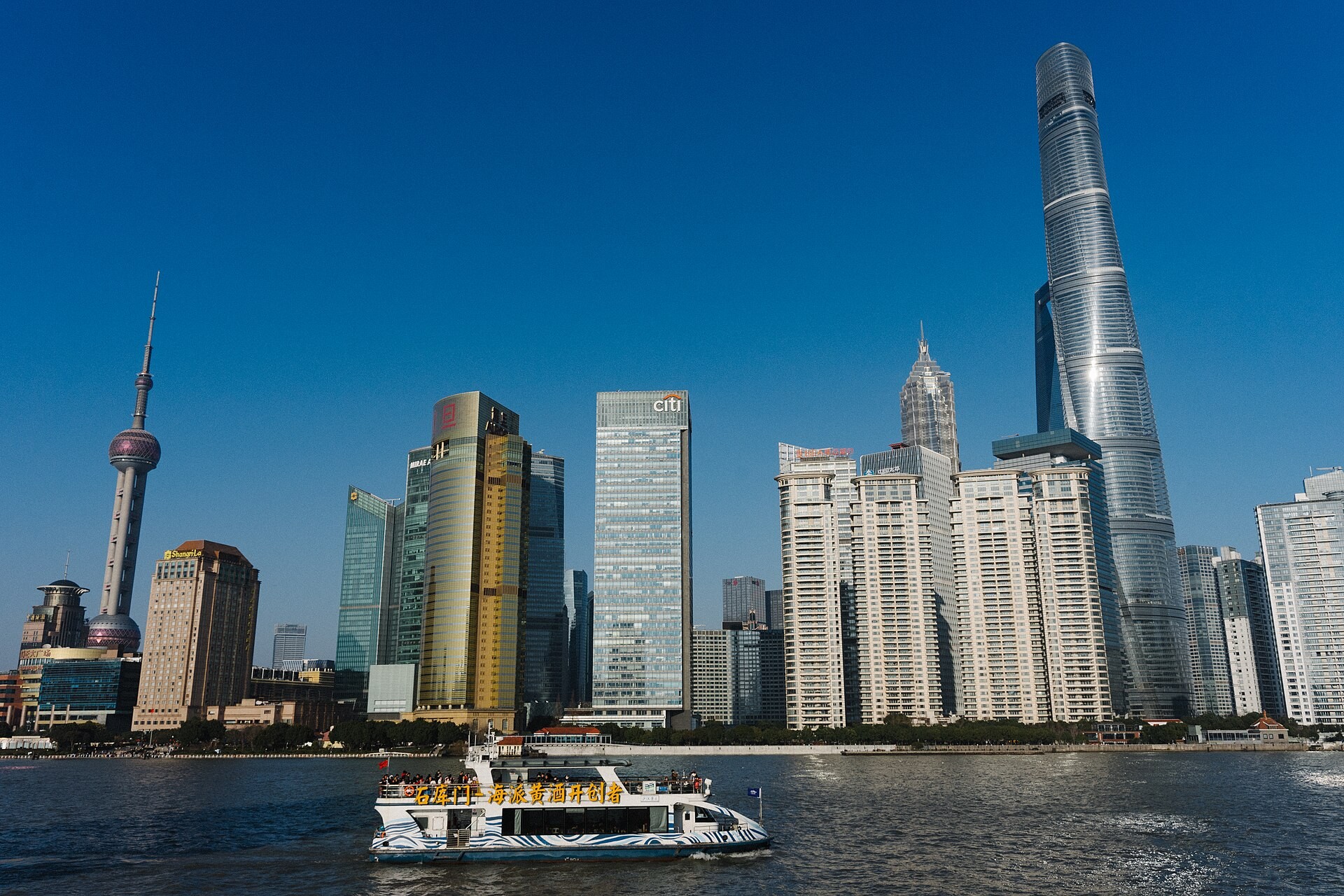 Shanghai · PrepareWhere to Stay in Shanghai: The Right Neighborhood for Your Travel StyleShanghai is really two cities split by a river. Pick the side your days will live on first, then match the neighborhood to how you actually travel.Reference ~
08 · SOURCES
Sources and status
Prices, schedules and booking channels change. Recheck the details that matter before you travel.
- Dianping (Shanghai restaurant reviews, Black Pearl list and local demand signal)Reference ~Local-signal patterns as described; no rankings reproduced or relied on
- MICHELIN Guide — official site (search Shanghai inside)VerifiedThe guide’s own channel: current Shanghai selection, Bib Gourmand list and inspection notes; the list URLs change with each edition, so search from the homepage