
UNESCO inscribed the Temple of Heaven on the World Heritage List in 1998: founded in the first half of the 15th century, it is a complex of religious buildings set in gardens and surrounded by historic pine woods, built for the emperors' annual rites of prayer for good harvests
Checked October 2026GUIDES / ATTRACTIONS
Temple of Heaven Guide: The Park Before the Postcard
Everyone comes for one blue-roofed hall. The better visit starts an hour earlier, among the kite flyers, card players and tai chi circles of a working Beijing park — then walks the ritual axis the slow way, in one direction.
City Beijing11 min read7 facts labeledChecked 2026-10-30
01 · IN BRIEF
Two visits happen here every morning, and only one is on the tour
At seven in the morning the park is already mid-conversation. A circle of retirees keeps a feathered shuttlecock alive with the soft, unhurried precision of people who have done this ten thousand times. Down a cypress avenue a choir is warming up around an accordion; nearer the wall, a man writes enormous calligraphy on the paving stones with a brush the size of a broom and water that evaporates as he finishes each character. None of this is a performance. It is Tuesday. Meanwhile the first tour groups are being aimed like arrows at a blue roof in the distance, flags up, cameras ready, and they will see the most famous building in the park without ever noticing the park — which is a shame, because the residents' morning and the emperor's altar were designed, in their different centuries, around the same idea: this is a place for ritual, and ritual takes time.
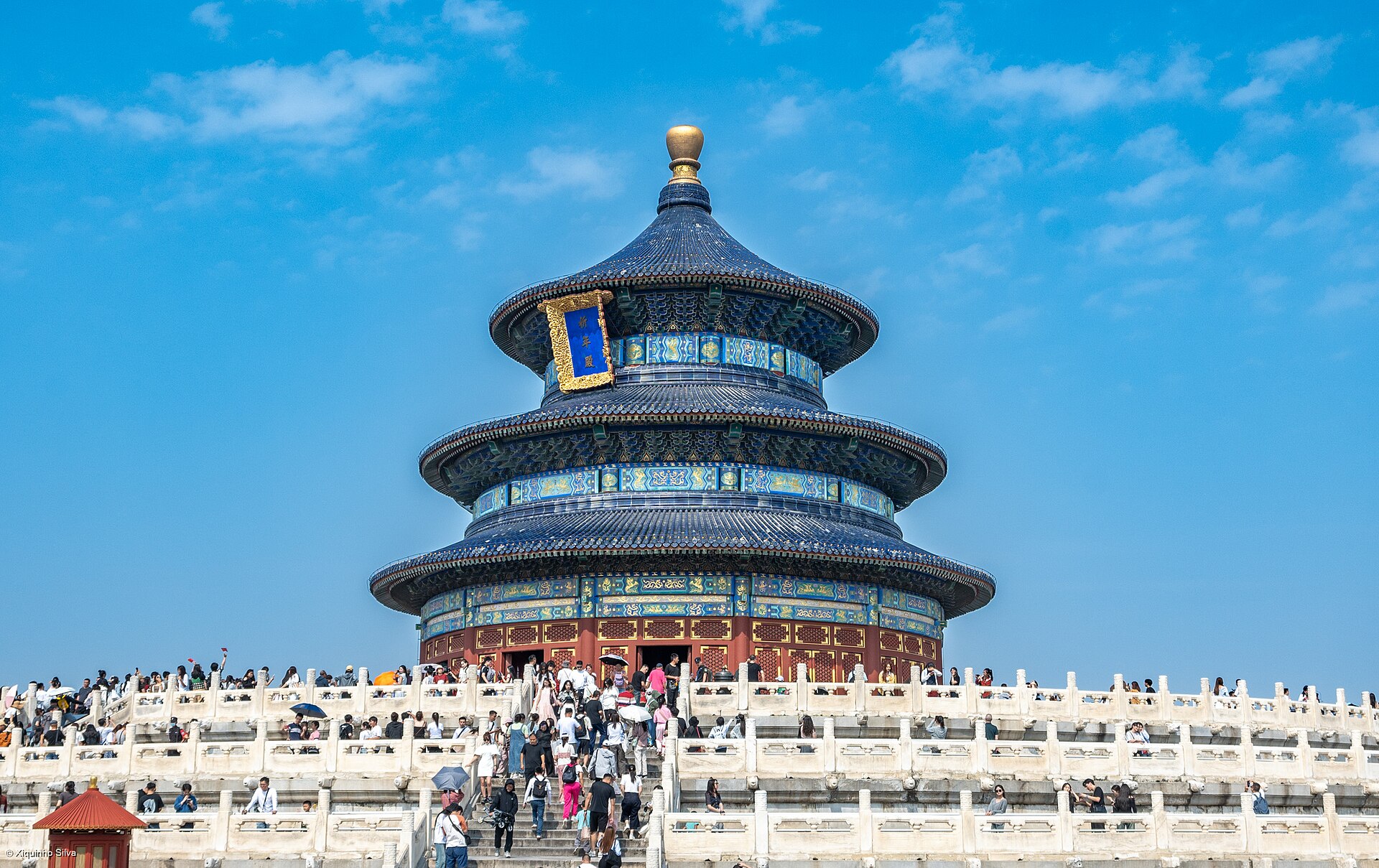
The Temple of Heaven is both an imperial sacrificial complex and one of Beijing's great living parks, and the visit works when you let it be both. Come early for the civic half, then walk the ceremonial axis — the great circular hall, the smaller vault below it, and the open altar at the southern end — in one direction, with the right ticket in your pocket and a gate chosen on purpose. This guide covers the entrance decision, the ticket scope that catches people out, what to actually look at in each monument, and how to leave toward lunch instead of across the city.
02 · SEE IT
One morning, in the order it wants to happen
- First light — the regulars' hour: exercise groups, musicians, card schools and kite flyers spread through the cypress groves before the sightseeing day begins
- The approach — long shaded avenues and rising ground, the park deliberately slowing you down before any monument appears
- The great hall — a blue triple roof on marble terraces, the image everyone arrived with, better for being earned
- The axis south — gates, distance and a raised walkway metering out anticipation between one structure and the next
- The Imperial Vault — a smaller hall inside its circular wall, where the enclosure itself is the exhibit
- The Circular Mound Altar — open sky, bare stone tiers and geometry doing the work that roofs do elsewhere; the quiet end of the sequence
- The exit — out toward Qianmen and the southern city for lunch, the rest of Beijing's day still intact
03 · TRY IT YOURSELF
Visit like a respectful regular
Your ticks stay on this page only. No account or personal data is sent.
04 · THE PROOF
The facts this guide leans on
Three principal monuments anchor the park's north–south ceremonial axis — the great circular hall where emperors prayed for the harvest, the vault below it, and the open mound altar at the southern end — and walking them as a sequence is what gives each its meaning
Checked October 2026The wider park and the ticketed monuments inside it can run on different schedules and different ticket scopes, so a park ticket alone may not admit you to the headline buildings
Checked October 2026The Circular Mound Altar is built on numerical geometry centred on the number nine — its terraces, steps and stone arrangements run in nines and multiples of nine, the imperial number for heaven
Checked October 2026The Imperial Vault stands inside a circular enclosure known as the Echo Wall, long noted for carrying a whisper along its smooth curve from one side to the other
Checked October 2026The surrounding parkland functions as everyday civic space: morning exercise, music, games and conversation are residents' routines, present most reliably in the early hours before sightseeing crowds build
Checked October 2026A visit that includes both the park atmosphere and the full ceremonial sequence generally needs several hours; a half-day block is the realistic planning unit for a first visit
Checked October 202605 · STEP BY STEP
How the morning runs, step by step
- Step 1 — Choose the gate from the route, not from the map pin
Decide the walking direction first: most first visits run the ceremonial axis in one line, entering at the end of the park that starts the sequence and leaving from the other. Only then pick gates, and pick them by name — the full Chinese name of both your entrance and your exit, saved in the phone. This park is broad enough that a careless arrival can add a long, shadeless crossing before the first monument, and a driver given only the destination's general name will naturally choose the gate that suits vehicles. To arrive at eight means to be standing at the right gate, documents out and tickets ready — not starting a transfer somewhere in the district and hoping the morning survives it.
- Step 2 — Buy the ticket scope you actually mean
The quiet trap here is ticket scope. Entry products differ: some cover the wider park, others combine the park with the principal monuments, and combinations change over time. Decide in advance whether the day is a park stroll or the full ceremonial sequence, then buy through the official channel and read the inclusions on the product you actually purchased. If one interior matters especially, check its own closure notices directly instead of assuming that an open park means an open building — the grounds and the buildings inside them keep different hours and different rules. Keep your booking confirmation somewhere it survives a dead phone battery, and skip resellers whose promises contradict what the park itself publishes.
- Step 3 — Spend the first hour in the park, on purpose
Resist the arrow-straight dash to the blue roof. The early park is half the site's meaning: exercise circles under the cypresses, musicians, card players, water calligraphy dissolving off the stones. Wander the avenues, watch how the grounds are used, and let the visit acquire a present tense before it becomes a history lesson. Two courtesies govern this hour. The regulars are neighbours in their park, not exhibits in yours — observe openly, keep paths and circles unblocked, and ask before photographing anyone up close. And keep your own volume low near groups mid-routine. Do this hour well and the monuments land differently afterwards: you have seen what this landscape is for now, which sharpens what it was for then.
- Step 4 — Walk the axis as one sentence: Hall, Vault, Altar
Now take the ceremonial sequence in a single direction, the way it was composed. Begin at the great hall and look past the famous colour to the structure of the thing: a circular hall under a triple blue roof — blue for the sky — standing on concentric marble terraces, geometry announcing that this building addresses heaven, not earth. Move south along the connecting route, noticing how gates and distance are used to build anticipation rather than merely fill space. At the Imperial Vault, the interest shrinks to a finer scale: a smaller hall held inside its circular wall, the enclosure and its acoustics part of the ritual machinery. End at the Circular Mound Altar, where the decoration stops entirely — open tiers of stone under open sky, the design carried by number and proportion, nine running through the structure as heaven's own digit. Standing in the centre of that emptiness after the morning's colour and noise is the visit's real climax.
- Step 5 — Manage the exposure: weather, distance, feet
For all its shade avenues, this is an outdoor site with a long axis and little shelter along it. In summer, the early start is also a heat strategy — carry water, use sun protection, and do the exposed ceremonial walk before the day peaks. In winter, the wind crosses the open terraces without asking; dress for standing still in it, not just walking. Rain makes stone paving and steps treacherous, so footwear with real grip outranks footwear that matches the photographs. The walking itself is level compared with a mountain site, but hard surfaces and sheer distance tire knees and feet quietly — older visitors do best with a direct one-way line through the park and an exit chosen beside a station or taxi rank, and visitors with reduced mobility should confirm the current step-free entrances and routes with the park directly rather than trusting a generic map.
- Step 6 — Leave toward lunch and a sane afternoon
Exit in the direction the day continues. Qianmen and the southern-central districts extend the imperial geography naturally and put reliable food within reach; for a family or a jet-lagged group, returning toward the hotel may honestly be the smarter move, and there is no prize for overriding that. If the Forbidden City shares the day, let the palace's admission slot set the clock and hold a genuine transfer and meal buffer between the two — the park stroll must flex, the palace entry cannot. What never works is pairing this morning with the Great Wall or the Summer Palace simply because all three sit on a top-sights list; the map distances turn the day into transport with scenery interruptions. A good Temple of Heaven morning ends spacious, with energy left — that spaciousness is the sign the route was right.
06 · WHERE THIS BREAKS
Where the visit goes sideways
A park ticket is not a monument ticket
The single most common disappointment here is arriving at a headline building holding admission to only the grounds. Ticket names and combinations change, park hours and monument hours differ, and none of it can be inferred from the fact that the gates are open. Read the inclusions of the exact product you bought, on the official channel, before the morning depends on it.
Residents are not a floor show
The morning park tempts visitors into treating retirees as local colour arranged for their benefit. It is a neighbourhood in use. Blocking an exercise circle for a photograph, crowding a card game, or filming someone's face at close range without asking converts a welcoming place into a guarded one. The atmosphere visitors come for survives precisely because regulars are left to have it.
The photo spot will try to run the visit
On busy days the terrace in front of the great hall becomes a scrum aimed at one angle. Groups that let that scrum set their pace spend their best hour queuing for a picture and skim the sequence that gives the building meaning. Step aside, turn around, and read the axis backwards, comparing how each structure handles people and open space — those observations outlast the photograph, and the photograph is still there when the crowd thins.
Weather exposure is structural, not incidental
The ceremonial core is roofless by design, spread along an axis built for processions, not shelter. Extreme heat, winter wind or rain do not merely discomfort the visit; on the worst days they should shrink it — protect the three-monument sequence, cut the park extension, and drop any long outdoor addition elsewhere in the day. A shortened morning here still delivers the site; a stubborn one delivers heatstroke with heritage characteristics.
Top-sights stacking breaks the day
Temple of Heaven plus Great Wall, or plus Summer Palace, is a combination that exists only in listicles. The distances across Beijing convert it into a transport day punctuated by two rushed landmarks, each deserving better. This site pairs with a slow lunch and one flexible southern neighbourhood — and, carefully buffered, the Forbidden City. Everything else is another day's headline, and Beijing has enough days' worth for a week.
07 · KEEP READING
Keep the trip moving
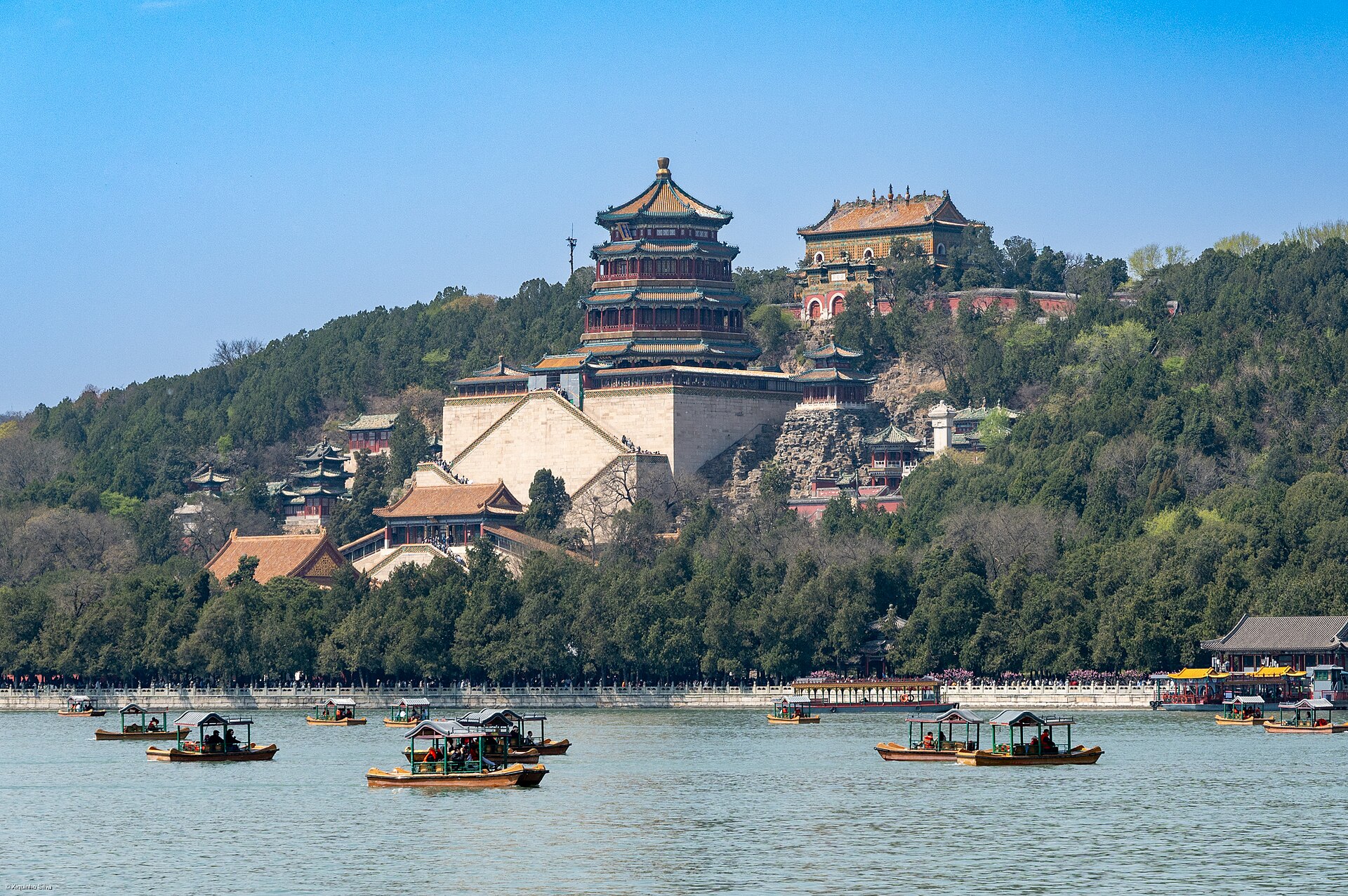 Beijing · DoSummer Palace Guide: Choose the Gate Before the LandmarksThe Summer Palace is not a checklist of halls — it is a lake, a hill and a designed sequence of views that takes half a day to cross honestly. Pick the route first, the gate second, and let the boat be a bonus rather than the plan.Verified
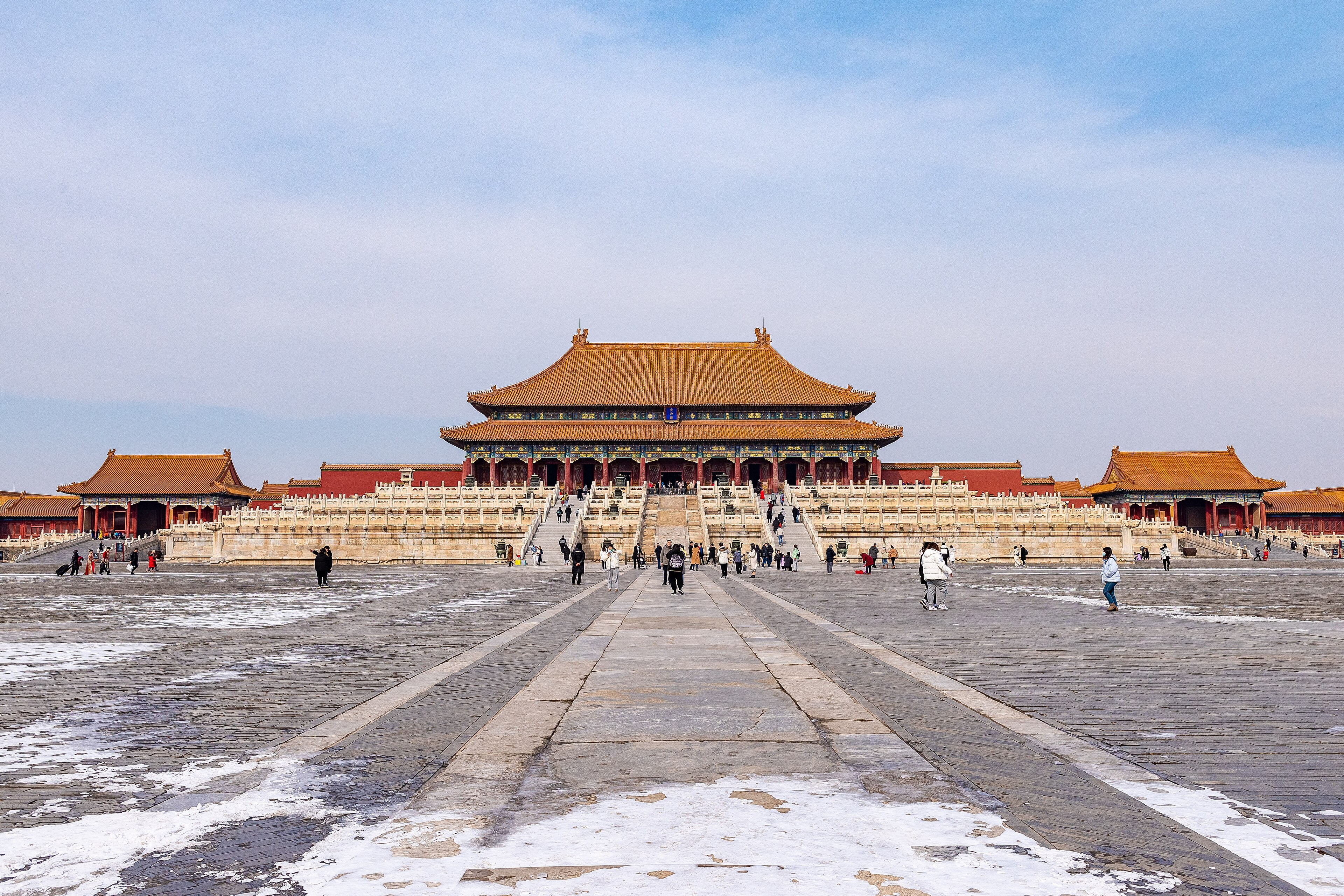 Beijing · DoForbidden City Tickets: How Booking Actually Works for Foreign VisitorsThere is no ticket window to fall back on. The Palace Museum is won or lost a week before your visit, on a phone screen, with your passport details typed exactly right.Reference ~
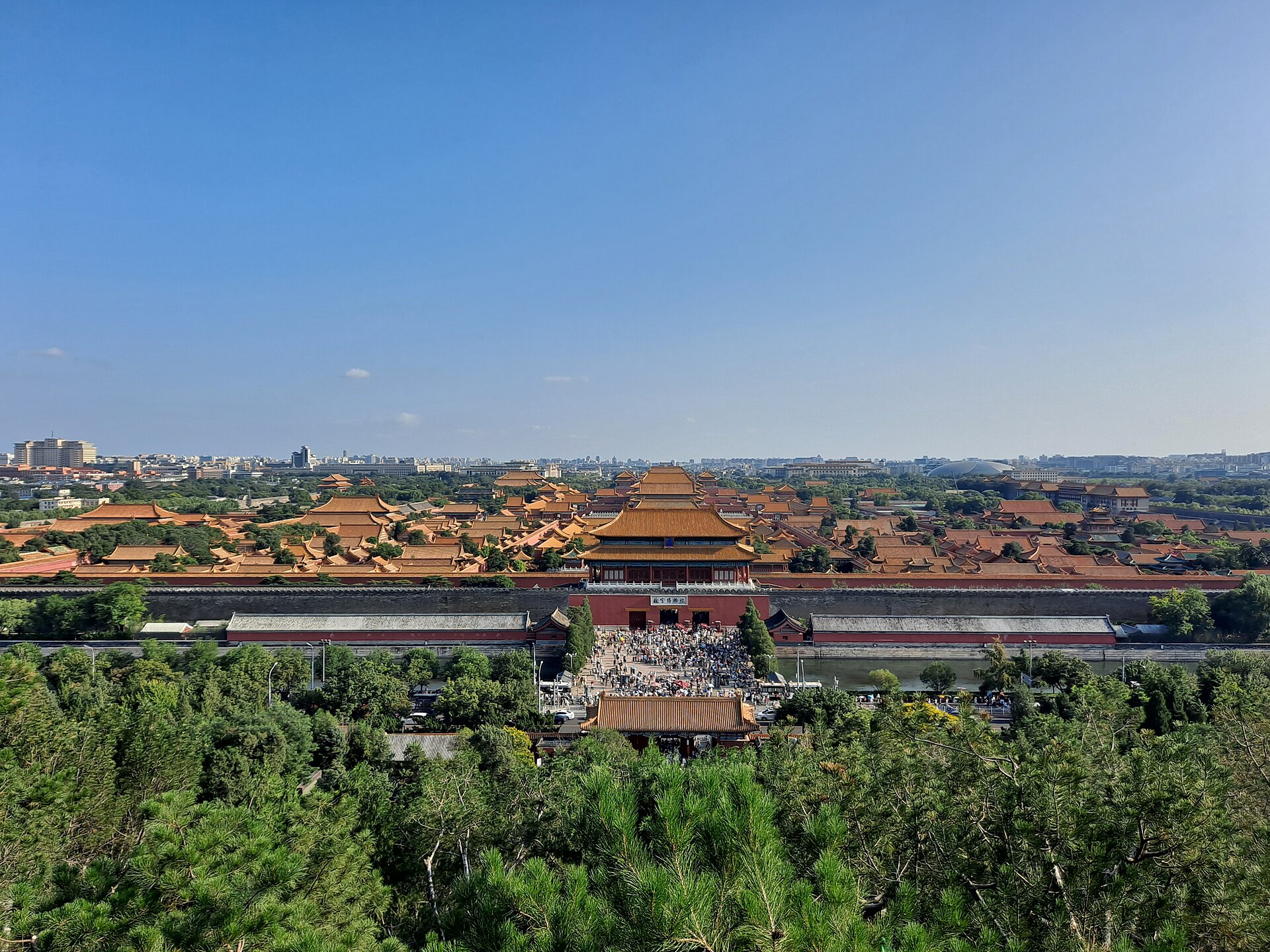 Beijing · DoBeijing in One Day: The Imperial Core, Walked in One DirectionOne day is enough for Beijing's imperial heart if you refuse to scatter it — the palace in the morning, the hill behind it, the lakes and lanes after lunch, and the Great Wall left honourably for another trip.Verified
08 · SOURCES
Sources and status
Prices, schedules and booking channels change. Recheck the details that matter before you travel.
- Temple of Heaven Park — official site (admission, ticket scope and notices)VerifiedOperator source for current admission products, monument hours and closure information; confirm ticket scope before visiting
- UNESCO World Heritage — Temple of Heaven: an Imperial Sacrificial Altar in Beijing (listing 881)VerifiedHeritage context: the sacrificial complex, its layout and its design symbolism
- Beijing municipal government — English visitor portalReference ~Municipal source for city-level visitor information affecting major attractions
- Dianping — Beijing (Temple of Heaven park reviews and local visitor reports)Reference ~Local-signal patterns on morning activity and crowd timing; directional only, no rankings relied on