
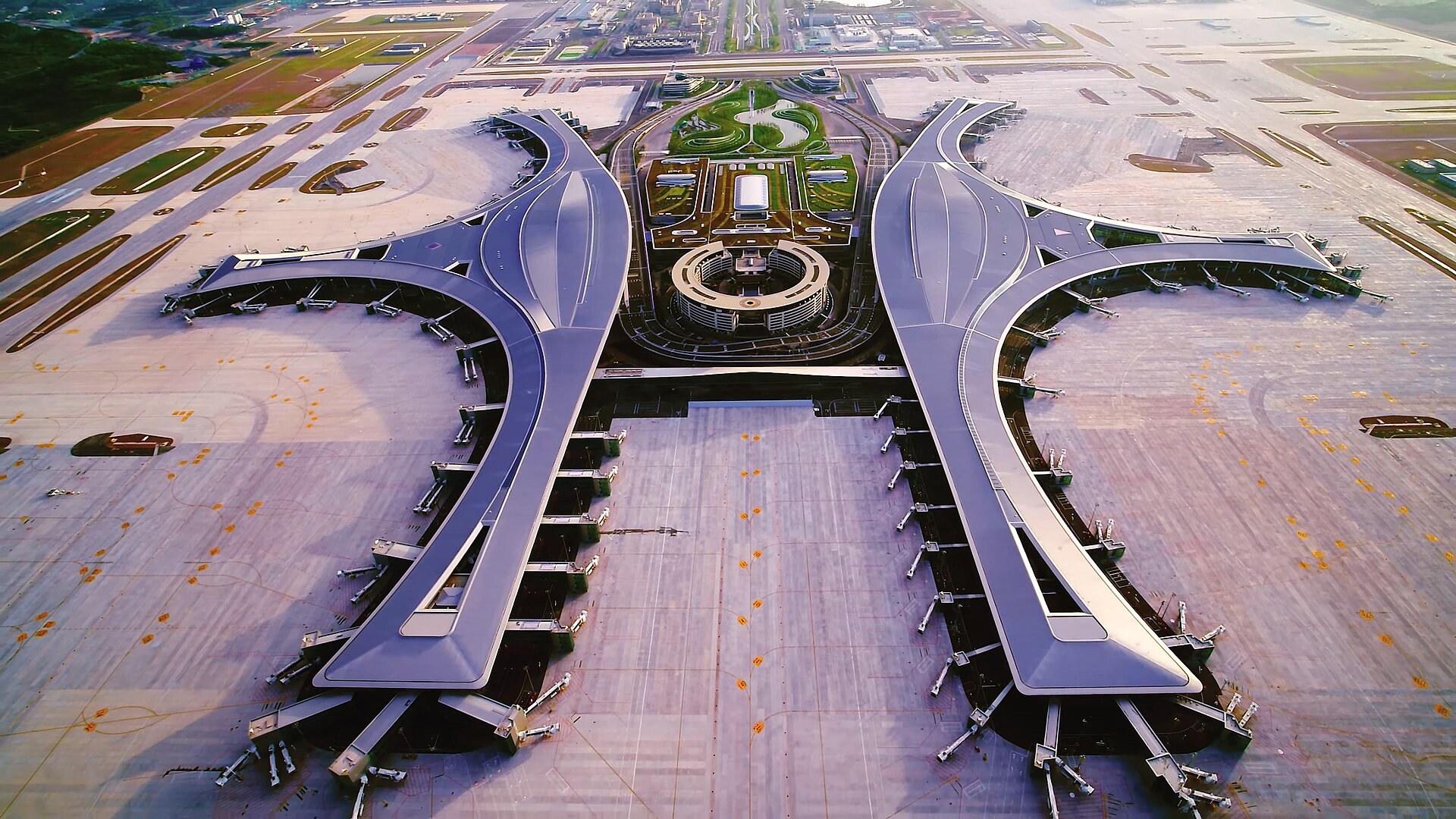
Chengdu has two full airports: Shuangliu (CTU) sits roughly 16 km southwest of the centre, while Tianfu (TFU) is around 50 km southeast — the TFU transfer typically takes an hour or more to a central hotel, the CTU one well under an hour
Checked October 2026GUIDES / TRANSPORT
Arriving in Chengdu: TFU vs CTU, and Getting Around Without Wasting Your First Day
Two airports, one real decision: TFU is far and CTU is close — then a metro system and panda shuttles that make the city itself easy.
City Chengdu18 min read13 facts labeledChecked 2026-10-29
01 · IN BRIEF
The short answer
Two friends we advised landed in Chengdu twenty minutes apart — one at Shuangliu, one at Tianfu — and the one with the 'better' flight deal walked into the hotel lobby almost an hour later, ¥180 poorer in taxi fare and quietly furious. Neither airport is a trap. But Chengdu is the Chinese city where the airport code matters most, because the two airports are not two terminals of one airport: they are 50-plus kilometres apart, on opposite sides of the city.
This guide does the two decisions in order: which airport to choose when you still can, and how to move once you are here — metro for the corridors, direct buses for the panda base, and a car when the map says so.
Everything in this guide follows from that one story: read the airport code, price the whole journey rather than the ticket, and match the transfer to your bags, your landing time and your hotel's actual station — not to the word Chengdu on the booking.
02 · SEE IT
Match the situation to the first move
- TFU, daytime, bags you can manage — the Line 18 / Line 19 rail corridor: predictable, and traffic cannot touch it
- CTU in daylight with a central address — ride the metro, or take an official taxi / DiDi: the airport is close, and the hotel's own line settles which
- Late arrival at either airport — an official late-night service or a road transfer: do not gamble the evening on a last train
- Family group, mobility needs, or several large bags — an official taxi, DiDi, or a car confirmed in advance: fewer lifts, changes and final walks
- Changing between CTU and TFU — a direct car, the official inter-airport bus, or Line 19: compare those first, not a detour through downtown
- A tight onward train to catch — aim at whichever station your ticket actually names: Chengdu has more than one, and they are not interchangeable
- Route — TFU to Tianfu Square: Line 18 into South Railway Station, change there for Line 1; budget about 60–90 minutes, change included, on a through ticket to your final station
- Route — TFU to Chunxi Road: Line 18, then Line 1 as far as Sichuan Gymnasium, then Line 3; about 75–105 minutes with bags, or compare the airport's Chunxi Road bus
- Route — CTU to Chunxi Road: Line 10 out of your terminal as far as Taipingyuan, then Line 3; about 45–70 minutes, change and walk included
- Route — CTU to Tianfu Square: Line 10, a change to Line 3, then Line 1; about 50–75 minutes — a taxi wins when two changes plus luggage make it clumsy
- Route — either airport, straight to the lobby: an official taxi or DiDi booked on the hotel's full Chinese address; times, tolls and fares move with traffic, and no fixed citywide price exists
03 · TRY IT YOURSELF
Landing checks, in order
Your ticks stay on this page only. No account or personal data is sent.
04 · THE PROOF
The numbers that matter
Most international and long-haul flights now use Tianfu (TFU); Shuangliu (CTU) handles mostly domestic routes plus a small number of regional international services
Checked October 2026Metro Line 18 links TFU directly to Chengdu South Railway Station, and Line 19 provides a second airport route; from CTU, Line 10 reaches the Line 3 corridor into the centre
Checked October 2026A taxi or DiDi from TFU to the central districts typically lands around ¥150–230 depending on district, tolls and time of day; from CTU, roughly ¥50–90
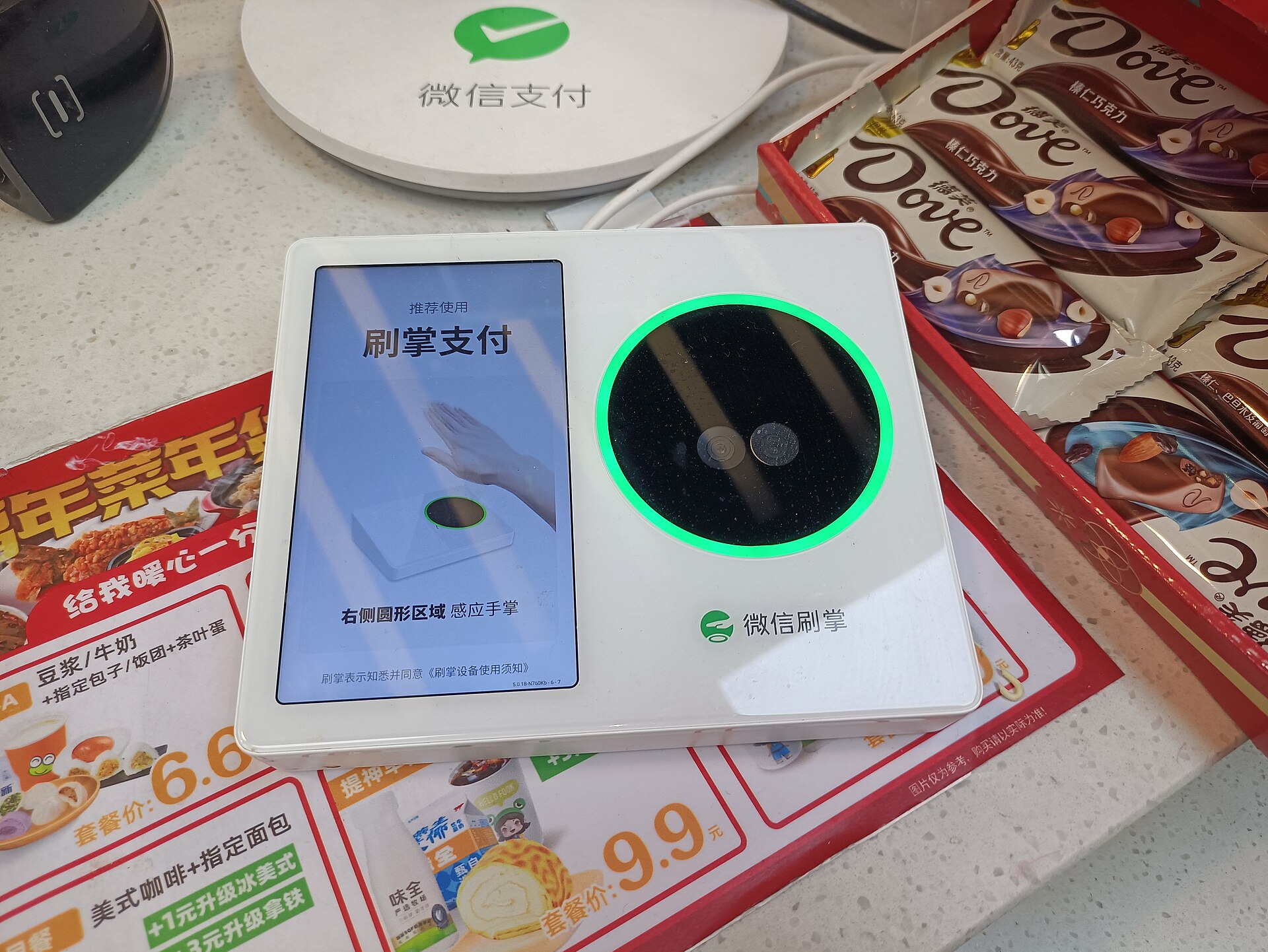
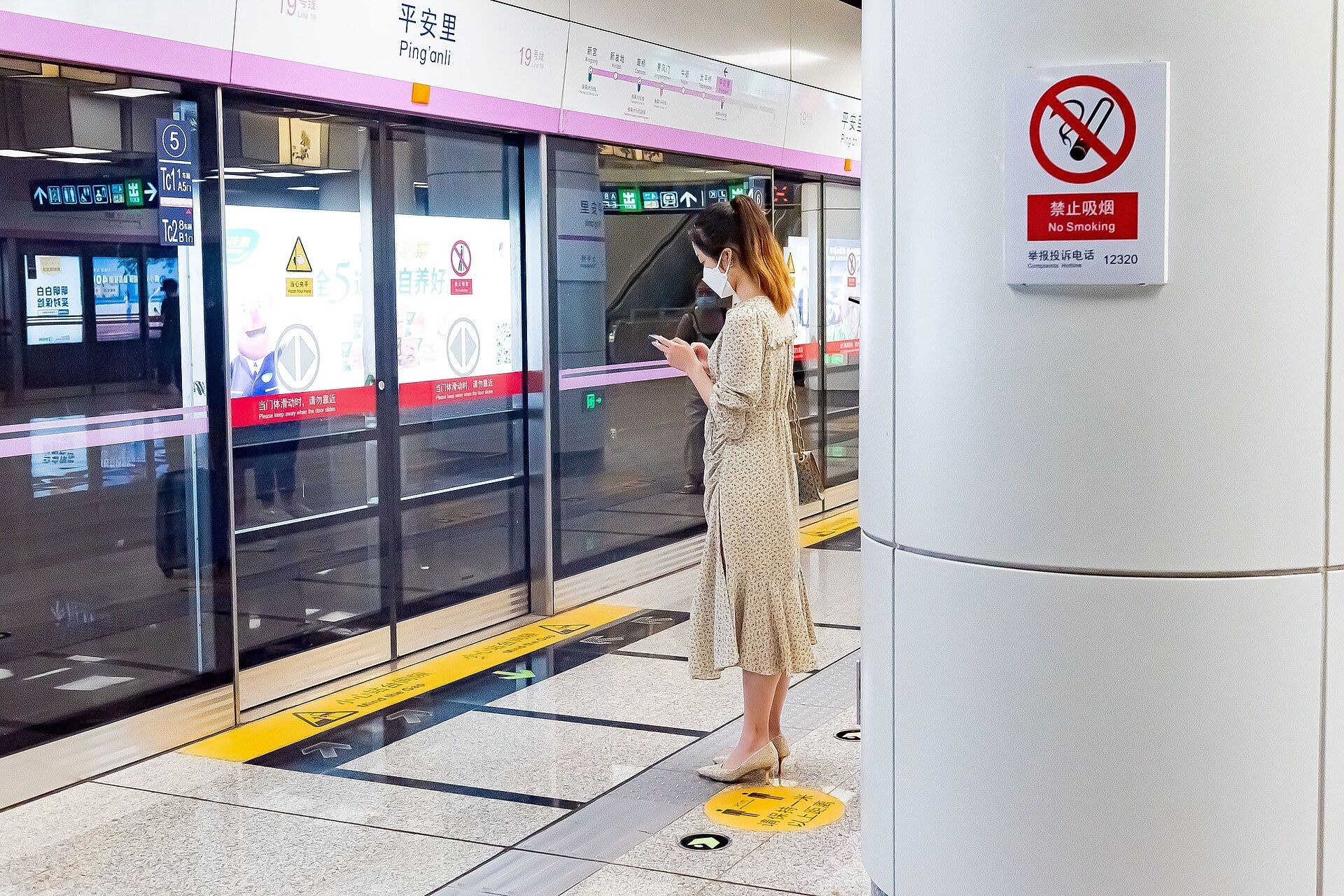
Checked October 2026Chengdu Metro is the practical backbone for visitors: lines are numbered, stations are signed in English, and the same Alipay/WeChat transport QR setup used in other Chinese cities works here
Checked October 2026The two airports plug into the metro differently: TFU is served by Lines 18 and 19, while the Shuangliu airport area is served by Lines 10, 19 and 30, each running toward a different part of the city — which is why there is no single correct CTU line for every hotel
Checked October 2026Line 18 runs in two patterns between TFU and South Railway Station: direct trains that skip intermediate stops and regular trains that call at them, so the train you board decides which stations you can actually use
Checked October 2026A dedicated direct Line 19 train links the two airport stations — Terminal 2 East on the Shuangliu side, Terminals 1 and 2 on the Tianfu side — in about 30 minutes of riding, but only some departures run direct; regular services stop more and take longer
Checked November 2023The airport's published night network (listing checked in October 2026) runs a CTU–Chunxi Road night route from 21:00 to 04:30 at a listed fare of ¥2, every 40–70 minutes, and an hourly CTU–TFU night route via the Global Center from 00:00 to 05:00 at ¥25 — departure windows to reconfirm at the stop, not guarantees
Checked October 2026A published 2025 transport guide prices the TFU airport bus to Chunxi Road at ¥15 by day and ¥25 at night — a dated figure to reconfirm at the airport desk, quoted here so you can spot a wrong quote when you hear one
Checked October 2026Since 28 July 2025, a Sichuan provincial notice reports gates across the whole Chengdu metro accepting direct taps from supported contactless cards issued overseas — the major international brands among them. Tap one card or device both in and out, and still carry a backup, because issuer and device compatibility varies
Checked October 2026The transfer times in this guide are planning allowances, counted from the moment you reach ground transport until a central station or your hotel district; immigration and baggage collection sit outside them, and they are not live journey-planner results or official minimum connection times
Checked October 2026What local traveler posts actually complain about is friction, not timetables: finding the ground transport centre, weighing rail against the airport bus with bags in hand, and the final walk near Chunxi Road — a pickup point you can see beats a route that is merely faster on paper
Checked October 202605 · STEP BY STEP
Airport by airport, transfer by transfer
- Step 1 — Run the worth-it maths on a cheaper TFU fare
A lower fare into Tianfu can be real value or a quiet tax, and the difference is arithmetic, not vibes. Add up the whole group: extra metro or bus fares per person, a whole-car quote if the road wins, the extra time the far airport adds, and what a late landing does to your first evening. Solo, landing by day, bags manageable, hotel near the Line 18/19 corridor — the saving usually survives, because rail is predictable and your only real cost is time. Two or more people sharing one car — genuinely borderline: set the whole-car quote against the per-person saving before deciding. Late arrival, a tight onward train, or a hotel far from any useful station — usually not worth it; a small fare gap does not compensate for a midnight transfer with changes. And a self-transfer between separate tickets at two different airports — almost never: the airlines may not protect that connection at all.
- Step 2 — From Tianfu (TFU): rail by day, car by default otherwise
Follow the metro signs to Line 18 (or Line 19 where its pattern serves your direction) and ride to Chengdu South Railway Station, then change to Line 1 or Line 7 for central districts like Chunxi Road and Tianfu Square. Check which train you are boarding: Line 18 runs direct services that skip intermediate stops alongside regular ones, and a direct train is only a gift if your station is one it serves. Allow roughly 1–1.5 hours door to door with a change. The airport bus earns a look when its route serves your hotel area, because it removes the interchange entirely — with several bags, that trade often beats a cheaper fare. With two or more people, heavy luggage, a landing after the evening peak, or anyone who cannot face a change of trains, a DiDi or official taxi in the ¥150–230 band is honest value for a straight line to the door. Judge the whole group's cost, never one rail fare.
- Step 3 — From Shuangliu (CTU): close, but pick the right corridor
CTU is the forgiving airport, not the automatic one. Three lines serve the airport area — 10, 19 and 30 — and each runs toward a different part of the city, so boarding the first train marked for the centre is how people ride an hour in the wrong direction. Line 10 from either terminal reaches Taipingyuan, where you change to Line 3 for Chunxi Road and the centre — around 40 minutes to the core, 45–70 minutes to a Chunxi Road hotel with the change and the walk. For Tianfu Square, People's Park or Wenshu-area hotels, compare the exact metro path on a live map against a taxi before you commit: one extra interchange with luggage can quietly erase the fare advantage. A taxi or DiDi takes roughly 30–45 minutes in normal traffic in the ¥50–90 band. CTU is the one airport in this guide where 'just grab a cab' is genuinely good advice.
- Step 4 — Ride the metro like a local once you are in the city
Payment first: since late July 2025, supported contactless bank cards issued overseas tap directly at Chengdu metro gates — tap one card or device both ways. The Alipay city transport code and single-journey tickets remain the backups; try your main method first on a ride that does not matter, not on the airport run home. Then navigate by anchors, not by pin-collecting: Tianfu Square for the civic centre, Chunxi Road and Taikoo Li for shopping and eating, People's Park with Kuanzhai Xiangzi for the slow Chengdu afternoon. Choose one district, walk it properly, and let the metro make the big jumps between districts. The detail that decides comfort is the exit: Chengdu blocks are large, the far side of a big junction adds heat, rain or a miserable crossing, and local travelers judge a hotel by the real walk from its station — not the straight-line figure a booking site shows. Save the exit number, the hotel name in Chinese and an entrance photo before you go underground.
- Step 5 — Get to the panda base without improvising
The metro does most of this journey and none of the last part, so plan the final leg as its own decision. Ride Line 3 to Panda Avenue station, then confirm the current shuttle, bus, taxi or short DiDi hop to the entrance your reservation uses — the final connection and the correct gate are the two things that change. The panda base also runs direct scenic-area buses from central points such as Chunxi Road, which suit anyone who would rather trade a little time for zero interchanges. For an early start — which the pandas reward — a DiDi booked the night before is the least stressful option of all. Whichever you choose, decide it the night before with the entry slot already booked; a panda morning improvises badly.
- Step 6 — Changing airports: CTU to TFU as its own operation
Treat an airport change as a flight connection, not a city ride, and compare the three real options first: Line 19 by metro, a direct car, or the official bus that runs between the airports. The station pair to memorise runs from Terminal 2 East (Shuangliu side) to Terminals 1 and 2 (Tianfu side) — do not mix up Terminal 2 East and CTU's separate Line 10 station. At CTU, entry runs through Terminal 2's B2 level passage; allow extra walking if you arrive at Terminal 1, and at TFU follow signs for the ground transport centre and the metro. A dedicated direct train covers the ride in about 30 minutes, but only some departures run direct — read the display and ask which departure runs direct next, and which regular one follows it, rather than assuming. Now budget honestly: 45 minutes to exit the arriving terminal, 20 to walk and wait, 30 on the direct train and 20 to reach the onward check-in area is already 115 minutes — before the onward airline's check-in cutoff and security. Immigration, a delay, checked bags on separate tickets: each one stretches that further. The airport publishes a dedicated guide for this transfer; recheck it before you travel, because desk locations, pickup points and hours all change without much notice.
- Step 7 — After the metro closes, and before it opens
The night network is thinner than the day one, but it exists. The airport's listing shows a night service linking CTU with Chunxi Road, running 21:00–04:30 at a listed ¥2, every 40–70 minutes, boarding for Terminal 1 just south of the Exit 6 arrivals door, and for Terminal 2 at Platform 4, which sits outside Exit 15's arrivals door; the return from Chunxi Road runs 22:00–05:30. Between the airports, a night route via the Global Center runs 00:00–05:00 at ¥25, roughly hourly — confirm the direction and the TFU stop at the ground transport centre, because an hourly bus is poor value against a tight connection however cheap it is. Landing late, the routine is: confirm before you fly that your hotel will still check you in late; have its name and address in Chinese, a photo of its entrance, and its phone number saved; and follow the official signs toward the taxi rank, ride-hailing point or bus — unsolicited driver offers in the hall are the one option never on the list. Leaving early, work backwards from the airline's required arrival at the terminal: check whether the first train gets you there with margin, not whether any early train exists at all. A car booked ahead is often the easier pre-dawn answer — confirm code and terminal with the driver, in Chinese, the night before, pack before sleep, and keep your passport out of the checked luggage. If the timing is brutal enough, sleeping at an airport hotel on the final night beats a central one; otherwise the centre wins for everything except the alarm clock.
- Step 8 — Let luggage and accessibility overrule the map
Count the bags and name who can lift each one — through security, onto a train, and along the final walk to the lobby. A four-wheel case that glides inside the terminal turns heavy over wet, broken paving, and the elevator at a big interchange may sit a long walk from the shortest exit. Anyone who needs a step-free route should book assistance with the airline or airport ahead of time, and verify the onward city leg separately before relying on it. Booking a car, confirm the unglamorous details in writing: passenger count, actual luggage volume, child seats, and space for a mobility device. Never assume a standard sedan swallows a whole group plus bags.
- Step 9 — Connect the railway stations by their full names
Chengdu East handles most high-speed arrivals and departures — Leshan, Chongqing, Xi'an and beyond — while Chengdu South is the TFU metro's city anchor, and further stations serve other routes. Copy the station's full name off the ticket into your map and your hotel decision; a connection that reads as comfortable on the timetable can still collapse once terminal walking, baggage, security screening, the ID check and finding your platform are added. If the train leaves the next day, choose the hotel for the whole itinerary instead of sleeping next to a station your train does not use — and if a day trip starts at Chengdu East, ride the metro there the evening before to learn the walk. The station is big, and panda mornings punish late starts.
06 · WHERE THIS BREAKS
When the plan breaks
Late TFU arrivals lose the metro
Airport metro lines wind down in the late evening. Land at TFU after the last trains and your options narrow to taxis, DiDi and the limited night airport buses — at surge pricing or terminal-queue length. A very late TFU landing is the strongest case in this guide for pre-booking a pickup.
Never self-connect TFU to CTU on a short layover
The gap between the TFU and CTU is roughly an hour by road. A tight self-transfer between the two airports is a bad plan even on paper; same-airport connections or an overnight in the city are the sane versions.
Cheap TFU flights can be false economy
The saving on a TFU flight evaporates if your hotel is in the northwest or your group needs two cars. Price the whole journey — flight plus transfer plus the hour — not the ticket alone. Step 1 runs the four scenarios in full; if your trip matches the late, tight or far-from-a-station rows, pay for CTU or pay for the car — those are the only two honest versions of the plan.
Rush hour is real here too
Metro and roads saturate in the morning and evening peaks, and the panda-base corridor is busy by mid-morning. Airport runs and panda runs both deserve buffer; Chengdu's relaxed reputation does not apply to its traffic.
Do not plan from ride time alone
Every short number in this guide — a 30-minute airport train, a 40-minute metro ride — excludes deplaning, baggage, walking, waiting, security, check-in cutoffs, finding the right terminal and the buffer for the departure you just missed. Add them all back before you call a connection safe, and double the margin where separate tickets mean no airline is protecting you.
Which of Chengdu's airports is closer to the centre?
Shuangliu (CTU), and it is not close: TFU sits far enough southeast that its transfer typically takes an hour or more, against well under an hour from CTU. But closer is a fact, not a decision — the terminal, the hotel's district, the operating hour and your luggage still pick the route.
What is the best way into the city from TFU?
For most daytime arrivals, rail: Lines 18 and 19 are predictable in a way no road out of TFU can promise. The airport bus or a car takes over when bags are heavy, the group is large, the landing is late, or the hotel sits far from a useful station — the honest answer is the one matched to your arrival, not a single winner.
How do I get from CTU across to TFU?
Set Line 19 beside two road options — the official bus between the airports, or a direct car — in that order, against the airport's current inter-airport guide — then allow a large buffer. The worked budget in Step 6 reaches 115 minutes before check-in and security on a good day; plan the connection around that scale, not around the 30 minutes printed next to the train.
Is every CTU–TFU train a 30-minute ride?
No. About 30 minutes is the dedicated direct service between the Shuangliu side (its Terminal 2 East station) and the Tianfu side (the Terminals 1 and 2 station). Regular Line 19 departures stop more and take longer, and no version of the number includes baggage, terminal walking, waiting, check-in or security — so 30 minutes is a train ride, never a connection allowance.
Is the metro workable with luggage?
With luggage you can manage and a hotel within an easy walk of a station that serves you, yes — Chengdu's metro is the backbone of most independent days here. It stops being the answer for several large bags, a family moving together, limited mobility, or a late arrival: then a taxi, a DiDi, or a car you have confirmed removes interchanges and final walks that no fare saving justifies.
Is there a night bus into Chunxi Road from CTU?
According to the airport's listing checked in October 2026, yes: a night route runs 21:00–04:30 at a listed ¥2 every 40–70 minutes — Terminal 1 boards just south of its Exit 6 arrivals door, Terminal 2 at Platform 4 outside Exit 15 — with the return direction running 22:00–05:30. Windows and stops change — reconfirm at the stop sign before you build a night around it.
07 · KEEP READING
Keep the trip moving
 Chengdu · DoChengdu Panda Base the Low-Stress Way: Opening Time, Passport Tickets and the Morning RouteOpening time, a passport-matched ticket, nurseries first: the panda base rewards exactly one strategy, and this is it.Reference ~
 China · PrepareHow to Pay in China (2026): Alipay, WeChat Pay, TenPayGo, Cards and CashSet up one wallet before you fly, add a second as backup, and understand the two numbers that explain most payment confusion.Reference ~
 China · PrepareInternet & eSIM in China (2026): Roaming, Travel eSIM, Local SIM and Wi-Fi ComparedYour phone will work in China. The real question is which internet it connects to — every connectivity choice is a choice between two exits.Reference ~
08 · SOURCES
Sources and status
Prices, schedules and booking channels change. Recheck the details that matter before you travel.