
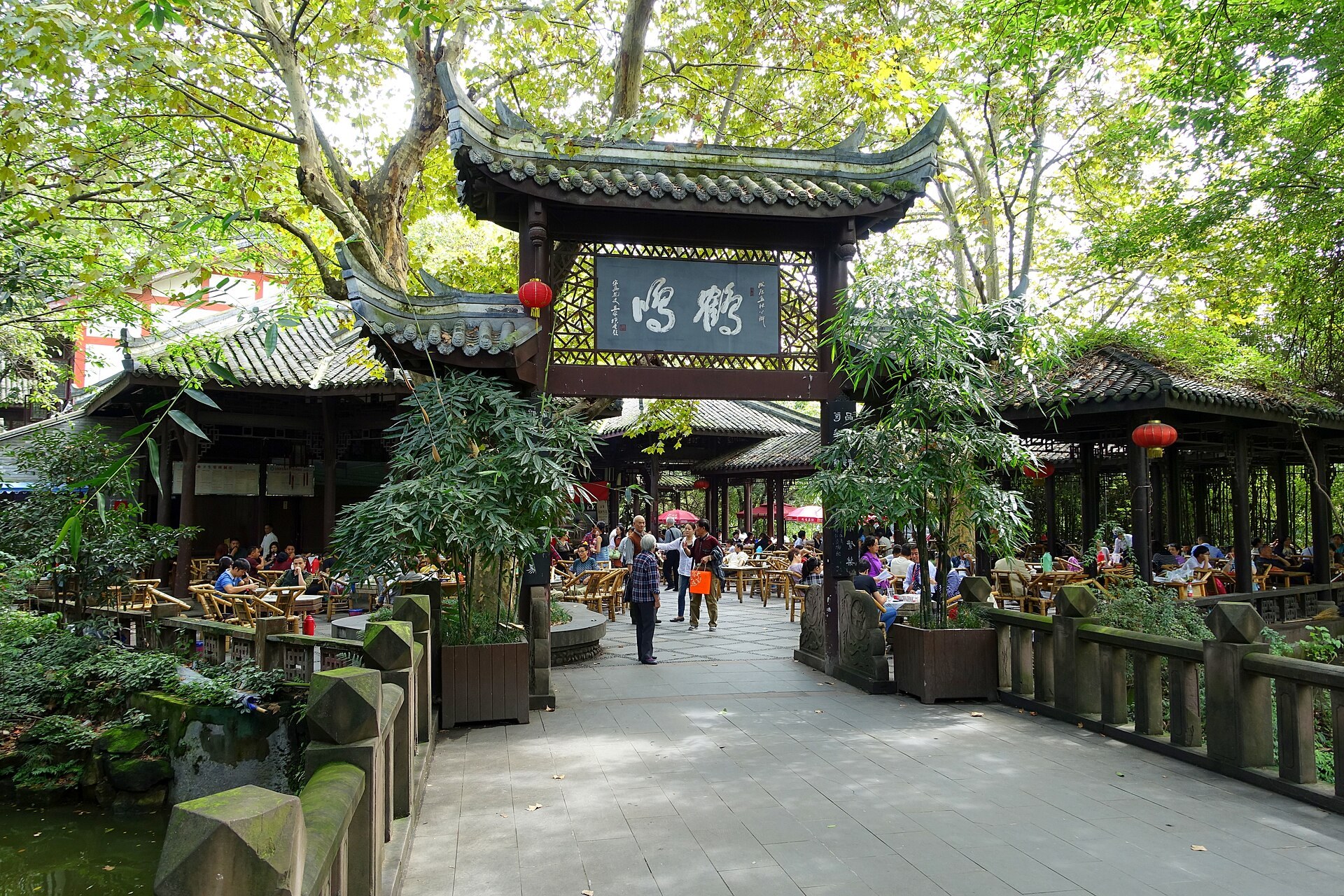
Heming Teahouse, in People's Park, opened in 1923 and still serves gaiwan tea in the open air under the trees — it is the city's best-known old teahouse, not a reconstruction for tourists
Checked 28 October 2026GUIDES / FOOD AND DRINK
Chengdu's Teahouse Republic: One Cup of Tea, the Whole Afternoon
One cup of tea rents you a bamboo chair for the entire afternoon. A foreign visitor's field guide to Chengdu's oldest public living room.
City Chengdu13 min read10 facts labeledChecked 2026-10-29
01 · IN BRIEF
9:40 a.m. at Heming: nobody is leaving
It is 9:40 on a Tuesday morning and the old man two tables over has clearly been here since eight. His gaiwan is on its fourth water. He has read the paper, lost a round of cards, watched the lake, and shows no sign of moving — and nobody, in a teahouse that has been open since 1923, expects him to. The waitress with the long-spouted copper kettle does another circuit, topping up cups from half a metre away without spilling a drop or breaking stride. An ear-cleaning practitioner drifts between the bamboo chairs, tuning forks humming, doing the softest sell in China: a raised eyebrow and ten minutes of bliss if you nod.
This is Heming Teahouse in Chengdu's People's Park, and it runs on a rule that breaks every visitor's café instincts: the price of one cup of tea — somewhere in the teens or twenties of yuan — rents you the chair, the shade, the refills and the entire afternoon. Chengdu people call this the city's living room. This guide is how a foreign visitor stops photographing it from the path and actually sits down in it.
02 · SEE IT
The whole ritual on one card
- Find it — People's Park, lakeside, under the trees; follow the mahjong clatter
- Sit — any free bamboo chair is yours; sitting down is the reservation
- Order — one gaiwan (jasmine for beginners); the price buys the chair for as long as you stay
- Drink — saucer as handle, lid as strainer; sip from the gap, sweep the leaves aside
- Refill — lid ajar means 'more water'; the long-spout kettle finds you, free, all day
- Decide — the ear-cleaning round: agree the price first, or decline with a smile
- Stay — cards, lake, matchmaking corner, a second hour that feels like the first
- Leave — ask for the bill when you go; nobody brought it because nobody was counting
- After the tea — the onward walk: People's Park gate → Citang St. → Dongsheng St. → Binsheng St. → Kuanzhai Xiangzi (optional finish)
- Time budget — three to four hours for park, tea and the lanes together; a two-hour version stays in the park and adds Citang Street only
03 · TRY IT YOURSELF
Before you sit down
Your ticks stay on this page only. No account or personal data is sent.
04 · THE PROOF
The facts, with their calibers shown
Published sources do not agree on the price of a cup: listings put covered tea anywhere from about ¥12 at the simplest end to ¥15–35 for better teas and houses. We quote the spread — house, tea grade and park location all move the number, and no single figure we found was reliable enough to print alone
Checked 28 October 2026Ear cleaning (caier) from the practitioners who circulate among the tables runs about 10 minutes; one source quotes ~¥30, others range from ¥20 to ¥100 depending on the set and the house — agree the full price before the tools come out
Checked 28 October 2026Refills are the deal: a circulating server with a long-spouted kettle tops up your gaiwan with hot water as long as you sit, and it does not add to the bill — the cup price buys the chair, the water and the afternoon
Checked 28 October 2026On Sunday mornings, People's Park runs two institutions at once a short walk apart: an English corner where retired locals practise English with students and visitors, and a matchmaking corner where parents post and browse profiles on behalf of their adult children
Checked 28 October 2026Teahouses were once so central to Chengdu that historical research counts them in the hundreds inside the old city alone — a frequently cited figure puts the peak at 748 houses in 1934. Sweeping claims of 'tens of thousands of teahouses' also circulate; the dated figure is the one we would repeat
Checked 28 October 2026Heming carries the fame, yet report after report from local walkers calls it noisy, and at peak hours every chair goes; the park holds other tea areas, and the cultural point is the seated pause itself, not one particular house's signboard
Checked October 2026West of the park, the Shaocheng lanes string together in a walking order — Citang first, then Dongsheng, then Binsheng — under plane trees, past older residential frontage, small cafes, design shops and storefronts doing everyday business, with Kuanzhai Xiangzi as the possible end point; walkers consistently rate a couple of unplanned stops above trying to enter every named shop
Checked October 2026On the standard way into the park you pass the monument raised to the Railway Protection Movement, and it is treated as a memorial — in a park that is a working piece of local life, with dancing, music, exercise groups and family gatherings, rather than a performance laid on for visitors
Checked October 2026People's Park is where most visitors first meet Chengdu's tea-house culture, but the neighbourhood houses away from the park can feel less staged — because what the culture is really made of is talk, card games, a newspaper, three generations at one table, and watching the world go slowly past
Checked October 202605 · STEP BY STEP
How to do a teahouse, step by step
- Arrive mid-morning, weekday if you can
People's Park sits on the west side of the centre, a short walk from Tianfu Square and on Metro Line 2. Heming occupies the open ground by the lake inside the park — follow the sound of mahjong tiles and the sight of bamboo chairs under the trees. Weekday mid-morning is the connoisseur's slot: full atmosphere, seats still free. Enter by the metro-side gate — save that exact gate in your map app, because the park has several entrances and a vague pin can land you on the wrong side — and give the monument to the Railway Protection Movement a respectful moment as you pass it, on your way to the lake.
- Take a bamboo chair like you mean it
There is no host and no queue. Walk in, take any empty bamboo chair at a low table — under the trees for shade, along the covered edge if rain threatens. A server will find you within a minute or two. Sitting down is the reservation.
- Order the gaiwan: jasmine to start
Point and smile works, but the order worth knowing is jasmine — mo li hua cha — the fragrant default of Chengdu's old houses, forgiving for beginners and endlessly refillable. Zhuyeqing, the bright green 'bamboo leaf' tea, is the local upgrade. The server brings the gaiwan: saucer, cup, lid, leaves already in. Pay now or run it as a tab — both are normal; mobile payment is standard (our pay-in-China guide sets that up in five minutes).
- Work the gaiwan properly
Three pieces, three jobs. The saucer is the handle — pick the cup up by it, never by the hot bowl. The lid is your strainer and spoon: tilt it, use its edge to sweep the leaves and foam aside, and sip from the gap. When the brew gets strong, push more leaves back; when it gets weak, you are due a refill anyway. It looks ceremonial and is purely practical — after two cups your hands will know it.
- Signal for the refill
The kettle server circulates constantly and reads lids the way waiters elsewhere read glasses. The classic signal for more water: leave the lid ajar, resting against the cup's rim — an open lid means an unfinished cup that wants topping up. (A fully closed lid can read as 'done' in some houses; when in doubt, just catch his eye and gesture at the cup. Refills are part of the price, so never ration your water.)
- Decide about the ear cleaning
You will be offered it — by a practitioner doing slow laps with a small lamp, feather brushes and tuning forks laid out like a surgeon's kit in miniature. It is a Chengdu institution and, done well, ten minutes of exquisite strangeness. Two rules: agree the price and the duration before anything touches your ear (expect somewhere in the ¥20–100 spread, commonly around ¥30 for the basic round), and feel free to decline with a smile — the lap continues without offence. If the kit does not look clean to you, skip it and keep the tea; there is no obligation in either direction.
- Settle in — this is the activity
Stay. That is the step visitors skip. Read. Watch the card games develop grudges. Order a small snack if vendors pass. Walk ten minutes to the matchmaking corner and observe — quietly, from a respectful distance, without photographing strangers' profiles up close; it is a real bulletin board for real families, not a photo set. Then come back to your chair: it is still yours. Two to three hours is a proper first session; locals measure in half-days.
- Pay when you leave, not before
No bill arrives until you ask for it. When you are done, find your server, gesture at the cup, pay, and return the chair to the republic. You will walk out slower than you walked in. That is not a side effect; it is the product.
- Continue into Shaocheng (optional, after the tea)
When the afternoon finally releases you, head out toward Citang Street and drift on through Dongsheng and Binsheng. The texture changes slowly: plane trees, older residential frontage, small cafes, design shops and everyday storefronts doing ordinary business. Resist the completionist urge — the walk rewards restraint, so let a stop or two stay spontaneous. Kuanzhai Xiangzi waits at the end as a recognisable finish with food, shops, old-style architecture and easy transport, but its core lanes run crowded and commercial; treat it as an optional finish or skip it entirely if the Shaocheng streets have already given you the Chengdu you came for. If you do plan to finish there, save its entrance separately rather than simply following the crowd.
- Pick your version of the walk
Short version: one park loop, the tea, and Citang Street only. Family version: stay within the park for nearly all of it, build snacks in, and head home by taxi or metro rather than pushing on to Kuanzhai. Neighbourhood version: park and tea, then all three Shaocheng streets, with Kuanzhai left off entirely. Food version: let the tea sit as the hinge between a few small tastes, and wrap up before dinner. Rain version: trim the outdoor stretches and keep an indoor fallback warm — Chengdu Museum, if that day's hours allow. On humid summer days, drink the tea earlier and let a taxi absorb the last leg; on big holidays, weight the park heavier and the commercial lanes lighter.
06 · WHERE THIS BREAKS
Where the teahouse dream bends
Weekend and holiday crowds
Heming on a sunny weekend is Chengdu's whole city at once: every bamboo chair taken, ear-cleaners on a waiting list, a happy roar over the lake. If that is your only slot, arrive before 09:30 or accept a seat at the edge. If you have any flexibility, give the teahouse a weekday — the institution is identical and the chair is easy.
Rain
Rain does not close the teahouse — the pavilions and covered edges carry on, and tea beside a rainy lake is half the poetry — but the under-tree seats flood out and the crowd compresses. Take a covered table, expect a slower kettle circuit, and note that the matchmaking corner thins out in wet weather.
Ear-cleaning surprises
Practitioners set their own prices and a foreign face can attract the top of the spread. The defence is boring and total: price first, tools second. If a quote arrives after the session instead of before, pay the pre-agreed going rate (~¥30 for the basic round) and treat the difference as tuition. And if anything about the kit's cleanliness bothers you, the correct answer is a polite no — tea alone loses nothing.
Language
Order by pointing at a neighbour's cup and you will drink well. But teahouse Chinese is a small, learnable vocabulary and using it changes the temperature of the interaction: gaiwan (the cup), mo li hua (jasmine), xu shui (more water), mai dan (the bill). Screenshots of the characters work too — no shame in it; the teahouse has accommodated barbarians for a century.
The tea goes bitter if you rush it
First-timers often gulp the first gaiwan like a coffee and sit puzzled in front of an empty, bitter cup. The brew is meant to be nursed and diluted across hours of refills — sip slowly, let the kettle keep it alive. A cup that tastes harsh is usually a cup that waited too long between sips, not bad tea.
How much time does People's Park deserve?
Give it roughly two hours if the loop and a proper tea are the whole plan; the longer version, out through the Shaocheng lanes with food on the way, runs three to four. The point of the place is the pause — a twenty-minute photo stop collects the scenery and misses the institution entirely.
Does the park work with children?
Yes — keep it short, and watch the lake edges, the crowds and the busy paths. Children reset well at an edge table with snacks of their own, away from the mahjong roar; the tea break then works for everyone.
Do you need a guide here?
Not at all — the park is easy to enjoy on your own, respectfully and without help, and most visitors do exactly that. A guide earns the fee only when the tea culture itself, the customs behind it, help with food ordering and the history of the lanes are the real purpose of your visit.
The snack-set upsell
The tea is cheap; the tray that arrives with it may not be. Local reports warn that the snack sets catch rushed visitors out on price, so order items separately, confirm what each costs before accepting any set, and take only what your group will finish. It is the one reliable way a twenty-yuan afternoon turns into a hundred-yuan one.
Everything here can change
Gates open and close, shops change hands, tea areas rearrange their chairs, park activities shift with the season and construction fences move — none of it consults this guide. Follow the posted rules on the day, and confirm any ticketed stop on your route through its official channel before setting out.
07 · KEEP READING
Keep the trip moving
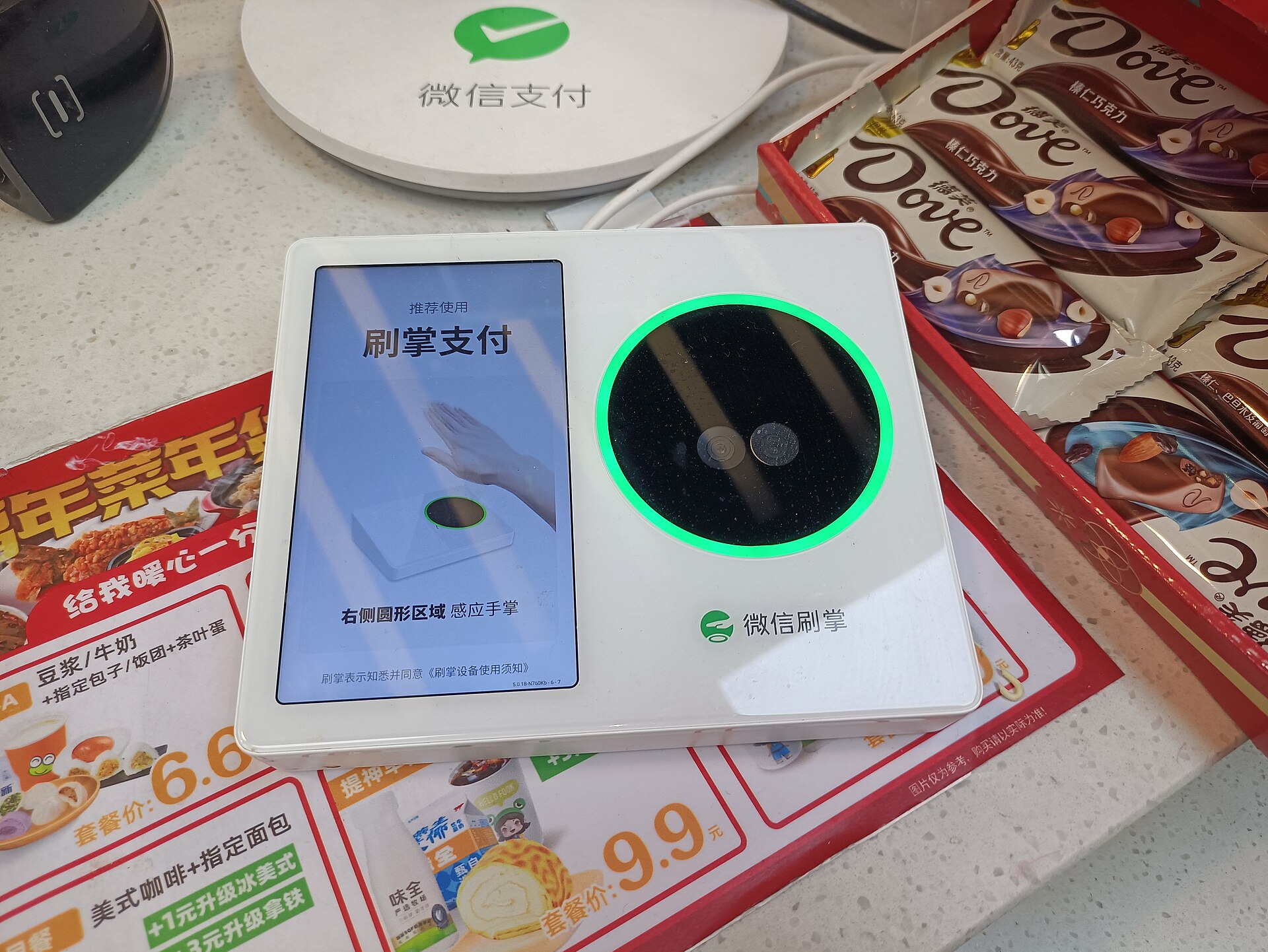 China · PrepareHow to Pay in China (2026): Alipay, WeChat Pay, TenPayGo, Cards and CashSet up one wallet before you fly, add a second as backup, and understand the two numbers that explain most payment confusion.Reference ~
 China · PrepareInternet & eSIM in China (2026): Roaming, Travel eSIM, Local SIM and Wi-Fi ComparedYour phone will work in China. The real question is which internet it connects to — every connectivity choice is a choice between two exits.Reference ~
 Chengdu · DoChengdu in 2 Days: Pandas Before Breakfast, Tea After LunchChengdu punishes itineraries and rewards rhythms: one anchor per half-day, an early panda morning, and long afternoons that end in hotpot.Reference ~
08 · SOURCES
Sources and status
Prices, schedules and booking channels change. Recheck the details that matter before you travel.