
Shaanxi keeps its breads in separate families: provincial archive accounts distinguish stone-baked shizimo from the thick guokui wheel and from the bread torn into paomo broth — so the name you ask for at the counter determines what lands in your bag
Checked October 2026GUIDES / SHOPPING
Xi'an Souvenirs: A Warrior Worth Taking Home, Chilli Oil Worth Labelling
Skip the suitcase of identical clay soldiers. Xi'an's real take-homes are Muslim Quarter pantry goods, stone-baked crisps, flat Shaanxi crafts and one replica bought with your eyes open.
City Xi'an11 min read8 facts labeledChecked 2026-10-30
01 · IN BRIEF
Six thousand soldiers, and then the sales corridor
The corridor outside the pits does something efficient to your judgement. You have just stood in a hangar above thousands of clay soldiers, each face different, and now a friendly man is offering you a general of your own — knee-high, 'handmade, museum clay, special price for you today' — while behind him, a wall of identical generals in identical poses stretches to the end of the arcade, every one of them carrying the same special price. Twenty minutes later, inside the museum's own shop, a palm-sized warrior in a printed box costs roughly what the big one outside did. Same army. Entirely different purchase.
Xi'an rewards that pause. Its strongest take-homes are not the loudest objects on the rack: fragrant chilli oil and stone-baked crisps from the lanes of the Muslim Quarter, jujube pastries and dried persimmons that Shaanxi families give each other, shadow puppets cut by people who still perform with them, paper cuts, and museum-shop design that survives the flight. This guide sorts what is genuinely local from what is merely nearby — and gives you a fair way to judge the one terracotta replica you do let yourself buy.
02 · SEE IT
The shortlist, matched to whoever is receiving it
- For a noodle cook — you po la zi chilli oil: a small sealed jar of the fragrant, sediment-rich oil Shaanxi spoons over noodles, its label checked for sesame and peanut
- For a serious snacker — shizimo stone-baked crisps: savoury and dry enough to travel for days, tasted from the exact line you plan to buy in quantity
- For a sweet tooth — jujube pastries and dried persimmons: Shaanxi's gift staples, assembled as two modest selections instead of one ceremonial assortment
- For a wall or a desk — shadow puppets and paper cuts: featherweight, flat-packed and unmistakably of this province, bought as craft and never as fake antiquity
- For a museum person — institution-backed design goods: notebooks, prints and small objects whose connection to a real collection is stated on the packaging
- The one-warrior rule — if clay comes home, it is modest in size, honestly described, and priced as the modern replica it is
- Eat in Xi'an instead — roujiamo, biangbiang noodles and cold liangpi: the celebrated fresh dishes, whose packaged imitators are different products entirely
03 · TRY IT YOURSELF
Buy it the Xi'an way
Your ticks stay on this page only. No account or personal data is sent.
04 · THE PROOF
The facts this guide leans on
Chinese shadow puppetry was inscribed on UNESCO's Representative List in 2011 as a performance art, carried by troupes and craftspeople; that status honours the living tradition and confers nothing on a printed silhouette in a souvenir rack
Checked October 2026Shaanxi paper cutting is a nationally recognised folk craft, with the Ansai area its best-known heartland; sheets are cut by hand with scissors or knives, which is visible in the slightly irregular line no print quite reproduces
Checked October 2026The Muslim Quarter's pantry shops serve a resident clientele alongside the crowds: the chilli oils, spice blends, dried fruit and pastries on its shelves are Shaanxi household goods, which is why stock there is dated, labelled and fast-moving
Checked October 2026Replica warriors are produced at every scale throughout the museum district, and finish, clay and detail vary enormously between workshops; nothing about a figure's confident sales story establishes age, and genuinely old artefacts are a separate, permit-controlled world from the souvenir trade
Checked October 2026Dried persimmons are a signature Shaanxi product — the harvest around Fuping county is the famous name — sold throughout Xi'an as a regional gift; regional is the honest word, since not everything in a Xi'an gift box grew inside the city walls
Checked October 2026Meat makes a border question out of any gift: the United States requires all food to be declared on arrival and restricts meat products tightly, and a vacuum seal on a roujiamo-style filling changes none of that
Checked October 2026Local demand signal lives on Dianping, where Xi'an residents rate the food shops, museum stores and specialty counters they use themselves; it is a way to find the working shops behind the famous street, not a ranking to copy
Checked October 202605 · STEP BY STEP
The shopping run, in order
- Step 1 — Bolt the shopping onto the days you have
Xi'an's souvenir geography is compact, so attach the shopping to days that already exist. Museum day covers the replica decision and the museum-shop gift; an old-city day around the Drum Tower and Muslim Quarter covers every food item and the flat crafts. Shopping as a separate expedition across town mostly buys you the same shelves at worse prices, because the working shops cluster where the Quarter and the museums already are.
- Step 2 — Work the Muslim Quarter like a pantry
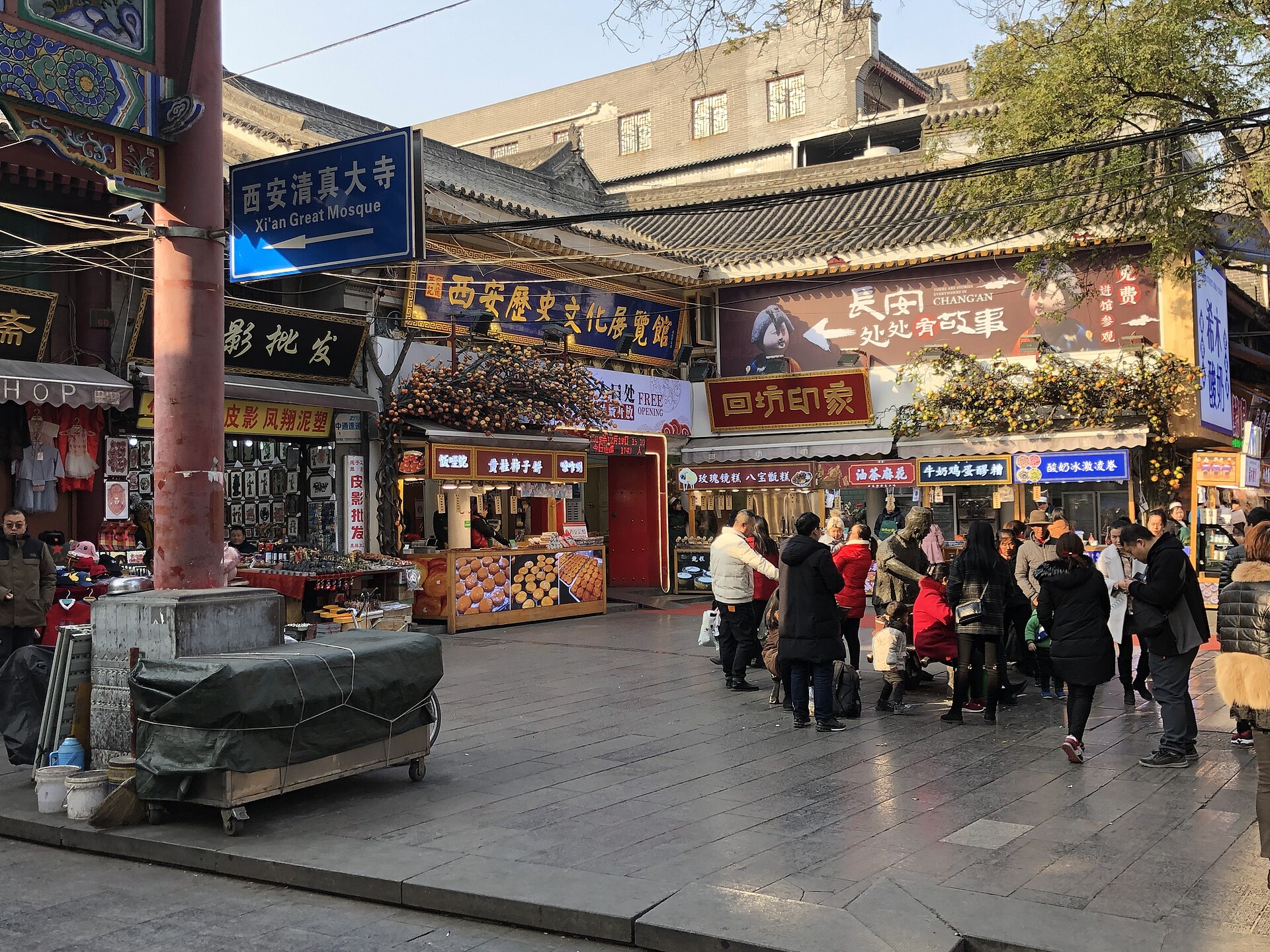
Walk Huimin Street and its side lanes as a pantry, not a backdrop. Chilli oil comes first: the style to look for is you po la zi, chilli flakes flooded with hot oil into a fragrant, sediment-rich condiment that Shaanxi spoons over noodles. Establish whether what you are holding is a finished topping or a dry mix that expects cooking, check the label for added sesame or peanut, and take the small sealed jar — a little of this oil seasons a great deal of home cooking. Compare the same product in a second shop a few doors along; on this street, that comparison takes four minutes and settles most pricing questions.
- Step 3 — Add the dry goods: crisps, pastries, persimmons
Shizimo is the connoisseur's Xi'an snack gift: a savoury bread crisp baked against hot stones, dry enough to travel for days and interesting enough to justify the space. Taste before committing, because hardness and seasoning swing widely between producers, and make sure the sample you liked is the exact line you are buying. Around it, build the sweet side of the parcel: jujube-filled pastries and other Shaanxi bakes, plus dried persimmons or dried fruit for the people who prefer their gifts unadorned. Two small selections chosen per person beat one grand assortment chosen for nobody in particular — and read pastry labels for meat, egg, dairy and nut content instead of trusting the fruit on the box.
- Step 4 — Judge the replica before it judges your luggage
Now the warrior, with clear eyes. Decide the size by the suitcase, not the sales patter: a figure you can wrap in clothes and carry home intact beats a knee-high general that must be shipped, insured and prayed over. Lift the candidate — real clay has real weight — and turn it over to inspect the base, the finish and the hands and face, where cheap production shows first. The museum's own shop is the benchmark for honest description and consistent quality; arcade prices should be judged against it, and sometimes beat it fairly for equivalent modern work. What ends the conversation is the word antique: an undocumented 'old' figure is a modern replica wearing a story, priced for the story.
- Step 5 — Buy the flat crafts flat
Shadow puppets and paper cuts are the weightless end of Xi'an craft, and the distinction inside each matters. A working puppet is jointed, translucent painted hide, made to move behind a screen; the stiff printed card version is a picture of one, and fine at a picture's price. Ask which you are holding, and who made it. Paper cuts should show the tiny irregularities of a hand with scissors. Both travel beautifully if you pack them as what they are: flat art, kept flat between stiff card in the middle of the case, away from the chilli oil's ambitions.
- Step 6 — Let the museum shops handle the design gift
For the person who wants the trip on a shelf without a warrior on it, the museum shops are Xi'an's design shortcut: notebooks, prints and objects developed with the institutions themselves, accurately described and fairly portable. The Shaanxi History Museum's collections drive much of the city's best museum design, and its shop — like the Terracotta Army museum's — is the place where a design claim can be checked against the object in the gallery upstairs. Buy the piece that refers to something you actually stood in front of.
- Step 7 — Pack by fragility, declare by default
Pack in fragility order. Crisps ride high in the case where nothing heavy can sit on them — crisp is their virtue and their vulnerability. Jars go in checked luggage, double-bagged with taped lids, padded by clothes. Paper and puppets stay flat and central. Keep every label and receipt with the goods, and before the flight, run the border check: your destination's rules on food and plant material, everything declared on arrival, and any meat-containing product left behind unless its entry is confirmed in writing by the rules themselves.
06 · WHERE THIS BREAKS
Where the advice stops working
'Factory price' and phantom comparison prices
A discount measured against a price that was never charged is not a discount. If a 'factory price' cannot be compared with the same item anywhere else, treat it as decoration and judge the object on its own merits and materials.
The antique story is the most expensive one in the shop
Anything presented as a genuine historical object — a warrior, a coin, a carving — without documentation is a modern piece priced on a narrative. Beyond the money, real antiquities sit inside cultural-property law in China and in most destination countries; the souvenir trade is not where that paperwork happens.
Red oil is not a heat scale
You po la zi ranges from aromatic to incendiary, and jar colour tells you almost nothing about which end you have bought. Only the label, a taste, and the seller's straight answer about whether it is ready to eat settle the question.
Roujiamo and biangbiang noodles do not pack
The famous fresh trio belongs to the trip. Sealed convenience versions of meat-filled dishes are different products with different textures, different instructions and a customs profile of their own; one more meal in the Quarter is the better souvenir budget.
A date on the box art proves nothing about the filling
A watercolour jujube on the lid is artwork, not an ingredient list. Pastries can carry lard, egg, dairy or nuts regardless of how pastoral the packaging looks, and the printed panel is the only statement that counts for a recipient with allergies or a vegetarian table.
The weight of clay rewrites the deal
Clay is dense. A large figure can cost more to ship safely than it cost to purchase, and every extra hand it passes through is another chance to arrive as gravel. If a big replica is truly the dream, price the shipping before the object, not after.
07 · KEEP READING
Keep the trip moving
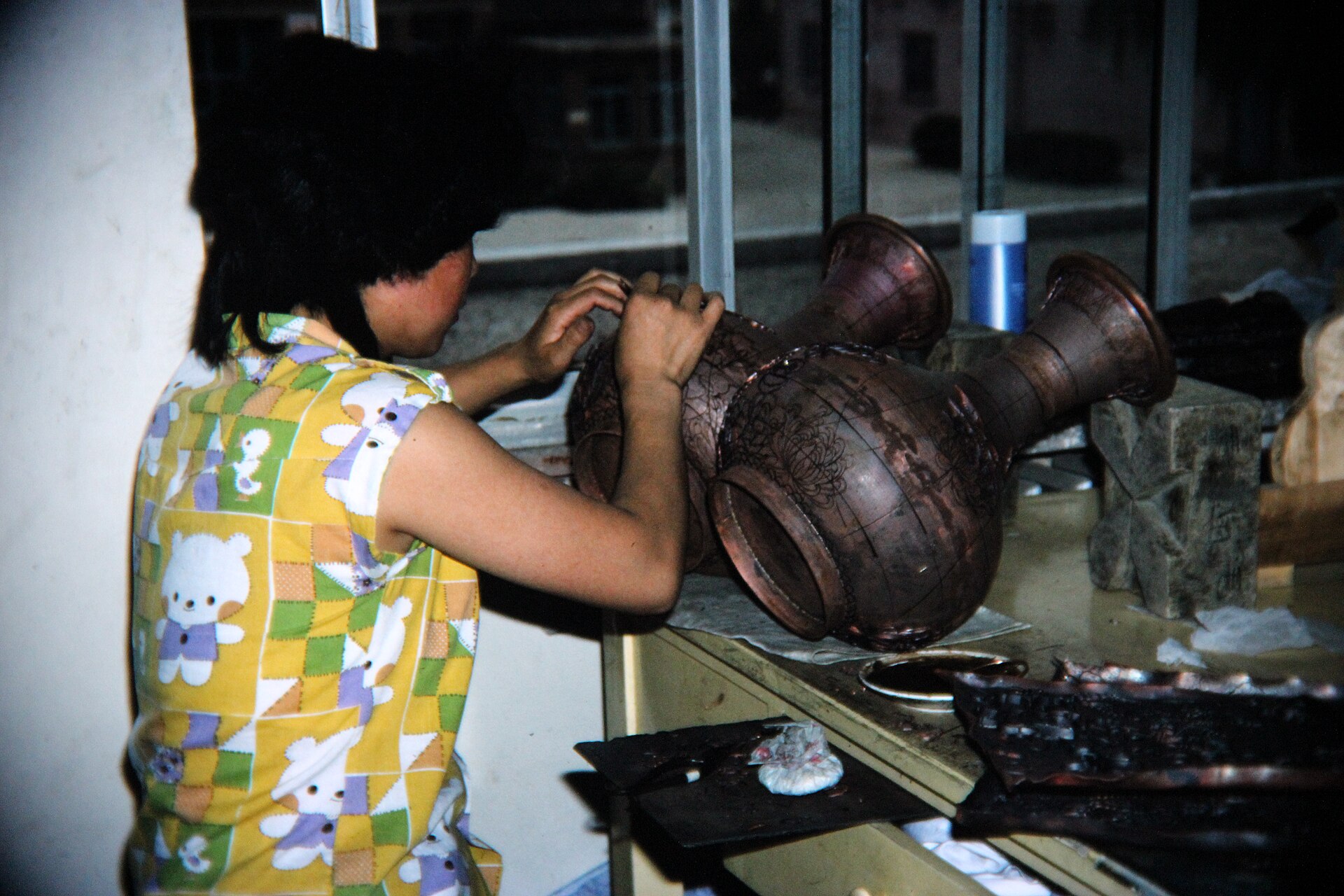 Beijing · DoBeijing Souvenirs Worth the Suitcase Space: Counter Pastries, Jasmine Tea and Folk CraftSkip the vacuum-packed duck. What Beijing people actually give each other is a box of counter pastries, tea chosen by drinking it, and one small piece of folk craft with a maker's name attached — here is how to buy all three like you mean it.Reference ~
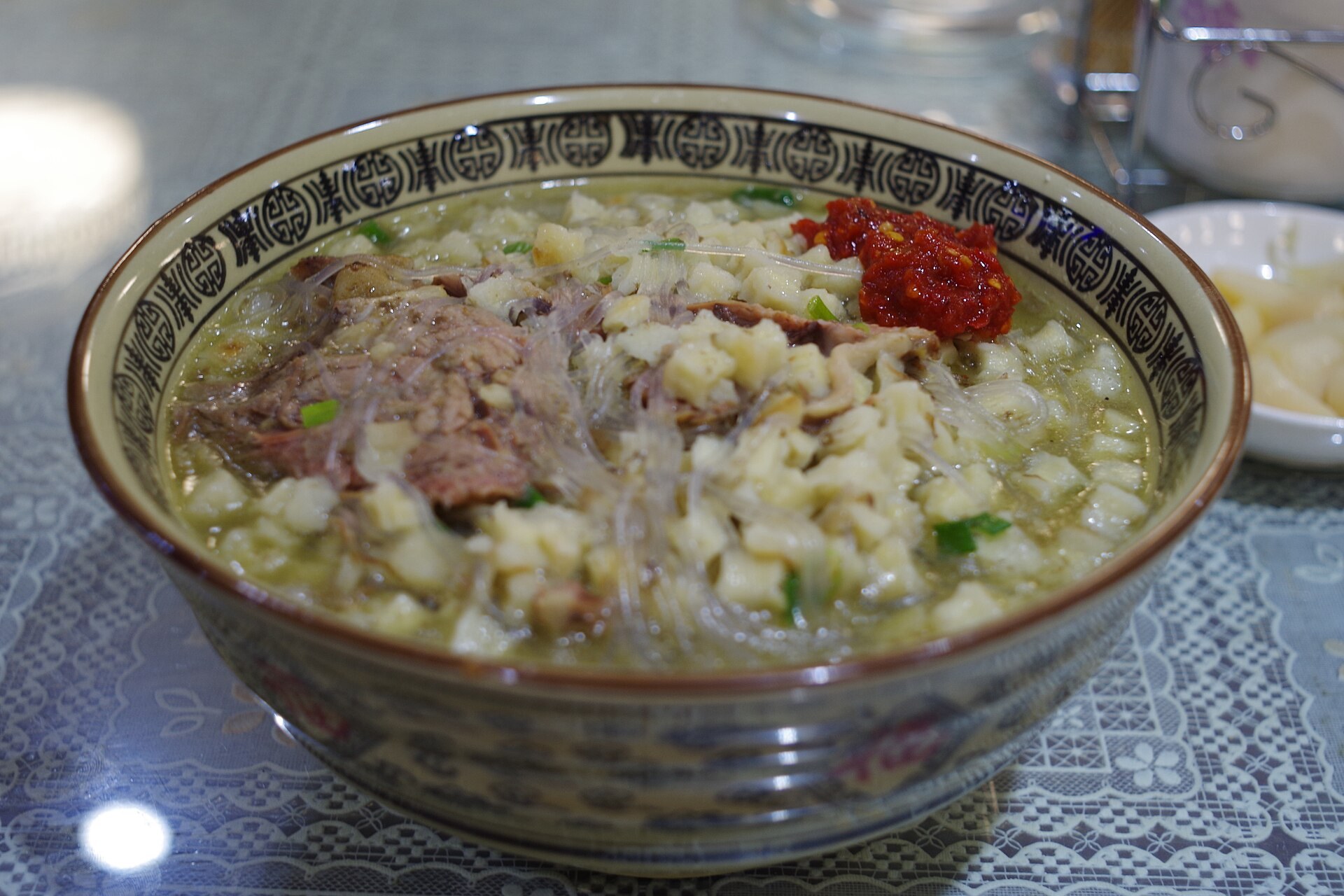 Xi'an · DoXi'an Food Guide: Tear Your Own Bread, Then Trust the Back StreetsRoujiamo, hand-torn paomo and belt-wide noodles — Xi'an food is carb theatre with a Muslim-quarter heart, and the best bites sit one street behind the famous one.Reference ~
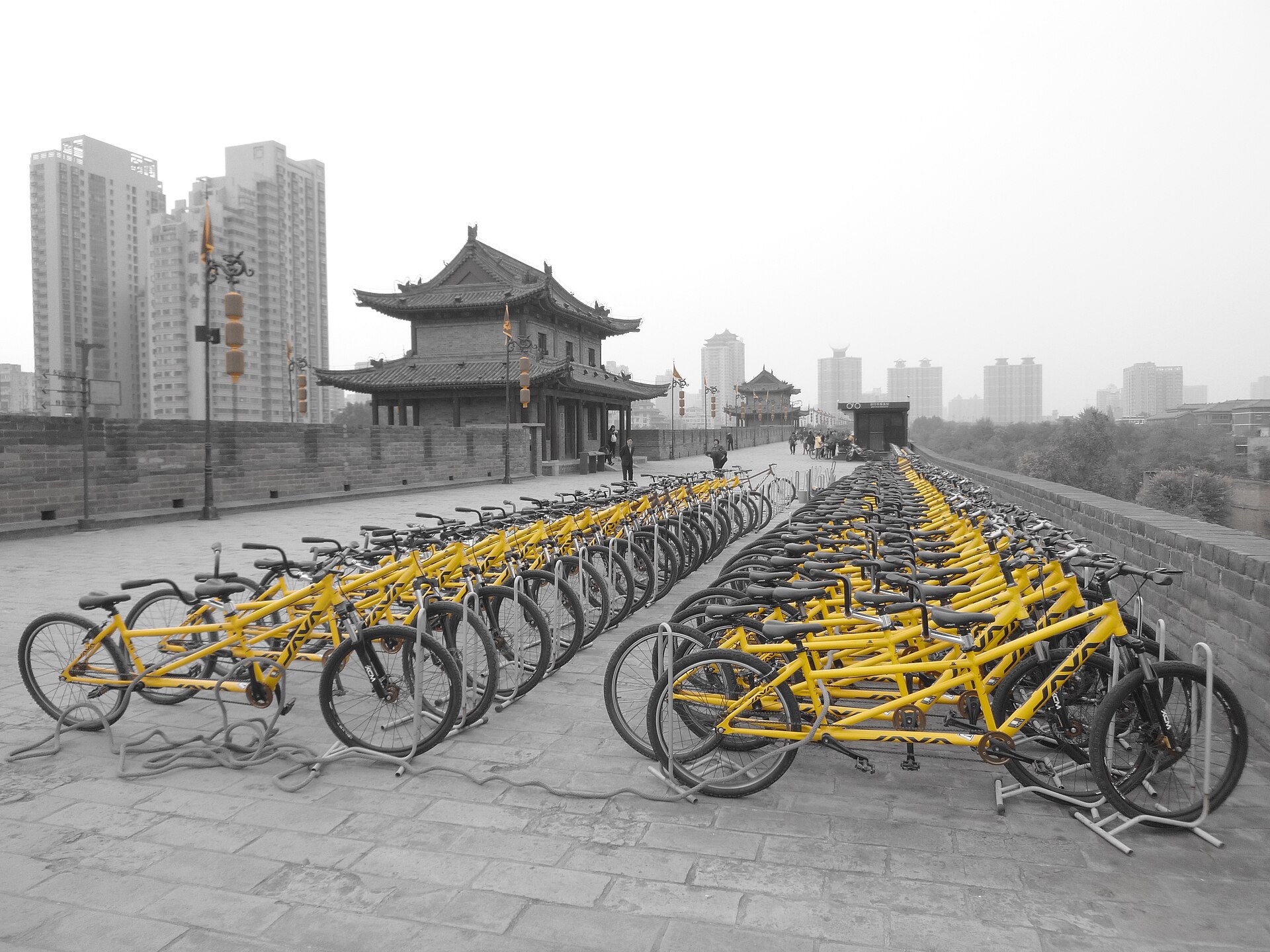 Xi'an · DoXi'an City Wall and Muslim Quarter: Ride the Ramparts, Then Graze DownhillA full 13.7 km bike loop on top of a Ming-dynasty wall at golden hour, then down the gate and into the Quarter's real food street — one evening, two Xi'ans. A slower daytime alternative threads the calligraphy lanes beneath the South Gate on foot.Reference ~
08 · SOURCES
Sources and status
Prices, schedules and booking channels change. Recheck the details that matter before you travel.
- UNESCO — Chinese shadow puppetry (Intangible Cultural Heritage listing)VerifiedInscribed 2011 as a performance tradition; cited for the craft's status, not as a mark on retail goods
- Shaanxi History Museum (official site)Reference ~The institution whose collections drive much of the city's museum design — the reference point for institution-backed, accurately described design goods
- US Customs and Border Protection — food and agricultural items for travellersVerifiedDeclaration duties and restricted categories; other destinations run their own equivalent rules
- Dianping (Xi'an food shops and specialty retailers — local demand signal)Reference ~Local review patterns for working food shops; directional signal only, no rankings reproduced