
Chongqing Jiangbei Airport passenger guidance recommends reaching the airport two hours ahead of a domestic departure, and somewhere between two and a half and three hours ahead of an international or regional one; airline check-in and boarding cutoffs sit inside that window, so plan an arrival target, not a cutoff
Checked October 2026GUIDES / ITINERARIES
Chongqing on Departure Day: Wulong, Dazu, or Stay in the City?
Your flight leaves tonight and the karst bridges are calling. The honest answer is a timetable, not a hope — here is how to work backwards from your departure and decide what actually fits.
City Chongqing10 min read7 facts labeledChecked 2026-10-30
01 · IN BRIEF
The suitcase is already by the door
Seven in the morning, hotel lobby in Jiefangbei. Your suitcase stands by the door, your boarding pass says 21:40, and a driver is messaging you the sentence every departure-day traveller wants to hear: Wulong and back, no problem. Outside, Chongqing is doing its morning trick of being several cities stacked on one hillside. The karst bridges are real, the photos are real, and the flight is also real — which is why the next twelve hours will be decided by arithmetic, not enthusiasm.
An ordinary day trip forgives a slow lunch, a missed bus, a scenic area that runs long. A flight day forgives none of it. The question is never how far Wulong or Dazu is from Chongqing; it is how long the whole chain takes, from the last viewpoint, through the scenic-area exit, the station or the car, the luggage question, and the final run into Jiangbei Airport. This guide builds that chain link by link, shows you the point where the honest answer flips from yes to no, and gives you a city route worth having when it does.
02 · SEE IT
Departure day, read by flight time
- Morning departure — sightseeing is already over: breakfast, bags, airport. Wulong and Dazu belong to a different day of the trip
- Afternoon departure — one compact central walk with a clean exit, an early meal, then bags and the airport run
- Late-evening departure — a regional trip enters the conversation, but only when every return stage is confirmed, not estimated
- The deciding equation — latest leave time = flight departure, minus airport buffer, minus the full return journey, minus the luggage detour, minus the scenic-area exit, minus contingency
- Stage card — Airport buffer: the time you intend to be inside the terminal, set by airport guidance and your airline, not by optimism
- Stage card — Scenic exit: last viewpoint to the confirmed pickup point, including in-park shuttles, walking and queues
- Stage card — Return journey: pickup point to departure terminal, with waiting, station changes and the airport leg counted
- Stage card — Contingency: minutes that belong to the delays you cannot name yet; they are not a bonus stop
03 · TRY IT YOURSELF
Plan it like someone who has missed a flight before
Your ticks stay on this page only. No account or personal data is sent.
04 · THE PROOF
The facts this guide leans on
Wulong's karst landscapes belong to the World Heritage property called South China Karst, whose listed features include the great natural bridges — the designation explains why the place matters, and says nothing about how fast a visitor route can be completed
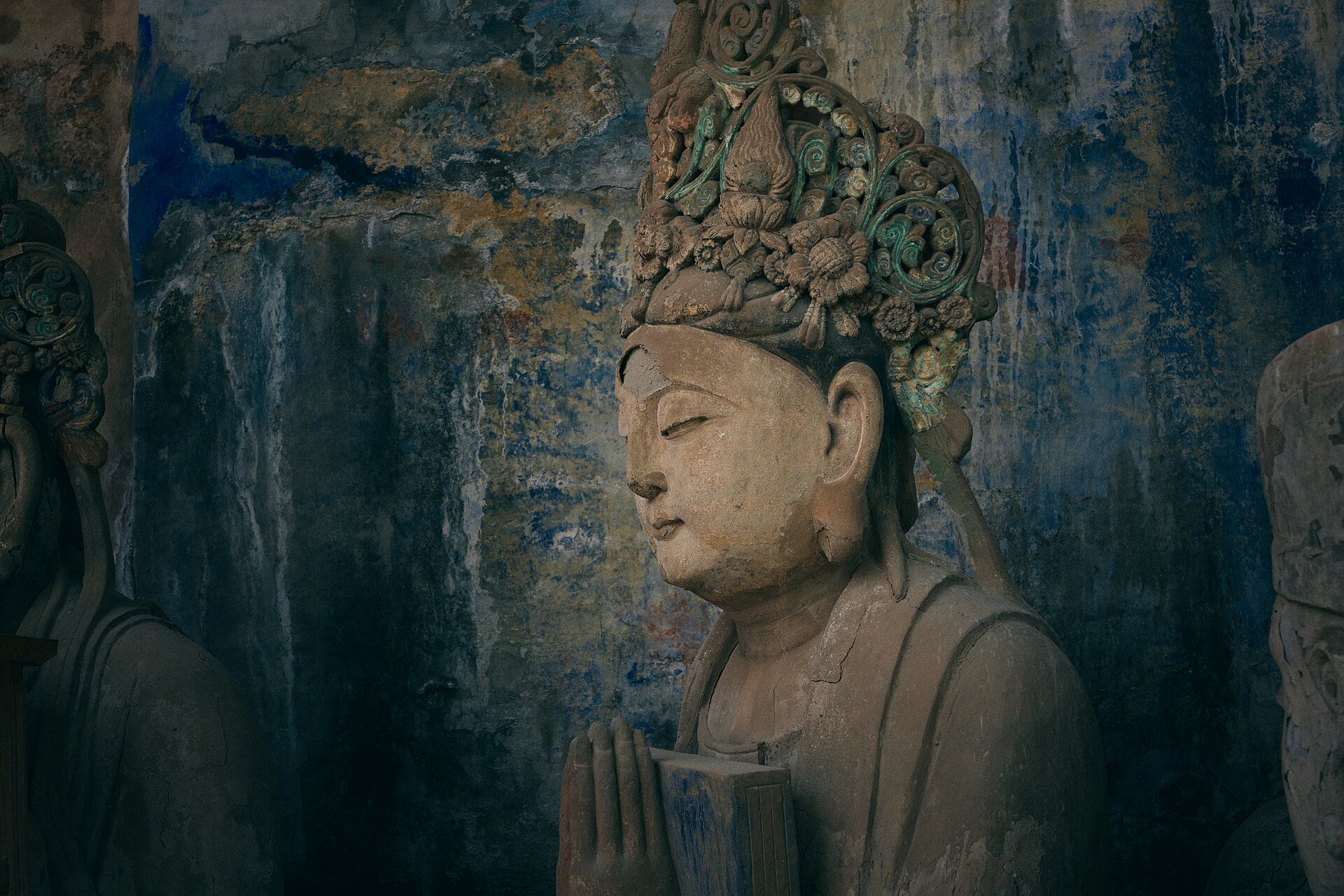
Checked October 2026UNESCO's Dazu entry describes carvings spread across several separate areas of the county, and the destination name alone does not point to one shared gate or one shared pickup point
Checked October 2026A Three Natural Bridges visit is a chain, not a single ride: station-to-visitor-centre transfer, in-park scenic transport, a walking route, and an exit connection — and every link needs a plan in both directions
Checked October 2026A single-site Dazu visit needs a shorter chain of shuttles and transfers than an itinerary stitching together several Wulong areas, which lowers the arithmetic risk without removing it; the chosen site still needs its own entrance, walking route and pickup confirmed
Checked October 2026A booked car that skips the city entirely, heading from the scenic gate straight to the terminal, removes one connection — but not the need for a realistic pickup time, confirmed space for the group's luggage, and a margin for road conditions
Checked October 2026Products sold locally as a Wulong or Dazu day trip are commonly quoted to a city return point rather than an airport terminal; the endpoint of the quoted route is the detail that decides whether it serves a flight day at all
Checked October 202605 · STEP BY STEP
The reverse timetable, step by step
- Step 1 — Fix the airport arrival target before anything else
Write the flight down in full: when it leaves, which airline, which terminal, and whether it counts as domestic or international/regional. Then set the moment you intend to be standing inside that terminal, using the airport's own guidance — two hours for a domestic departure, stretching to between two and a half and three for international or regional ones — tempered by your airline's current instructions. Everything else in this guide is subtracted from that line. Travellers who start from the attraction and reason forwards almost always discover the constraint at the wrong end of the day, when the only remaining variable is panic.
- Step 2 — Fill in the worksheet, and respect the blank cells
Six rows decide the day. The scenic exit: everything between the final gallery or viewpoint and the place your pickup is confirmed for, counting walking, in-park shuttles and queues. The return journey: pickup point to your departure terminal, counting waiting time, station changes and the final airport leg. The luggage detour, if your bags are not already with you. The airport buffer from Step 1. Contingency: a block of minutes reserved for delays you cannot yet name. And finally the leave-by cutoff those rows produce — the latest moment you walk away from the last viewpoint. A row you cannot fill is not a zero. It is an unresolved risk, and the correct response to an unresolved row is the city plan, chosen early and without regret.
- Step 3 — Choose real services, not average durations
If the return runs on rails or a scheduled coach, start from an actual departure on your actual date whose full onward chain reaches the terminal before your target, then work backwards from its boarding deadline, adding entry checks and waiting. Subtracting a generic driving time from your flight creates a number, not a service — the timetable may simply not contain the connection your arithmetic assumes. The same discipline applies to a booked car: the plan is the named pickup point, the named terminal and the agreed time, not the phrase day trip in a listing title.
- Step 4 — Stress-test Wulong honestly
Wulong earns its scrutiny. Between the railway station and the famous bridges sit a transfer to the visitor centre, scenic-area transport, a walking route through the karst, and an exit that must happen in reverse with the same links at the end of the day when you are tired. For a flight day, cut the itinerary to a single core attraction — the Three Natural Bridges alone — and refuse the gravitational pull of adding the fissure gorge or Fairy Mountain because you are already out there. Even that single-attraction version is conditional: it proceeds only if the completed worksheet holds, and it keeps a live exit clause — cancel the whole outing at breakfast if overnight weather, changed access or a broken return connection says no.
- Step 5 — Stress-test Dazu the same way
Dazu looks simpler and mostly is — one focused carving site, fewer shuttle stages. Simpler is not the same as safe. Commit to Baodingshan or Beishan first, because the two hills differ in entrance, walking route and pickup geometry. Confirm the precise visitor entrance and where the car or station transfer collects you afterwards. If you are hiring a driver, ask whether the route runs directly from your chosen hill to Jiangbei Airport or loops back through central Chongqing, and make the answer part of the booking, not a hope. If the first site finishes early, the spare minutes belong to the return, not to a second carving area added on impulse.
- Step 6 — Lock the luggage plan in writing
More departure-day trips fail on bags than on scenery. There are exactly three sound arrangements: the luggage rides with you all day, which requires confirmed vehicle space or workable storage at the attraction end; the luggage sits in confirmed storage you can access on the return path without a detour; or the luggage waits at the hotel and the collection is written into the timetable with its own minutes, its own traffic allowance, and a route that passes the hotel on the way to the airport rather than doubling back. What is not an arrangement is the assumption that you will somehow swing by. Swinging by is a stage, and stages get counted.
- Step 7 — Run the city fallback like it was the plan all along
For an afternoon departure, the fallback is genuinely good: a short Jiefangbei walk, one nearby meal, bags collected at the planned minute, airport at the planned hour. With a later flight you may earn one extra central stop, but only while the bag pickup and the run to the airport both stay simple. Build the walk around wherever your bags are, especially if the hotel sits outside the centre. Fix the cutoff time before the first viewpoint, not during the last one, and when something changes, remove a stop instead of quietly borrowing from the buffer. The travellers who enjoy departure day are the ones who chose the shorter plan on purpose at breakfast, not the ones who were forced into it at the scenic-area gate.
- Step 8 — Write it down, share it, and let the paper decide
Before you leave the hotel, turn the worksheet into one screenshot: flight, arrival target, pickup point, leave-by cutoff, luggage arrangement. Send it to the driver, leave it with the hotel desk if they are holding bags, and keep it on the lock screen of every phone in the group. This is not bureaucracy; it is how the decision survives contact with a beautiful afternoon. At the scenic area, nobody re-litigates arithmetic they agreed to at breakfast — the cutoff on the screenshot is the plan, and the person who wants to extend the day has to argue with the numbers, not with the most cautious traveller. Groups that skip this step discover at the second viewpoint that half the party was working from a different, imaginary timetable.
06 · WHERE THIS BREAKS
Where the advice stops working
A morning flight ends the discussion
No arrangement of shuttles, drivers or optimism turns a morning departure into a sightseeing day. Breakfast, bags, airport. Spend the energy on a better final evening in the city instead.
Contingency is not a slush fund
The spare minutes in the worksheet exist for the return leg's unknowns: a slow shuttle, a crowded station, weather on the road. Spending them on one more viewpoint converts an ordinary delay into a missed flight, and the conversion happens silently, one small decision at a time.
Fewer stages is not zero stages
Dazu's simpler geometry tempts travellers to skip the worksheet entirely. A single carving site still has an entrance, a walking route, a pickup and a road or rail journey between it and the terminal, and each one can slip independently.
A quote can end at the wrong place
The classic failure is a fairly priced, perfectly real day-trip product whose route terminates back in central Chongqing while your flight leaves from Jiangbei. Always compare the product's endpoint with your terminal before comparing prices.
Confirmed plans can still be voided on the day
Weather, scenic-area access changes or a cancelled service can break a worksheet that was sound the night before. That is why the abandon option must survive until the moment you actually leave the city — and why nothing on a flight day should be prepaid beyond recovery.
If the worksheet will not complete, it already answered
An unfilled row is information: the trip, as specified, does not fit the day. Treat that as the plan working correctly, take the city route, and give Wulong or Dazu the full free day both places deserve.
A group moves at its slowest walker's pace
Every stage in the worksheet stretches with company: boarding takes longer, shuttles fill, one traveller's photo stop becomes everyone's. If your party includes small children, older relatives or anyone managing mobility on Chongqing's stairs, pad the scenic-exit row honestly — the mountain city's terrain does not negotiate.
07 · KEEP READING
Keep the trip moving
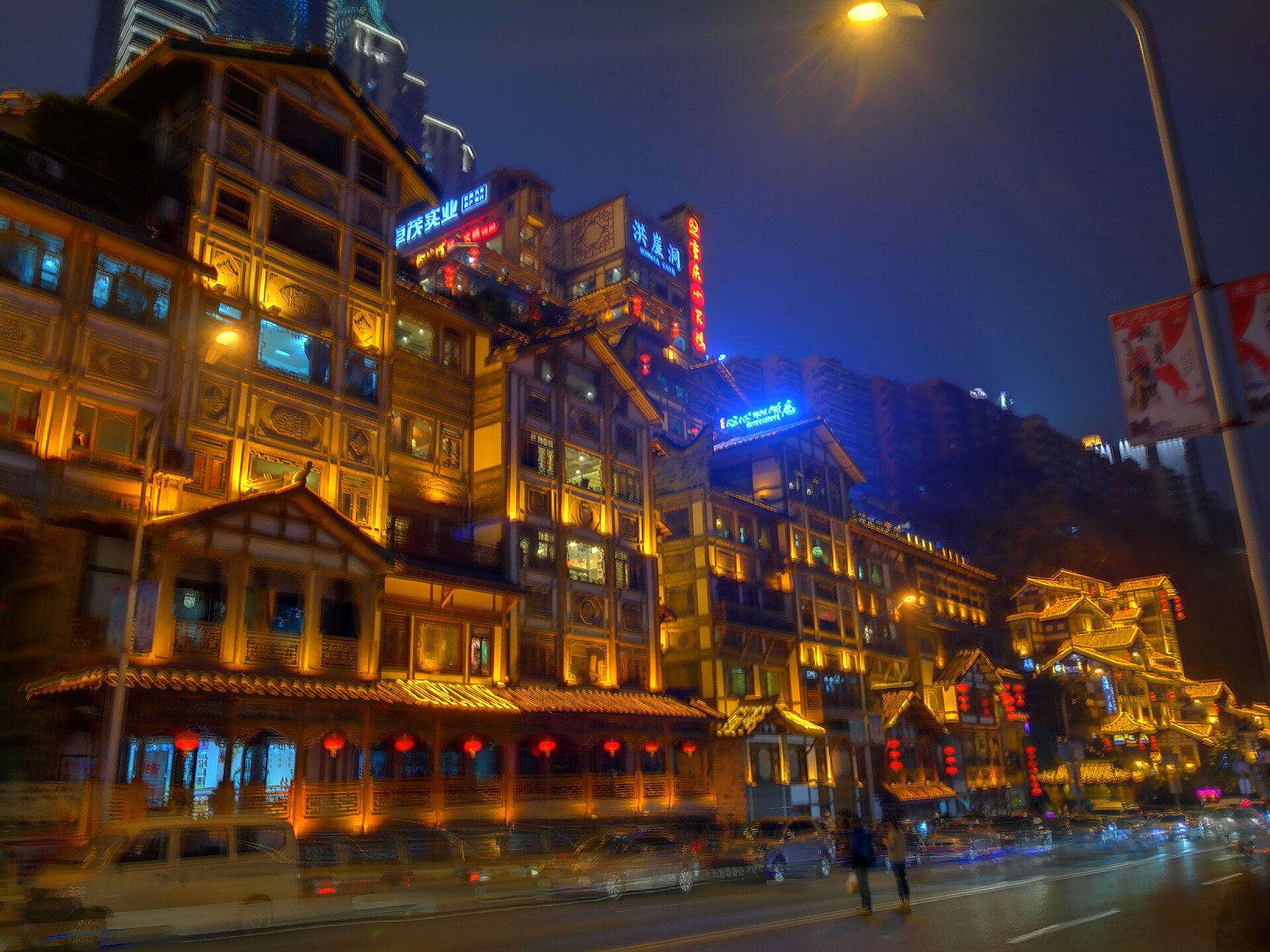 Chongqing · DoChongqing First Time: Learn the Levels Before the LandmarksA city where the ground floor may be the eleventh floor, where your hotel can sit above the street your taxi is on — read the terrain first and Chongqing turns from a maze into a machine you can operate.Verified
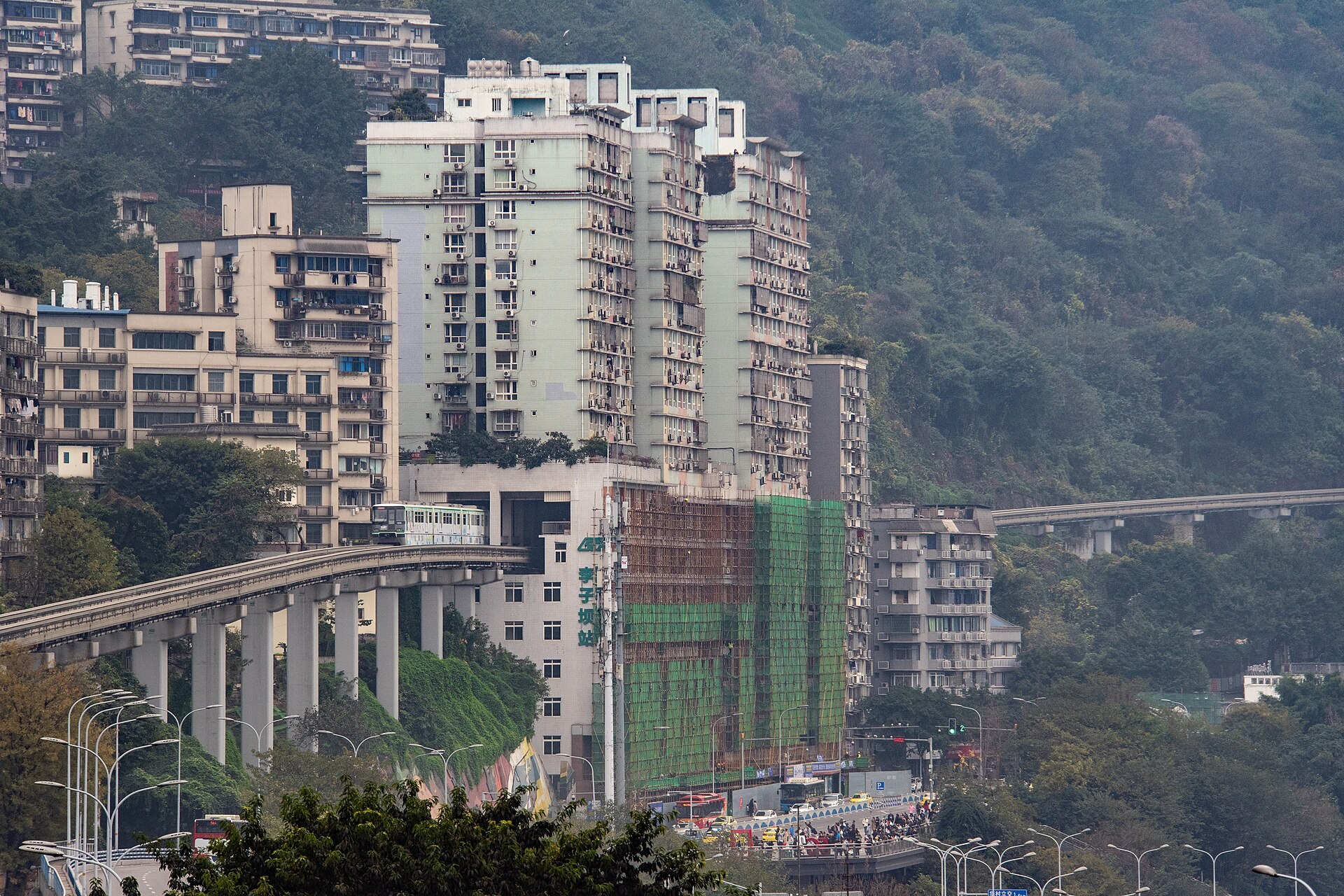 Chongqing · DoChongqing in 2 Days: Walk Downhill, Ride Through the BuildingIn Chongqing you plan by floor, not by distance: a monorail through a living room block, one honest climb, a lit cliff after dark, and stairs treated as the sightseeing itself.Reference ~
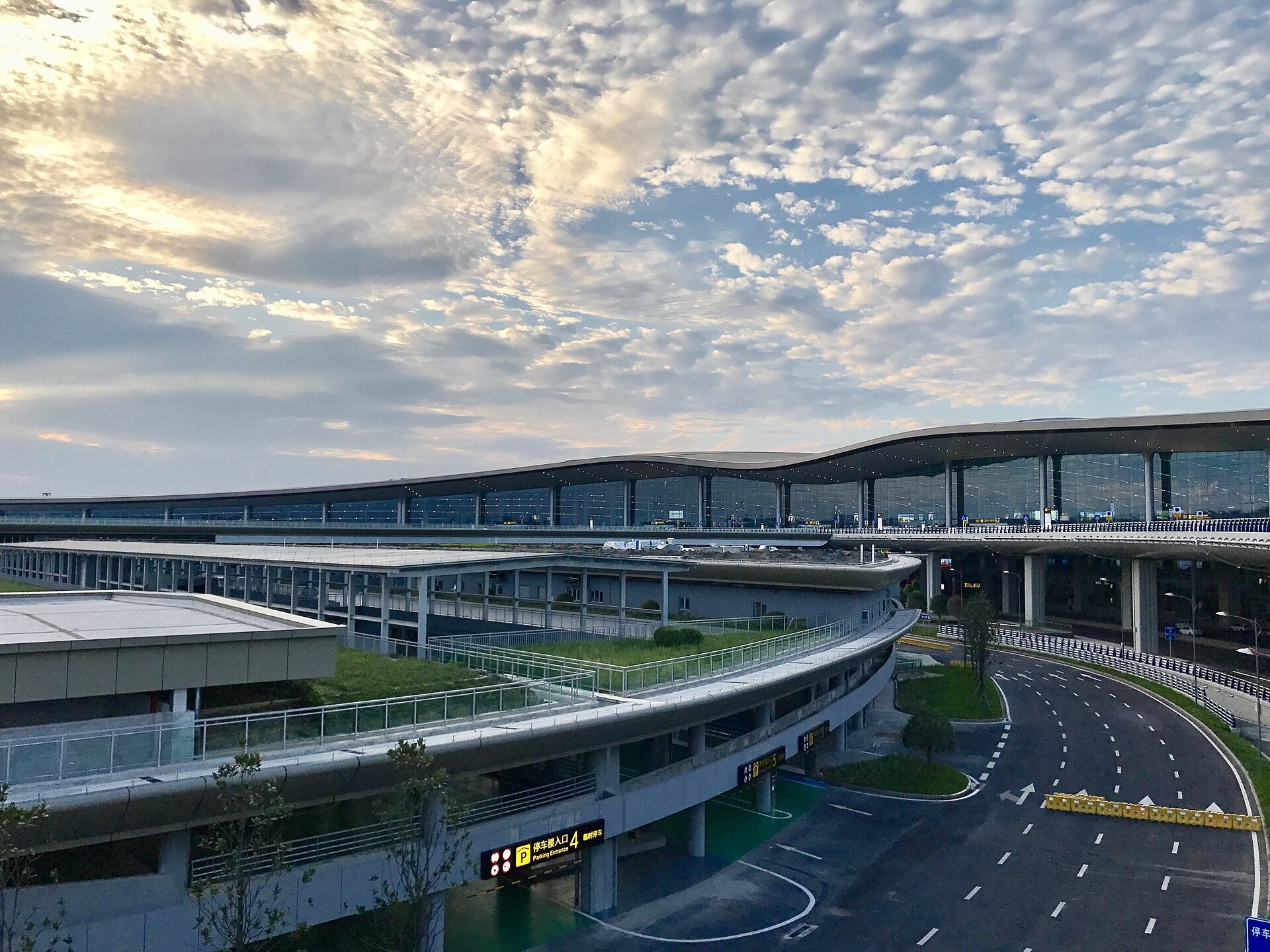 Chongqing · PrepareArriving in Chongqing: Jiangbei Airport, Three Stations with One Name, and Moving in a Vertical CityOne airport, three railway stations with one city name, and a map that only tells half the story — the vertical half is the one that matters.Reference ~
08 · SOURCES
Sources and status
Prices, schedules and booking channels change. Recheck the details that matter before you travel.
- UNESCO World Heritage Centre — South China Karst (Wulong)VerifiedHeritage significance of the Wulong karst and its natural bridges; no visitor timing taken from this source
- UNESCO World Heritage Centre — Rock Carvings at DazuVerifiedConfirms the carvings are spread across multiple areas including Baodingshan and Beishan
- Dianping — Chongqing (day-trip and private-car listings, local demand signal)Reference ~Listing patterns for local day-trip products and their return endpoints; directional signal only, no schedules relied on