
Chongqing is built across steep hills at the meeting of the Yangtze and Jialing rivers, and its addresses are effectively three-dimensional: entrances, roads and metro exits serving the same building or station can sit on entirely different levels, so a map pin fixes position but not height
Checked October 2026GUIDES / ITINERARIES
Chongqing First Time: Learn the Levels Before the Landmarks
A city where the ground floor may be the eleventh floor, where your hotel can sit above the street your taxi is on — read the terrain first and Chongqing turns from a maze into a machine you can operate.
City Chongqing12 min read7 facts labeledChecked 2026-10-30
01 · IN BRIEF
The lift opens on the street — eleven floors up
You follow the blue dot. It says forty metres. You are standing on a plaza in front of your hotel, suitcase in hand, and the dot insists the entrance is right here — except the building in front of you is a blank retaining wall topped by a road, and somewhere above your head, traffic is driving across what your map calls ground level. A delivery rider watches you rotate in place, points at a lift lobby you walked past twice, and says the kindest sentence in Chongqing: 'The lobby is upstairs.' Eleven floors up, the lift doors open directly onto a street, with taxis, noodle shops and a woman walking a dog, all of it level, all of it normal. Nothing was wrong with your map. It simply only knew two of the city's three dimensions.
That is the whole first-timer's lesson, and this guide is built on it: in Chongqing you do not navigate by distance, you navigate by level. Two points that touch on a map can be separated by a cliff face, a staircase, a tunnel or a bridge deck; two points that look far apart can be one lift ride from each other. Plan the first days around that physics — walk downhill on purpose, treat metro exits as destinations in themselves, choose one night view and commit to it, and let hotpot happen near where the day ends. Do that, and the city's famous density stops being exhausting and starts being the show.
02 · SEE IT
Three days, arranged by altitude
- Day 1 — Orientation at Jiefangbei, then one older hillside corridor walked deliberately downhill, learning the city's levels on foot
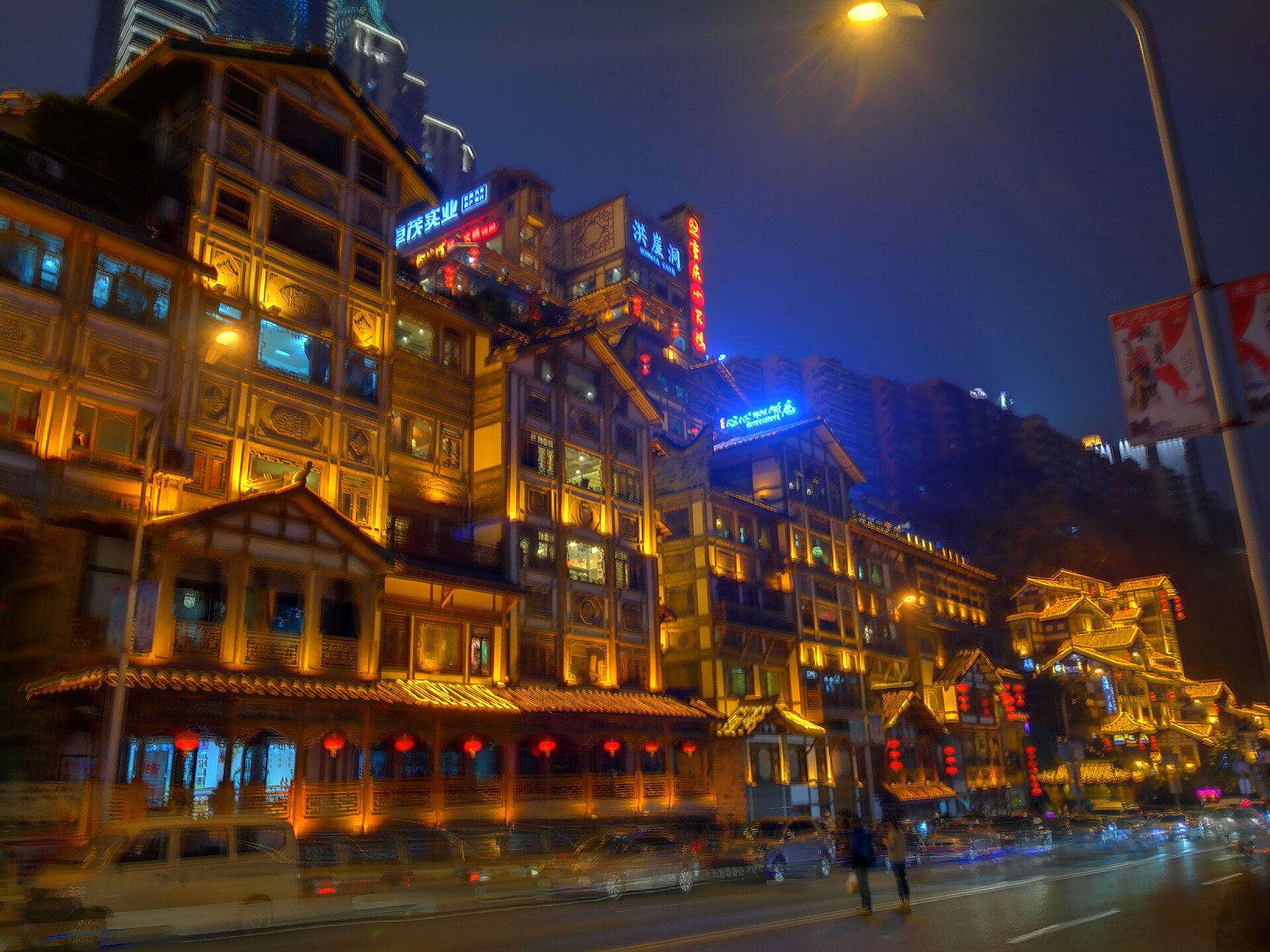
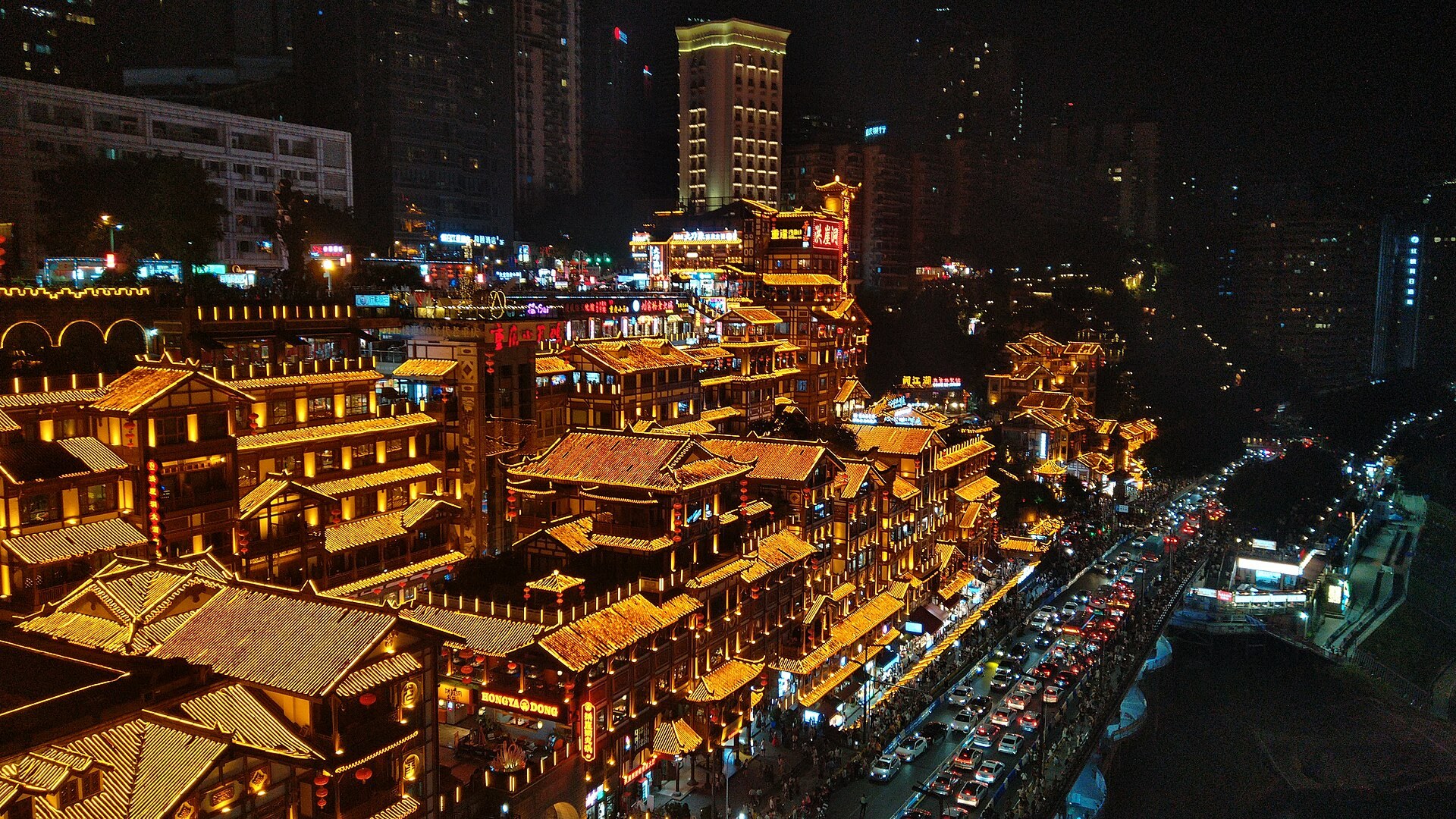
- Day 1 evening — One night view, close by: Hongya Cave read from outside, across the road or from the bridge side
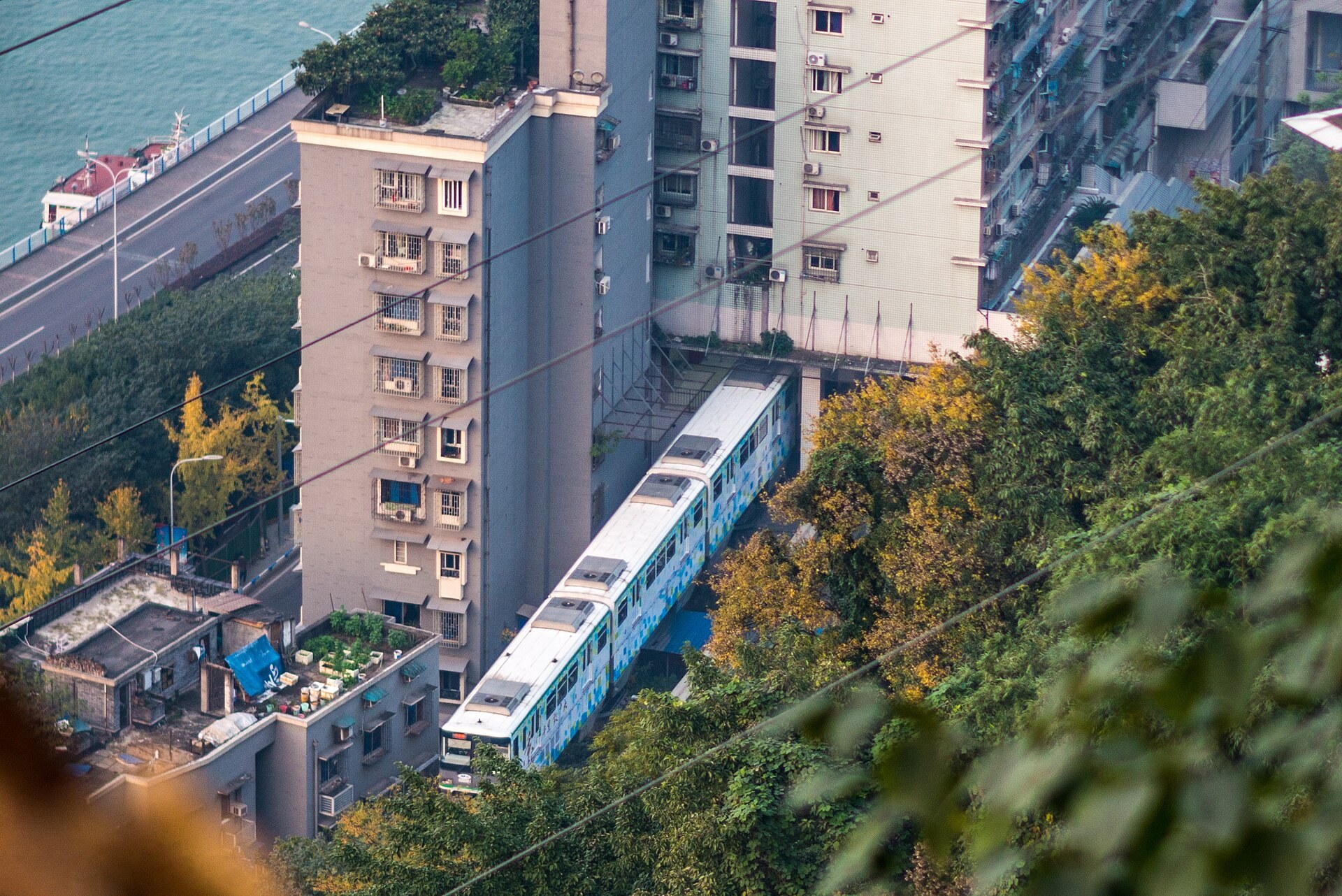
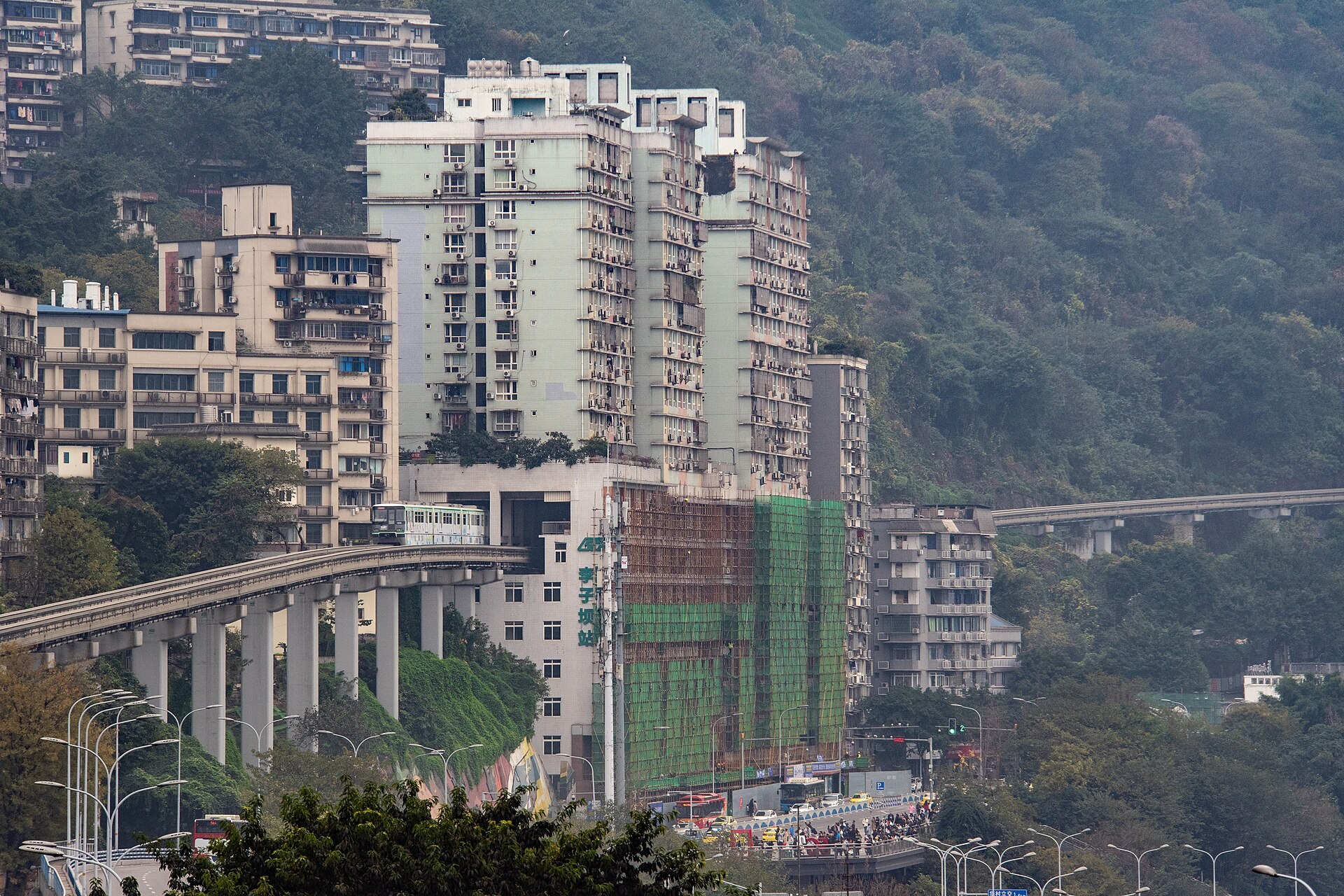
- Day 2 — Liziba's through-building train, a museum for the region's story, and a riverfront or Nan'an block across the water
- Day 2 evening — Hotpot near where the day ends, or a short river cruise if the weather and the schedule cooperate
- Day 3 — One regional anchor as a full day: Wulong's karst bridges or Dazu's carved Buddhas — or a slow recovery day in the city
- Movement pattern — Metro for the long, predictable legs; cars for the final climbs, the luggage and the tired
- Energy pattern — Never two strenuous days back to back: stairs are this city's real opening hours
03 · TRY IT YOURSELF
Ground rules for a vertical city
Your ticks stay on this page only. No account or personal data is sent.
04 · THE PROOF
The facts this guide leans on
The Liziba monorail, where a Chongqing Rail Transit Line 2 train passes through a residential building, is a working piece of transport infrastructure rather than a constructed attraction — the station and the block were designed together
Checked October 2026Hongya Cave, the cliffside complex above the Jialing riverbank, reads most clearly from outside — across the road, from the Qiansimen bridge side or from the water — while its interior levels function mainly as a crowded food and souvenir stack
Checked October 2026Two full days absorb the central mountain-city experience and one night view; three days is the working balance, buying room for Wulong, Dazu or a deliberately slower city day; and stair load, not sightseeing count, is the honest measure of a Chongqing itinerary
Checked October 2026The Dazu rock carvings, a UNESCO World Heritage site of Buddhist, Taoist and Confucian cliff sculpture, are the art-history regional trip; Wulong's karst — natural bridges, caves and gorges — is the landscape one. Both consume a full door-to-door day from the city
Checked October 2026Yangtze cruises are journeys of several days, embarking or disembarking at Chongqing, never a day trip to insert into a city stay; the short evening river cruises inside the city are a separate product with their own routes and weather limits
Checked October 2026Two hotels sharing one central district name can demand completely different final approaches — a panoramic room in Jiefangbei may still end every return with an unplanned climb, which is why entrance level, taxi access and lift provision outrank the district label
Checked October 202605 · STEP BY STEP
How the first trip fits together
- Step 1 — Learn to read levels before you book anything
Before choosing a single sight, change the question you ask of every address: not 'how far?' but 'at what height, and entered from where?' An address can look adjacent on the map and be practically remote — perched over a retaining wall, tucked under an expressway, or reached only by a stair network of a hundred steps. Two exits of the same metro station can open onto different streets at different elevations, and neither is the wrong one; they serve different Chongqings. For critical arrivals, save the exact exit, a photo clue or a street-level landmark, and when you are lost, ask which road or which level reaches your destination, not merely which direction. Once that habit is in place, the rest of the city planning becomes ordinary.
- Step 2 — Choose the base by its front door
Jiefangbei and Xiaoshizi put you in the dense centre with river access and the thickest transport web; Nan'an, across the water, trades a little convenience for calmer nights and the classic postcard view back at the peninsula; Guanyinqiao is the eating-and-nightlife quarter with a distinctly local, commercial buzz; Shapingba suits rail-linked or university-side plans. But the district is only the shortlist. The booking decision is the building: a useful metro exit, a lobby your suitcase can roll into without meeting a staircase, legal taxi pickup at the door, lifts that actually serve your floor, and quiet sleep above the entertainment streets. Read recent reviews for entrance clues — guests complain about access with unusual precision — then ask the hotel itself, in Chinese, exactly where cars stop and which floor the lobby sits on, before arrival day.
- Step 3 — Walk one hillside corridor, downhill, on purpose
Devote the first day's walk to a single older corridor of the peninsula — the stepped lanes and hillside neighbourhoods where housing, shops, clinics and bus stops are stacked into the slope — and walk it in the forgiving direction: start high, drift down, let gravity do the work your calves would otherwise do twice. This is the day the city stops being a screensaver and becomes legible: you will see how a 'street' can run across a rooftop, why a shortcut on the map is a staircase in person, and how daily life solved terrain long before visitors arrived with cameras. Keep it to one corridor. The classic first-trip error is repeating a steep route in both directions, or stitching three hillside walks into a single heroic day that quietly ruins the next one.
- Step 4 — Cross the water for the second texture
Day two changes the angle. Ride the metro to Liziba and watch a train thread a residential tower — engineering as urban folklore — then give the city a narrative at the Three Gorges Museum, where the region's river history and wartime-capital years explain why Chongqing looks and behaves as it does. After that, take one river perspective seriously: cross to the Nan'an side for the long view back at the peninsula's stacked towers, or walk a riverfront stretch and read the bridges — Chongqing's bridges are its true boulevards. Move between these clusters by metro and save your legs; the mistake is knitting them together on foot across levels because the map made them look adjacent.
- Step 5 — Eat where the day ends
Hotpot is the meal this city is famous for sharing, and it deserves one proper evening: agree the broth and both spice settings before ordering, keep the raw-meat chopsticks out of the cooked food, and say any allergy out loud in written Chinese if needed. But hotpot should not be every meal. Chongqing xiaomian — small bowls of noodles with a serious chilli-oil dressing — is the city's other daily ritual, best at breakfast or as the light counterweight lunch, and the small-dish restaurants near your route will feed you better than a famous name across the river followed by a climb. Site your restaurants at the end of the day's movement, when everyone is most ready to sit down; a celebrated shop, a bridge crossing and a forty-minute wait is a poor trade at eight in the evening. After a rich late dinner, protect the next morning.
- Step 6 — Commit to exactly one night view
Chongqing after dark is the city's headline, and the way to ruin it is to collect it. There are four honest perspectives: among the buildings at Jiefangbei, inside the lights; from across the Jialing, watching Hongya Cave glow on its cliff; from the Nan'an bank, taking in the whole peninsula; or from the water itself on a short evening cruise between the bridges. Choose one per night, eat dinner within the same few streets, and check the practicalities on the day — lighting hours, crowd controls at the famous viewpoints, the last useful metro, and the weather, which can close the view entirely in fog or rain. A short, coherent evening beats a four-hour relay of queues, bridges and transfers in search of a better angle on the same lights.
- Step 7 — Give the regional day its full weight
If a third day exists, spend it whole. Wulong is the landscape choice: karst natural bridges, cave systems and gorges, reached by train or road and walked substantially once there — a full outdoor day with weather in it. Dazu is the mind's choice: centuries of Buddhist, Taoist and Confucian carving in one hillside gallery, closer in spirit to a museum that happens to be outdoors. Both are door-to-door undertakings; the train or the highway is only the middle of the journey, not the journey itself. Book the anchor first, keep the previous evening early and the following morning loose, and resist the phrase 'quick trip out' — in this terrain there is no such thing. If the group is travelling with older relatives or small children, take the gentler version of either, lean on a vehicle for the final climbs, and let a recovery city day be a legitimate plan rather than a failed one.
06 · WHERE THIS BREAKS
Where the plan breaks
The wrong level is the default error
Every Chongqing failure mode is the same one wearing different clothes: the hotel booked by district with a staircase for a driveway, the driver circling one level below you, the 'five-minute walk' that is actually a cliff path. You cannot eliminate it, only price it in — exits saved, entrances confirmed, buffers on arrival day, and a standing rule that the first attempt at any address is reconnaissance.
Stairs are a budget, and rain spends it faster
Count stair load the way you count money. Stack one long hillside walk, an evening in the night-view crowds and Wulong at dawn, and even a fit group will crack, let alone grandparents. Wet weather multiplies the cost: polished stone, steep lanes and smooth station floors all turn slippery. Shoes with grip, a seated museum block between climbs, and no two heavy days in a row are the whole defence.
Viral viewpoints are gateways, not the city
Hongya Cave, Liziba and the cableway are the city's postcards, and each is genuinely worth seeing once. But a trip composed only of photo coordinates will feel thin and strangely exhausting, because each viewpoint sits at the end of somebody else's queue. Use the footage to find the angles, then spend the saved time on a museum, a neighbourhood meal and one unhurried riverbank hour — the parts that explain the pictures.
Operating status changes on the day
Cableway running, museum opening, cruise sailings and regional transport all flex with weather, maintenance and crowd controls. Anything the day depends on gets rechecked through official channels that morning, and anything suspended gets replaced from the same level of the city, not by a scramble across it. A fogged-out night view becomes a hotpot evening; that is a trade this city makes kindly.
Should you add Wulong to a two-day trip?
Only if karst scenery outranks the city itself. Wulong done properly consumes a full day and a meaningful share of your legs; squeezing it into a two-day first visit means seeing Chongqing as a hotel between excursions. With three days it fits cleanly. With two, walk the city well and let Wulong argue for a return trip — it is good at that.
07 · KEEP READING
Keep the trip moving
 Chongqing · DoChongqing Mountain City Walk: Liziba, the Crown Escalator and the Shibati Steps — Mostly DownhillOne ridge-to-river walk through the stacked city: a train through a tower, an escalator instead of a staircase, a square that is somehow the 22nd floor, old-town steps, and two rivers meeting in two colours.Reference ~
 Chongqing · PrepareWhere to Stay in Chongqing: Jiefangbei, Guanyinqiao, Nanbin Road or Eling?Jiefangbei puts you inside the postcard, Guanyinqiao inside local life, Nanbin Road across from the view, Eling inside the old mountain city — and the fog votes on all of them.Reference ~
 Chongqing · DoChongqing in 2 Days: Walk Downhill, Ride Through the BuildingIn Chongqing you plan by floor, not by distance: a monorail through a living room block, one honest climb, a lit cliff after dark, and stairs treated as the sightseeing itself.Reference ~
08 · SOURCES
Sources and status
Prices, schedules and booking channels change. Recheck the details that matter before you travel.
- UNESCO World Heritage — Dazu Rock CarvingsVerifiedListing and description of the Dazu carvings regional anchor
- UNESCO World Heritage — South China Karst (Wulong)VerifiedListing covering the Wulong karst landscape
- Chongqing Municipal People's Government portalReference ~Official city information and visitor notices
- Dianping (Chongqing restaurant reviews and local dining signal)Reference ~Local demand signal for hotpot and noodle shops; no rankings reproduced