
Liziba is a working station on Chongqing Rail Transit Line 2, the city's monorail line along the Jialing River — the train-through-building moment is ordinary scheduled service, not a staged attraction
Checked October 2026GUIDES / ATTRACTIONS
Liziba Monorail: Ride Through First, Photograph Second
The train really does run through the flats — but the good visit is a transport stop, not a photo siege: ride Line 2 through the station, drop to the viewing platform, watch three trains go in, and be on your way inside the hour.
City Chongqing12 min read7 facts labeledChecked 2026-10-30
01 · IN BRIEF
The doors open inside somebody's apartment block
The train slows, the doors sigh open, and for a second nothing about the platform is strange — tiled floor, safety line, a drinks machine doing steady business. Then you look up at the directory and realise the station shares its floor numbering with the flats wrapped around it: you have just stepped off a metro train inside a residential tower, with homes above and below the platform and a kitchen window somewhere over your left shoulder. Passengers stream past without a glance. For them this is Tuesday. For everyone holding a phone, it is the single most Chongqing thing that will happen all trip — a railway threaded through a building because the city ran out of flat places to put either one.
Liziba station, on Chongqing Rail Transit Line 2, deserves its fame, but it rewards a particular kind of visit: short, legal, and done from the train outward. Ride through it first, the way it was designed to be used. Then drop to the public viewing platform, watch a few trains slide into the building, and leave with the engineering understood rather than just photographed. This guide covers the exit logic, the photo routine, the timing, the pairings that keep the stop inside a sensible day — and the handful of mistakes that turn a forty-minute pleasure into a two-hour vertical maze.
02 · SEE IT
The visit in running order
- Ride first — stay aboard a Line 2 train through Liziba for the passenger's-eye pass between the homes
- Exit by the signs — follow the station's current viewing-area signage, not the pin your map app is proudest of
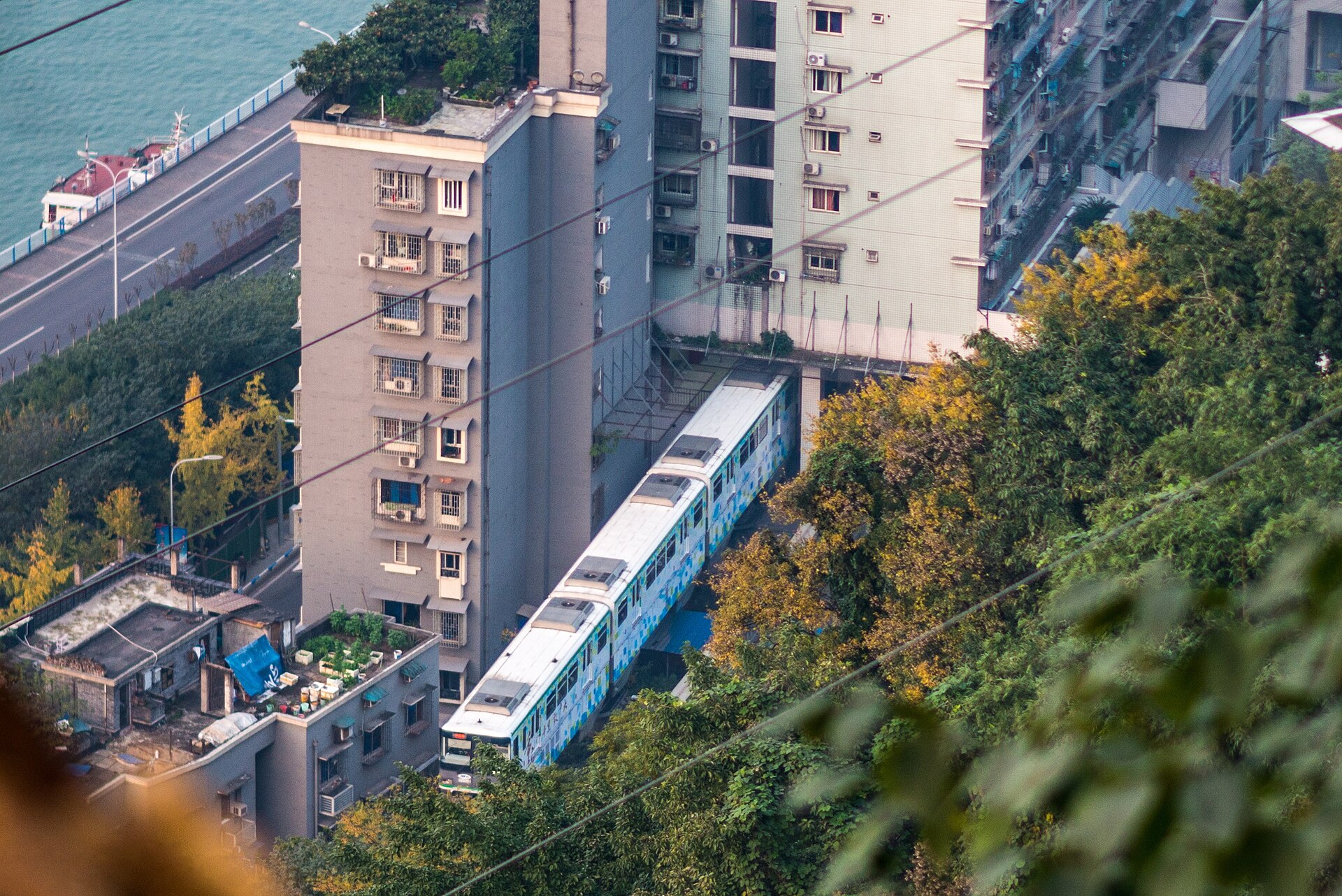
- Platform level — the designated public viewing area sits at street level below the station, positioned for the full building-and-train frame
- Three trains — Line 2 services run every few minutes in normal hours; shoot the second pass, simply watch the third
- Wide, then tight — one frame holding the whole tower and river slope, then a sequence as the nose of the train slides into the opening
- Onward, not back — stay on Line 2 toward the Three Gorges Museum area and let the stop pull your day in one direction
03 · TRY IT YOURSELF
Do it like a local, not like a livestream
Your ticks stay on this page only. No account or personal data is sent.
04 · THE PROOF
The facts this guide leans on
The station and the residential tower were designed and built as one integrated project — the railway did not bore through a finished block of flats, which is why the structure, noise isolation and passenger flow work as calmly as they do
Checked October 2026In the widely reported design, the station occupies the sixth to eighth floors of a 19-storey residential building, with homes above and below and the track passing through a purpose-built opening
Checked October 2026A focused Liziba stop runs 30 to 60 minutes once the exit is known — ride-through, viewing platform, photographs — and stretches mainly when visitors lose time to vertical navigation instead of viewing
Checked October 2026Chongqing's mapping trap is elevation, not distance: a destination pin can be horizontally exact while sitting several storeys above or below the road you are standing on, which is why station signage outranks app directions inside this stop
Checked October 2026The natural onward pairing is along the same line: the Three Gorges Museum area and central riverside districts sit on Line 2's corridor, so Liziba can open a museum-and-river day instead of interrupting one
Checked October 2026There is no guaranteed attraction infrastructure at the viewpoint itself — the commercial offerings around the station change without notice, and a souvenir stand or display pictured in someone's post may not exist when you arrive
Checked October 202605 · STEP BY STEP
The forty-minute visit, step by step
- Step 1 — Arrive the correct way: on the train
Board Line 2 from whichever direction your day is already travelling and stay on through Liziba at least once before getting off. From inside, the moment is subtler and better than the photograph suggests: the train leaves daylight, runs through the building's opening with the platform alongside, and the flats are simply there, metres away, laundry and all. Note which side of the train the platform sits on and where the exit signs point as you pass through — you are scouting your own route. Arriving by car or taxi at the street below skips the whole interior half of the experience and lands you in the crowd with the least context. The ride is not the commute to the attraction. The ride is the attraction.
- Step 2 — Exit by signage, and treat levels as the puzzle
Back at the station, follow the current signs toward the viewing area, and distrust any shortcut that begins with a confident stranger or a map pin. Chongqing's geography means the viewing platform can sit several levels below the platform you arrived on, reached by a specific sequence of lifts, stairs and corridors — a sequence the station signs because it is not guessable. Screenshot the signed route as you walk it. If the party includes children, a stroller or anyone with limited mobility, ask staff for the step-free path at this point rather than discovering the stairs halfway down; the accessible route exists but is rarely the one the crowd is pouring into.
- Step 3 — Work the viewing platform like a regular
The designated platform puts the whole composition in one frame: the tower, the opening at the station level, the train arriving out of the hillside greenery, and the slope down toward the Jialing River. Settle at a stable spot a step back from the front rail — you will hold it for about three trains. Line 2 runs frequently in normal service, so there is no scarcity to fight over: let the first pass teach you the timing, shoot the second, and watch the third with your phone down, because the sound and scale of it never survive into a photograph anyway. One wide frame for the urban context, one tighter sequence for the movement, then step aside and give the rail to the next arrival. Blocking the front row for a fourth identical shot is the one move everyone here recognises and nobody respects.
- Step 4 — Read the building while you are standing there
Spend two of your platform minutes on why this exists. Chongqing stacks its infrastructure because the terrain leaves no choice: rail, road, homes and slope all competing for the same shelf of land above the river. Liziba's answer was to design the station and the flats as a single structure — track, platform and homes engineered together, with the separation and sound insulation that makes it liveable. That is the interesting fact to carry away, and it corrects the viral version: no train bursts through anyone's living room, and residents are neighbours of a station, not extras in one. Photograph accordingly — the building as a whole, yes; close-ups of residents at their windows, no.
- Step 5 — Leave in the direction of your day
The stop pays best when it opens a route instead of interrupting one. The classic continuation stays on Line 2 toward the Three Gorges Museum area, pairing the city's most futuristic station with its deepest history in a single morning, then on to riverside districts. A riverside block near the station also works if the day runs that way. What does not work is the dedicated cross-city round trip: if Liziba requires travelling past your other plans and back again, it has been promoted beyond its weight — move it to the day your route passes this corridor, or to day two. Thirty to sixty minutes, in the flow of a day, is precisely the right size for it.
- Step 6 — The family and low-mobility variant
Families should weight the visit toward the train: children reliably rate the ride through the building above the wait outside it, so keep the platform segment short, hold small hands near the roads below, and plan toilets and snacks into the wider route rather than expecting the viewpoint to provide them. A stroller is manageable on the lift route and miserable on the stair route — confirm which one you are on before committing. For older or mobility-limited visitors, verify the lift path, the walking distance from platform to viewing area, and a road-level pickup point that a taxi can actually use at your level. And know that the fallback is legitimate: riding through the station and appreciating the engineering from a seat inside the train is a complete Liziba visit, not a failed one.
06 · WHERE THIS BREAKS
Where the advice stops working
The myth is more shareable than the truth, and both are on your feed
Posts will tell you the train passes through people's homes, that residents dodge carriages between kitchen and balcony. It does not, and repeating it marks the visit as a drive-by. The engineered version — station and tower designed as one, trains gliding past sealed, insulated structure — is less cartoonish and considerably more impressive. Quote that one.
Crowds concentrate exactly where the photograph is
Social platforms funnel thousands of visitors toward the same few metres of platform, and at peak times the space runs tight, loud and slow. Your defences are timing (weekday, morning), brevity (three trains, not thirteen), and position discipline. If crowd management or transit staff are directing movement, their instruction outranks this guide, the crowd and your shot list.
A flat map in a vertical city is a liar
The most common Liziba failure is not photographic at all: it is standing on a road directly below the destination, following a pin that says 'you have arrived'. Two points that coincide on the map can differ by eight storeys of stairs. Inside this stop, signage and staff beat software every time — and the same rule quietly governs the rest of your Chongqing trip.
Night trades the facade for the atmosphere
After dark the lit train crossing the building is genuinely striking, but the platform is harder to read, the crowd's edges are harder to judge and the return journey needs more care on stairs and wet surfaces. Go at night for mood if the day demands it; go in daylight if the engineering and the photograph are the point. Fog and rain add atmosphere and subtract footing — Chongqing surfaces get slick.
Do not promote a 40-minute stop into a day's anchor
Liziba is a superb scene and a thin destination: no guaranteed museum, shop or exhibition waits at the bottom of the stairs, and the neighbourhood around it is ordinary residential Chongqing going about its Tuesday. Trips bend out of shape when the whole day is built around one photograph. Keep the stop in its weight class — a brilliant hour inside a larger route — and it will be one of the stories you tell. Inflate it, and it becomes the day the itinerary ate.
07 · KEEP READING
Keep the trip moving
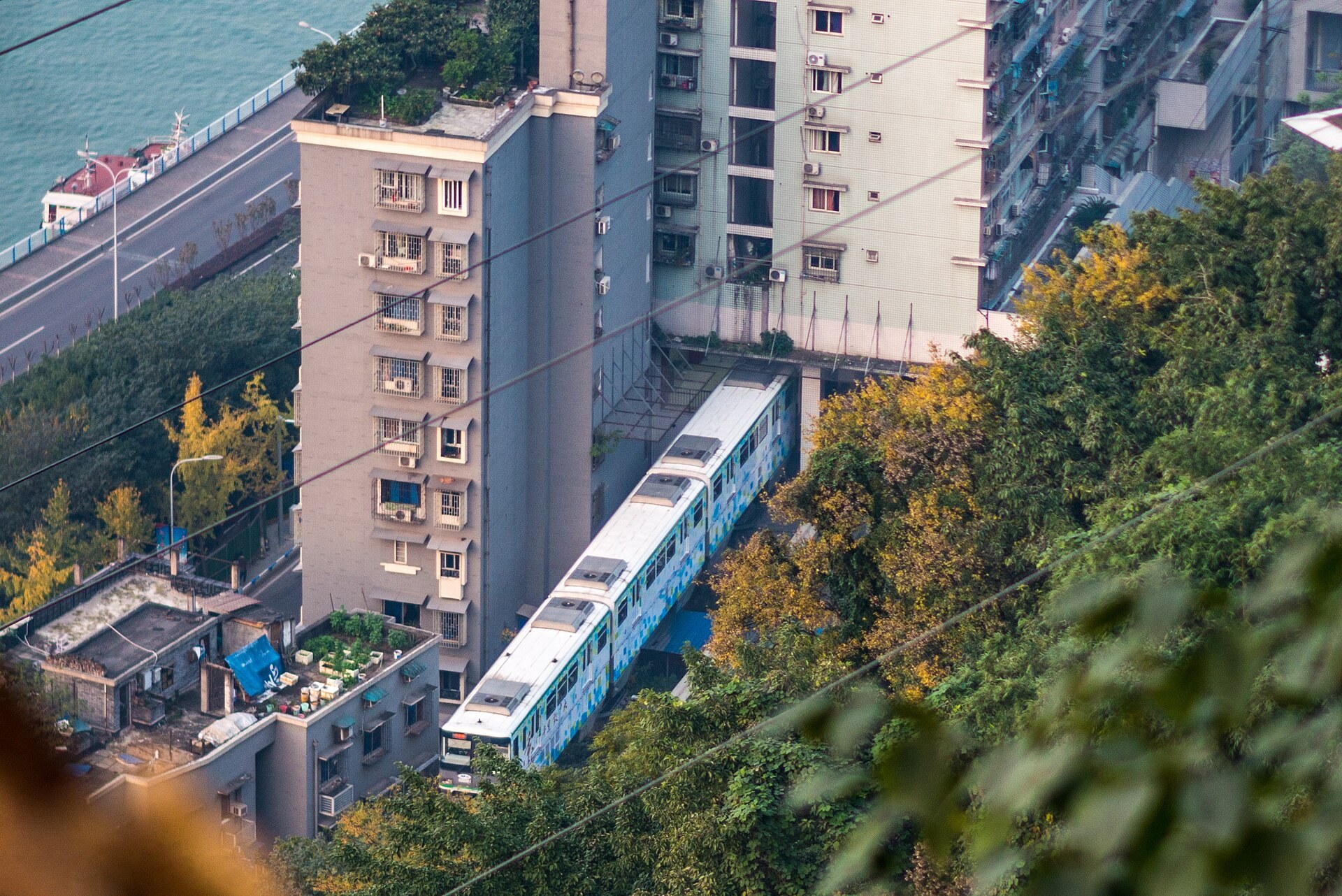 Chongqing · DoChongqing Mountain City Walk: Liziba, the Crown Escalator and the Shibati Steps — Mostly DownhillOne ridge-to-river walk through the stacked city: a train through a tower, an escalator instead of a staircase, a square that is somehow the 22nd floor, old-town steps, and two rivers meeting in two colours.Reference ~
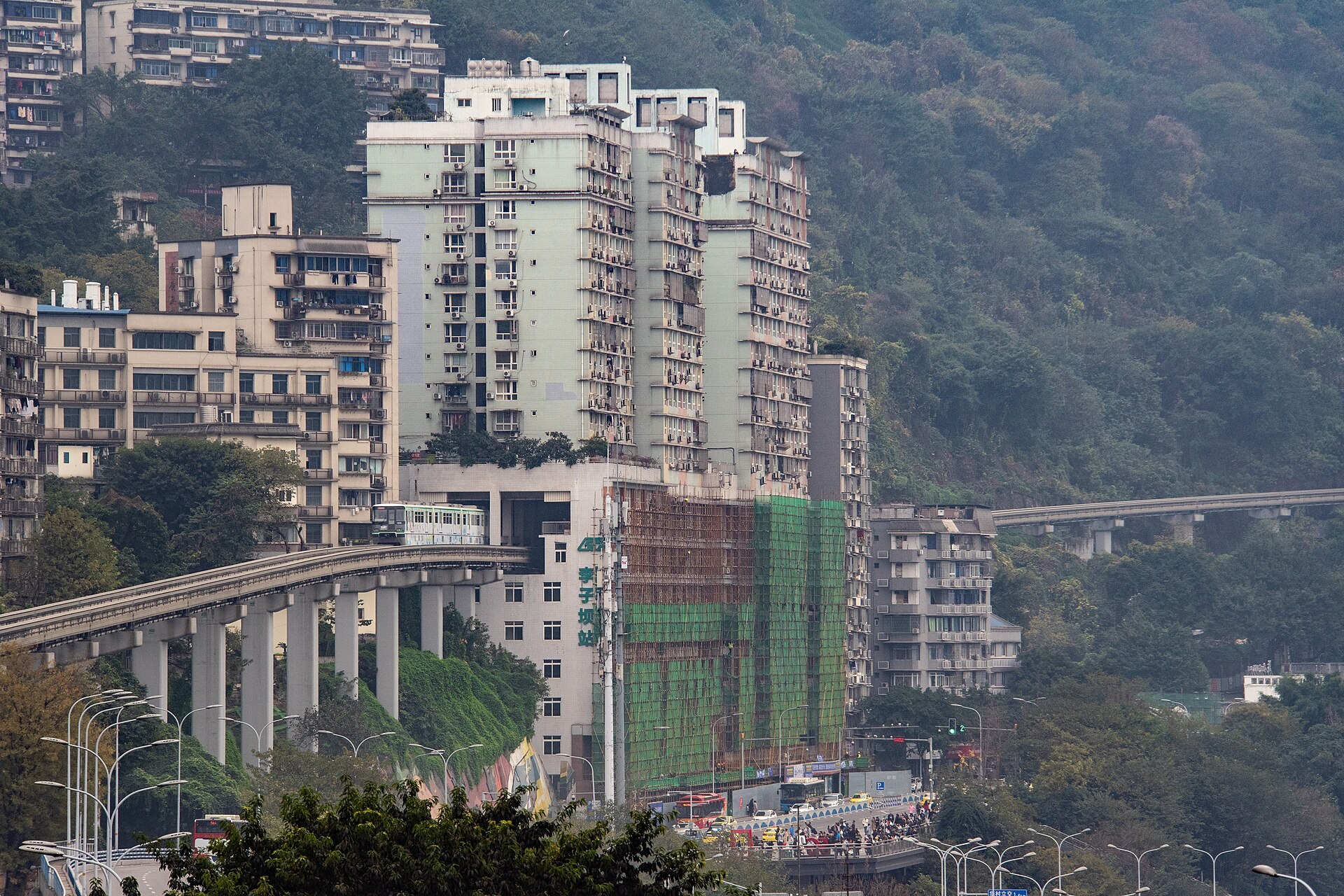 Chongqing · DoChongqing in 2 Days: Walk Downhill, Ride Through the BuildingIn Chongqing you plan by floor, not by distance: a monorail through a living room block, one honest climb, a lit cliff after dark, and stairs treated as the sightseeing itself.Reference ~
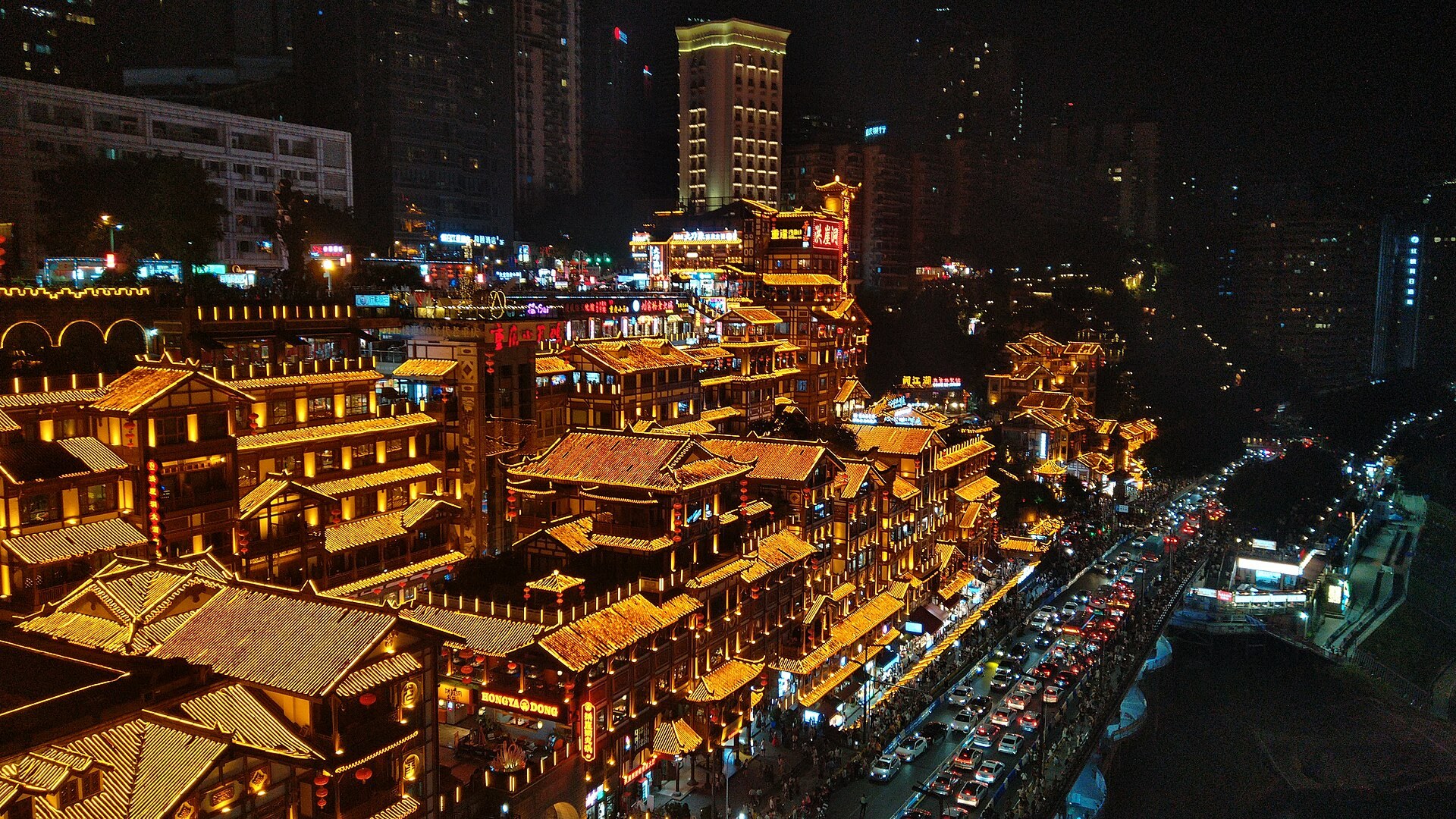 Chongqing · PrepareWhere to Stay in Chongqing: Jiefangbei, Guanyinqiao, Nanbin Road or Eling?Jiefangbei puts you inside the postcard, Guanyinqiao inside local life, Nanbin Road across from the view, Eling inside the old mountain city — and the fog votes on all of them.Reference ~
08 · SOURCES
Sources and status
Prices, schedules and booking channels change. Recheck the details that matter before you travel.
- Chongqing Municipal People's Government (official city portal)Reference ~City and transport context for the Liziba district
- Dianping (Chongqing local demand and crowding signal)Reference ~Local-signal patterns for visiting conditions; no rankings reproduced or relied on