
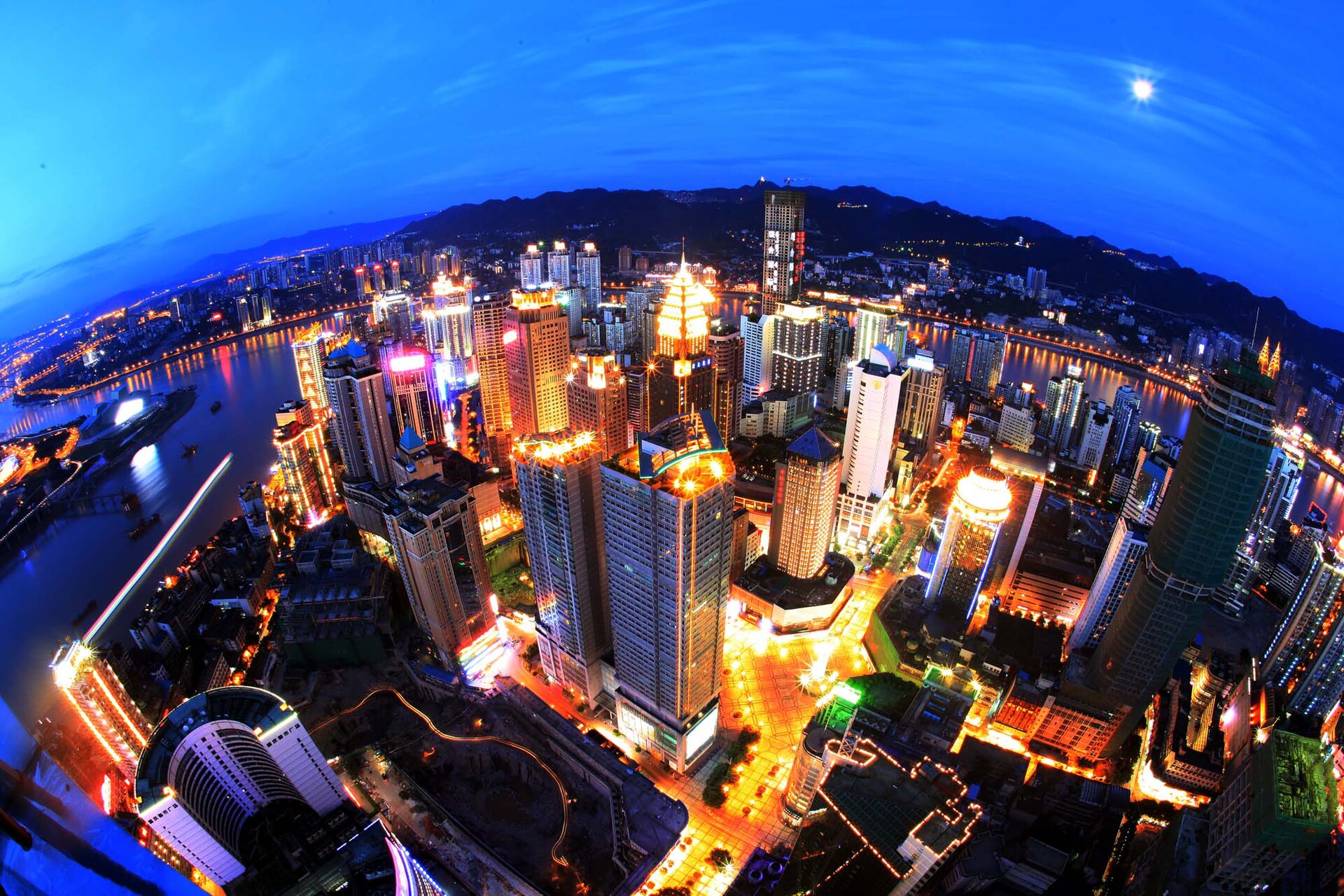
Chongqing offers four structurally different night views rather than four versions of one: standing inside the layered, illuminated centre; looking at the peninsula from the bank opposite; travelling at water level and watching both banks slide past; and looking down from height — and they cannot sensibly be combined in a single evening
Checked October 2026GUIDES / CITY WALKS
Chongqing Night Views: Where to Stand When the Lights Come On
Hongyadong from outside, the peninsula from across the river, or the whole city from above — Chongqing's night is four different shows sharing one stage, and the trick is choosing a single one and engineering everything else around it.
City Chongqing12 min read7 facts labeledChecked 2026-10-30
01 · IN BRIEF
Four viewpoints saved, one evening to spend
At 18:40 the city starts switching itself on. Not all at once — floor by floor, tower by tower, as if someone were walking through Chongqing with a very long arm and a tray of switches. On the bridge approach, a man next to you is holding a phone with four saved viewpoints glowing on it: a cave of golden balconies, a road across the river, a boat pier, a rooftop. He will spend the golden hour in taxis between levels of the same mountain, and by the time the sky is fully dark he will have stood near all four and seen none of them properly. Two hundred metres along the rail, a couple with exactly one plan is watching the light arrive over the confluence like it was scheduled for them personally.
That is the whole secret of a Chongqing night. The city does not reward collection; it rewards commitment. Pick the one visual idea that matters — stand inside the lights, or face them from the far bank, or float through them, or look down on them — then build dinner, timing and the ride home around that single anchor. This guide lays out the four systems, the ground manners of each famous spot, and the unglamorous logistics (levels, last trains, pickup points) that decide whether the evening is a memory or a queue.
02 · SEE IT
A well-run Chongqing night, in running order
- 18:15 — Dinner first, on the bank you intend to end on: hotpot if the night is young, noodles if it is a late one
- 19:10 — In position before dark: learn the levels, find the toilets, agree the pickup point while you can still see it
- 19:40 — Blue hour: the towers are lit, the sky still holds colour, and the reflections double everything — this is the photograph window
- 20:30 — Peak glow and peak crowd: hold your ground at the anchor viewpoint rather than joining the cross-city migration
- 21:45 — The decision point: one unhurried walk along the bank, or the planned car home — not a second district
- View card — Inside the lights, Hongyadong and the central river edge: maximum atmosphere, maximum crowd. Cost: level changes and hard pickups
- View card — Across the river, Nanbin Road: the peninsula composed like a poster, bridges doubled in the water. Cost: one crossing, one long bank
- View card — On the water, the short evening cruise: both banks in motion, no walking. Cost: a fixed wharf, a timetable, the weather
- View card — From above, a high viewpoint: two rivers and the city's full geometry. Cost: everything depends on the visibility you are given
03 · TRY IT YOURSELF
Run the night like a local would
Your ticks stay on this page only. No account or personal data is sent.
04 · THE PROOF
The facts this guide leans on
Hongyadong's celebrated perspective is the one from outside: the piled-up lit facade read against the roads below and the river beyond. Going in delivers food halls and shopping circulation, which is a different evening from the view of the place
Checked October 2026Nanbin Road stretches for kilometres along the south bank, so 'Nanbin Road' as a destination can put a driver far from the viewpoint a traveller actually saved — the precise spot and a lawful pickup point have to be fixed in advance
Checked October 2026The Yangtze River Cableway runs with restricted capacity, builds queues and does not operate on an unchanging pattern — it functions simultaneously as transport and as a viewpoint, and neither role guarantees the other on a given night
Checked October 2026The scene itself is not on rails: building lighting schemes, public events, fog, routine maintenance and changes to access all alter what a viewpoint delivers from one night to the next
Checked October 2026Good timing is anchored to the day itself — the current sunset and the moment the lighting takes over — rather than to a clock time copied from someone else's season; arriving with daylight left is what makes the levels and exits readable before the crowds peak
Checked October 2026In Chongqing the address of a viewpoint is incomplete without its level: the famous angle may sit up or down several floors of terrain from the metro exit the map suggests, across a bridge or along a bank, and that last vertical stretch decides the evening's shape
Checked October 202605 · STEP BY STEP
One anchored evening, step by step
- Step 1 — Choose your visual system
Name the system first and let it fire the other three. Standing inside the lit city at Hongyadong and the central river edge gives you density and atmosphere at close range, and charges you crowds, constant level changes and awkward car pickups. The south bank around Nanbin Road gives you the peninsula as a composition — skyline, bridges and reflections in one frame — and charges you a river crossing and possibly a long final stroll. The short river cruise gives you motion and both banks from water level, and charges you a fixed boarding point, a ticket and weather exposure. The high viewpoint gives you scale and the geometry of two rivers meeting, and charges you total dependence on visibility plus uphill access. Each is a complete evening. Stacked together, they are four queues connected by traffic.
- Step 2 — Do Hongyadong from the outside in
Approach Hongyadong as a facade before you approach it as a venue. Decide in advance which side you will view from and how you will leave, because once the crowd is flowing, re-deciding costs real effort. Keep to the barriers and the marked pedestrian space, leave emergency and walking lanes open, and never step into moving traffic for the photograph — the shot everyone takes is available from places designed for standing. If the density stops being enjoyable, trade precision for space: a wider public stretch a little further along gives you a looser frame and a calmer pulse. The interior, with its food and shopping floors, is a fine plan B for a group that turns out to prefer eating to spectating — just know it answers a different question than the postcard does.
- Step 3 — Take the south bank for the composition
Nanbin Road is the photographer's honest bargain: the whole Yuzhong peninsula arranged across the water, bridge lights doubled in the river, and pavement wide enough to stand on. It is also long enough to be a trap. Save the precise viewpoint, not the road's name; agree the pickup point with the same precision; and check beforehand whether your stretch is level walking, stepped, or split from the road by barriers. Then stay on that side for dinner. The classic error is crossing for the view and crossing straight back for food, converting an evening of looking at Chongqing into an evening of traversing it. Eat near the bank, let the skyline be the restaurant's backdrop, and leave when the composition, not the taxi queue, says so.
- Step 4 — Decide the cableway and the short cruise with open eyes
Both moving options are transport first and viewpoint second, and both punish casual planning. The cableway carries a limited number of people per hour, queues accordingly, and can change its operating pattern — treat it as a border crossing with a view, not a gondola ride you can improvise at the last minute. The evening cruise fixes your boarding wharf, your timetable and your disembarkation point. Compare the real variables before choosing either: the actual fare, where boarding happens, how long it lasts, where it sets you down, and how you get home from there. If the queue for either threatens dinner or the last metro, the public riverfront is not a consolation prize — it is frequently the better evening. And keep the categories straight: an hour on an evening boat around the peninsula is a night-view product; the multi-night sailing to Yichang is a holiday. The piers and the marketing happily blur them; your wallet should not.
- Step 5 — Time it around the sunset you actually have
Build the schedule backwards from tonight's sunset, not from a screenshot's timestamp. Get to the area while there is still light to read the terrain by — Chongqing's levels are a puzzle you want to solve before dark, not during the densest flow. Food goes before the view or after it depending on which bank you end on; what it should never do is drag you across the river mid-evening. Set a return threshold in advance — the time after which you switch from 'one more angle' to 'we are leaving' — and keep it. Finally, dose the night to the day: after the stairs of a mountain-city walk or a full excursion to Wulong, the right evening is dinner and a single view, because tomorrow's knees are also part of the itinerary.
- Step 6 — Shoot like a guest, not a film crew
Commit to one relationship and shoot it properly: facade against roadway, bridge against skyline, reflection against current, or towers stacked in layers. Travel light enough to keep both hands free on stairs — Chongqing will ask for them. Tripods are restricted or simply obstructive in the busiest public spaces, so obey the current local rules and never plant equipment where people need to circulate. Wet weather is not automatically a failed shoot: rain polishes the streets into mirrors, but it eats electronics and turns steps treacherous, so protect the kit and slow down. Two courtesies mark the visiting photographer here: do not shoot into residents' windows, and do not treat a residential stairwell or rooftop as a public platform. People live inside this view.
- Step 7 — Engineer the way home before you leave
The return is designed, not discovered. Before you go out, know the last metro you are willing to take, the lawful place a taxi can actually stop near your viewpoint, and which entrance of your hotel the driver should aim for — in this city the front desk's street and the drop-off level are frequently different addresses wearing the same name. On the south bank, confirm the pickup point while you can still see it. For older travellers and anyone with tired legs, simply budget the car home as part of the evening's cost; a licensed taxi or Didi to the confirmed entrance is not extravagance here, it is the plan working. The night ends when you are inside the lobby, not when the view was good.
06 · WHERE THIS BREAKS
Where the postcard ends
Weather rewrites the plan without asking
Rain lays mirrors on the pavement and menace on the steps; umbrellas turn narrow crowds into slow collisions. Fog erases the skyline while gilding the street-level lights into atmosphere. Heat and humidity transform waiting itself into the evening's main exercise. The working response is a pivot, not perseverance: when visibility dies, abandon the high platform for a ground-level route in the same direction instead of crossing the city chasing altitude, keep exposed waits short, and let official access updates outrank any photograph you arrived hoping to copy.
Peak crowd is a physical fact, not a vibe
At its fullest, the Hongyadong area flows like a station concourse with better lighting. A pushchair, a slow walker or anyone unsteady on stairs changes what 'enjoyable density' means, and no angle is worth a frightened grandparent. Use a vehicle-served spot on the opposite bank, or take one short central segment outside the peak crush, with loos, benches and the pick-up street worked out first. Children, honestly assessed, want one light show, not a survey of four.
The expensive viewpoint is a gamble
Height sells certainty and delivers probability. A paid platform can be beaten on a murky night by a free stretch of riverbank, and tickets, opening hours and access arrangements all need checking against the operator's current word rather than a month-old post. Always keep a street-level fallback in roughly the same part of town, so the pivot costs minutes instead of a cross-city ride.
The pin is not the place
A celebrated image may have been taken across a bridge, two levels down from where the map pin drops, or from the far end of a long bank road. Choose the angle first and the transport second — never assume the nearest station exit serves the picture you came for, and save the exact spot with its level, the way you would save a restaurant's branch rather than its brand.
Do not stack the biggest night on the biggest day
Do not schedule the longest night of the trip after its longest day. Stairs climbed at noon are still owed at nine in the evening, and Chongqing collects. One glowing sequence, a seated dinner and an unhurried car home beat a heroic circuit for almost every traveller over sixty and every family past bedtime.
Will the lights match the photographs?
No — the scene is alive. Schemes change for events, towers go dark for maintenance, fog edits the skyline, and access shifts with crowds and weather. What you can control is position, timing and exit, which is fortunate, because those three decide the photograph far more than the lighting design does.
07 · KEEP READING
Keep the trip moving
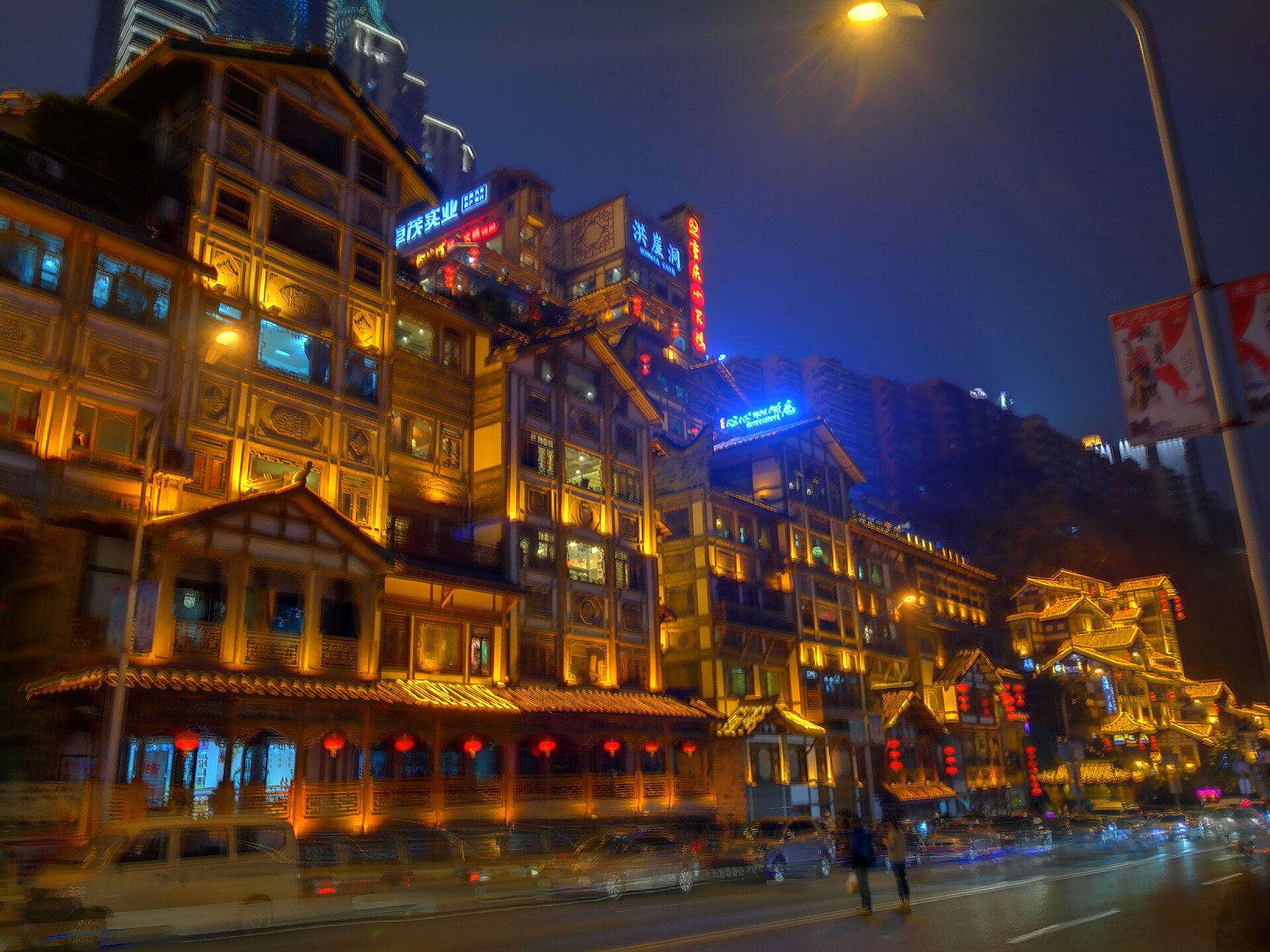 Chongqing · DoChongqing First Time: Learn the Levels Before the LandmarksA city where the ground floor may be the eleventh floor, where your hotel can sit above the street your taxi is on — read the terrain first and Chongqing turns from a maze into a machine you can operate.Verified
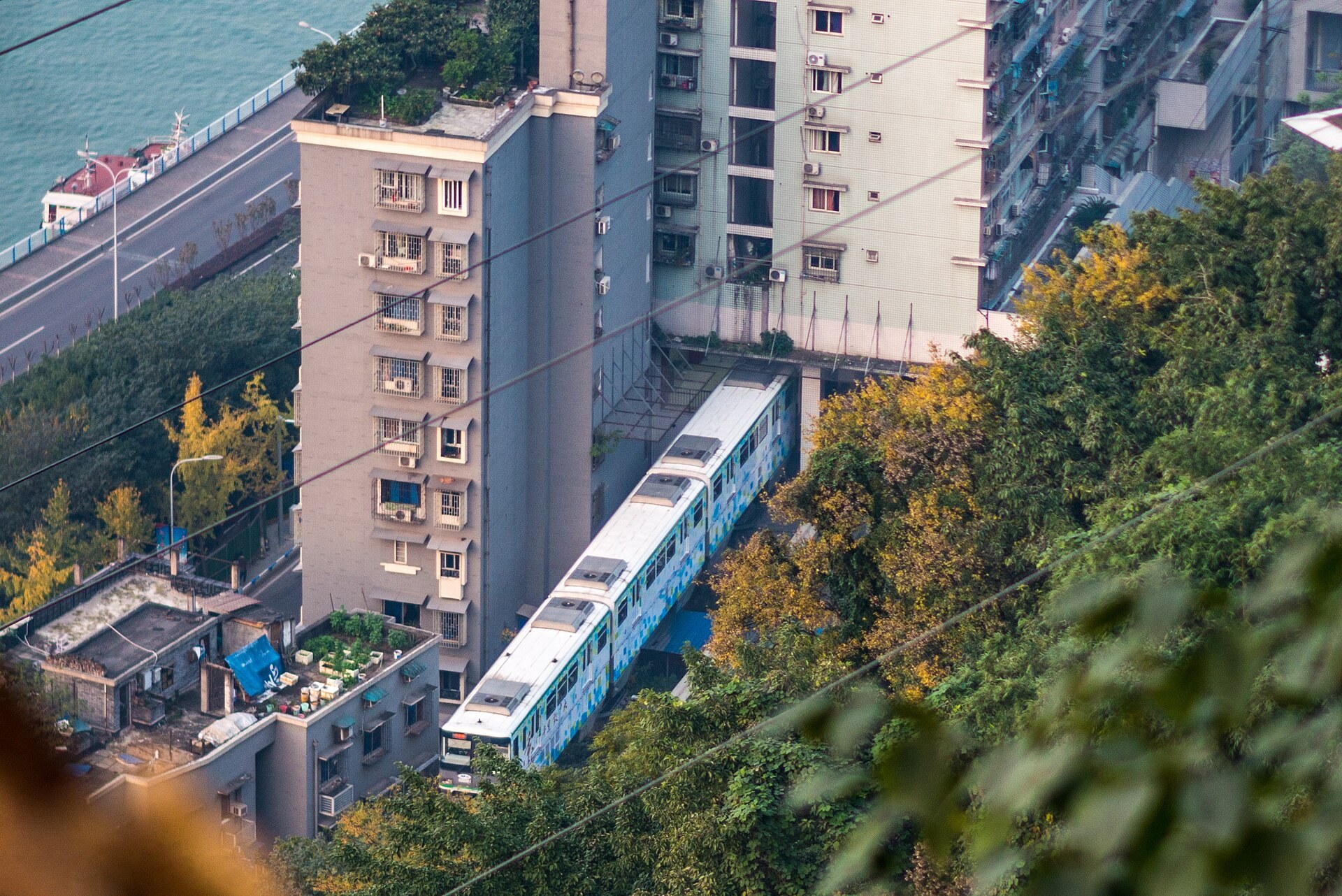 Chongqing · DoChongqing Mountain City Walk: Liziba, the Crown Escalator and the Shibati Steps — Mostly DownhillOne ridge-to-river walk through the stacked city: a train through a tower, an escalator instead of a staircase, a square that is somehow the 22nd floor, old-town steps, and two rivers meeting in two colours.Reference ~
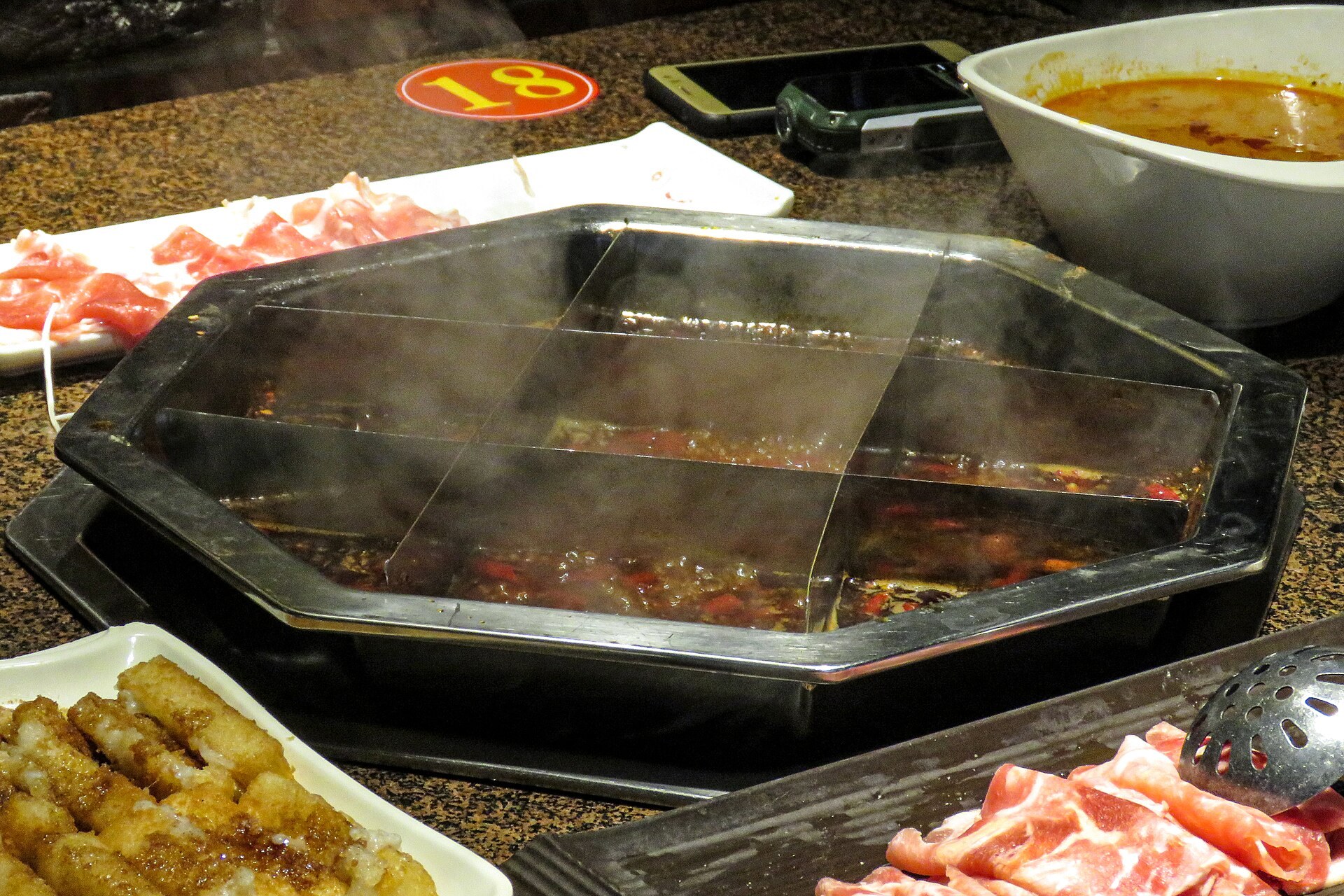 Chongqing · DoChongqing Food Guide: Hotpot in Its Home CityButter-and-chilli broth, a nine-grid clock in the pot, a breakfast noodle with no interest in subtlety — hotpot in its home city, plus the dishes that carry the days between pots.Reference ~
08 · SOURCES
Sources and status
Prices, schedules and booking channels change. Recheck the details that matter before you travel.
- Chongqing Municipal People's Government portalVerifiedOfficial city portal for current public access, events and visitor information in Chongqing; URL checked live 2026-10-30
- Chongqing Municipal Commission of Culture and Tourism DevelopmentVerifiedOfficial tourism authority channel for attraction access and operating updates; URL checked live 2026-10-30
- Dianping (Chongqing dining and night-life listings — local signal)Reference ~Local demand and operating-hours signal for restaurants and night venues in Chongqing — directional local signal, not a verified ranking; URL checked live 2026-10-30