
Hechuan peach slices are not dried fruit: Chongqing's intellectual property office describes the product as a walnut confection built on glutinous rice, made in soft and crisp variants — the 'peach' in the name is heritage branding, not an ingredient list
Checked October 2026GUIDES / SHOPPING
Chongqing Souvenirs: Peach Slices, Rice Candy and the Hotpot Block
Beyond the wall of hotpot seasoning, Chongqing's real gift basket is texture: a walnut-and-rice confection named after a peach, puffed-rice candy from Jiangjin, mahua twists from the Ciqikou counters — and one small block of hotpot base for the cook back home.
City Chongqing12 min read8 facts labeledChecked 2026-10-30
01 · IN BRIEF
The tasting counter makes the decision for you
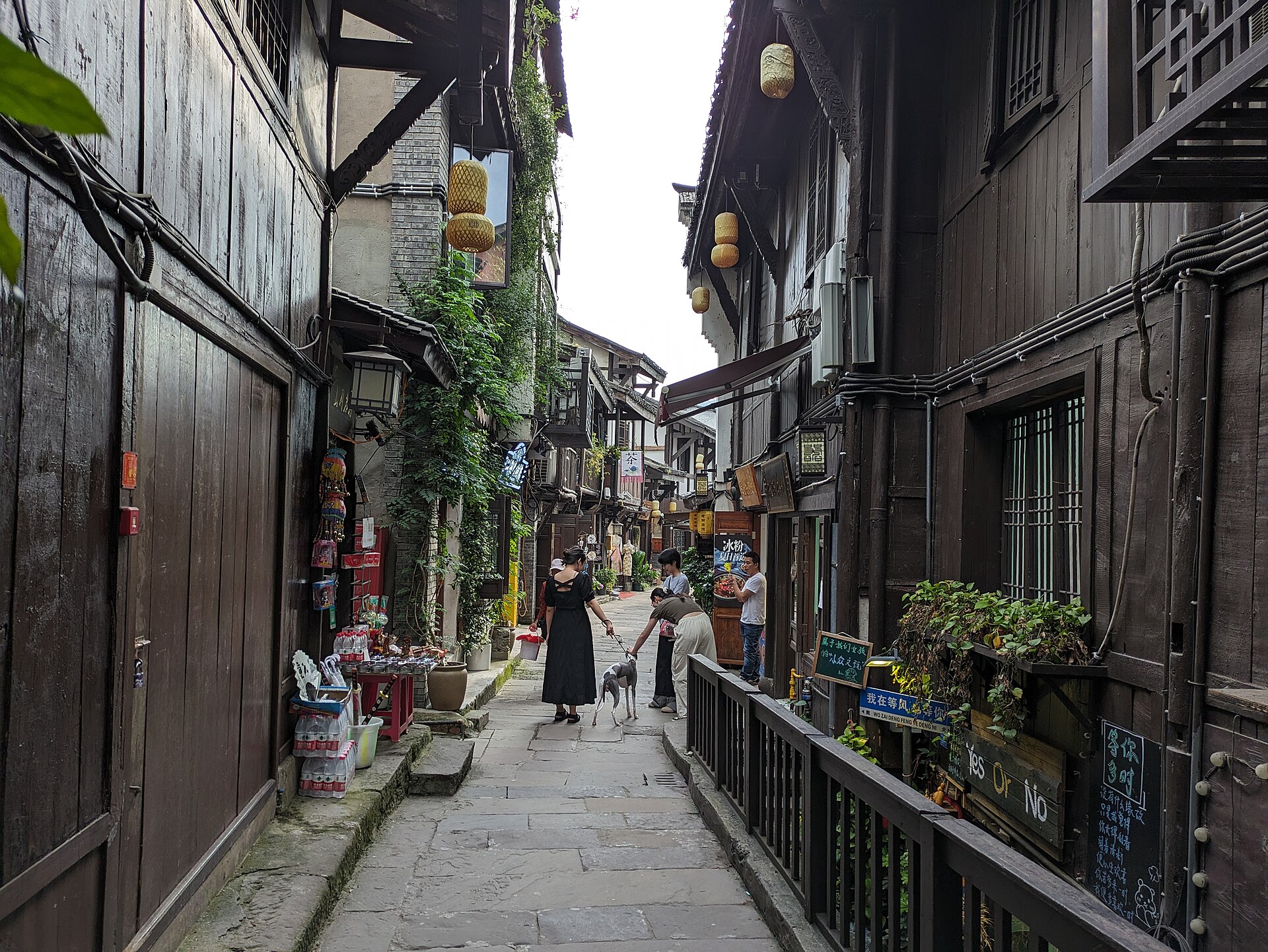
The mahua vendor in Ciqikou does not pitch you. She takes a twisted rope of fried dough from the stack, snaps it in half with a sound like a dry branch, and holds out the piece — crisp, faintly sweet, still warm enough to smell of the oil it left a minute ago. Behind her the street performs its afternoon commerce: tea shops, pickle jars, three more mahua counters with queues of their own, and a tourist twenty metres back buying a gift box of something she has never tasted because the packaging had a skyline on it. One of these two shoppers is doing Chongqing souvenir shopping correctly, and it is not the one with the skyline.
This guide works the local shortlist the way that vendor does: taste first, in small quantities, and let texture arbitrate. Chongqing's famous edible gifts divide neatly — Hechuan peach slices, a soft or crisp confection of glutinous rice and walnut that contains no peach worth mentioning; Jiangjin's puffed-rice sweets, all crunch and lightness; mahua twists, the fried-dough snack at its best within hours of the counter; and on the savoury side, the hotpot base block and 'strange-flavour' broad beans. Add one rule — one sweet, one savoury, tasted, then stop — and souvenir shopping stops being a luggage problem and becomes what it should be in this city: another way of eating it.
02 · SEE IT
The shortlist, by texture
- Hechuan peach slices — Texture: soft, layered and yielding, or crisp, by variant. Role: the compact confection; a thin pack shares easily and travels flat
- Jiangjin puffed-rice sweets — Texture: light, dry crunch. Role: the contrast gift after a trip of heavy meals; crushable, so it rides on top of the bag
- Mahua twists — Texture: crisp fried dough, best fresh. Role: the taste-it-now snack that becomes a souvenir only in a rigid box and a sealed pack
- Hotpot base — Texture: a solid block of chilli, pepper and fat. Role: the cook's gift; small is correct, and the heat level is a decision about the recipient, not about you
- Strange-flavour broad beans — Texture: crunchy beans in a sweet-salty-spiced coat. Role: the pocket snack and the beer gift; the name describes a style, not a promise about taste
- Dazu carving crafts — Texture: stone and wood, priced by workmanship. Role: the one non-edible on the list, bought near Baodingshan as craft — never as 'antique'
- Buying rule — Taste, then one sweet plus one savoury, then stop: several bulky snack bags hauled through a hilly city is a self-inflicted wound
- Packing rule — Crushables above, jars and blocks below, original labels and receipt kept with the goods
03 · TRY IT YOURSELF
Shop like someone who has to carry it uphill
Your ticks stay on this page only. No account or personal data is sent.
04 · THE PROOF
The facts this guide leans on
Jiangjin puffed-rice sweets are documented by the district's own local-history office as a traditional puffed-rice confection; recipes may fold in seeds or nuts, which makes the exact label — not the category — the allergy document
Checked October 2026Mahua around Ciqikou exists in two different storage propositions: twists bought fresh at a counter and commercially packaged versions — they share a name and a shape, not a shelf life, and storage advice belongs to the exact batch in your hand
Checked October 2026'Strange flavour' (guai wei) on broad-bean snacks names a recognised Sichuan seasoning style — a deliberate collision of sweet, salty, sour, numbing and hot — and is a style description, not a reliable prediction of how spicy or sweet a given pack will taste
Checked October 2026Traditional Chongqing hotpot base is built substantially on animal fat — beef tallow is the classic — alongside chilli and Sichuan pepper, which matters twice: for vegetarian recipients, and because fat-and-meat content is exactly what many customs regimes ask about
Checked October 2026America's Customs and Border Protection agency obliges arriving travellers to declare all food and agricultural items, and sealed or vacuum-packed commercial packaging does not by itself make a product admissible — other destinations run their own versions of the same rule
Checked October 2026Dazu's fame rests on its UNESCO-inscribed Buddhist rock carvings (1999), and carving-themed craft pieces sold around the Baodingshan site area are the district's characteristic non-food souvenir — contemporary craft, to be priced by the work in it
Checked October 2026Municipal tourism publications single out Guanyinqiao as a major commercial district of the city — a district-level lead for where packaged specialties concentrate, not an endorsement of any individual counter or brand
Checked October 202605 · STEP BY STEP
How to buy each one well
- Step 1 — Start with the peach slices that contain no peach
Hechuan peach slices are the list's most useful gift and its best story. Pressed into thin, layered slices from glutinous rice and walnut, it comes in soft and crisp variants that eat like different products — ask which you are tasting, and whether the recipe in this pack leans on walnut or other nuts if the recipient has an allergy. Buy the small labelled pack first. Its virtues are logistical as much as culinary: thin, flat, light, and easy to share without ceremony, it survives a suitcase corner that would destroy grander boxes. Check the seal is intact and the date is clear, and keep the packet somewhere it will not be bent double — a crushed slice is still edible, but it has stopped being a present.
- Step 2 — Add the crunch: Jiangjin puffed-rice sweets
After Chongqing's restaurant cooking — oil, chilli, weight — the puffed-rice sweets from Jiangjin are the palate's holiday: dry, crisp, lightly sweet, gone in a bite or two. They are the correct second purchase for exactly that contrast. Two checks before buying. First, the recipe: seeds and nuts appear in some versions, so read this pack's ingredients rather than assuming the category is allergen-free. Second, the packaging ratio: decorative gift boxes can triple the bulk of a snack that weighs almost nothing, and bulk is your scarcest currency. A small sealed pack, carried on top of the bag's contents where nothing heavy can sit on it, is the form this souvenir wants to travel in.
- Step 3 — Treat mahua as fresh food that can travel, with help
Mahua — ropes of dough, twisted and fried — is the Ciqikou counter snack, and the honest way to buy it is the vendor's way: taste the exact batch, choose the flavour you actually liked, and be suspicious of your plan to buy several bags of a second flavour you never tried. A queue at one counter tells you that counter is popular; it is not evidence that its mahua is the category's best, and the street offers comparison within fifty metres. If the twists are travelling onward, insist on a rigid outer box and ask how this batch should be stored; if they are tonight's snack, buy the loose counter version and eat it at its peak. Never mix several unlabelled flavours into one bag to save space — future-you, at a hotel desk, will not solve the identification puzzle.
- Step 4 — Buy the hotpot block like a grocer, not a fan
For a recipient who cooks, a small block of Chongqing hotpot base may outrank every sweet on this list — it is a working ingredient, not a ornament. Buy it with a grocer's questions. What fat is it built on — tallow-based blocks are the classic and the wrong gift for a vegetarian? What heat level is it honestly pitched at, in a scale calibrated for Chongqing rather than for export? And what else rides along — bases carry multiple seasonings and allergens, readable on this pack's label and no other. Keep expectations straight at home, too: a block is the broth's foundation, not a restaurant in a wrapper; the meal still needs stock, aromatics and the table's own judgement. One small block, well chosen, beats a heroic brick that outlives three dinner parties.
- Step 5 — The pocket extra: strange-flavour broad beans
If a savoury handful is wanted for the train, the plane or a beer drinker at home, the broad-bean snacks in the guai wei style are the local answer — crunchy beans in a coating engineered to hit sweet, salt, acid, numbness and heat in sequence. The name is the first thing to understand: 'strange flavour' is a style with centuries of Sichuan logic behind it, and it predicts complexity, not a particular scoville count. Read each product's label on its own terms, because adjacent packs on the same shelf can be built quite differently. They travel well, weigh little, and are the easiest item here to hand out in an office without a speech.
- Step 6 — One non-edible: Dazu craft, bought with clear eyes
If the trip included Dazu — and if it did not, the carvings are worth their own day — small carving-themed craft pieces from the Baodingshan area are the district's natural souvenir: contemporary work trading on a millennium of Buddhist stone art inscribed by UNESCO. Buy them as what they are. Price reflects size, material and the hand in the work; ask about the stone or wood, enjoy the choosing, and walk past any framing of a new piece as an antique or a relic. A modest, honestly-bought carving that fits the suitcase will mean more at home than a monumental one that becomes a shipping saga.
- Step 7 — Know what stays in Chongqing
Some of the city's best tastes are deliberately not on the souvenir list, because they are meals, not products: the hotpot itself, a bowl of xiaomian at a counter, freshly cooked duck dishes eaten where they were made. Notice, while you eat them, which sensations you actually favour — the chilli's burn, the pepper's tingle, or neither — because that answer is what should steer the seasoning purchases. A traveller who discovers they prefer the gentler end loses nothing: the peach slices and rice candy are not consolation prizes, they are half the city's gift tradition in their own right.
- Step 8 — Run the border check before the shopping, not after
The final step happens in your head before money moves. Keep each product's original ingredients list, producer and date — photograph the label if the packaging is bulky. Buy only quantities you can genuinely keep safe across the next leg of travel, in a hilly city, possibly in rain. And check your destination's customs or agriculture rules for food, seeds, plant material, animal products and alcohol before the purchase, because sealed packaging settles nothing: the United States, for example, requires every food item to be declared and decides admissibility at the border, and tallow-bearing or meat-adjacent products are exactly the ones that draw questions. The souvenir that gets confiscated at arrivals is the most expensive kind there is.
06 · WHERE THIS BREAKS
Where this advice stops working
Labels, not categories, carry the facts
Every check in this guide — allergens, fat content, dates, storage — resolves to the individual pack in your hand. Two products with the same English name can differ in nuts, heat and shelf life. Any advice, including this guide's, that sounds like a blanket rule for a city's food should be re-verified against the label of the exact item being bought.
Impulse architecture is designed against you
Be wary of mixed souvenir halls where restaurant advertising is slipped between product shelves, of anything whose pitch is mainly its skyline packaging, and of 'Sichuan' products assumed to be Chongqing-made. A big meat selection, a couple of weighty jars and a box of fragile sweets compose, together, the classic awkward multi-city load — each fine alone, miserable as a set.
Fresh and packaged are different products
The mahua that sang at the counter is on a clock; the sealed retail version trades some of that immediacy for time. Neither is the 'real' one — but planning as if the fresh purchase keeps like the packaged one, or gifting the packaged one as if it were fresh, are both ways to disappoint a recipient.
Customs is a hard boundary, not a formality
This guide can flag the questions; it cannot answer them for your passport and destination. Rules on meat, fat, seeds and plant products differ by country and change; the declaration requirement does not. When a product's admissibility is genuinely doubtful, the peach slices will travel. Let them.
Is it actually dried fruit?
No — the question the name invites, answered by the city's own intellectual property office: they are pressed slices of glutinous rice and walnut, made in soft and crisp variants. Buy them for the texture and the story, check the nut content for your recipient, and never present them to a peach lover as preserved fruit.
07 · KEEP READING
Keep the trip moving
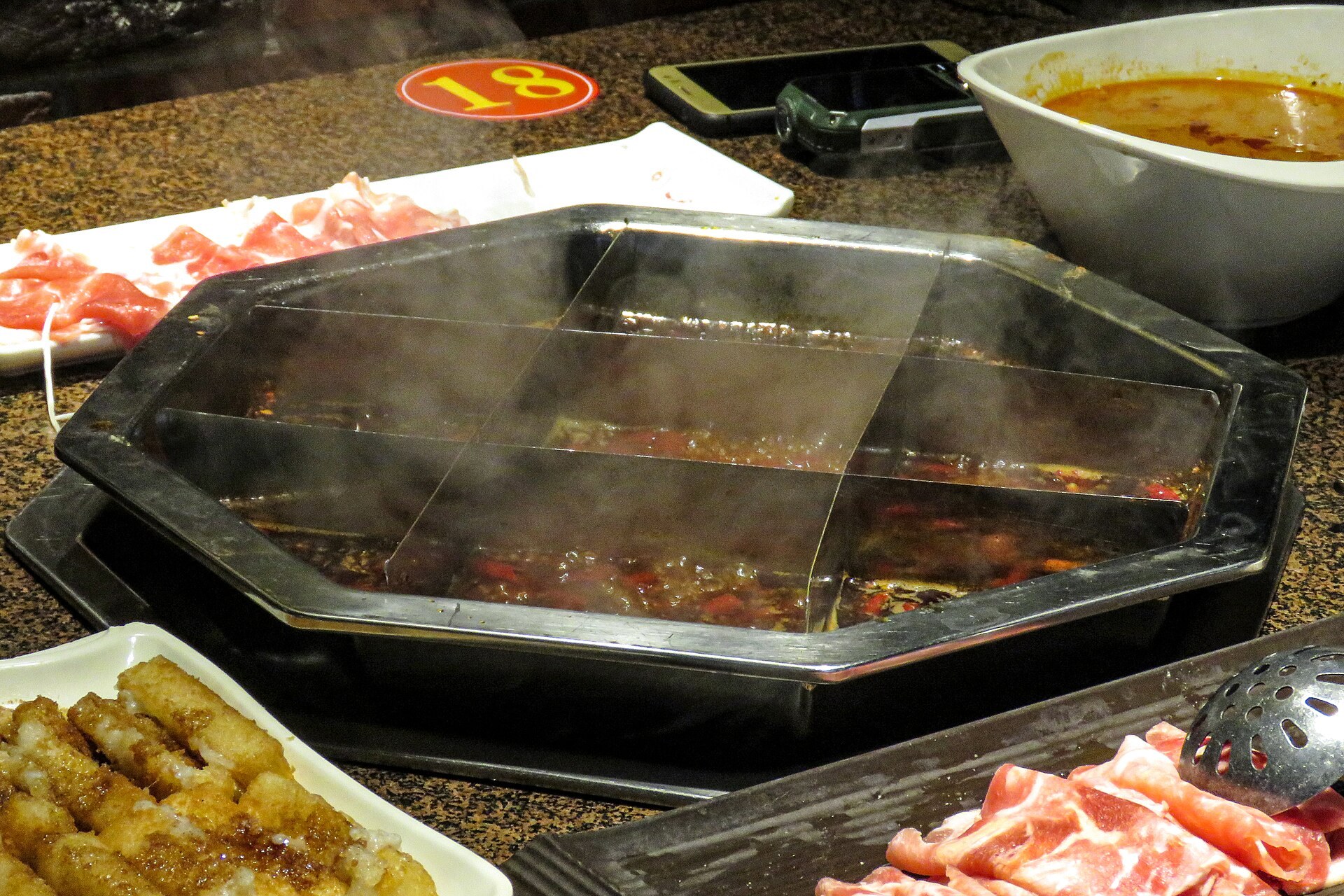 Chongqing · DoChongqing Food Guide: Hotpot in Its Home CityButter-and-chilli broth, a nine-grid clock in the pot, a breakfast noodle with no interest in subtlety — hotpot in its home city, plus the dishes that carry the days between pots.Reference ~
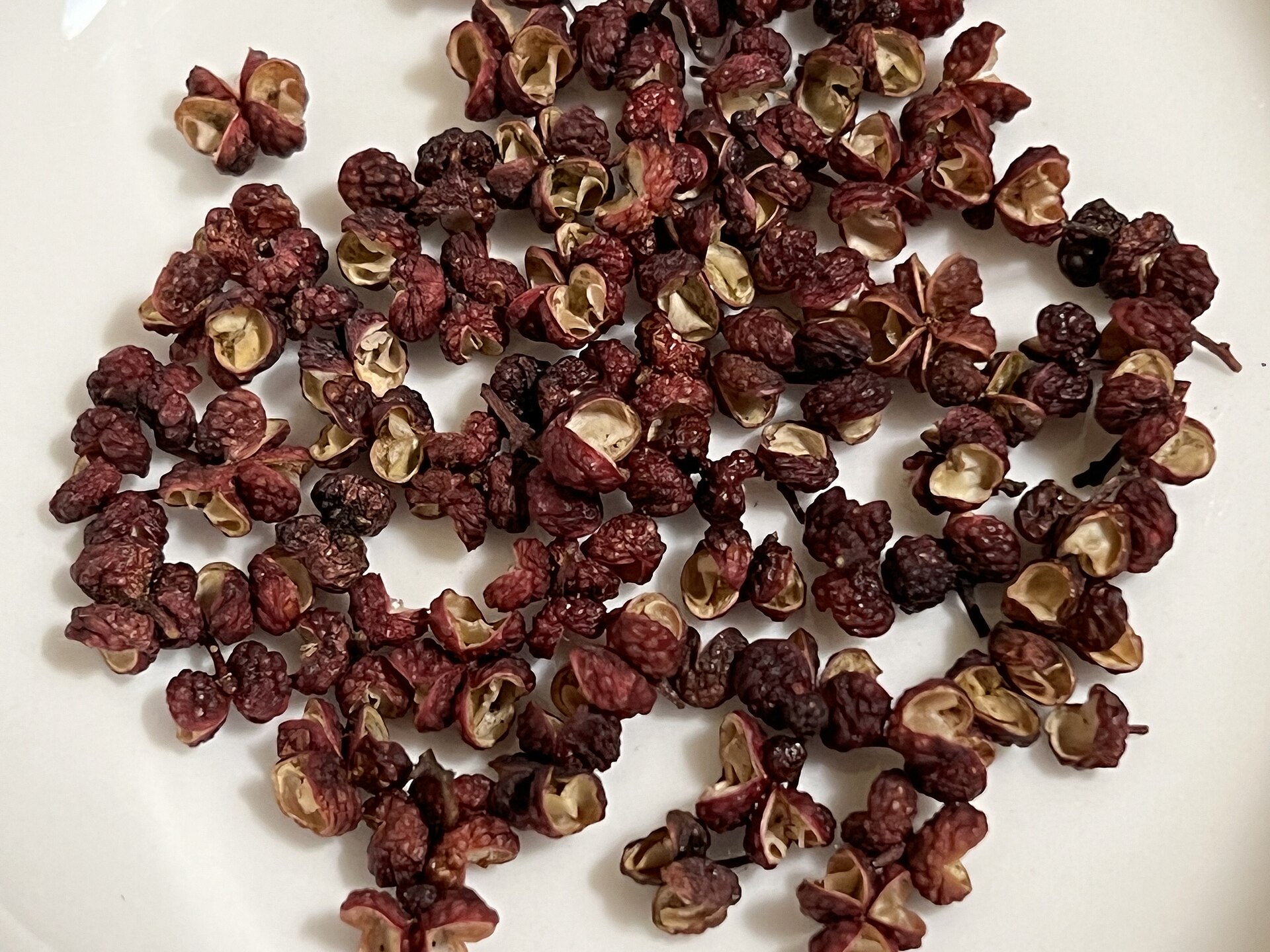 Chengdu · DoChengdu Souvenirs: Doubanjiang for Cooks, Brocade for Keepers, Pandas Done RightChengdu's best gifts are the ingredients a cook will open within the week and the small crafts whose maker you can name — bought where the city shops for itself, not where the tour bus idles.Reference ~
 Chongqing · DoDay Trips from Chongqing: Karst Bridges, Carved Cliffs, or a Long SoakWulong gives you stone bridges the size of cathedrals and makes you walk for them; Dazu gives you eight centuries of carved devotion and asks only that you listen. Here is how to run each day without the transport eating it — and when to choose the hot springs instead.Reference ~
08 · SOURCES
Sources and status
Prices, schedules and booking channels change. Recheck the details that matter before you travel.
- Dianping (Chongqing restaurant and snack reviews — local demand signal)Reference ~Local-signal patterns as described; no rankings reproduced or relied on; checked 2026-10-30
- US Customs and Border Protection — Prohibited and restricted itemsVerifiedDeclaration and admissibility rules for food taken home; checked 2026-10-30
- UNESCO — Dazu Rock CarvingsVerifiedInscription behind the Dazu craft context; checked 2026-10-30
- Chongqing Municipal Government portalVerifiedOfficial municipal portal for current district and tourism information; checked 2026-10-30