
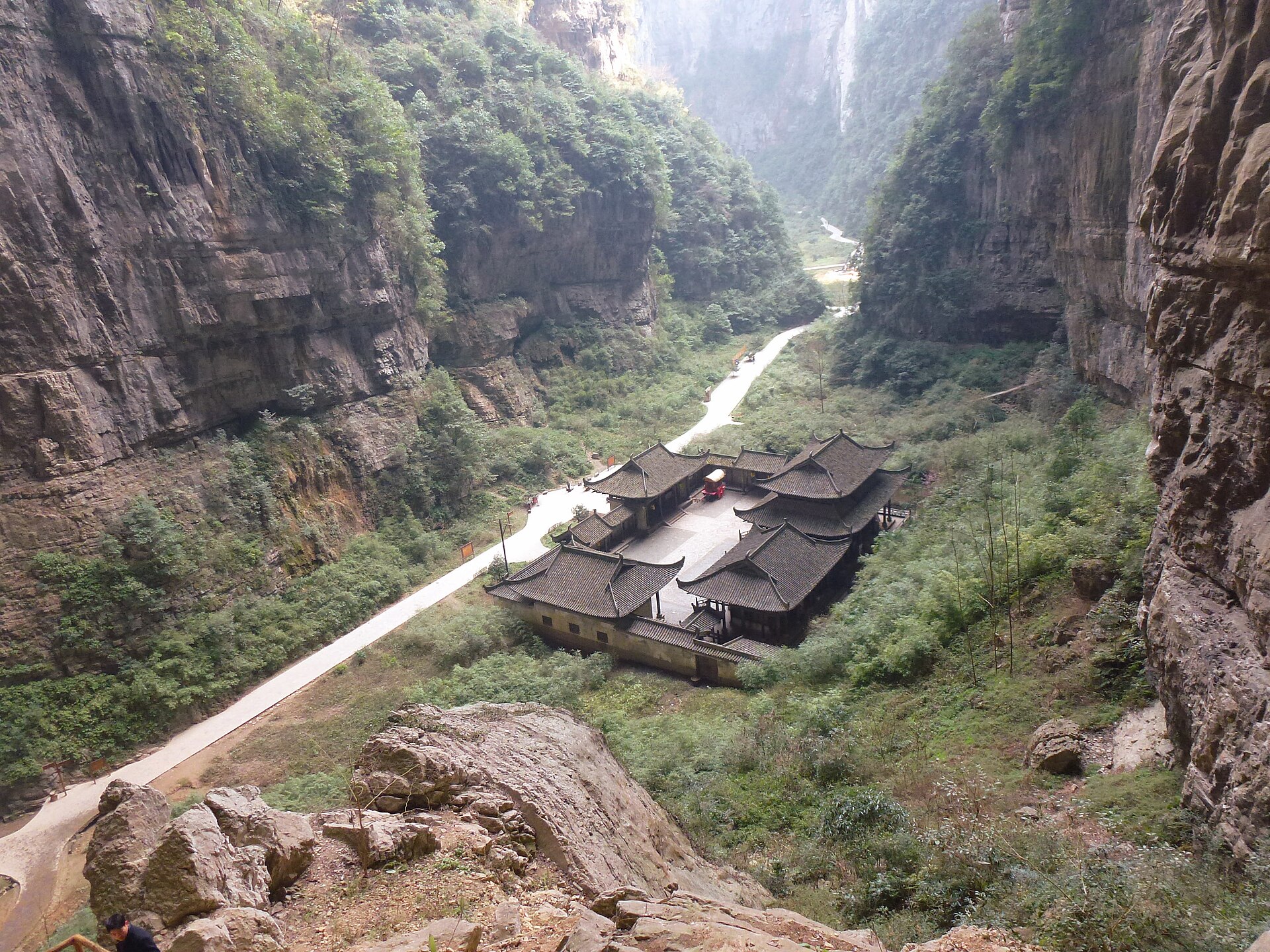
Wulong is the city's clearest nature excursion — karst country of stone bridges, cliffs and forest around the Tianfu Official Post — and every honest route report treats the run as a dawn-start, whole-day undertaking from the centre, never a spare afternoon
Checked October 2026GUIDES / ITINERARIES
Day Trips from Chongqing: Karst Bridges, Carved Cliffs, or a Long Soak
Wulong gives you stone bridges the size of cathedrals and makes you walk for them; Dazu gives you eight centuries of carved devotion and asks only that you listen. Here is how to run each day without the transport eating it — and when to choose the hot springs instead.
City Chongqing12 min read8 facts labeledChecked 2026-10-30
01 · IN BRIEF
Two alarms, two directions, one day each
The alarm goes at 6:10 and the day is already decided — the only question is which decision you made last night. In one version, you are at Chongqing East station with a ticket that says Wulong South, a driver meeting the train, and a sandwich plan; by nine you are standing under a stone bridge wide enough to hold a village, in air ten degrees cleaner than the city's. In the other version of last night, you chose the carvings: a slower morning, a guide booked, and a hillside in Dazu where a thousand-year-old sermon is still legible in the rock — provided someone is there to read it to you. Both versions are right. The wrong version is the third one, where you try to do both, or leave the station names to luck.
Chongqing's two great day trips pull in opposite directions. Wulong is landscape that makes you walk; Dazu is art that makes you think; and the city's hot springs wait at home as the option for travellers whose legs file a formal protest. This guide builds each day the way it actually unfolds — trains and last miles, visitor centres, honest cost accounting — so the only surprise on the day is the scenery.
02 · SEE IT
Two excursions and a recovery day, side by side
- 06:40 — Out of the hotel with the return already solved: tickets bought, station names checked twice, driver or connection confirmed
- 08:00 — Wulong: through the visitor centre and descending into the karst — bridges overhead, the old official post below, the day's walking ahead of you
- 13:00 — Wulong: out of the gorge country and eating simply; the return train, not appetite, sets the schedule from here
- Dazu, 09:30 — A gentler start: station or highway, the visitor-centre handover, and then the Baodingshan hillside with a guide warming up the first panel
- Dazu, 15:30 — The last carvings in slanting light and a unhurried ride back; culture days end tired in the head, not the legs
- Day card — Wulong Three Natural Bridges: landscape at full scale. The price of admission is distance, steps and an early alarm
- Day card — Dazu Rock Carvings: eight centuries of Buddhist art in one hillside district. The price of admission is attention — bring a guide
- Day card — Hot springs, Beibei or Tongjing: the same geology, enjoyed sitting down. The excursion for the day the stairs win
- Rule card — If the city itself gets less than a pair of full days, skip both expeditions and stay put; the day trips will still be there next visit
03 · TRY IT YOURSELF
Plan the day like it matters — because it is one
Your ticks stay on this page only. No account or personal data is sent.
04 · THE PROOF
The facts this guide leans on
Rail planning for Wulong now runs through the newer station pair: Chongqing East for departure and Wulong South on arrival, where they fit your date — and substituting the older Wulong station merely because the name looks similar is a recognised way to wreck the day
Checked March 2026A fast train closes only the middle of the journey: the hotel-to-station leg at the Chongqing end and the station-to-scenery leg at the Wulong end sit outside the ticket, and both need arrangements of their own
Checked October 2026Baodingshan, the usual Dazu anchor, sits in Baoding Town roughly ten kilometres north-east of the district's centre — and Dazu South station, the town itself and the visitor centre are three separate points on the map, not one arrival
Checked October 2026Reaching the carvings involves a reception step: official visitor-centre and transport notices describe how visitors are received and moved onward to the site, with the railway-station and bus-station approaches handled differently — current operation must be confirmed with the attraction itself
Checked October 2026'Dazu' on a ticket or a driver's quote can mean a spread of separate carving sites rather than one compact attraction, so the named sites included — Baodingshan alone, or a defined combination — are the unit that has to be agreed before transport is arranged
Checked October 2026The carvings are inscribed on UNESCO's World Heritage List, and Wulong's karst belongs to the South China Karst listing — both are days out with heavyweight credentials, which is part of why neither compresses well
Checked October 2026The ground itself votes: the Wulong route descends, climbs steps and keeps you walking for sustained stretches, while Chongqing's hot-spring resorts — clustered in districts such as Beibei and Tongjing — ask almost nothing of your legs, which is why they function as the recovery option rather than a third expedition
Checked October 202605 · STEP BY STEP
How to make each day actually work
- Step 1 — Decide what kind of day you are buying
Choose Wulong when the group wants landscape, photographs and physical scale — cliffs, forest and stone architecture written by water. Choose Dazu when the appetite runs to sculpture, religious art and a story an expert can unfold panel by panel. Choose neither when the city itself is getting under two full days: the city's layered streets and night views are not a waiting room for excursions, and a stolen city day is the most common regret on this route. Families should judge by the step count and the full door-to-door duration; travellers with limited mobility will generally find Dazu, done by car, the more manageable of the two — while Wulong demands an honest mobility conversation before anybody pays.
- Step 2 — Build the Wulong day in six time boxes
Plan Wulong as six boxes of time and refuse to merge them: hotel to departure station; getting through that station; the train ride out; the ride from the arrival station to the Xiannüshan visitor centre or whichever reception point your ticket names; the visit itself; and the entire return in reverse. Fill every box from the live timetable and confirmed vehicle arrangements before paying for anything. The outward and return trains must both exist on your actual date. Confirm what the bridges ticket itself covers — entry, any compulsory internal transport, and how entering and exiting works — and then work backwards from the return train, allowing for the walk out of the park, the ride back to the station and a sane margin for boarding. Keep lunch loose and the evening empty; the day is long enough without a second attraction stapled to it because it looked near on a map.
- Step 3 — Take the right stations, in the right order
Search your date on 12306, the official railway channel, and read station names as carefully as times. The newer line changes the geometry of this trip: Chongqing East and Wulong South are the pair to look for where they fit your route, and the older station sharing the Wulong name is not an interchangeable substitute — it belongs to a different journey. Then solve the last mile before you celebrate the cheap fare: establish how you get from Wulong South to the visitor centre or reception point, whether that vehicle runs direct or makes an intermediate stop, and how the return connection is timed. A private car remains the simple alternative — hotel pickup, no connections, the return handled — at a price that must be compared against the full rail chain, not the ticket alone.
- Step 4 — Assemble the Dazu day around the visitor centre
Dazu punishes vagueness, so define the product first: Baodingshan on its own is the standard day; anything broader is a named combination of sites, agreed before wheels or rails are booked. Expect a reception step in the middle of the journey — the official notices describe a visitor-centre arrangement that receives you and moves you onward to the carvings, with the approach differing between the railway station and the bus station — then verify how it currently operates with the attraction before travelling. If you are weighing rail against a driver, make the vehicle quote answer properly: the pickup address, the exact sites covered, the maximum service hours, whether parking and tolls are inside the price, how waiting time is treated, and what one extra stop costs. A bargain train ticket can be terrible value once a bad final connection eats the usable hours.
- Step 5 — Cost both days on the full ledger
Compare the two days on the full ledger, in five lines. The long-distance leg: for Wulong, hotel transfers plus return rail, or one complete vehicle service; for Dazu, return rail or bus plus local links, or the same complete service. The admission: the precise bridges product at Wulong; at Dazu, Baodingshan alone or the named combination. Local transport: station connections and any compulsory scenic shuttle on one side; visitor-centre and site transfers — plus a separate hop if a second carving site joins the day — on the other. Interpretation: an optional guide or audio product at the bridges; at the carvings, guidance close to essential. Then the honest extras: meals, parking and tolls, overtime, cancellation terms. Ask which sums are charged per head and which per vehicle, and verify how children and seniors are priced under the operator's own rules, and never let a superseded regional pass or an expired promotion into a current budget — last season's free-entry campaign is history, not a discount.
- Step 6 — Keep the third option: water you sit in
There is a third answer, and on the right trip it is the correct one: stay close and recover. Chongqing is a historic hot-spring city, with resort clusters in districts such as Beibei to the north and Tongjing — the standard move is an afternoon-to-evening soak after days of stairs, booked as a resort visit rather than an expedition, with the journey home measured in tens of minutes rather than hours. Inside the city proper, Ciqikou and the streets of Shapingba offer the same mercy in cultural form: old lanes, snacks and an unhurried pace, gaining atmosphere without surrendering a whole day to transport. Travellers who schedule the light day deliberately enjoy the big days more.
- Step 7 — Book it, then re-verify it the day before
Close the day the way you opened it: on paper. Rail through the official 12306 channel with the station names double-checked; a driver or guide confirmed with the pickup point, the hours, ticket handling, in-park rides, food, extra-hour charges and the cancellation rules all written down. Re-read the weather and the attraction's own notices the day before — fog and rain are atmospheric at the bridges but they change what you can see and how the paths behave. And where the trip's shape allows, leave one flexible city day in reserve ahead of any onward leg that truly matters. The travellers who enjoy Wulong and Dazu most are the ones who never had to sprint for a train in either direction.
06 · WHERE THIS BREAKS
Where the day can break
Wulong is not a half-day trip
Transport out, park transfers, sustained walking and the weather all say no. Squeezing Wulong into the hours between a late breakfast and an early dinner produces the costs of the day without its payoff — the bridges deserve the morning. If the itinerary cannot spare the full day, Dazu by car or the in-city options serve you better than a compressed expedition.
Mobility decides before enthusiasm does
The bridges route means descents, steps and long walking on ground that rain makes honest. Grips on your shoes, rain protection in the bag, and no heroic assumptions about knees. Dazu with a vehicle is the gentler assignment, but even there the visitor-centre transfer and the site's own walking belong in the plan, stated in advance rather than discovered at the gate.
The cheapest fare can be the most expensive day
Rail wins on price only when the connections behave. If the station-to-scenery leg consumes the morning, the complete vehicle — pickup at the hotel, sites agreed, hours guaranteed — may be the cheaper day measured in the currency that matters: hours in front of the carvings or under the bridges.
Dazu without context is only half the site
At Dazu, an unguided visitor can admire a sequence of magnificent images and leave without the social and religious narrative that binds them — the art was made to be read. Budget for a guide or a serious audio product, confirm it covers the sites you actually bought, and treat interpretation as part of the admission, not an upgrade.
Dated information expires quietly
Old posts carry old prices, discontinued passes and promotions whose dates have passed. Notices describe the period they state; current operation, availability and ticket rules belong to your actual visit date. Anything in this guide that would change your spending should be re-checked against the operator or the official channel before money moves — that is the deal with a city that rebuilds its railways between editions.
Families: measure the day door to door
Count the day from the hotel door to the hotel door, not from the scenic gate. If the honest total — transfers, connections, the visit, the return — exceeds what the youngest or oldest traveller can enjoy, the trip is wrongly sized no matter how famous the destination. The fix is a vehicle, a later return, or a different day, chosen tonight rather than negotiated at a rural station.
07 · KEEP READING
Keep the trip moving
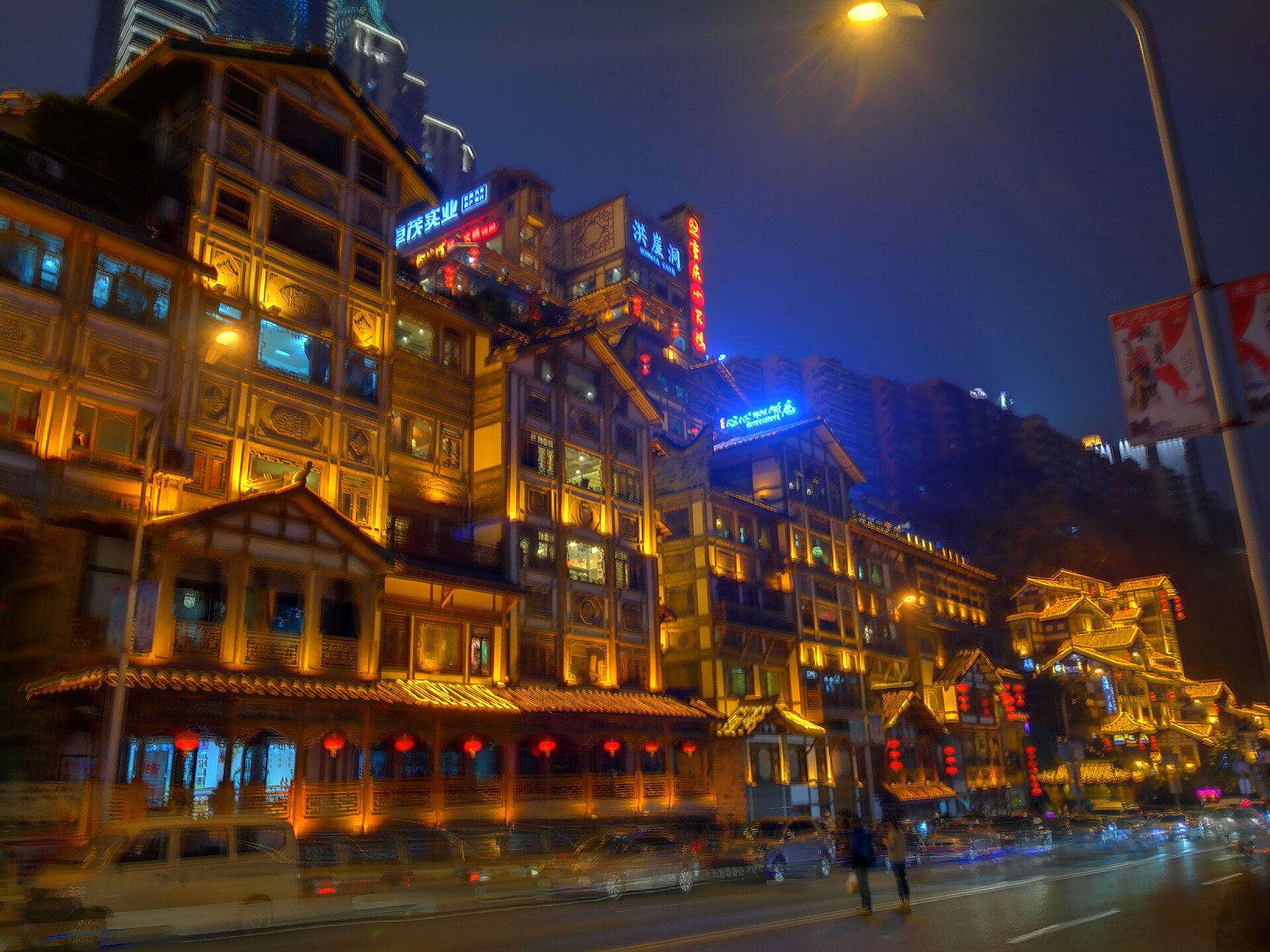 Chongqing · DoChongqing First Time: Learn the Levels Before the LandmarksA city where the ground floor may be the eleventh floor, where your hotel can sit above the street your taxi is on — read the terrain first and Chongqing turns from a maze into a machine you can operate.Verified
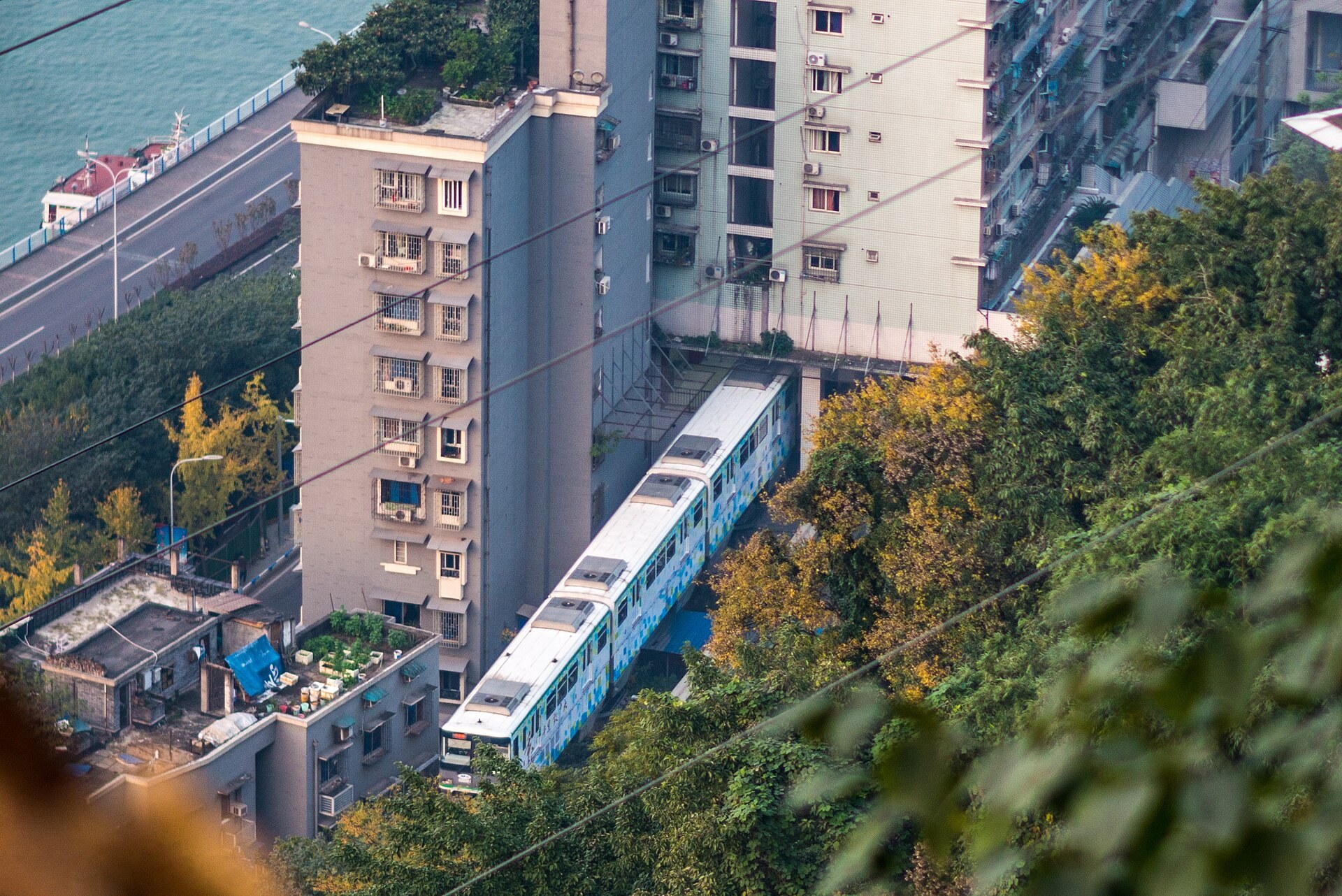 Chongqing · DoChongqing Mountain City Walk: Liziba, the Crown Escalator and the Shibati Steps — Mostly DownhillOne ridge-to-river walk through the stacked city: a train through a tower, an escalator instead of a staircase, a square that is somehow the 22nd floor, old-town steps, and two rivers meeting in two colours.Reference ~
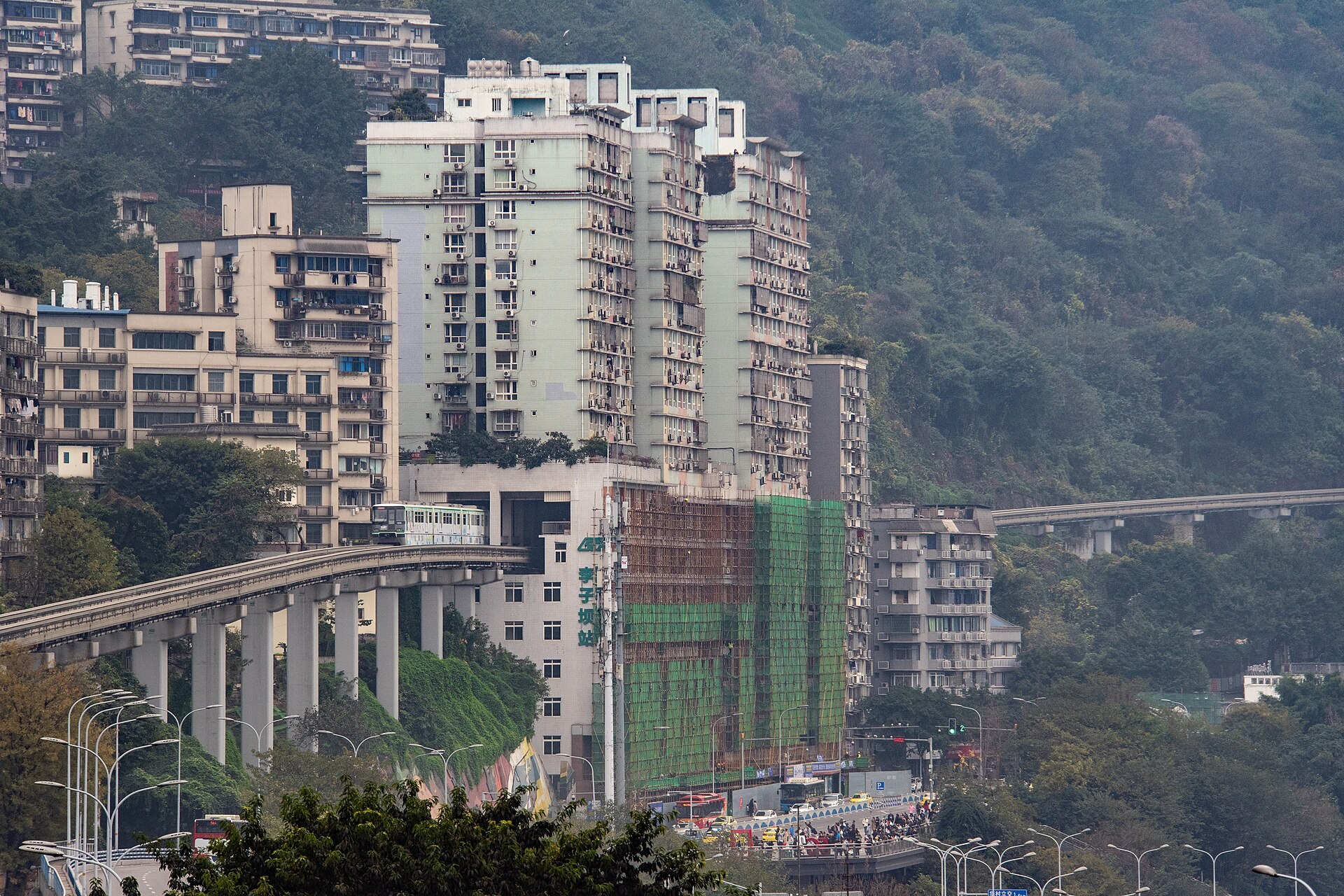 Chongqing · DoChongqing in 2 Days: Walk Downhill, Ride Through the BuildingIn Chongqing you plan by floor, not by distance: a monorail through a living room block, one honest climb, a lit cliff after dark, and stairs treated as the sightseeing itself.Reference ~
08 · SOURCES
Sources and status
Prices, schedules and booking channels change. Recheck the details that matter before you travel.
- UNESCO World Heritage Centre — Dazu Rock Carvings (listing 912)VerifiedWorld Heritage listing for the Dazu Rock Carvings — inscription record and site description; URL checked live 2026-10-30
- UNESCO World Heritage Centre — South China Karst (listing 1248)VerifiedWorld Heritage listing covering the Wulong karst within the South China Karst property; URL checked live 2026-10-30
- China Railway customer service centre (12306)VerifiedThe official China Railway booking channel — the only place train times and station names in this guide should be finalised, for your actual date; URL checked live 2026-10-30
- Chongqing Municipal People's Government portalVerifiedOfficial city portal for Chongqing transport and scenic-area public information; URL checked live 2026-10-30