
At Liziba, Chongqing Rail Transit Line 2 passes through the sixth to eighth floors of a residential building, with the station occupying part of the same structure — the train-through-a-block photograph is real, and the designated viewing area below is the place to take it from
Checked October 2026GUIDES / ITINERARIES
Chongqing in Three Days: Walk Downhill, Then Choose Your Big Day Out
Chongqing is a city built in three dimensions, and three days is how you learn to read it: a downhill first day through the old core, a second day of rails and museums, and a third spent on one deliberate expedition — karst, carved cliffs, or neither.
City Chongqing13 min read8 facts labeledChecked 2026-10-30
01 · IN BRIEF
The map is lying to you, politely
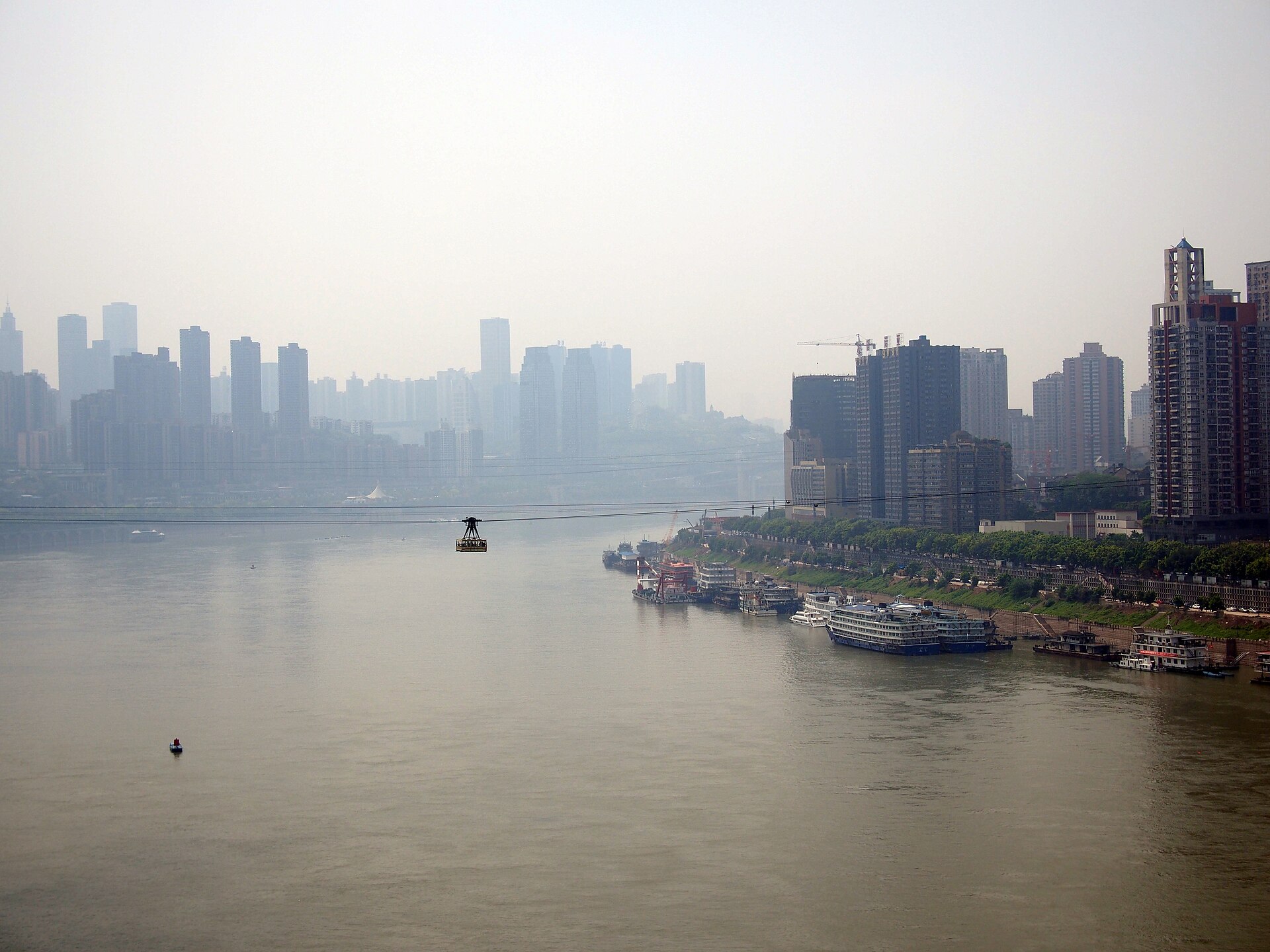
Your phone says the restaurant is two hundred metres away, and in a sense it is — two hundred metres horizontally, and eleven floors straight down. You are standing on a plaza in Yuzhong that turns out to be the roof of a building whose front door opens at street level far below, and the blue dot that is you sits directly on top of the blue pin that is dinner, with a cliff of staircases between them. A local grandmother passes with a shopping bag, takes the unmarked steps beside the car park entrance, and vanishes into the correct level like water finding a drain. This is Chongqing's first lesson, and everyone learns it in the first hour: distance here is measured in floors, not metres.
Three days is the right amount of time to stop fighting that and start using it. The plan below is built on the city's own physics. Day one strings the old core into a single downhill line so gravity works for you and every view arrives earned but unexhausted. Day two goes deliberately flatter — the famous rail line, a serious museum, modern districts — to give your knees a different kind of day. Day three is one expedition, chosen honestly: Wulong's karst if you want landscape, Dazu's carved cliffs if you want art and argument, or a slow city day if the previous forty-eight hours have made the case for mercy. What it never is, is all three.
02 · SEE IT
The three days, in running order
- Day 1 — Read the core downhill: start high around Jiefangbei and Xiaoshizi, walk one coherent descending corridor through older streets toward the river, finish at one night viewpoint only
- Day 1 evening — Eat in the district you ended in; save the viewpoint from your phone before the crowds make pickup levels a puzzle
- Day 2 — Rails and context: Liziba, where the train passes through a residential block, then the Three Gorges Museum for the river's story, with Guanyinqiao or a riverfront block only if it lies on the way back
- Day 2 evening — The planned hotpot night: it follows the walking, never precedes it, and nothing strenuous is scheduled after it
- Day 3, choice A — Wulong: giant karst bridges and sinkholes, the longest logistics chain of the trip — intercity leg, arrival point, scenic-area transfer, internal transport
- Day 3, choice B — Dazu: Buddhist rock carvings spread across hillside sites, Baodingshan first — the heritage day, where a good guide doubles the value
- Day 3, choice C — The slow city day: a museum missed earlier, neighbourhood food, a lower riverfront, a second night view at nobody's pace but yours
- Terrain rule — Sequence every walk so the climbing happens by lift, escalator, cableway or car, and the walking happens downhill
- Terrain rule — Reaching a station named Wulong or Dazu is not reaching the sight; the last transfer is part of the plan, not a detail
03 · TRY IT YOURSELF
Move through the mountain city like a resident
Your ticks stay on this page only. No account or personal data is sent.
04 · THE PROOF
The facts this itinerary leans on
The Dazu Rock Carvings are a UNESCO World Heritage inscription (1999) — not a single grotto but a family of carved sites across the Dazu hills, of which Baodingshan is the usual first focus, so 'going to Dazu' still leaves a which-site decision to make
Checked October 2026Wulong's great natural bridges and sinkholes form part of the South China Karst UNESCO inscription, and 'Wulong' names an area containing several distinct scenic zones — the Three Natural Bridges and the Longshuixia fissure are separate visits with separate logistics, not one gate
Checked October 2026Chongqing municipality operates several major rail terminals — Chongqing North, Chongqing West and others — and an excursion or onward journey can silently depend on the right one; the station on the ticket is part of the itinerary, not fine print
Checked October 2026The Three Gorges Museum, facing the People's Hall across the square in Yuzhong, is the city's context museum — river history, the gorge culture and Chongqing's own wartime and port past — and it is the natural flat, indoor anchor for a low-stair day
Checked October 2026A Three Gorges cruise cannot be folded into a three-day stay as a day trip: it is a separate multi-day river journey with its own embarkation port, cabin and itinerary decisions, taken before or after the city days rather than between them
Checked October 2026Chongqing's core is a ridge between two rivers, and its everyday geography treats 'ground floor' as a local variable — buildings routinely have entrances at several levels, which is why routes here are planned by sequence and gradient rather than by map distance
Checked October 2026Restaurant choice in Chongqing runs on Dianping the same way it does across China — reviews and photos shortlist where locals actually eat hotpot and noodles, a directional signal to combine with your route, never a substitute for it
Checked October 202605 · STEP BY STEP
How the three days fit together
- Step 1 — Day one: one downhill line through the old core
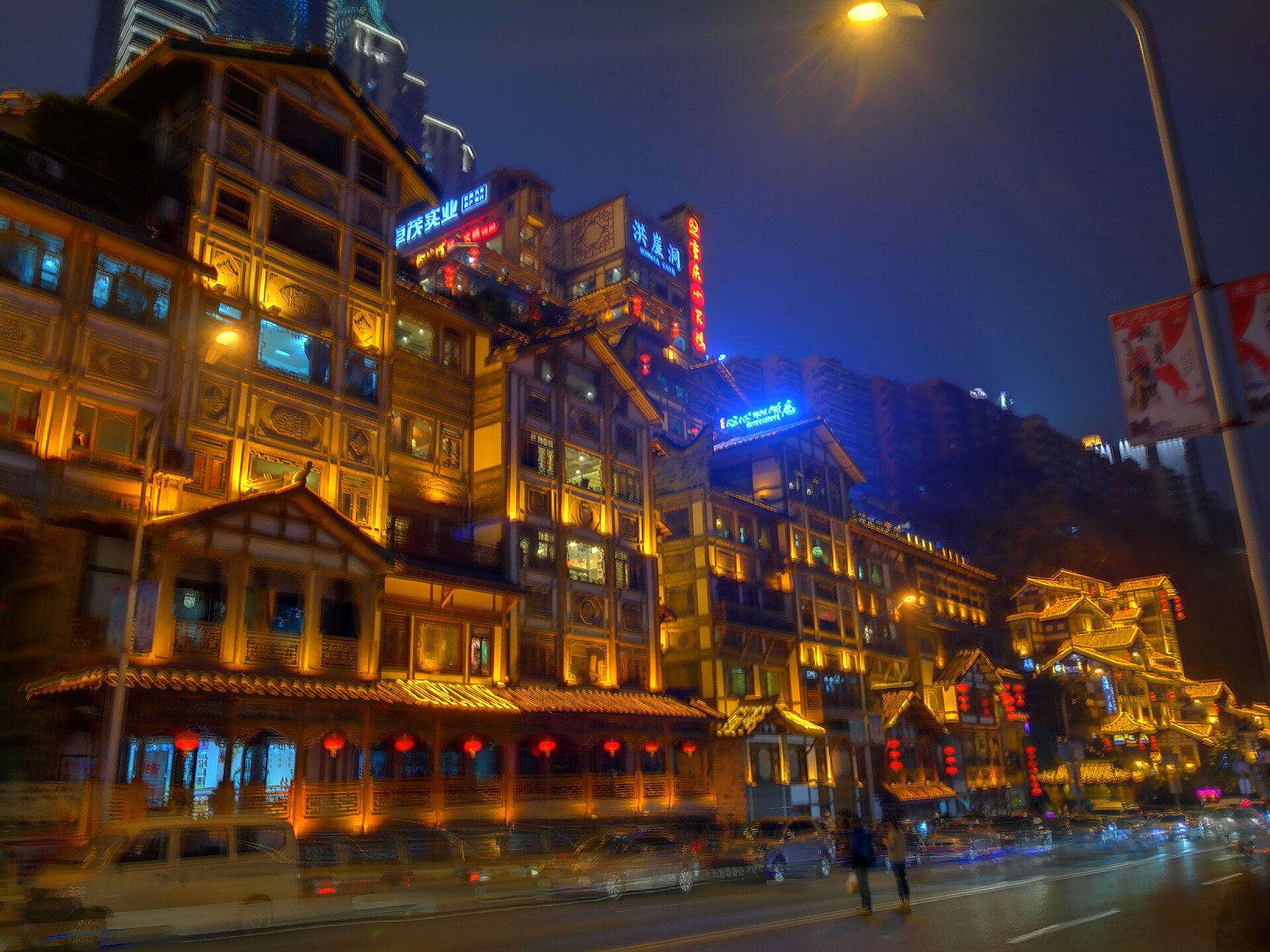
Enter the route at its top. Begin around Jiefangbei and Xiaoshizi, where the monument and the old commercial streets give you orientation, then walk one coherent descending corridor — through the older lanes on the Xiahaoli side, or toward Longmenhao across the way — letting the streets show you how Chongqing stacks houses, shops and stairways onto a slope. Resist every detour that climbs back up; the day's whole elegance is that it never retraces a staircase. By the time you reach the river level you will understand the city's grammar better than any viewpoint can teach it. Then choose the evening's single perspective at the route's end — the floodlit cliff-face of Hongya Cave is the classic — eat in that same district, and save your vehicle pickup point while the evening is still young enough to think clearly.
- Step 2 — Sleep in the right place, once
One hotel, three nights, chosen for its mechanics rather than its photograph: a clear road entrance a car can actually reach, a metro exit you will actually use, and a lobby whose level you have verified. A district label like 'Jiefangbei' tells you nothing about whether the last two hundred metres to bed involve a staircase with your luggage. If day three is an excursion, favour a base that makes an early vehicle pickup painless; if you leave by train, know which of Chongqing's stations is yours well before the morning it matters.
- Step 3 — Day two: let machines do the climbing
Day two is engineered to contain less continuous stair work than day one. Ride the rail out to Liziba, take the photograph from the viewing platform, appreciate that the building was designed around the line — and leave. From there, head for the Three Gorges Museum and the context that turns the rivers from scenery into story: the gorges, the old port city, the wartime capital. Add Guanyinqiao's modern commercial energy or a modest riverfront block only if it sits naturally on your return line. Move between clusters by metro and spend one taxi ride on the final climb without a flicker of guilt. This is also the day hotpot belongs to: the planned, unhurried pot, placed after the walking is finished, in a neighbourhood chosen from your route and local listings rather than from a single queue video.
- Step 4 — Day three, choice A: Wulong, the landscape expedition
Choose Wulong for scale: stone bridges spanning sinkholes, a fissure gorge, scenery that operates at geological size. Then respect what the day demands. Confirm the intercity leg, which arrival point in Wulong is the right one, the onward transfer to the specific scenic area you mean — bridges or fissure — plus admission, internal transport and the return, as one chain you have checked end to end. Inside, expect lift rides, stair climbs, sloping paths and long walks; wear shoes that grip, and carry layers for weather that turns faster in the hills, and expect the outdoor routes to be the first casualty of a bad forecast. Keep the Chongqing evening completely empty. Arriving at a station called Wulong is a waypoint in this day, never its achievement.
- Step 5 — Day three, choice B: Dazu, the heritage expedition
Choose Dazu for the opposite pleasure: not scale but density — centuries of Buddhist carving worked into hillside rock, including the great reclining Buddha and the wheel-of-life at Baodingshan. Confirm which sites your day actually includes, because the carvings are distributed rather than gathered in one room, and take current access and transport from official information. Interpretation is the multiplier here: a prepared hour of background — the basic visual vocabulary of Buddhist art — or a guide with genuine subject knowledge will substantially change what you see, while an unprepared visit slides into photographing panels in rapid sequence. Allow time to look closely, respect the barriers and the fact that these remain religious places, and let a direct vehicle simplify the day if the group values the carvings over the logistics puzzle.
- Step 6 — Day three, choice C: the slow day is a real option
After heavy rain, a late arrival, a strained knee, or two weeks of excursions elsewhere in China, the correct day three may be no excursion at all. Spend it inside the city at recovery pace: the museum you skipped, a neighbourhood food street at lunch hour, a lower riverfront block, tea, a second night perspective taken slowly. This is not the failed version of the itinerary. It is the day that often turns Chongqing from scenery into somewhere you have actually been — and its looseness is useful, absorbing a cableway closure, a missed admission or a fogged-out viewpoint from the days before. It is also the only responsible choice when day three is a departure day: guard the transfer to airport or station and let the region keep.
- Step 7 — Pace the food across the three days
One dinner given over to hotpot, xiaomian and smaller meals in rotation, and at least one deliberately lighter dinner: that is the rhythm. Hotpot follows the hardest walking, never precedes it, and is chosen by route and verified quality rather than by whichever queue is longest on video. Communicate three things separately at every table — chilli heat, Sichuan-pepper numbness, and dietary restrictions — because Chongqing kitchens treat them as three different dials. Carry water in the humidity, pack a real snack for excursion day, and refuse, politely and in advance, any plan that reserves a late feast for the night you return from Wulong.
- Step 8 — Adjust honestly for the group you actually have
Families and older travellers do beautifully in this city with three edits: a shortened day one that keeps the downhill idea but halves the stairs, a museum-weighted day two, and day three given to Dazu or a carefully selective slice of Wulong rather than its full route. Avoid two late nights in a row. A driver removes transfer friction but does not flatten a scenic area — verify steps and internal transport before assuming any site is accessible. Children, meanwhile, tend to love the raw material — trains through buildings, bridges, cable cars, rivers — without needing every staircase the city owns.
06 · WHERE THIS BREAKS
Where this plan stops working
Wulong and Dazu in one day is not a plan
They lie in different directions, each demands a full day with its own transfer chain, and attempting both converts two of China's great sites into a windscreen survey. The same applies to bolting an excursion onto an untouched city checklist: if the day out swallows the city days, the trip has lost its centre and become transport with interruptions.
Weather rules the excursions, not you
Wulong's routes are outdoor infrastructure in mountain weather; rain makes stone slick and fog deletes the views the day exists for. Dazu is hardier but not immune. Check the forecast the night before, and be willing to swap day three's choice — or promote the slow city day — rather than marching a group through scenery they cannot see.
Mobility limits are real and specific
Chongqing's core involves stairs that no itinerary can fully design away, and scenic areas add elevators, slopes and long internal walks. A vehicle helps between places, not inside them. Travellers with knee or mobility limits should take the shortened day one, the museum day, and vehicle-accessible night views — and treat any 'accessible Chongqing' promise, from anyone, with suspicion until it names exact routes.
A departure day is not a bonus day
If day three ends at the airport or a station, the excursion options close. The transfer out of a mountain city, to the correct terminal, with luggage, is a project in itself — schedule it like one, and let the flexible city day carry whatever the first two days dropped.
Can Chongqing be done in three days?
For the city itself, yes — two days make the mountain city legible and one opens a regional window, which is the honest shape of the place. What three days cannot hold is Chongqing plus Wulong plus Dazu plus a gorge cruise; that is a five-to-seven-day trip, and guides that pretend otherwise are selling you transfers.
07 · KEEP READING
Keep the trip moving
 Chongqing · DoChongqing First Time: Learn the Levels Before the LandmarksA city where the ground floor may be the eleventh floor, where your hotel can sit above the street your taxi is on — read the terrain first and Chongqing turns from a maze into a machine you can operate.Verified
 Chongqing · DoChongqing Night Views: Where to Stand When the Lights Come OnHongyadong from outside, the peninsula from across the river, or the whole city from above — Chongqing's night is four different shows sharing one stage, and the trick is choosing a single one and engineering everything else around it.Reference ~
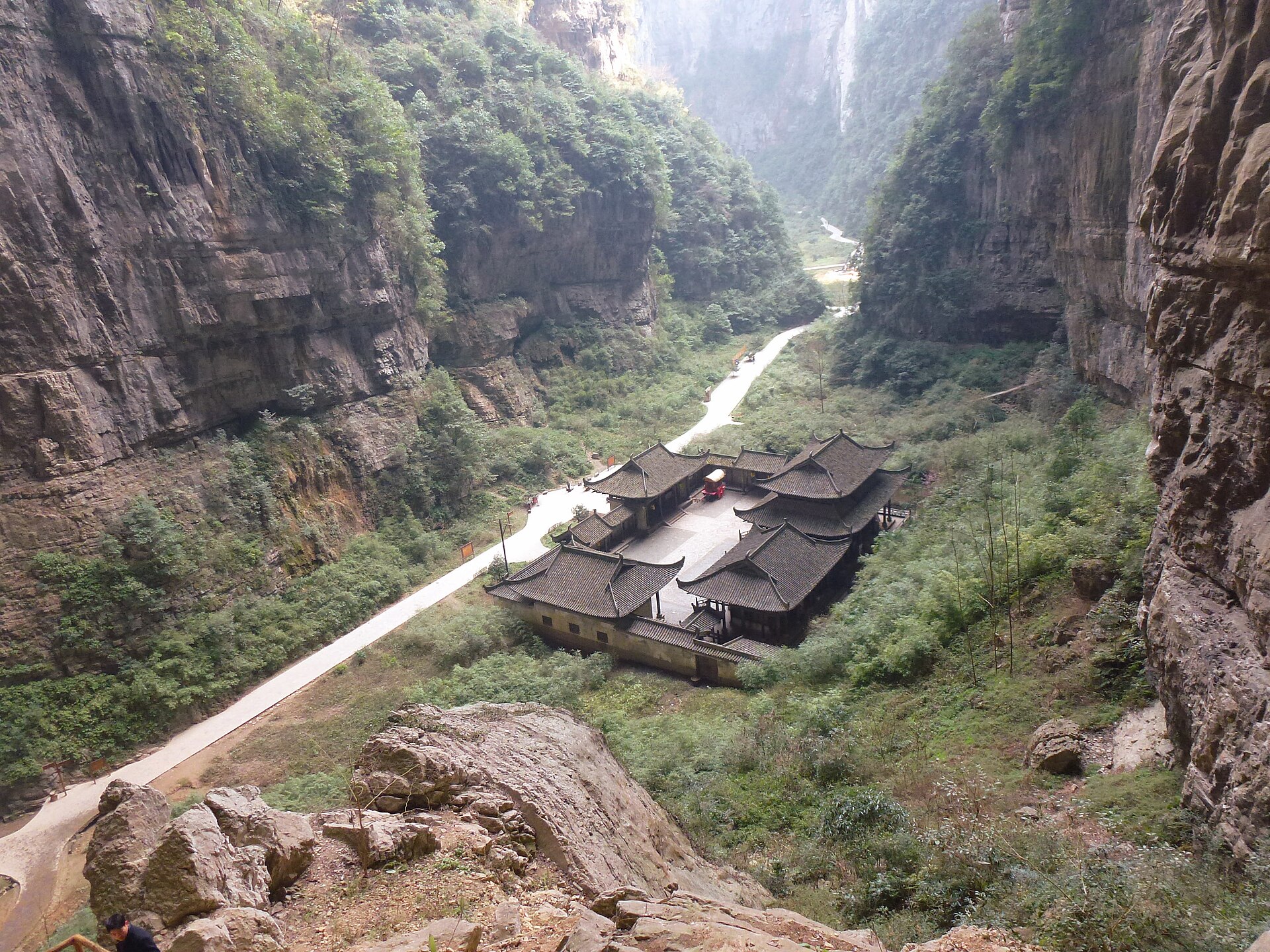 Chongqing · DoDay Trips from Chongqing: Karst Bridges, Carved Cliffs, or a Long SoakWulong gives you stone bridges the size of cathedrals and makes you walk for them; Dazu gives you eight centuries of carved devotion and asks only that you listen. Here is how to run each day without the transport eating it — and when to choose the hot springs instead.Reference ~
08 · SOURCES
Sources and status
Prices, schedules and booking channels change. Recheck the details that matter before you travel.
- UNESCO — Dazu Rock CarvingsVerifiedInscription and site description for the Dazu day option; checked 2026-10-30
- UNESCO — South China Karst (Wulong)VerifiedInscription covering the Wulong karst components; checked 2026-10-30
- Chongqing Municipal Government portalVerifiedOfficial municipal portal for current city and scenic-area information; checked 2026-10-30
- Dianping (Chongqing restaurant reviews — local demand signal)Reference ~Local-signal patterns as described; no rankings reproduced or relied on; checked 2026-10-30