
Central Chongqing occupies a steep peninsula where the Jialing River meets the Yangtze; streets, plazas and station exits stack at many levels, so an address can be perfectly correct and still sit several floors above or below where you are standing
Checked October 2026GUIDES / ITINERARIES
Chongqing in Two Days: Downhill First, Explained Second
Day one delivers the mountain city's physical shock — a one-way walk downhill to the river. Day two explains it: a train through a residential building, a museum of rivers, one modern district. Two days, two different cities wearing the same name.
City Chongqing13 min read9 facts labeledChecked 2026-10-30
01 · IN BRIEF
Ground floor is a local opinion
You do exactly what the metro app says. You ride to the station, you follow the exit signs, you push out through the doors expecting a street — and instead you find a viewing rail, a drop of some twenty storeys, and the river shining far below what turns out to be somebody else's rooftop. Beside the exit, a woman selling oranges watches you recalibrate with the patience of a person who sees this precise expression forty times a day. Welcome to Chongqing, where 'ground floor' is a local opinion.
Two days is enough for this city if each day is given a different job. The first day is physical: start high on the central peninsula and walk one-way downhill through the old lanes toward the water, letting the terrain explain itself to your legs. The second day is interpretive: the train that threads a residential block, the museum that tells you why these rivers matter, one modern district for contrast. This plan keeps the days in that order, keeps each evening to a single idea, and keeps the whole thing honest about stairs.
02 · SEE IT
Two days, in running order
- Day 1, morning — Start at the top: Jiefangbei and the upper peninsula for orientation — the monument, the plateau streets, and your first honest look at how the city's levels stack
- Day 1, afternoon — The one-way descent: old-city lanes and stair streets walked downhill toward the river, with a rail or road exit waiting at the bottom — never a climb back up the same steps
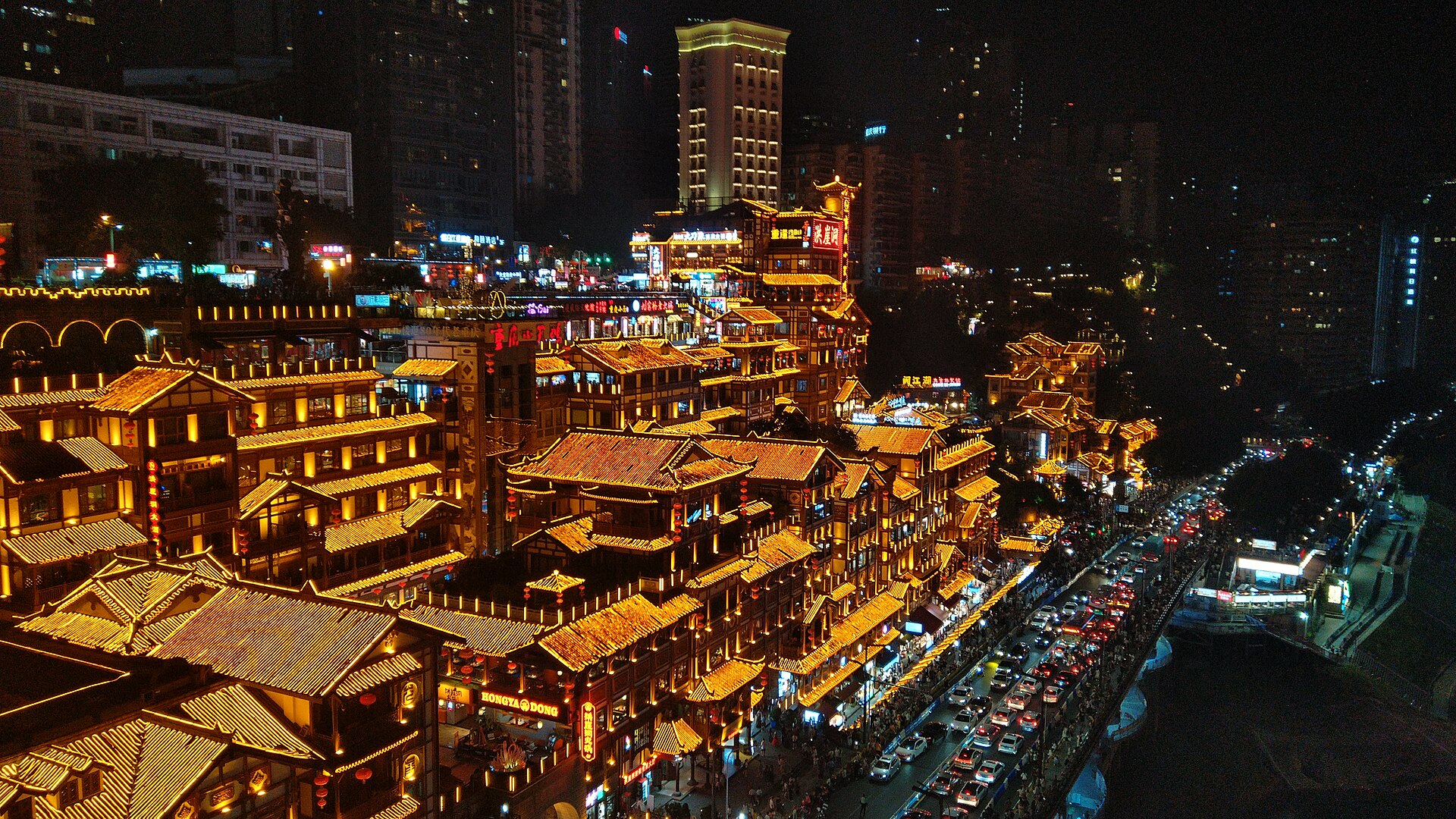
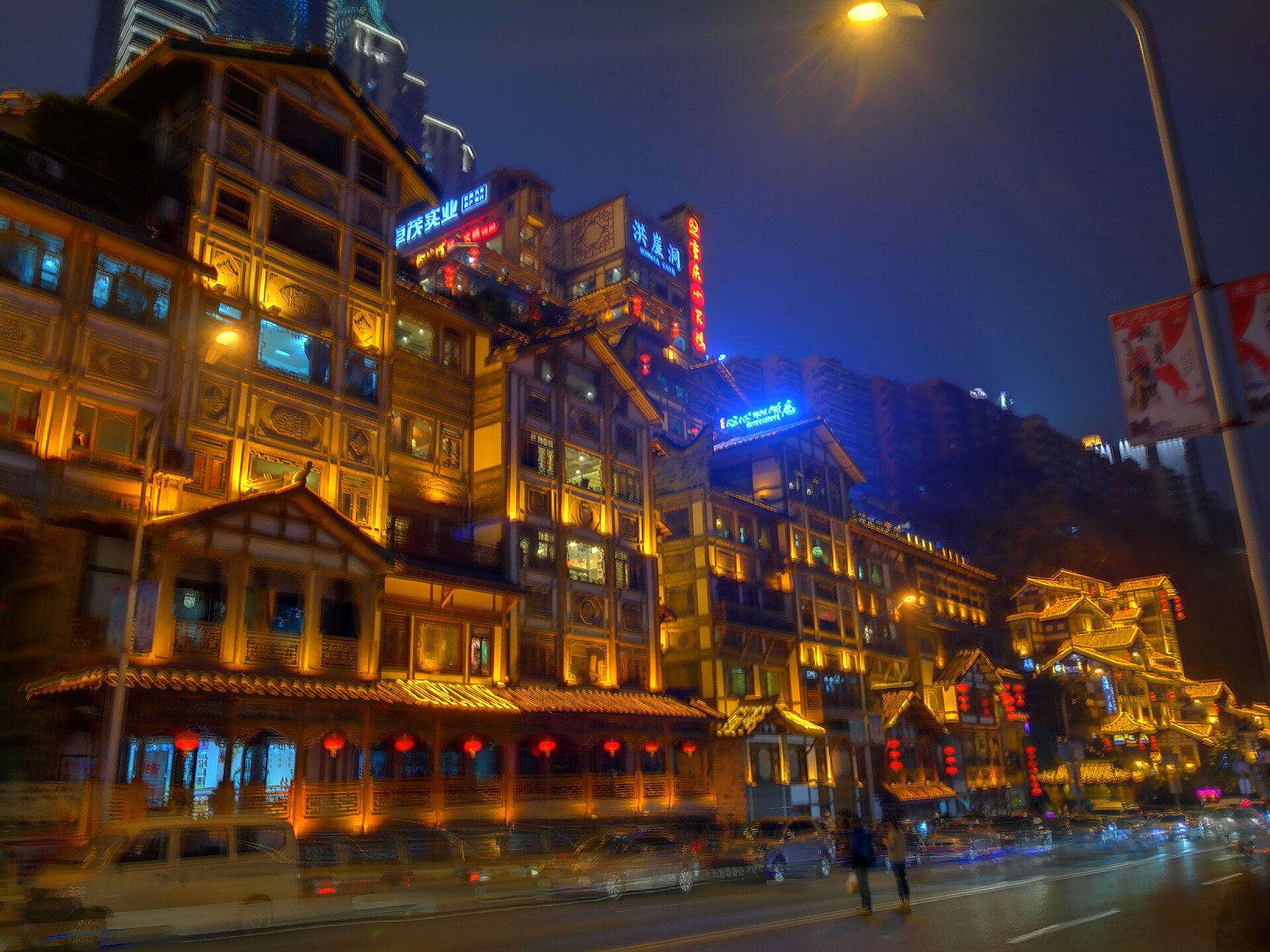
- Day 1, evening — One lit perspective only: Hongyadong from across the water or a Nan'an riverbank view, then hotpot close to the last stop
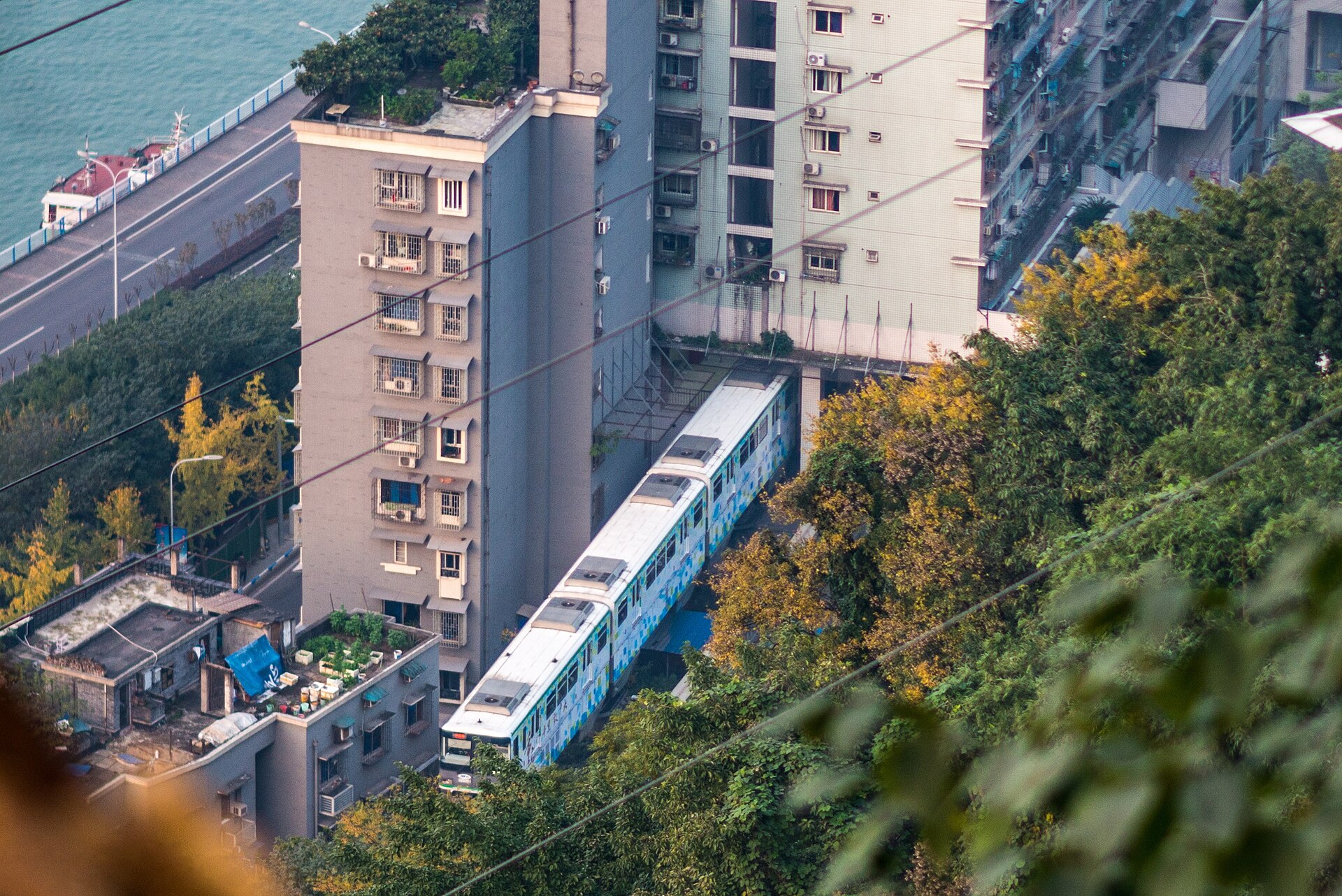
- Day 2, morning — Liziba, done properly: ride Line 2 through the building first, then the official viewing platform for a train or two, then leave
- Day 2, afternoon — The context block: the Three Gorges Museum for the rivers' story, or Guanyinqiao for the contemporary city — pick one and give it real time
- Day 2, evening — The quiet close: Chongqing noodles near the hotel, a short flat walk, an early night before whatever comes next
- Evening card — Hongyadong: the postcard. Best consumed from outside, across the Jialing, with the crowd behind you rather than around you
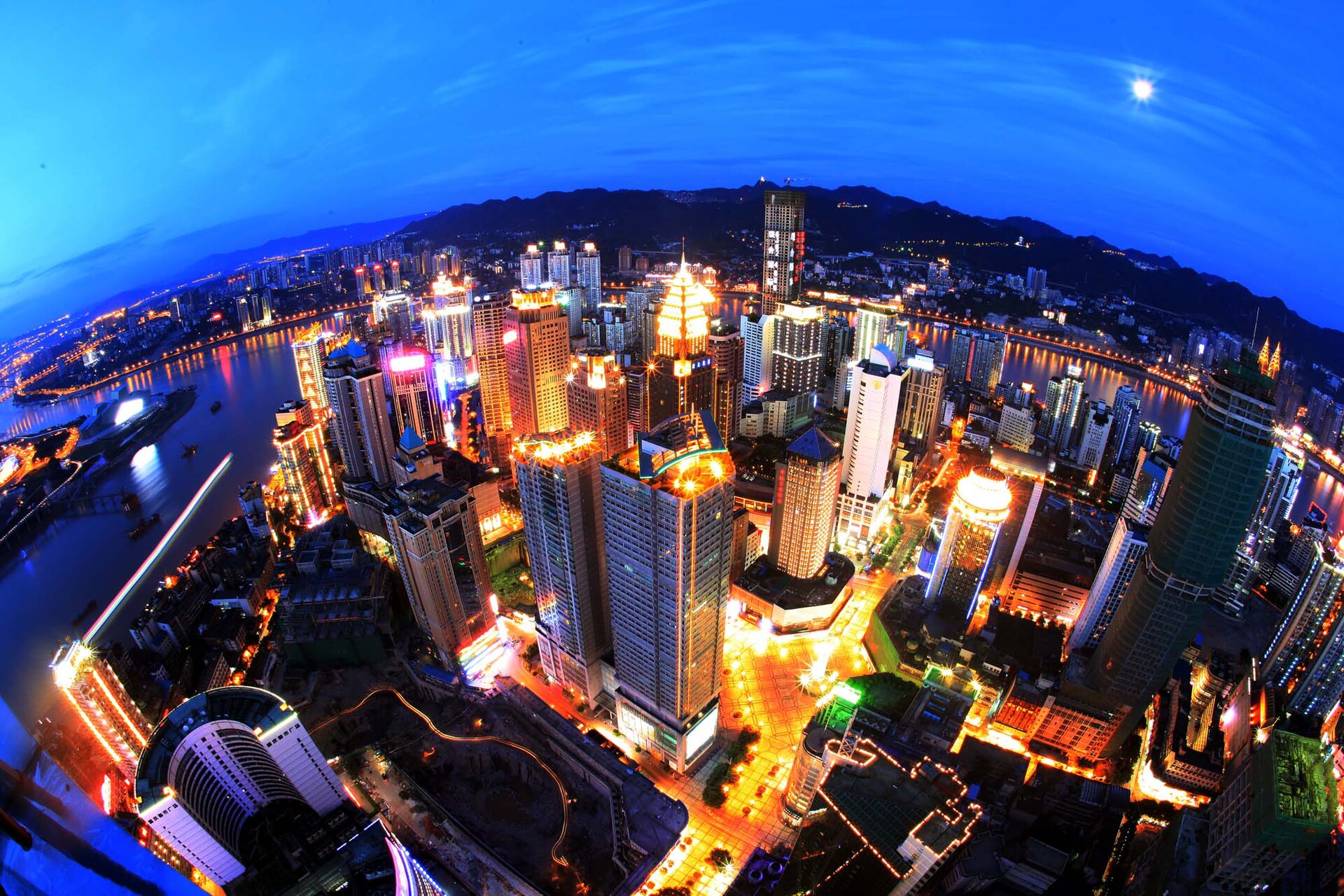
- Evening card — Nanbin Road: the skyline as a single lit wall across the Yangtze — the photographer's version of the same evening
- Evening card — The cableway: a crossing, not a viewpoint guarantee — ride it only if operations and the queue cooperate on the day
03 · TRY IT YOURSELF
Do it like a local
Your ticks stay on this page only. No account or personal data is sent.
04 · THE PROOF
The facts this guide leans on
At Liziba, Chongqing Rail Transit Line 2 passes directly through a residential building, with the station built into the block; a purpose-built viewing platform on the street below is the sanctioned place to watch trains cross
Checked October 2026The Chongqing China Three Gorges Museum faces the Great Hall of the People across its plaza in Yuzhong and covers Ba-Yu culture, the Three Gorges and the reservoir era — the background that makes the river city legible
Checked October 2026Hongyadong is an 11-level complex built into the cliff on the Jialing bank below Jiefangbei; its celebrated night image is the building seen from outside, above all from across the river
Checked October 2026The Yangtze River Cableway is a working transport link as much as an attraction, and its running, queues and hours shift with weather, maintenance and demand — a crossing can never be promised in advance
Checked October 2026Wulong's karst scenic areas lie hours from the centre once intercity transport and the final scenic-area transfer are combined; a visit consumes a full day, which is why it cannot join a two-day city plan without deleting one
Checked October 2026Chongqing food runs on two independent dials — chilli heat and Sichuan-pepper numbness — and local ordering sets them separately; xiaomian noodle shops in particular let you specify both at the counter
Checked October 2026Local diners use Dianping to shortlist hotpot and noodle shops by neighbourhood and queue length; treat its lists as a signal of where the city actually eats, not an authority worth crossing a river for
Checked October 2026The vertical habit runs underground too: Hongtudi station on Line 10 sits more than 90 metres below the surface and is routinely cited among the deepest metro stations in China, so even a simple cross-town ride can involve long escalator descents
Checked October 202605 · STEP BY STEP
How to run the two days
- Step 1 — Choose the hotel by its door, not its district
Jiefangbei convenience is real only if the details work: ask the property for the lobby's street level, the metro exit that actually serves it, and where a car can legally stop to collect you — a taxi may reach a road one floor above or below the door. One hotel for both nights, no exceptions; changing banks mid-trip spends luggage energy and solves nothing about vertical access. If you leave by train, identify the exact departure station now, not on the morning.
- Step 2 — Day 1, morning: start at the top and read the legend
Begin on the plateau around Jiefangbei, where the city is at its flattest and most legible: the monument, the department-store streets, the first viewpoints down to both rivers. Use the morning to calibrate — how a single block can hold three street levels, how the maps lie politely about it. Buy nothing heavy, climb nothing optional. You are reading the legend before walking the map. Let the morning end with a small, unrepeatable pleasure — a bowl of noodles eaten standing where the plateau begins to fall away — because pacing a Chongqing day is mostly the art of placing the breaks before the stairs place them for you.
- Step 3 — Day 1, afternoon: the one-way descent
Now commit to the day's one serious walk: a corridor of old lanes and stair streets — the Shancheng Alley and Shibati side of the peninsula — walked strictly downhill, with tea stops and viewpoints taken as they come. The non-negotiable is the exit: a rail station or a road where a car can reach you at the bottom, so the route never doubles back up its own stairs. After the descent, choose: a south-bank historic block if legs remain, or the hotel and a rest. Both is how Day 2 gets ruined. Walk it with your hands free and your phone charged: the lanes reward looking up — washing lines, mahjong balconies, a staircase that turns out to be somebody's main street — more than they reward luggage.
- Step 4 — Night one: one lit idea, then hotpot
Pick a single lit idea and build the evening around it: Hongyadong glowing across the Jialing, or the skyline as one lit wall from Nanbin Road — not both, and not the cableway and a cruise stacked on top. Eat hotpot once the day's walking is behind you, close to wherever the route finishes, and settle the practical questions before dinner while your phone still has charge: which level your pickup is on, when the last metro runs. The first evening sells the city; it does not need to sell it four times.
- Step 5 — Day 2, morning: Liziba as a lens, not a mission
First ride Line 2 through the building — the experience is better from inside the train than from any photograph of it. Then drop to the official viewing platform, watch a train or two cross, and spend a minute reading what the scene actually demonstrates: rail, housing and slope negotiated into a single structure. Then leave. Half an hour is generous. The travellers still standing there at noon, waiting for a marginally better frame, have traded their museum for a photograph they already have. Stand where the platform intends, keep out of the residential lanes feeding it, and remember the building above the tracks is somebody's home that a railway happens to visit — the courtesy is part of the sight.
- Step 6 — Day 2, afternoon: one context block, properly
Choose one context block and give it real hours. The Three Gorges Museum supplies the deep version: Ba-Yu culture, the gorges, the reservoir that redrew this region — plus air-conditioning and level floors. Guanyinqiao supplies the contemporary version: the commercial, snacking, everyday Chongqing that the tourist peninsula only gestures at. Either completes the picture; attempting both, across town from each other, completes neither. Check the museum's current admission and identity requirements before you set out. End the block at the museum's plaza or the district's snack streets while the light is still good; the point of the afternoon is that the city should feel explained, and explanation takes unhurried time, not mileage.
- Step 7 — Night two: close quietly, protect tomorrow
Close with noodles near the hotel, a short flat walk, and an early night. Pack tonight. Confirm tomorrow's departure station by its full name — Chongqing operates several long-distance stations and they are not interchangeable — and time the transfer with an allowance for level changes, not just distance. The second evening's restraint is what makes the two days feel like a visit rather than an extraction.
06 · WHERE THIS BREAKS
Where the advice stops working
Wulong does not fit 'as well'
It replaces Day 2 almost in its entirety: intercity transport, the final scenic-area transfer and substantial walking inside the gates. Choose it only if karst scenery outranks the city itself — and accept that Liziba, the museum and the slower districts come off the plan to pay for it.
The cableway is a maybe, always
Operations, queues and weather jointly decide whether the cableway is a plan or a hope on any given day. Hold a river-view alternative you would genuinely enjoy, and let the crossing be a bonus rather than the evening's load-bearing wall.
Stairs are the tax on everything
Two stair districts in sequence, a hotel without a working elevator route, a viewpoint climb saved for after dinner — individually small, together fatal for older knees and tired children. Verify the hotel's elevator access, pre-agree one vehicle transfer for the worst climb, and let somebody say 'enough' without it becoming a negotiation.
Night views repeat easily
The same corridor photographed by day and night, the skyline from both banks, a cruise on top of a viewpoint: one experience billed three times. If the first evening delivered, spend the second differently or not at all — repetition is the two-day trip's most common filler.
Rain rewrites the hillside
Wet stone stairs are genuinely treacherous and Chongqing rain arrives with conviction. If the forecast turns, swap the descent and the museum between the two days rather than hero-walking a slick hillside; the plan is a structure, not a bet.
Families: shorten, don't stack
For a child, Liziba is a quarter-hour of delight, not a roadside vigil for the perfect shot. The family version of this plan is one short downhill route, one indoor block, vehicle help on the worst climb and an early finish — and it is a better trip than the maximal version endured badly.
Summer humidity is a route condition
Chongqing's summer heat arrives with heavy humidity that turns the same staircase into a different proposition by 14:00. Front-load outdoor walking into the mornings, let the museum or the hotel own the early afternoon, and treat water as equipment — the plan above already leans that way, and in July and August it stops being a preference and becomes the design.
07 · KEEP READING
Keep the trip moving
 Chongqing · DoChongqing First Time: Learn the Levels Before the LandmarksA city where the ground floor may be the eleventh floor, where your hotel can sit above the street your taxi is on — read the terrain first and Chongqing turns from a maze into a machine you can operate.Verified
 Chongqing · DoLiziba Monorail: Ride Through First, Photograph SecondThe train really does run through the flats — but the good visit is a transport stop, not a photo siege: ride Line 2 through the station, drop to the viewing platform, watch three trains go in, and be on your way inside the hour.Verified
 Chongqing · DoChongqing Night Views: Where to Stand When the Lights Come OnHongyadong from outside, the peninsula from across the river, or the whole city from above — Chongqing's night is four different shows sharing one stage, and the trick is choosing a single one and engineering everything else around it.Reference ~
08 · SOURCES
Sources and status
Prices, schedules and booking channels change. Recheck the details that matter before you travel.
- Chongqing Municipal Government (English portal)Reference ~Municipal visitor, culture and district information for the city
- Chongqing China Three Gorges MuseumReference ~Official information for the Day 2 context block: collections, opening and admission notices
- Dianping (Chongqing restaurant reviews — local demand signal)Reference ~Local dining signal only: where the city actually eats; no rankings relied on