
One major operator's published pattern makes the direction concrete: its downstream Chongqing-to-Yichang sailing is listed at four days and three nights, while the upstream version of the same route is listed at five days with four nights — direction is a scheduling decision, not a detail
Checked October 2026GUIDES / ITINERARIES
Chongqing Yangtze Cruise Guide: The Right Ship, the Right Cabin, the Real Ending City
Three nights down the gorges or four nights up them, a cabin that is a contract rather than a photo, and a finish line in a different city — the Yangtze cruise rewards travellers who read the paperwork before the brochure.
City Chongqing13 min read8 facts labeledChecked 2026-10-30
01 · IN BRIEF
The ship is lit, the gangway is steep, and the couple ahead of you booked the wrong cruise
Chaotianmen at dusk is a staircase with a river at the bottom. You are picking your way down the wharf steps with a suitcase in each hand, past porters carrying other people's luggage on bamboo poles, while your cruise ship glows at the pontoon below like a small, patient city. Ahead of you, a couple is having the conversation you were smart enough to have last week: their confirmation says one night, dinner included, back by ten. They have bought the city lights boat. The ship they actually wanted — the one that sleeps, sails through two gorges while they breakfast, and lets them off three hundred kilometres away in Yichang — is the one boarding beside it, and it sold out in their cabin class a month ago.
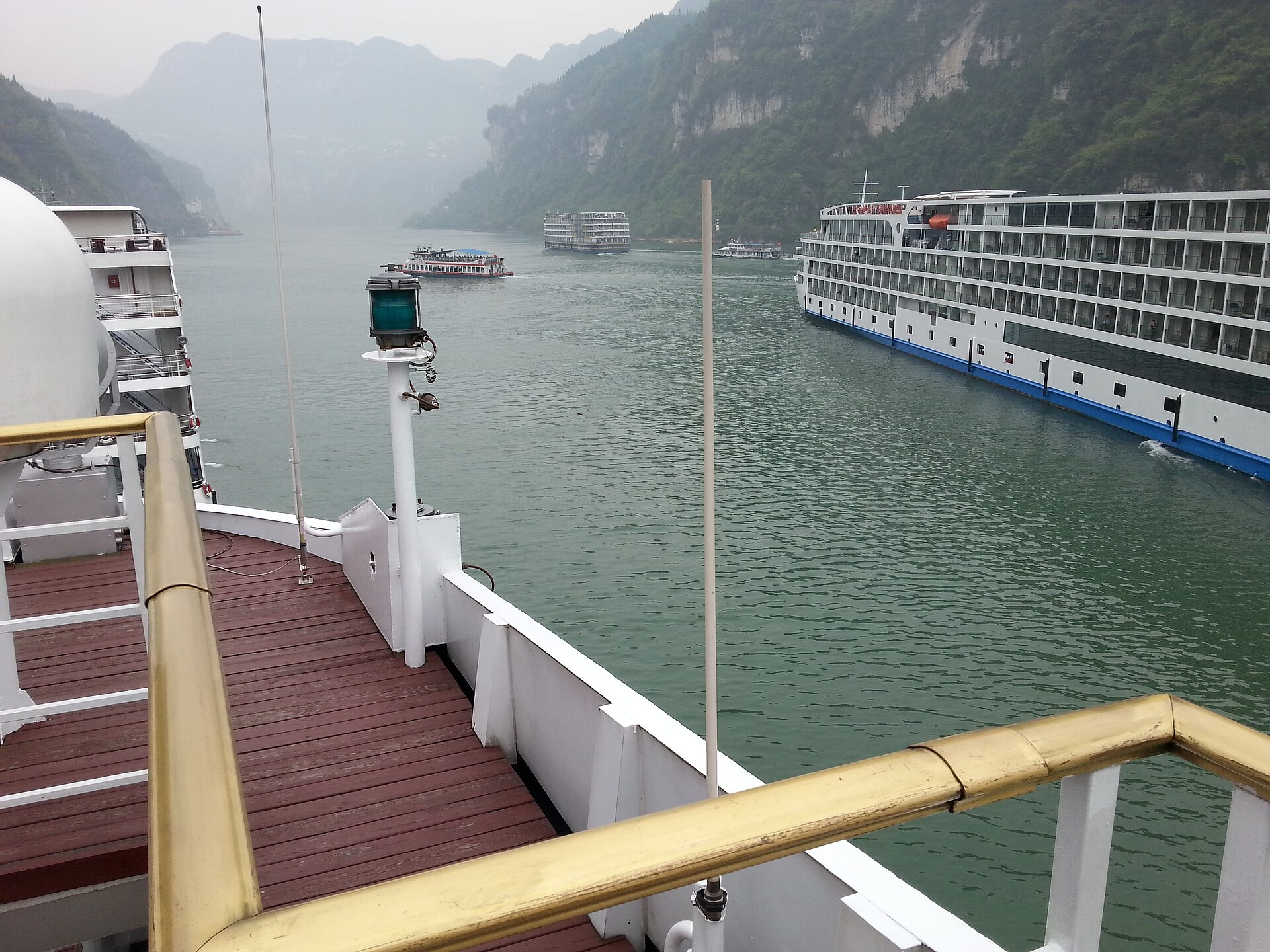
A Three Gorges sailing is the rare trip where the transport is also the hotel, the restaurant and most of the sightseeing, which means the buying decisions are the trip. Direction, vessel, cabin, inclusions, the exact wharf at each end: get those right on paper and the river does the rest. This guide walks the purchase in the order a careful traveller makes it — what the product actually is, how the two directions differ, how to compare ships and cabins without being sold a fleet photo, and how boarding day and disembarkation day really work on the ground.
02 · SEE IT
One downstream sailing, in running order
- Day 1, evening — Board at the Chongqing wharf named on your own voucher, settle the cabin, eat aboard, and watch the city light up as the ship casts off
- Day 2 — A shore stop at Fengdu, then river time: decks, briefings, and the first hills closing in
- Day 3 — Qutang Gorge in the morning, Wu Gorge after, with a smaller-boat excursion up Goddess Stream in between; White Emperor City is the optional extra on some programs
- Day 4 — Off the ship in the Yichang area, a visit to the Three Gorges Dam, then the operator's transfer toward the city — your onward train or flight is a separate problem to solve
- Direction card — Downstream, Chongqing to Yichang: the published example runs four days and three nights. The current does the work, the pacing is brisk
- Direction card — Upstream, Yichang to Chongqing: the same operator's example runs five days and four nights. One extra night aboard, and an embarkation point near Yichang that may be a pier outside the city
- Product card — Three Gorges river cruise: sleeps aboard, ends in a different city, the gorges are the point
- Product card — Chongqing night cruise: a short evening circuit of lit banks and bridges that returns you to the same city the same night
- Paperwork card — The unit of comparison is never the headline fare: it is vessel + cabin + included excursions + both port transfers, written down
03 · TRY IT YOURSELF
Book it like someone who has read the fine print
Your ticks stay on this page only. No account or personal data is sent.
04 · THE PROOF
The facts this guide leans on
That same downstream example runs: board in Chongqing on the first day, a Fengdu stop on the second, Qutang and Wu gorges plus a Goddess Stream excursion on the third, ending in the Yichang area on day four, where the program closes with the Three Gorges Dam and a transfer into the city; White Emperor City appears as an optional extra
Checked October 2026The upstream example boards at Maoping Pier, so a sailing advertised simply as starting in 'Yichang' can still involve a land journey to the actual vessel — the port name, not the city name, is the operative fact
Checked October 2026A city night cruise and a Three Gorges cruise are different products that search results routinely blur: one is a short illuminated circuit returning locally, the other a multi-night one-way journey ending elsewhere. The separators that never lie are the named ship, the count of nights, and the city the journey ends in
Checked October 2026Even fares presented as all-inclusive can leave out alcohol, premium dining, optional excursions and gratuities, and the operator's own FAQ leaves service charges to be confirmed at booking — the itemised list, not the label, is the price
Checked October 2026Boarding logistics are physical: the last stretch from road to vessel can involve stairs, porters or a changed boarding arrangement, and wharf assignments can shift — operators expect passengers to arrive inside a stated window with a same-day way to reach them
Checked October 2026Shore excursions divide into included and optional, and the scenic label on a stop says nothing about its walking distance, stairs, bus time or shopping detours — the physical load has to be asked about stop by stop
Checked October 2026Disembarkation day is a chain, not an event: which wharf you actually leave the ship at, whether the dam is part of your final morning, where the land program sets you down afterwards, and whether the run to the station or airport is included all have to be confirmed for your booking, because a published example only proves the transfer toward the city happened on that sailing
Checked October 202605 · STEP BY STEP
How to buy and board, step by step
- Step 1 — Choose the direction before anything else
Downstream, Chongqing to Yichang, is the classic shape: in the published example it takes four days and three nights, which suits an itinerary that gives Chongqing its own days first and then rides the river out. Upstream reverses the effort — five days and four nights in the same example — and moves the logistical puzzle to the start: you must reach an embarkation point in the Yichang area, which on the example sailing is Maoping Pier rather than a city-centre dock. Decide by where the cruise sits inside your wider trip. If China time is short, downstream usually protects it; if you are arriving via the dam region anyway, upstream can work beautifully. Either way, price the whole journey, including the night before boarding and the onward leg after the far end — the fare is only the middle of the cost.
- Step 2 — Compare exact ships, not cruise lines
Every fleet has a flagship in the photographs and other hulls doing the work. Insist on the named vessel for your sailing date, then look at the things that decide daily life: when it launched and when it was last renovated, how many passengers it carries, how the dining room is organised, whether it has lifts between decks, its smoking policy, what medical support exists aboard, and what the Wi-Fi and power sockets are honestly like. Recent passenger photos of that specific ship tell you more than the operator's gallery. Big ships bring facilities and operational depth; smaller ones bring character and fewer redundancies. Licensed, safe operation outranks styling every time — and if a seller cannot or will not name the ship, walk to a seller who can.
- Step 3 — Choose the cabin on usable facts
A cabin listing should survive six questions: how much usable floor area, is the bathroom private, is there a window or a real balcony, how are the beds arranged, which deck is it on, and how far is it from the lifts. Then ask the noise question directly — engines, public rooms and crew areas all have addresses, and the cabin above the disco or beside the galley is cheap for a reason. Do not assume a higher deck buys quiet or easier access, especially for anyone managing mobility. Solo travellers should price the single supplement into the comparison from the start. Families need occupancy, extra-bed type and child pricing in writing. And understand the substitution clause: whether the operator may move you to a different cabin in the same category matters more on a sold-out sailing than any photograph of the room.
- Step 4 — Audit the fare line by line
Ask for the quote as an itemised document: the exact vessel and sailing date, the cabin and who is sleeping in it, the all-in total for your party, single supplements and service charges already inside it, which shore excursions are included, which are optional and what each optional one costs, and which transfers at the Chongqing and Yichang ends are part of the deal — with pickup and drop-off points named. Add the cancellation terms, the vessel-substitution terms, and what happens if water levels or weather rewrite the program. A phrase like 'bus transportation included' in a listing proves nothing about your hotel, the airport or the railway station. If you are booking far ahead — a 2027 sailing, say — get a dated quote for that departure and confirm real availability before you bolt flights and trains onto either end, because schedules and prices on the river are living documents.
- Step 5 — Plan the shore excursions by physical load
The excursion list is where itineraries that look identical on a poster stop being identical. Two ships can promise the same three scenic names and give you wildly different hours ashore. For each stop, ask: is it included or optional, how far do we walk, how many stairs, how long is the bus ride, are there shopping stops built in, what language is the guiding in, where are the toilets, and what happens if I stay on the ship instead. That last question matters most for travellers with limited mobility: a lift aboard the vessel says nothing about gangways, floating docks, shore steps or excursion coaches, and those are where a cruise is won or lost for a wheelchair user or a bad knee. Get the per-stop detail in writing before payment, not reassurance at the gangway.
- Step 6 — Treat boarding day as a logistics exercise
Sleep in Chongqing the night before sailing — this is the single easiest risk to remove from the whole trip. On the day, work from the operator's own instructions: the wharf assignment and the vehicle access to it can change, so keep a channel for same-day updates open, plus the pier's Chinese name in your phone. Label your luggage, keep passport and medication on your person, and arrive inside the window the operator gives you rather than a time you read on a forum. Expect the final descent from the road to the vessel to be the most physical five minutes of the day — stairs, a pontoon, possibly porters for hire. And keep your driver with you until the embarkation contact confirms, out loud, that this ship at this pier is yours. Travellers have waved goodbye to their ride at the wrong hull.
- Step 7 — Plan the Yichang ending before you pay
The cruise ends in a different city, which means the trip is not over when the ship docks. Before booking, establish the chain for your sailing: which wharf you actually disembark at, whether a dam excursion is built into the final morning, where exactly the land program drops you afterwards, what time the operator expects it to finish, and whether the run to the railway station or airport is included or yours to arrange. In the published example, guests are transferred toward Yichang city after the dam visit — that is evidence about one sailing, not a promise about yours. Leave real slack before any onward train or flight. A multi-day river journey operates under rules that permit change, and the ending transfer is one more stage where minutes evaporate. Travellers who plan the ending first board in Chongqing noticeably calmer.
06 · WHERE THIS BREAKS
Where the brochure stops helping
The most expensive mistake is buying the wrong product
A one-hour night circuit of the lit-up banks and a three-night journey through the gorges share vocabulary, photographs and sometimes piers. If the price looks impossibly good for a 'Yangtze cruise from Chongqing', it is the evening boat. Check the three separators before any money moves: the vessel's name, the count of nights, and the city you wake up in on the last day.
The river keeps editorial rights
Water levels, fog, rainfall, dam operations and daylight all shape what you see and occasionally what the ship may do. Programs can change inside the operator's permitted rules, and a photograph from another season proves nothing about navigability or scenery on yours. Read official transport information and the operator's own updates close to sailing, and never build a same-day, no-margin connection onto the end of a river journey.
'Accessible ship' is a label, not a plan
Safe planning needs written measurements and step counts: cabin and bathroom, lift, dining room, gangway, the port access at every pier, and every excursion you hope to take. Say whether the chair is pushed by hand or driven by a motor, and whether help with transfers forms part of the requirement. Ask how boarding works if water levels move the ship's position. Travellers who collect this detail in advance cruise comfortably; travellers who trust the brochure adjective improvise at a pontoon.
Families: a ship is not a resort with the gates locked
The format suits families — fewer hotel changes, the scenery comes to you — but verify the practicalities: railings and supervision on deck, whether a child can stay on the ship, supervised by an adult from your own party, while an excursion goes ashore, meal flexibility, and what medical support exists. A seven-year-old can love the sailing and still be undone by a three-hour guided bus stop; choose excursions with the youngest passenger in mind, not the average one.
Language promises come in three strengths
'English available' can mean printed information sheets, some bilingual crew, or a dedicated English-speaking guide on excursions — experiences that share nothing but the advertisement. Confirm which one your sailing carries, in the quote, especially for the excursions, where interpretation is the difference between a famous cliff and an explained one.
Connectivity and cabin space are finite
Pack for the ship you booked, not a hotel: layers for wind on deck, rain protection, shoes that grip gangways and shore paths, a small day bag for excursions, copies of your confirmations, and medical and dietary paperwork translated into Chinese. Load your e-reader before boarding; gorge walls are indifferent to your streaming plans. Formal clothes matter less than a warm layer at the rail at dawn.
07 · KEEP READING
Keep the trip moving
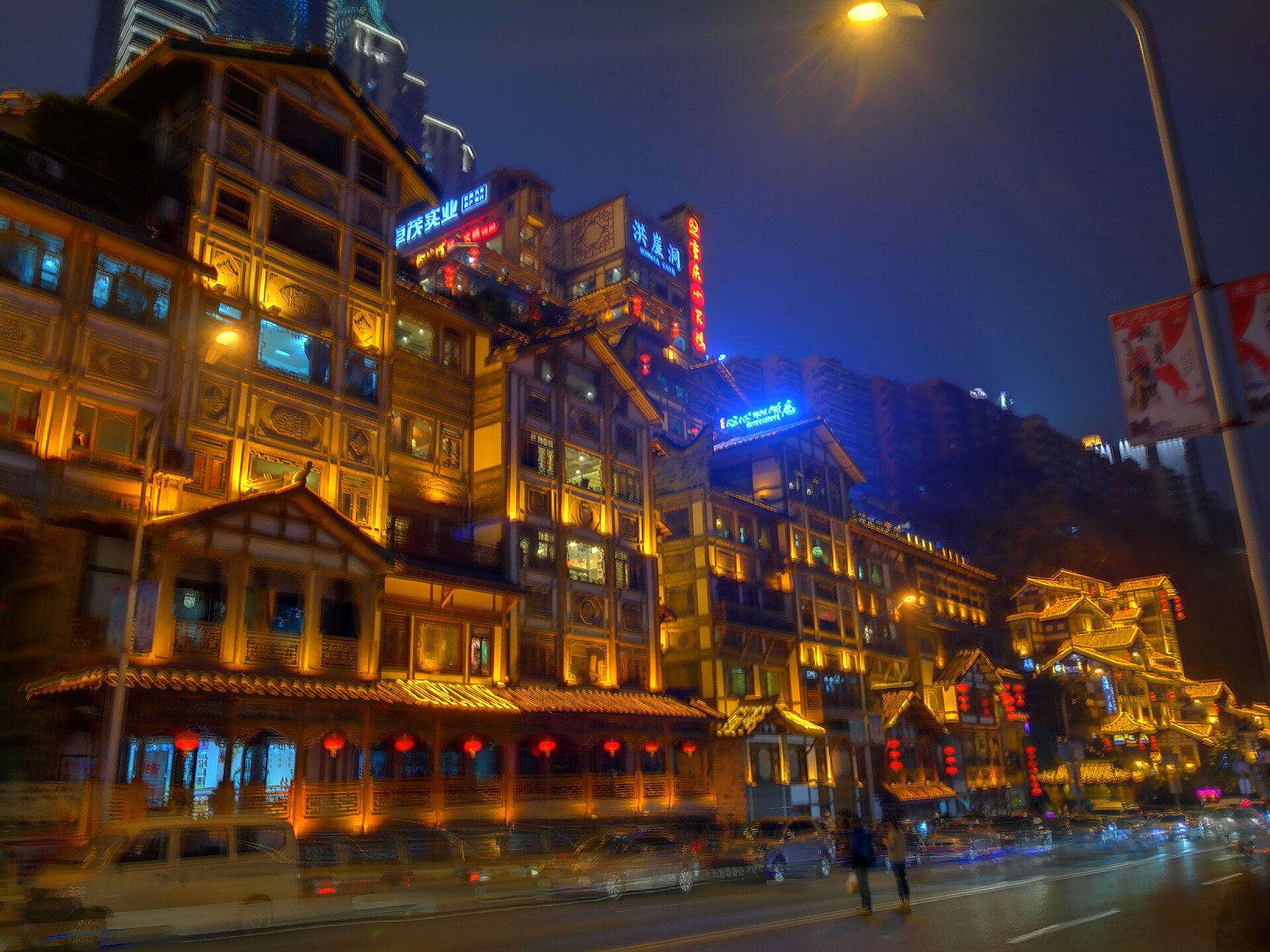 Chongqing · DoChongqing First Time: Learn the Levels Before the LandmarksA city where the ground floor may be the eleventh floor, where your hotel can sit above the street your taxi is on — read the terrain first and Chongqing turns from a maze into a machine you can operate.Verified
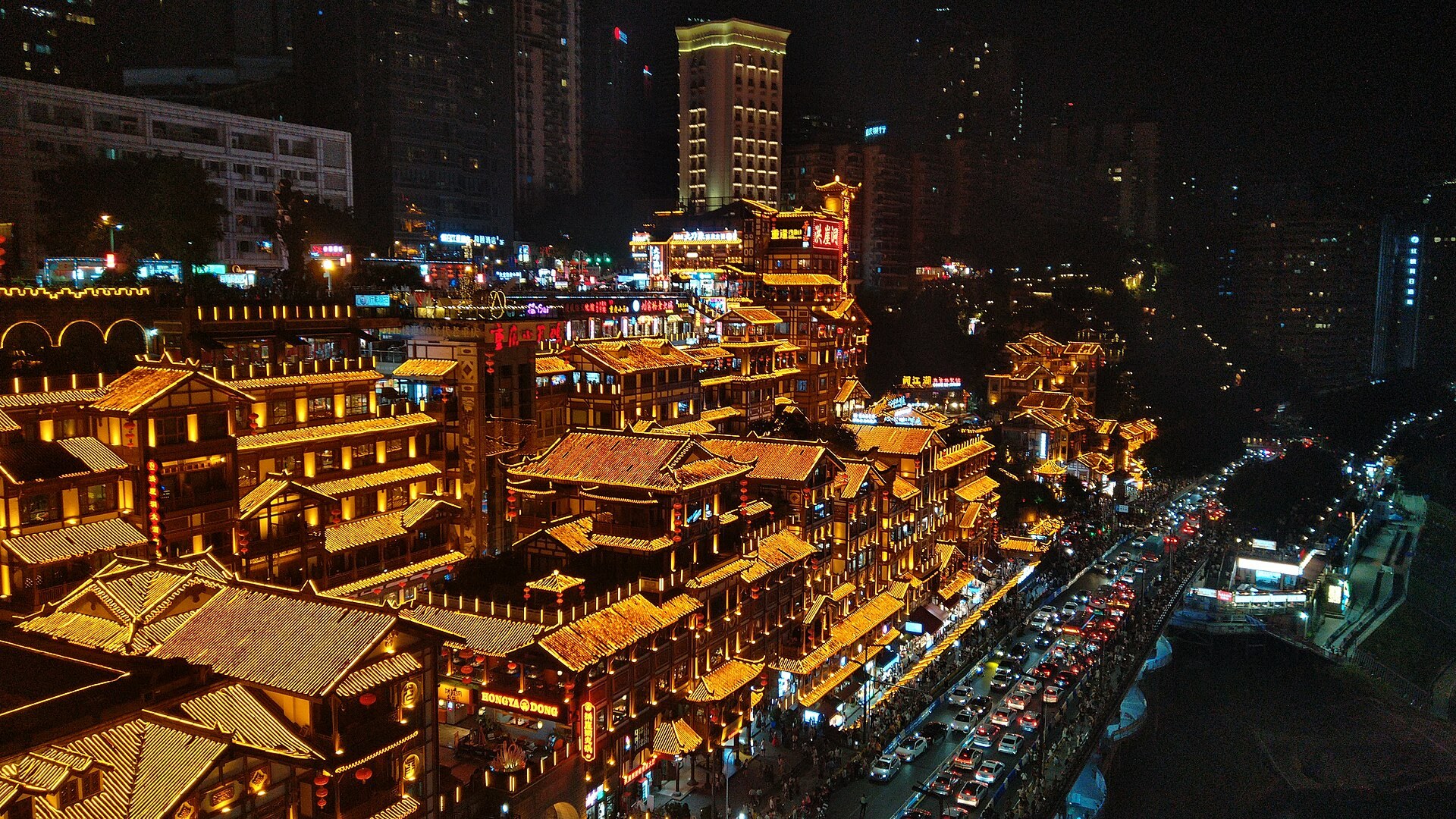 Chongqing · PrepareWhere to Stay in Chongqing: Jiefangbei, Guanyinqiao, Nanbin Road or Eling?Jiefangbei puts you inside the postcard, Guanyinqiao inside local life, Nanbin Road across from the view, Eling inside the old mountain city — and the fog votes on all of them.Reference ~
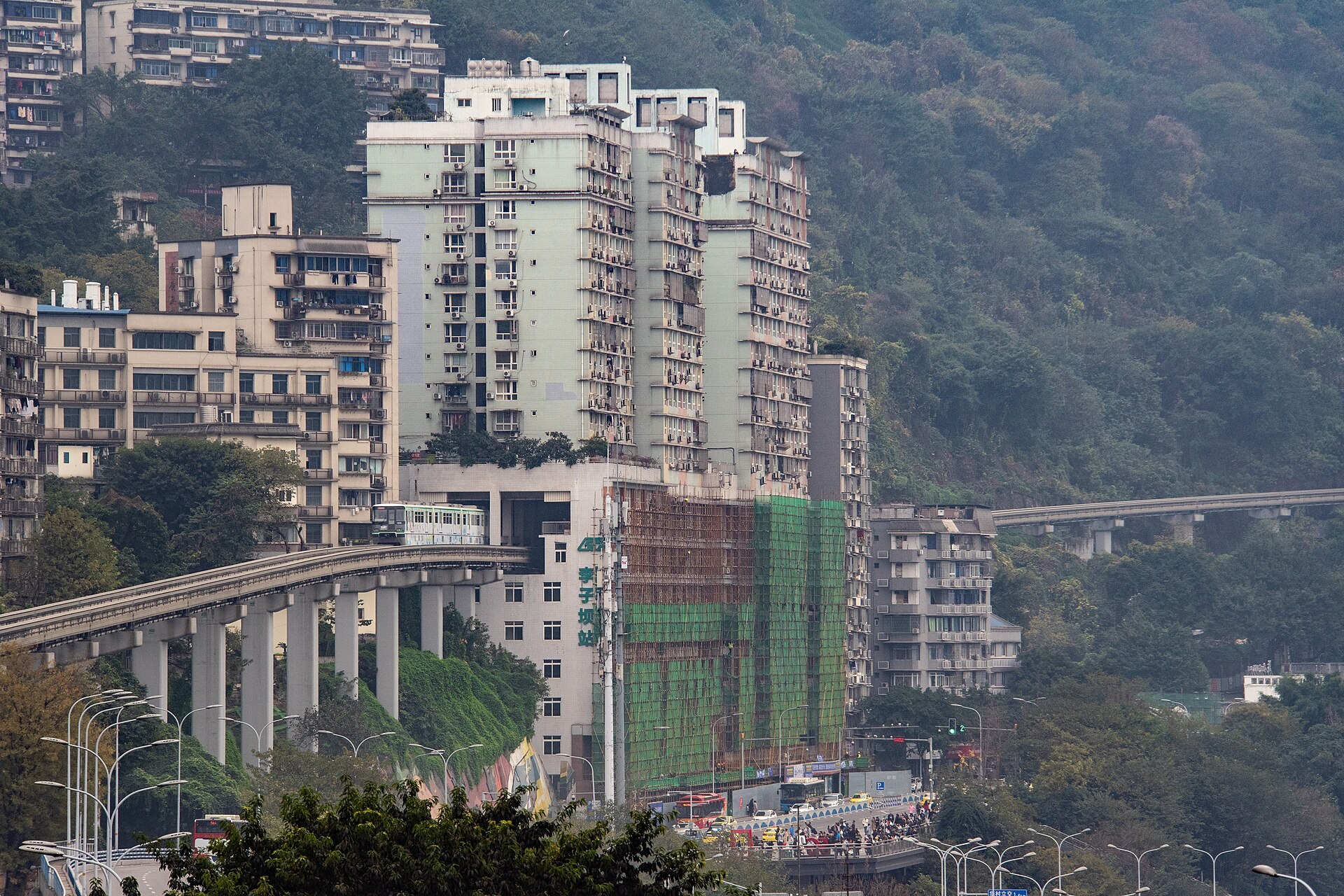 Chongqing · DoChongqing in 2 Days: Walk Downhill, Ride Through the BuildingIn Chongqing you plan by floor, not by distance: a monorail through a living room block, one honest climb, a lit cliff after dark, and stairs treated as the sightseeing itself.Reference ~
08 · SOURCES
Sources and status
Prices, schedules and booking channels change. Recheck the details that matter before you travel.
- Chongqing Municipal People's Government portalVerifiedOfficial city portal for current public information on Chongqing transport and visitor services; URL checked live 2026-10-30
- Chongqing Municipal Commission of Culture and Tourism DevelopmentVerifiedOfficial tourism authority channel for Chongqing attractions and cruise-related public notices; URL checked live 2026-10-30
- Century Cruises — official site of the operator whose published example itinerary anchors this guideReference ~Operator's own published itineraries and terms; examples cited here describe specific sailings, not a network guarantee; URL checked live 2026-10-30
- Ministry of Transport of the People's Republic of ChinaVerifiedNational transport authority — the public-information backstop for river navigation and port matters; the sailing operator remains responsible for your exact itinerary; URL checked live 2026-10-30