
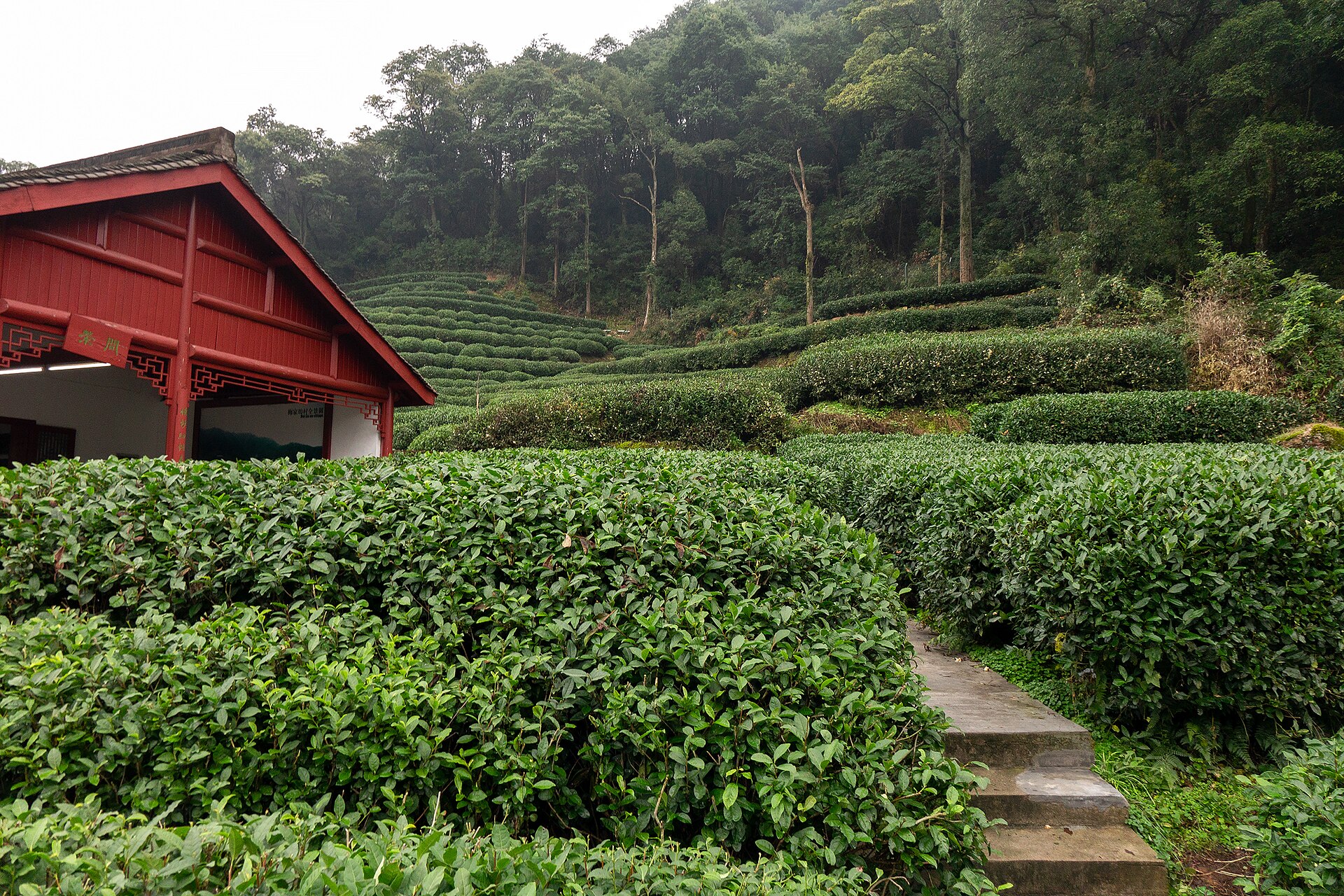
West Lake Longjing is a protected origin name: the genuine article grows in a defined production area in the hills around the lake, while a plain Longjing label can describe tea from a far wider region — the two descriptions should never be treated as interchangeable
Checked October 2026GUIDES / SHOPPING
Hangzhou Souvenirs, Bought by Evidence: Longjing, Silk and the Folding Fan
Tea whose origin you can actually state, silk whose fibre label you have read with your own eyes, and a folding fan carrying a maker's name — Hangzhou rewards shoppers who buy evidence rather than packaging.
City Hangzhou12 min read8 facts labeledChecked 2026-10-30
01 · IN BRIEF
The most expensive word in the shop is 'West Lake'
The seller lifts the lid off the tin before you have even asked a question, and the smell does half his work for him: chestnut, warm grass, spring. The tin says Longjing in beautiful calligraphy, the price says this is the good stuff, and the lake is glittering obligingly through the shop window. Everything in the scene is designed to stop you asking the only question that matters — where, exactly, did these leaves grow? Two streets away, another counter will brew you two cups side by side, tell you plainly which hills each came from, and charge you less for the one you like more.
Hangzhou's gift shelf rests on three crafts — Longjing tea, silk, and the folding fans of a historic local maker — plus the pastries and lotus-root starch that fill the gaps. Each category fails in its own way when bought carelessly, and each has its own kind of evidence: an origin you can state for the tea, a fibre label you can read for the silk, a construction you can inspect for the fan. This guide works through the three decisions separately, because a shop that bundles them into one scenic gift set is asking you to stop making them.
02 · SEE IT
The short list, matched to the person receiving it
- For the daily tea drinker — Two modest packs of Longjing with named origin and packing date beat one grand tin carrying neither
- For the scarf wearer — Silk chosen by fibre label, in a colour that already exists in their wardrobe
- For the hard-to-buy-for — A folding fan from a named maker: light in the bag, useful in summer, and a story you can tell in one sentence
- For the office — Longjing tea pastries: shareable on day one and gone before shelf life becomes a question
- For the cook — West Lake lotus-root starch for the sweet soup locals make, with the method explained before you pay
- For yourself — The exact cup you tasted at the counter and preferred, in the smallest honest quantity on the shelf
- Skip — Any miracle-grade tea claim you cannot taste your way to believing
- Skip — A large scenic gift box whose contents list nobody offered to show you
- Skip — 'Silk' priced like treasure whose fibre label, read closely, says something else
03 · TRY IT YOURSELF
Do it like a local
Your ticks stay on this page only. No account or personal data is sent.
04 · THE PROOF
The facts this guide leans on
UNESCO's Hangzhou profile ties the city to both silk making and Longjing tea, and the city holds a Creative Cities listing for crafts and folk art — background that explains the gift shelf, while certifying nothing about any individual shop
Checked October 2026The earliest spring pickings — leaves gathered before the Qingming festival in early April — carry the famous premiums in the Longjing trade, which is why harvest language is the first thing inflated at a souvenir counter
Checked October 2026Wangxingji is Hangzhou's historic fan-making house, with roots in the nineteenth century, and its own company information treats materials and construction fan by fan — the maker's name is a stronger lead than the souvenir category itself
Checked October 2026The China National Silk Museum stands in Hangzhou, south of the lake, documenting the central place of this region in Chinese silk — useful context for why the city sells silk, and no guarantee at all about the scarf in your hand
Checked October 2026Fibre-content labelling is the only silk test truly available to a shopper: printed designs move freely between pure silk, silk blends and fully synthetic cloth, and all three can look identical across a counter
Checked October 2026West Lake lotus-root starch is sold in grades and blends; retail packs may add sugar or other starches, so the ingredient list — not the lakeside artwork on the box — defines what you are actually buying
Checked October 2026Dianping's Hangzhou pages expose the local rhythm of this shopping: spring tea buying surges and bakery queues appear there in season, a directional signal for where residents spend, rather than a ranking to obey
Checked October 202605 · STEP BY STEP
Three crafts, three kinds of evidence
- Step 1 — Decide the recipient before the product
Hangzhou shopping goes wrong at the level of the gift list, not the shop. A devoted tea drinker deserves leaves; a colleague who never makes tea deserves pastries; a person who wears scarves deserves silk, and a person who does not will leave the finest scarf in a drawer. Walk the categories in this guide against named people, and let each purchase be small, specific and defensible. The city's own rhythm supports restraint: something tasted and enjoyed during the visit, one craft object chosen properly, and leaves only for someone who will brew them while they are still fresh.
- Step 2 — Buy Longjing by origin, date and cup
Longjing is a pan-fired flat green tea, and its price ladder is built on three claims: where it grew, when it was picked, and how it tastes. Test all three. Ask which production area the pack is claiming and get that origin noted on the pack or on the receipt — a seller confident in West Lake leaves will not resist writing it down. Check the producer name and packing date, because green tea fades and last season's leaves in a beautiful tin are still last season's leaves. Then taste: any serious counter will brew, so compare two price points and buy the cup you genuinely prefer. A prestige harvest description you cannot assess, for a recipient who cannot assess it either, is money spent on adjectives.
- Step 3 — Buy silk by the label, not the pattern
Hangzhou silk is a real tradition and an unreliable souvenir word. Pure silk, silk blends and printed synthetics all take the same West Lake prints beautifully, and drape and shine across a counter will not separate them at tourist distance. The garment label will: composition first, then seams and finish, then care instructions. None of this makes a blend a bad purchase — a well-made blend at a blend's price is a fair gift. What you are refusing to do is pay a pure-silk premium against evidence that was never produced. Choose colours the recipient already wears, and favour a scarf or small pouch over a large ceremonial piece bought for its story.
- Step 4 — Buy the fan by its construction
A folding fan is the most underrated Hangzhou gift: genuinely useful, light, flat, and tied to a famous local making tradition. Judge the object, not the display. Open and close it gently and watch whether the action is smooth and even; inspect the ribs for straightness and the paper or fabric joins for neatness; ask directly whether the design is printed or painted by hand, and expect the honest answer to be priced accordingly. A named maker's fan — Wangxingji is the historic Hangzhou house — gives you a sentence of story to hand over with the gift. Then protect it: a sleeve or flat box, and a place in your luggage where heavier purchases cannot bend the ribs.
- Step 5 — Use pastries and lotus-root starch as the low-risk gifts
Not every gift needs a provenance investigation. Longjing tea pastries are the social purchase: flavoured, portioned, opened at the office and finished while they are good. Taste the flavour first, because leaf-green colouring and a leaf-shaped mould say nothing about how much tea is inside. Lotus-root starch suits a cook — it makes the translucent sweet soup served around the lake — but read the pack: blends with added sugar or other starches are common, and that is a fact about the product, not a scandal. Check the format against your journey, too: anything with fresh cream filling travels on its own strict instructions, not on your itinerary.
- Step 6 — Sequence the stop like a planner
Hangzhou shopping works best split in two. During the trip, taste: drink the tea in a teahouse or up in the tea villages, try the fresh rice sweets and tea desserts, notice what you actually enjoy. At the end of the trip, buy — somewhere along streets already on your itinerary, comparing at least two sellers within the one category you chose. Expect different expertise in different rooms: a serious tea merchant can walk you through the exact pack in your hand, while a silk seller's authority shows in fibre knowledge. Neither a market nor a scenic-area address guarantees anything; the questions in this guide are the guarantee.
06 · WHERE THIS BREAKS
Where the advice stops working
A tea-garden photograph proves a theme, not a supply chain
Beautiful packaging is a design decision. Photographs of misty hills, calligraphy, temple references and blessing language can all be printed by anyone, for tea from anywhere. Traceability lives in the unglamorous text: producer, production area, packing date, and a seller willing to repeat them on a receipt. If those four are missing, you are buying the box.
Your palate is not a grading laboratory
Even honest tasting has limits: most of us cannot reliably separate very good Longjing from excellent Longjing across a counter, and the price gap between those grades is where tourist money evaporates. The defence is structural — modest quantities, named origins, two cups compared — rather than confidence. Buy the amount a household will drink in a season, not a cellar.
A blend is fine; a disguised blend is not
The silk rule cuts both ways. Silk blends can be practical, durable and honestly priced, and rejecting every blend would be snobbery. The limit case is the label that hides: tiny print, vague words like 'silk-feel', or a seller who changes the subject when you ask about composition. At that point walk away — Hangzhou has no shortage of counters willing to answer.
Fans are fragile in a packed bag
A fan survives centuries in a drawer and one careless hour under a water bottle in a daypack. Ribs bend, mounts tear, and hand-painted surfaces scuff against zips. Keep the sleeve or box it came with, pack it flat against something rigid, and if you are buying several as gifts, ask for them boxed separately rather than rubber-banded into a bundle.
Food crosses borders on paperwork, not charm
Before buying any edible gift, check the rules of the country you are flying to — its customs or agriculture authority publishes them, and they cover food, plant material, seeds and alcohol with no exceptions for sealed or vacuum-packed goods. Several destinations require every food item to be declared on arrival, sealed or not. A confiscated box of pastries is a small loss; an undeclared one can become a fine and a flag on your record.
There is no citywide shelf-life rule
Keeping instructions belong to the single pack in your hand, not to Hangzhou specialties as a class. One pastry keeps for weeks and another wants eating this week; one tea pack begs refrigeration after opening and the next tolerates a cool cupboard. Any seller quoting a single keeping rule for everything on the shelf is guessing. When instructions and itinerary conflict — a fresh-filled sweet on a three-day journey home — believe the instructions.
07 · KEEP READING
Keep the trip moving
 Beijing · DoBeijing Souvenirs Worth the Suitcase Space: Counter Pastries, Jasmine Tea and Folk CraftSkip the vacuum-packed duck. What Beijing people actually give each other is a box of counter pastries, tea chosen by drinking it, and one small piece of folk craft with a maker's name attached — here is how to buy all three like you mean it.Reference ~
 Suzhou · DoSuzhou Souvenirs: Biluochun, Honest Silk and a Fan You Will Actually CarrySuzhou's classics are the easiest in China to fake and the easiest to buy well: tea with a named hillside, embroidery you inspect from the back, sweets from a counter the city itself uses.Reference ~
 Chengdu · DoChengdu Souvenirs: Doubanjiang for Cooks, Brocade for Keepers, Pandas Done RightChengdu's best gifts are the ingredients a cook will open within the week and the small crafts whose maker you can name — bought where the city shops for itself, not where the tour bus idles.Reference ~
08 · SOURCES
Sources and status
Prices, schedules and booking channels change. Recheck the details that matter before you travel.
- UNESCO Creative Cities Network — Hangzhou profileVerifiedCity profile covering the city's silk and tea traditions; checked 2026-10-30
- China National Silk Museum (Hangzhou) — official siteReference ~National museum documenting the region's silk history and craft; checked 2026-10-30
- Wangxingji Fans — official company siteReference ~Maker information for Hangzhou's historic fan house — materials and construction by product; checked 2026-10-30
- Dianping — Hangzhou (local shopping and bakery demand signal)Reference ~Directional local signal for tea buying seasons and popular bakeries; checked 2026-10-30