
Biluochun's address is unusually specific for a famous tea: Suzhou's own government material ties it to the Dongting hills — Dongshan and Xishan — rising from Lake Tai, which is why the origin printed on a pack carries more weight than any grade adjective on the tin
Checked October 2026GUIDES / SHOPPING
Suzhou Souvenirs: Biluochun, Honest Silk and a Fan You Will Actually Carry
Suzhou's classics are the easiest in China to fake and the easiest to buy well: tea with a named hillside, embroidery you inspect from the back, sweets from a counter the city itself uses.
City Suzhou11 min read8 facts labeledChecked 2026-10-30
01 · IN BRIEF
The weighed bag and the lacquered box
At the sweets counter on Guanqian Street, the Suzhou grandmother in front of you buys zongzi candy the way locals buy anything they genuinely eat: a small bag, weighed on the scale, no box. The name is a quiet joke — the candy is a sesame-sugar confection pressed into the shape of a zongzi rice dumpling, and there is no rice in it at all. Twenty steps away, another shop is settling the same sweets into a lacquered assortment case three times the size, at a price that mostly pays for the lacquer. She does not even glance at it. She has seen that box before, at every festival, in every city.
That is Suzhou's souvenir problem in miniature. The city's celebrated products — Biluochun tea, silk, embroidery, folding fans — are precisely the ones most often sold on adjectives: premium, imperial, antique, handmade. The genuine versions are superb, and they are not hard to find, because Suzhou still buys them itself: tea identified by its Taihu hillside, sweets sold by weight, embroidery from makers content for you to turn the piece over and study the back. This guide walks the four classics one by one, with the questions that separate the two economies.
02 · SEE IT
The shortlist, matched to whoever is receiving it
- For a tea drinker — Biluochun: a modest, dated pack naming its Dongting hillside, tasted before any larger commitment
- For a sweet gift — zongzi candy and sesame confections: bought by weight from a working food shop, in sealed packs for the journey
- For someone who keeps things — Su embroidery: a small piece examined from both sides, with its maker and method stated plainly
- For a carrier — a Suzhou folding fan: opened, worked and rib-checked in the shop, and sold with its sleeve
- For a silk sceptic — a scarf bought as three verified answers: what fibre, what technique, and whether the design is printed or stitched
- For a garden memory — a garden-linked object from a garden or museum shop, tied to a courtyard you actually stood in
- Eat in Suzhou instead — the city's noodles, fresh rice sweets and fresh savoury mooncakes: glories of the trip that make poor luggage
03 · TRY IT YOURSELF
Buy it the Suzhou way
Your ticks stay on this page only. No account or personal data is sent.
04 · THE PROOF
The facts this guide leans on
Zongzi candy contains no zongzi: it is a traditional Suzhou confection of sugar and sesame pressed into the dumpling's shape, and the city's heritage records treat its candy-making as a craft in its own right
Checked October 2026Caizhizhai, on Guanqian Street, is the name local guidance uses as the benchmark for traditional Suzhou sweets — a working food shop where the city's own shoppers buy by weight, which is what makes it a useful comparison point
Checked October 2026Embroidery and silk are independent variables: Su xiu names a stitching technique, silk names a fibre, and a single scarf can be silk and printed, embroidered on another cloth entirely, both, or neither — each claim must be checked on its own evidence
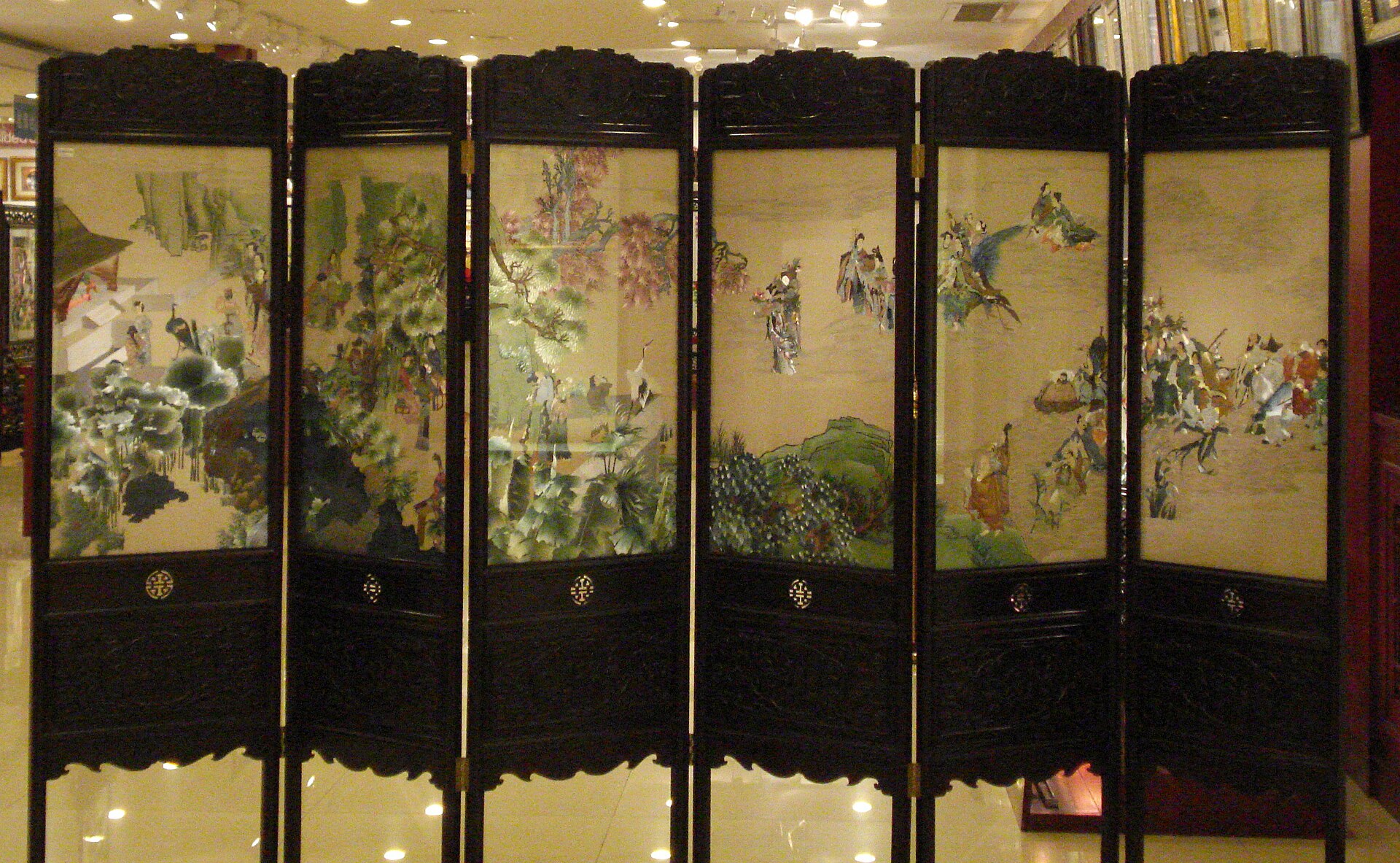
Checked October 2026Su embroidery stands among China's four celebrated regional embroidery styles and is prized for fine, painting-like stitches — including double-sided work in which the reverse is a second finished image rather than a tangle of knots
Checked October 2026UNESCO's inscription for the sericulture and silk craftsmanship of China covers the Jiangsu silk tradition in Suzhou's region, and the classical gardens hold World Heritage status — pedigree for the city's crafts, and certification of no individual purchase
Checked October 2026Fans belong on the city's own list of representative gifts in Suzhou's official souvenir guidance, and the classic local form is the folding fan, its ribs traditionally worked in sandalwood and other fine materials
Checked October 2026Local demand signal lives on Dianping, where Suzhou residents review the tea shops, sweet shops and silk retailers they return to; a working shop's local review trail is a steadier lead than a famous street's foot traffic
Checked October 202605 · STEP BY STEP
The shopping run, in order
- Step 1 — Decide whether it is drunk, eaten or kept
Suzhou's specialties divide into things you drink, things you eat and things you keep, and each family has its own test. Tea is judged by origin and date, sweets by freshness and a sample, textiles by technique and fibre, fans by their ribs and action. Deciding which family a gift belongs to before you enter the shop determines the questions you ask inside it — and prevents a tea budget from being spent on tin, or a textile budget on printing.
- Step 2 — Buy sweets by weight on Guanqian first
Begin where the city does its own sweet shopping: Guanqian Street, with Caizhizhai the classic name among its food shops. Order like the woman in front of you — a modest weighed bag of zongzi candy or sesame confections, tasted first — and only then consider whether anyone on your list truly needs the presentation version. Check the ingredient panel for nuts and seeds against your recipients, and choose sealed packs for anything travelling far. The point of starting here is calibration: once you know what the sweets cost by weight, every gift box in the city becomes legible.
- Step 3 — Biluochun: buy the paperwork, not the adjective
Biluochun rewards paperwork. Ask which hillside the tea claims — Dongshan or Xishan, on Lake Tai — who produced the pack in front of you, and when it was picked and packed; a seller of the real thing answers all three without reaching for adjectives. Taste if tasting is offered. Then buy the quantity the drinker will actually finish while the tea is still fragrant, in its original labelled packaging, and ask for the brewing and storage guidance for that tea rather than a generic green-tea answer. An expensive harvest story with no origin on the pack is priced exactly backwards.
- Step 4 — Inspect embroidery from the back
Give textiles their own unhurried stop, ideally with a specialist seller or maker rather than a general souvenir counter. The inspection is physical: front first for the image, then the reverse — in serious embroidery the back is nearly as composed as the face — then seams, edges and finishing. Ask who made the piece and by what method, and let the answers set the price you are willing to entertain. Small works are the intelligent buy: close enough to examine stitch by stitch, light enough to carry flat, and honest about what handwork costs at a scale you can afford.
- Step 5 — A scarf is three separate answers
Silk is a fibre claim, embroidery is a technique claim, and a pattern is neither. For any scarf or cloth, ask the three questions separately: what is it made of, how was the design applied — woven, printed or stitched — and what does the fibre and care label say in print. A printed silk scarf honestly sold can be a lovely gift; the same scarf sold as embroidery is a different transaction. Match the answers to the price, and prefer the seller who states the modest truth over the one who agrees with everything you suggest.
- Step 6 — The fan, chosen by hand
Choose the fan for the hand it will live in. A folding fan suits a carrier; a round fan suits a wall or a desk. Whatever the format, open it fully before paying, work it gently once or twice, and check the ribs for cracks and the leaf for tears or loose mounts — a fan's mechanics are its quality. Ask for a sleeve or case as part of the purchase. The strongest choice ties the object to your own trip: a fan or a small garden-motif piece from a garden or museum shop, attached to a place you actually walked through, explains itself forever.
- Step 7 — Pack the fragile away from the heavy
Finish with logistics. Brittle sweets travel cushioned, in the middle of the case, never loose against toiletries or under the textiles' frames. Embroidery goes flat; fans go in their sleeves, away from anything that could sit on them. Keep every producer, origin and date label intact and the receipts with the goods — tea and sweets are food at the border, subject to your home country's agriculture rules and to declaration on arrival, and the labels are what make those conversations short.
06 · WHERE THIS BREAKS
Where the advice stops working
Adjectives are not evidence
Premium, imperial, master-grade, ancient — in Suzhou's souvenir streets these words are pricing instruments, not descriptions. The counters in this guide are all verifiable on the spot: an origin on a pack, a reverse side, a fibre label, a maker's name.
Not every green tea here is Biluochun
Plenty of respectable green tea is sold in this city, and plenty of it grew nowhere near Lake Tai. Without a stated Dongting origin, what you have is Suzhou-retail tea, which may be pleasant and is certainly cheaper — as long as it is priced and described that way.
Silk-patterned is not silk, and stitched-looking is not stitched
A floral pattern woven or printed to imitate stitching fools the eye at arm's length and disappoints at reading distance. Turn the piece over: print and weave show their nature on the back long before the front admits anything, and machine stitching sold as handwork carries the same gap between story and object.
Sweetness is personal — taste before you multiply
Suzhou sweetness is a local calibration, not a universal one. Tofu-based snacks and traditional confections divide visitors cleanly; sample your exact purchase, and buy a second pack only for people whose tastes you actually know.
Fresh pastries are a meal, not a memento
Suzhou noodles, fresh rice sweets and the city's fresh savoury mooncakes belong to the eating itinerary. Their meat fillings and short lives make them poor travellers and complicated border crossings; the luggage space belongs to the sealed and the durable.
Decorative is not the same as food-safe
Painted cups, dishes and ornaments in garden motifs are made for looking at. Unless the seller states the piece is intended for food use, treat it as decoration — Suzhou's lacquer-and-ceramic prettiness is not a food-safety certificate.
The big embroidered picture is a shipping decision
A full embroidered picture involves framing, rigid packing and freight risk that can exceed the purchase price, all decided under holiday lighting. Measure the wall it is meant for, price the transport, and sleep on anything that needs both — the shop, and the craft, will still be there tomorrow.
07 · KEEP READING
Keep the trip moving
 Beijing · DoBeijing Souvenirs Worth the Suitcase Space: Counter Pastries, Jasmine Tea and Folk CraftSkip the vacuum-packed duck. What Beijing people actually give each other is a box of counter pastries, tea chosen by drinking it, and one small piece of folk craft with a maker's name attached — here is how to buy all three like you mean it.Reference ~
 Chengdu · DoChengdu Souvenirs: Doubanjiang for Cooks, Brocade for Keepers, Pandas Done RightChengdu's best gifts are the ingredients a cook will open within the week and the small crafts whose maker you can name — bought where the city shops for itself, not where the tour bus idles.Reference ~
 Suzhou · DoSuzhou as a Day Trip from Shanghai: One Garden, One Canal, Home by DinnerA garden, a canal street and one of China's great museums, twenty-seven minutes from Shanghai — if you book the three things that sell out and catch a specific train home.Reference ~
08 · SOURCES
Sources and status
Prices, schedules and booking channels change. Recheck the details that matter before you travel.
- UNESCO — Sericulture and silk craftsmanship of China (Intangible Cultural Heritage listing)VerifiedJiangsu's silk tradition under the inscription; pedigree for the craft, not certification of a purchase
- UNESCO World Heritage — Classical Gardens of SuzhouVerifiedInscribed 1997; the garden connection behind the city's garden-motif craft goods
- Suzhou Municipal Government (English portal)Reference ~The city's own channel — source of its Biluochun origin material, gift and souvenir guidance and craft introductions
- Dianping (Suzhou tea, sweets and silk retailers — local demand signal)Reference ~Local review patterns for working tea, sweet and silk shops; directional signal only, no rankings reproduced