
TenPayGo is a live, official product in Apple's App Store and on Google Play alike, published by Tencent Technology, with its payment capability powered by Weixin Pay — this is a real installable app, not a rumour or a renamed WeChat feature
Checked October 2026GUIDES / PAYMENTS
TenPayGo and Payment Apps: The Two-Wallet Setup for China
One wallet rides the Weixin Pay network, the other covers almost everything else. Install both before you fly, test each with one small purchase, and QR payment stops being a trip risk.
City China13 min read7 facts labeledChecked 2026-10-30
01 · IN BRIEF
Nine yuan of soy milk, two codes on the counter
Your first morning in China starts at a bakery counter inside a metro station. You order a soy milk and a sesame bun, hold out a bank card the way you would in any city on earth, and the cashier shakes her head gently and points at the laminated card standing next to the till. On it are two printed codes, one green, one blue, and no card terminal anywhere in sight. Behind you, the queue performs the local ritual without looking up: phone out, scan, beep, gone, three seconds a person. Your turn arrives. You open the wallet you set up at home, and it asks for a verification code sent by text to a number that is currently not roaming. The queue breathes in. This is the exact moment this guide exists to prevent — because the fix is not a better card, it is a second wallet, tested yesterday, sitting one icon away.
China did not make paying difficult; it made paying phone-shaped, and two apps cover nearly the whole landscape. TenPayGo is Tencent's dedicated visitor wallet, a narrow travel payment app whose spending runs on the Weixin Pay merchant network. Alipay is the broader second wallet, woven into transport, ride-hailing, restaurant ordering and mini programs as well as ordinary counter payment. Neither replaces the other: they sit on different networks, fail for different reasons, and rescue each other. This guide explains what each app actually is, which one to open first at a counter, the setup order to finish before departure, the places payments still break, and the unglamorous backups that keep a broken wallet from becoming a broken day.

02 · SEE IT
Which wallet to open, by situation
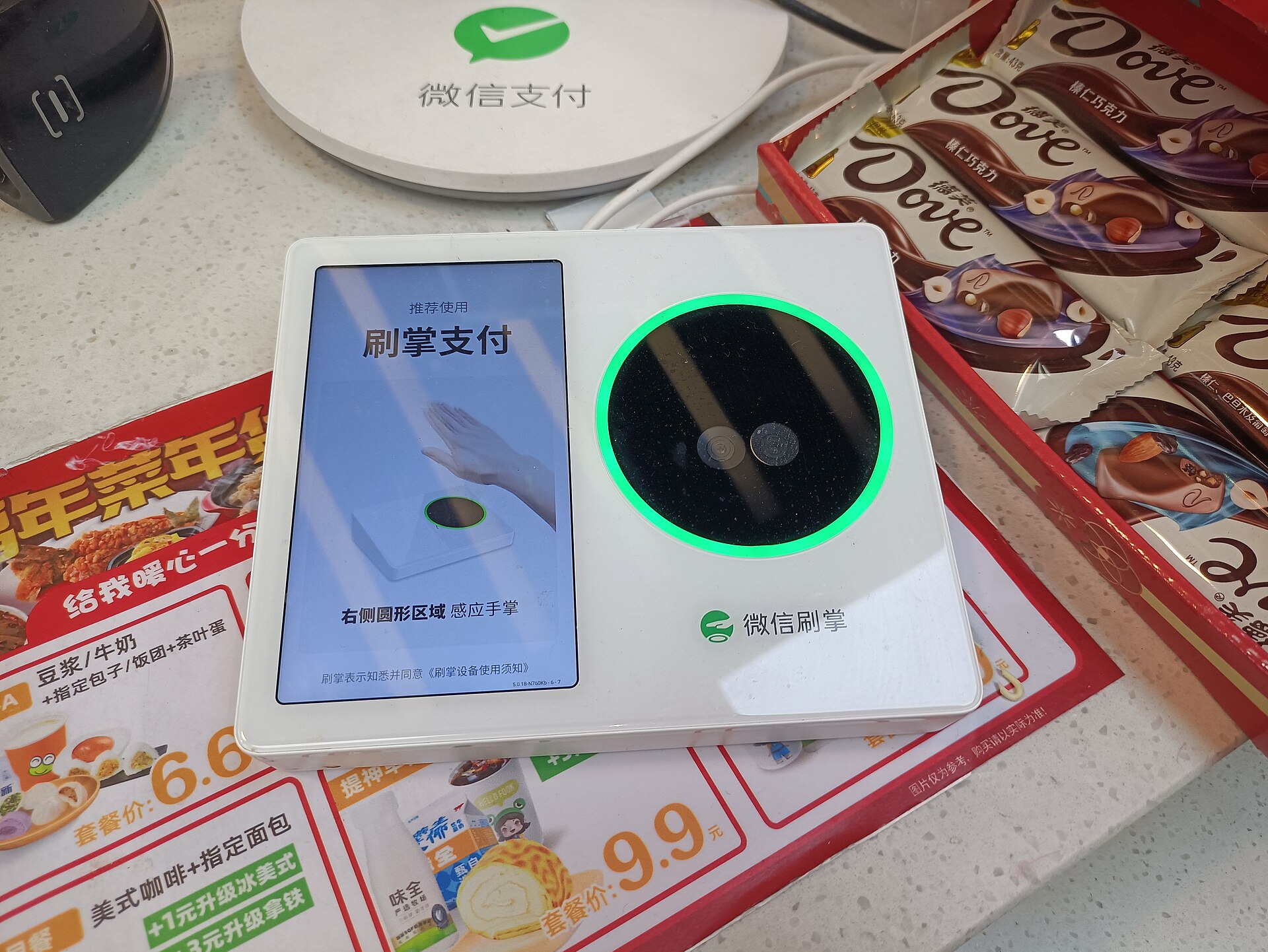
- Green code at the counter (Weixin Pay or WeChat Pay) — open TenPayGo first: its acceptance runs on the Weixin Pay merchant network behind that code
- A service that lives inside Alipay — a ride-hailing flow, a city transport card, an attraction mini program — stay inside Alipay and pay without stepping out of the flow
- One wallet declines — open the other before retrying anything: a block is often specific to one app, one card or one risk check, not to you
- Battery low or signal gone — switch to cash or the physical card: a QR wallet is only as reliable as the phone and the data connection carrying it
- First purchase of the trip — make it a coffee or a convenience-store snack with each app in turn, while nobody and nothing is waiting on the result
- A person, not a shop — street stalls and small vendors post a code of one network or the other; either wallet works once your setup has survived its first live test
03 · TRY IT YOURSELF
Set it up like someone who has been caught out before
Your ticks stay on this page only. No account or personal data is sent.
04 · THE PROOF
The facts this guide leans on
The TenPayGo store listing describes paying wherever Weixin Pay is accepted, across everyday scenarios including shopping, dining, transport, hotels, attractions, entertainment and health services
Checked October 2026Alipay's Google Play listing tells overseas visitors they can link a credit card and pay at merchants all over China — approval of any individual card still depends on the issuer and on account verification
Checked October 2026China's central bank, in its official payment guide for visitors, treats mobile payment as one lane among several — next to ordinary bank cards, paper cash, a local bank account and the e-CNY digital yuan — the regulator's own framing being that these rails complement rather than replace each other
Checked October 2026A completed setup does not guarantee any individual payment: transactions still fail: a card issuer says no, an in-app risk control intervenes, an identity detail does not match, a spending cap bites, a refund rule blocks the reversal, the merchant’s own policy intervenes, or the network drops
Checked October 2026TenPayGo is deliberately narrower than the full WeChat or Weixin app: it is built around paying in China and reviewing transaction history, so a visitor is not required to understand the whole social ecosystem before buying a train-station coffee
Checked October 2026The two-wallet design is redundancy engineering, not app collecting: TenPayGo and Alipay sit on different acceptance networks, so a failure pinned to one app, one card or one verification flow leaves a working alternative already installed and already tested
Checked October 202605 · STEP BY STEP
How to set up both wallets, in order
- Step 1 — Download both apps at home, from the official stores only
Do this on your sofa, not in an arrivals hall. Open your phone's official app store — Apple's or Google's — find the TenPayGo listing, and confirm the developer is Tencent Technology before installing — the same check applies to Alipay. A payment app handles your passport data and your cards, so the provenance of the download matters more than anywhere else in your travel setup: no third-party APK mirrors, no QR code on a blog that 'installs it for you'. Installing at home also means the large download, the account creation and the first verification attempt all happen on a connection and a phone number that behave normally.
- Step 2 — Verify your identity with the passport, exactly as printed
Both ecosystems tie foreign users to a real-name identity check. Type your name in the order and spelling the passport shows, even if the form's layout tempts you to rearrange it, and use the document you will physically carry in China — not an older passport, not a driver's licence photo you happen to have on the phone. Identity mismatch is one of the quiet causes of payments that work in setup and then stall at a counter: the account, the card and the document have to describe the same person. If a check fails, stop and correct the underlying detail rather than re-submitting variations of it.
- Step 3 — Link cards in both wallets, and make approvals travel-proof
Add an eligible international card to TenPayGo and to Alipay; if both accept a second card, vary the issuer so one bank's fraud block cannot freeze your whole payment life. Then open your bank's own app and make sure you can approve an overseas charge from inside it. Many first-payment failures are not Chinese at all: they are your home bank asking 'was this you?' through a text message sent to a SIM that is sitting in a drawer, or roaming silently. In-app approval, a notified travel plan where your bank offers one, and a reachable phone number remove most of that class of failure before you fly.
- Step 4 — Give the trip a data connection before you need it
Every QR payment is a small internet transaction. Choose the pipe in advance — home-carrier roaming, a local SIM on arrival, or an eSIM installed before departure — and verify it works with something trivial at home or at the airport. Keep the SIM your bank knows reachable for codes, even if it is not your data SIM: dual-SIM and eSIM combinations exist precisely for this split. A wallet setup performed on hotel Wi-Fi and never tested on mobile data is half a setup; the counter where it matters will not have your hotel's network.
- Step 5 — Test each wallet once, cheaply, on day one
Treat the first real purchase as a systems check, not a meal. Buy a coffee, a bottle of water, a convenience-store snack — something under the price of embarrassment — with TenPayGo, then repeat the experiment with Alipay later the same day. Notice what each app asked for: a PIN you set, a confirmation tap, nothing at all. Do not make the first test a taxi with a driver waiting, a railway-station purchase against a departure board, or a timed attraction slot. After two small successes you know which wallet this phone, this card and this account actually trust — and the rest of the trip's payments become boring, which is the goal.
- Step 6 — Build the counter habit: match, then escalate
At the till, let the situation pick the wallet. A green Weixin Pay code points to TenPayGo; a flow that began inside Alipay — a ride, a transport card, an ordering mini program — finishes fastest inside Alipay. If a payment fails, escalate in a fixed order rather than tapping the same error repeatedly: switch wallets, switch the funding card inside the wallet, then flip the scan direction — many merchants can scan the payment code your app displays instead of you scanning theirs — and finally pay cash for that purchase and diagnose later, away from the queue. Repeated identical retries help nobody and can trip stricter risk controls.
- Step 7 — Layer the backups underneath the apps
Under the two wallets, keep three dull things: a modest amount of yuan cash in small notes, the physical card that your wallets draw on, and a second international card stored apart from the first — a different bag, a hotel safe, a partner's wallet. Add the human layer too: a hotel front desk or a local contact who can rescue a logistics payment — a train ticket, an airport transfer — is worth more than a fourth app. The stack is deliberately boring. Payment is infrastructure, and infrastructure is supposed to be invisible until the day it saves the trip.
06 · WHERE THIS BREAKS
Where the advice stops working
Passing setup is not passing every payment
Risk controls do not retire after your first success. An unusually large charge, a new merchant category, a payment at an odd hour or a sudden change of city can each trigger a fresh check mid-trip. This is normal behaviour, not a broken account — it is why the escalation order exists and why cash stays in the plan. If one wallet starts refusing everything, stop feeding it attempts, use the other, and let time and a small successful payment elsewhere reset the pattern.
TenPayGo will not open for every traveller
Availability depends on your app-store region, your phone number and your card issuer, and some combinations simply will not pass. That is a routing problem, not a dead end: the older Tencent path — WeChat or Weixin with an eligible international card linked — reaches the same Weixin Pay merchant network, and our TenPayGo registration guide walks through that fallback in detail. Decide which Tencent route you own before departure, while support pages and patience are both easy to reach.
Refunds run on rails, not on goodwill
A refund does not arrive because a cashier agrees with you; it travels back through the wallet to the funding card on the platforms' timelines, which can be slow and largely invisible from the app. For anything significant — a cancelled booking, a double charge — keep the in-app transaction record and a photo of the receipt until the money visibly lands. Do not accept a promise to 'refund to your card' for a payment you made in cash, and do not pay twice for the same purchase while a first attempt shows as processing.
Mini programs are a separate country inside each wallet
Counter payment working proves only that counter payment works. The mini programs inside Alipay and Weixin — city transport, attraction ticketing, ordering systems — run their own checks and do not all accept every foreign-card flow. Test the specific service before the day you depend on it: add the transport card before the morning rush, open the attraction program before its release hour. A failure inside a mini program is solved inside that program's rules, not at the merchant's till.
Both wallets die with the phone
Battery, data and a locked account are payment infrastructure. A phone at four percent in a rainstorm is a wallet closing early. The defences are unglamorous: a power bank on long days, the second adult's phone carrying the same two wallets, cash for the gaps, and your hotel's name and address kept on paper for the taxi driver scenario. Plan for the phone's worst hour, not its best.
Do I still need WeChat itself?
For payment alone, not necessarily — TenPayGo exists precisely to spare visitors the full Weixin setup. But WeChat remains the country's default messaging and contact layer, and some local arrangements — a guide confirming a pickup, a small operator sending a location pin — still assume it. Treat WeChat as a communications install and TenPayGo as the money install, and let Alipay stand behind both. What you no longer need is the old strategy of making one social app carry your entire payment life.
07 · KEEP READING
Keep the trip moving
 China · PrepareTenPayGo Registration: Tencent's Visitor Wallet, Set Up SafelyA standalone Tencent app that spends anywhere Weixin Pay is taken — if you download the real listing, link a card that cooperates, and keep a second wallet warm behind it.Verified
 China · PrepareHow to Pay in China (2026): Alipay, WeChat Pay, TenPayGo, Cards and CashSet up one wallet before you fly, add a second as backup, and understand the two numbers that explain most payment confusion.Reference ~
 China · PrepareInternet & eSIM in China (2026): Roaming, Travel eSIM, Local SIM and Wi-Fi ComparedYour phone will work in China. The real question is which internet it connects to — every connectivity choice is a choice between two exits.Reference ~
08 · SOURCES
Sources and status
Prices, schedules and booking channels change. Recheck the details that matter before you travel.
- TenPayGo — Apple App Store listing by Tencent TechnologyVerifiedOfficial listing; seller verified as Tencent Technology (Shenzhen) Company Limited, October 2026
- Alipay — official Google Play listingVerifiedOfficial listing describing credit-card connection for foreign visitors to China; checked October 2026
- Tenpay Global — Tencent's cross-border payment armReference ~Official Tencent cross-border consumption and visitor-payment information