GUIZHOU · THE WINTER CRANES

Caohai in Winter: Watching Black-Necked Cranes on Guizhou's High Lake

Keep it in your favorites
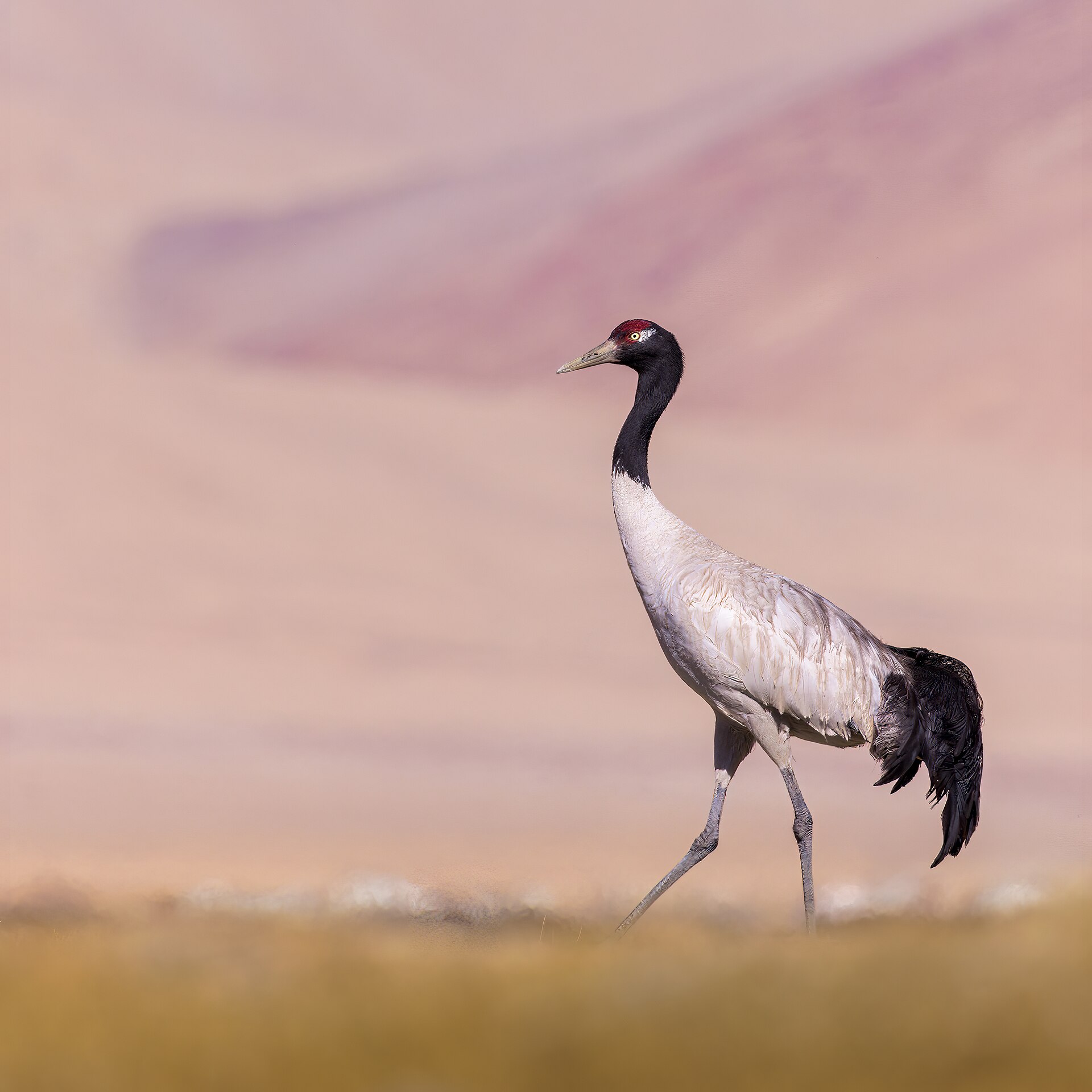
A black-necked crane walking on high-plateau grassland, red crown and black neck against pale hills
Caohai is a national nature reserve before it is a sight: a high, shallow lake at over 2,100 metres, where the world's rarest crane spends the winter in sight of a county town. · Image source

They come down out of the cold in the first days of November, in family groups, calling as they circle — black-necked cranes, the only crane on earth that breeds and winters entirely on the high plateau, and a first-class protected species in China. Their chosen wintering ground is not a remote wilderness. It is Caohai, a shallow lake in Weining county, Guizhou, whose northern shore touches the county town itself: you can eat breakfast in town and be watching cranes in the mist before the bowl is cold in memory.

The verdict, with the correction that matters most: the cranes are at record numbers — 2,898 were counted in the 2025–26 winter, the most ever recorded here — but the way of watching them has changed completely. The pleasure boats that older guides describe are gone, banned to protect the birds; the night roosts are closed reserves; viewing is from boardwalks and designated platforms, at the cranes' distance, on the cranes' timetable. Go expecting a safari and you will be disappointed. Go expecting dawn on a high lake with three thousand wild cranes waking in the mist, and there is nothing else in China like it.

This page gives the window (early November to March, peak December to February), a crane day hour by hour, the rules that are law rather than etiquette, and the practical route in — high-speed train to Weining, a town that exists for farming and potatoes and now, each winter, for the birds.

The windowEarly November → March · Peak December–February · Record 2,898 cranes in the 2025–26 count
The dayBefore 07:00 at the platforms for the dawn waking · Midday quiet · Dusk for the return to the roosts

Book the train, not the birds

There is no crane ticket. The reserve's viewing is from public boardwalks and platforms around the lake; no operator can sell you closer access, and anyone offering a boat onto the lake is offering something the reserve has banned — boats were withdrawn to protect the birds, and the ban is enforced. The correct response to a tout with a boat is the same as at the airport: walk away.

Weining is the base. High-speed trains on the Chengdu–Guiyang line stop at Weining station, and the county town sits at the lake's northern edge — stay in town, eat in town, and reach the platforms by taxi or on foot at dawn. One booked element does exist: the Jiangjiawan pier, now an ecology education base best known for its winter red-billed gulls, takes bookings through its WeChat service account and fills at weekends — reserve there if gulls at sunrise are on your list.

No affiliate links in this box. Access rules reflect the reserve's current management as reported in Guizhou provincial coverage, checked November 2026; reserve rules can tighten in sensitive weeks, and the rangers' instruction on the day governs.
Weining on a plate

Weining ham is the famous name. The county's air-cured ham is one of Guizhou's storied products — order it stir-fried with peppers or steamed in slices in any town restaurant, and buy a piece to travel only if your onward rules allow meat.

Buckwheat and potatoes are the high-country staples. At this altitude the honest food is buckwheat cakes, potato in a dozen forms, and mutton soup against the cold. Breakfast before a dawn start is a bowl of something hot from a town stall — the platforms have no catering.

Eat early; the town keeps crane hours in winter. Weining is a working county town, not a resort: kitchens close early, and the winter dark comes down by seven. Dinner at six is not a compromise here, it is the schedule.

A crane day, hour by hour

The birds set the timetable · Dawn is the main event · Altitude 2,100 m+ — dress for standing still

The cranes sleep in the shallow water at protected roost sites around the lake and wake before the light is properly up. The day's great scene is that waking: families calling, wings opening, groups lifting off through the mist to feed in the fields and marshes — and the reserve's own guidance names the hours honestly, before 07:00 and again toward dusk, when the birds return. A January morning adds the photograph everyone comes for: hundreds of cranes in the fog at a single roost-edge viewpoint, black necks materialising out of white air.

By midday the lake settles into its quieter register — cranes feeding at distance, grey cranes and bar-headed geese among them (the winter counts log thousands of both), red-billed gulls at Jiangjiawan, and the boardwalks nearly empty. This is the hour for the long lens and the slow look, not for expecting drama. Dress for the altitude and the stillness: Weining's winter mornings sit below freezing, and birdwatching is the coldest sport ever devised, because it is mostly standing.

05:30 — Out of town in the dark; taxi to the platform agreed the night before06:30 — In position before the waking: quiet, no lights, lens ready07:00–09:00 — The dawn flight: families leaving the roosts to feedMidday — Boardwalks and the lake's other birds; lunch and warmth in town17:30–dusk — The return: cranes coming back over the water to the roosts

The rules that are law, not etiquette

Closed roosts · No boats · No feeding · Rangers patrol the lake daily

Caohai's protection is the reason the cranes are thriving, and its terms are plain. The seven night-roost areas are closed to entry — approaching them disturbs a first-class protected species and is an offence, not a faux pas. Boats no longer operate on the lake for visitors; the old image of poling through the reeds among the cranes belongs to the past, and the reserve's patrols stop illegal trips daily in season. Feeding is banned, drones are not welcome near the birds, and the boardwalks and platforms are the whole of the visitor's territory.

None of this makes the experience lesser. The counts are the argument: from a few hundred birds in the reserve's early decades to 2,898 black-necked cranes in the 2025–26 winter, alongside more than ten thousand wintering waterbirds of dozens of species. Caohai is what a protected wetland looks like when protection wins — the visitor's job is simply to be the kind of guest the result deserves.

Watch only from boardwalks and designated platformsNever approach the roost areas — closed means closed, at any hourNo boat offers, no feeding, no drones near birdsIf a ranger gives an instruction, it outranks this page

Our call: a specialist trip, and worth every kilometre

Caohai is not an add-on to a Guizhou itinerary; it is a destination for people who plan around birds — who will stand in freezing mist at 06:30 and call it the highlight of their winter. For them, in December, January or February, it may be the single best wildlife morning in China. For everyone else, the honest advice is to enjoy the cranes in the photographs and give the lake its quiet — the birds have earned it.

Final checks

Verification: crane season, peak months, record count, best viewing hours, the boat ban and closed-roost rules are from Guizhou reserve and monitoring reporting, checked November 2026. The hero photograph is a black-necked crane photographed on the Tibetan plateau at Hanle; its source line says so — Caohai's own birds keep their distance, which is rather the point of the page.

This page contains no affiliate links.

Timing is everything: before early November the cranes have not arrived; after March they are leaving. The peak counts and the mist belong to December through February, with January the strongest month on recent monitoring. Book the Weining trains and a town hotel with heating you have verified, agree the dawn taxi the evening before, and carry more warm layers than the Guizhou name suggests — this is a high lake, closer in spirit to Yunnan's plateau than to the steamy south.

And leave the lake a margin of respect in your planning, too: check the reserve's current notices before you travel, because access arrangements tighten in sensitive periods, and a winter that is dry can lower the water and scatter the birds. The cranes have been coming to Caohai longer than there has been a town to watch them from. The whole art of the trip is to arrive as a guest at something that is not performed for you.

Related guides

Sources and status

Prices, schedules and booking channels change. Recheck the details that matter before you travel.

Keep it in your favorites
Something changed? Email a correction ↗

Questions, answered from the guides

Answers are drawn from published ChinaMate guides and cite the guide used. Where no guide covers a question, the result states that and links the relevant community discussion.

Request a written proposal

Send your dates, party size and priorities. You receive a costed itinerary and a final price in writing before anything is booked.

No payment now · Nothing is booked until you accept a written proposal

Answered by a person — Jacob, founder · hello@gochinamate.com · Replies within 24 hours on business days

Plan your trip →