China Airport Pickup: Who Is Waiting for You, Where They Stand, and What Changes When Your Flight Does
Updated November 2026 · Checked against current airport practice at China's major gateways
Keep it in your favorites
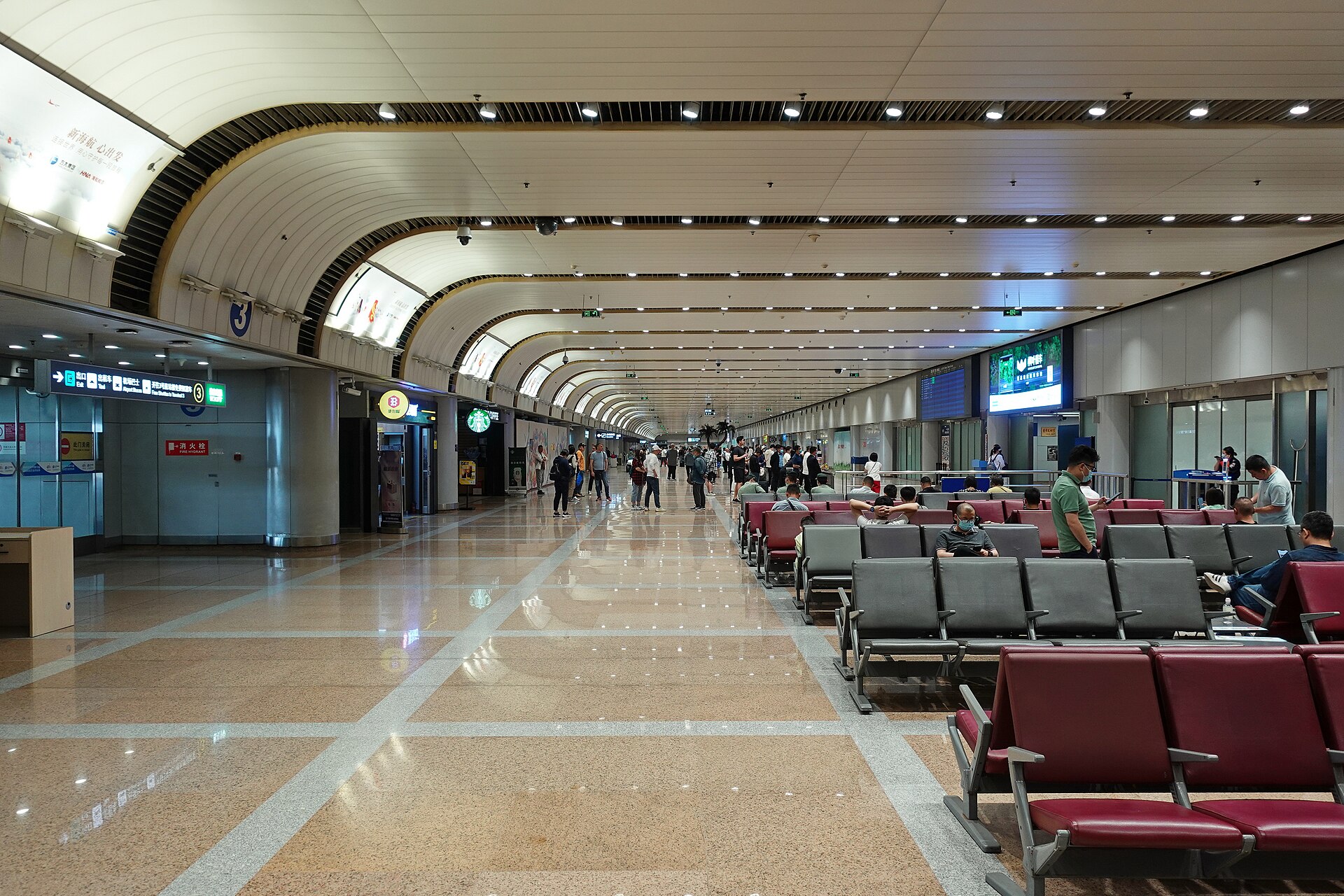
Every Chinese gateway funnels arriving passengers through one set of doors. The people waiting on the other side of them are the subject of this page. · Image source
The doors open and there it is: a rail, a crowd, and a forest of boards — hotel logos, tour company cards, and sheets of A4 with names printed on them, some in careful capital letters, some photographed off a phone screen. You are jet-lagged, your bags are heavy, and somewhere in that row a stranger is being paid to wait for you. The next two minutes go well or badly depending on decisions made days earlier, in a booking form.
Here is the honest verdict up front: an airport pickup in China is not a taxi that happens to know your name. It is a small system — a flight number that lets the driver track you, a name spelled exactly as your passport spells it, a meeting point that is a place and not a vibe, and a waiting window that starts when your wheels touch the runway, not when you reach the doors. Set those four things up and the system absorbs delays, early arrivals and dead phone batteries. Skip them and the same system quietly gives up on you.
This page walks the whole chain: where the person actually stands, what the board should say, what happens when the flight moves two hours in either direction, and the fallbacks — metro, taxi rank, ride-hailing pickup zones — for the day the board with your name on it simply is not there.
The meeting pointArrivals exit, landside → the greeter rail directly outside the doors → boards face the doors, not the hall
If it goes wrongStay at the rail → call or message the number in your confirmation → the airport information desk is the agreed last-resort landmark
Book the pickup so it can flex
Give the flight number, not a landing time. A driver working from your flight number can see the delay before you can. A driver working from 'arrives 14:30' starts the waiting clock from a fiction. Every reputable pickup service asks for the flight number for exactly this reason — if yours did not, send it anyway.
Spell your name the passport way. The board will carry whatever you typed. If your booking says 'Mike' and your passport says 'Michael James', a careful driver may still wave — a strict one, matching a list at a busy rail, may not. Book under the passport spelling and put the same name in the confirmation screenshot you save.
The button above is an affiliate link to a Klook search for China airport transfers; booking through it costs you nothing extra. The advice in this box is the same whether you book there, through your hotel, or not at all.
If you are the one waiting
Landside coffee is your friend. Chinese arrivals halls have coffee and convenience food on the landside, priced like airports everywhere. If you are meeting someone yourself, arrive for the landing time, not the doors time — international arrivals take 30 to 60 minutes to surface.
Eat before you ride. The transfer into a Chinese city centre runs 45 minutes to well over an hour at the big gateways. A bowl of noodles in the terminal beats an hour of traffic on an empty stomach, and the driver will wait for a passenger who has told him they are eating.
Carry small cash for the tolls-and-parking edge cases. Most pre-booked transfers are all-in. Hotel cars and informal arrangements sometimes add parking or tolls. A little cash — or a working payment app — closes the argument before it starts.
The last thirty metres of your flight
Baggage → one set of doors → the rail · The greeter cannot come to you
Chinese airports are built so that arriving passengers leave through a controlled exit, and nobody without a boarding pass gets past it in the other direction. Your driver, guide or hotel greeter waits on the public side of that exit, in the arrivals hall, usually behind a rail or along the wall the doors face. They cannot come airside, they cannot stand at the baggage belt, and at the largest airports there may be two exits in use — which is why the confirmation names a terminal and, at the careful services, a door or pillar number.
Walk it slowly. The boards are densest in the first minute after a big flight lands, and the person holding yours is scanning the crowd for someone who looks like the name — which means the fastest way to be found is to stop, face the rail, and read every board once, end to end, before reaching for your phone. Half of all 'my driver wasn't there' stories end with the driver twenty metres down the rail, board up, watching the passenger stride past toward the taxis.
Land → passport control → baggage → customs channel → the doorsStop at the rail. Read every board once, slowly, both directionsFound it: show the confirmation on your phone — names get misread in both directionsNot found after one full pass: go to the fallback drill in the next section, do not leave the hall
What can change — and who absorbs it
Delays · Early arrivals · Dead batteries · The waiting window is the contract
Flights move; the question is whose problem that becomes. With a flight number on the booking, a delay is the service's problem: the driver shifts with the flight, and the waiting window — the grace period after actual landing during which the car is held for you — starts from touchdown. Most pre-booked services include a window of around an hour for international arrivals, but the number printed in your own confirmation is the only one that counts, and it is worth reading before you fly rather than after you land.
Early arrival is the sneakier case: land forty minutes early and a driver dispatched to the timetable may not yet be in the hall. The fix is patience, not taxis — sit in the arrivals hall, in sight of the doors, until the scheduled time has passed. And if your phone dies, the system has an analogue backup: airport information desks will usually help you contact a local number, and your hotel's front desk number — saved on paper, in your passport wallet — reaches a human who knows a car was sent.
Delayed: do nothing until you land — then message 'landed' as you taxi inEarly: wait in the hall until at least the scheduled arrival timeNo board, no answer: information desk → hotel front desk → only then the taxi rankRunning past the waiting window: call before it expires, not after — extensions are cheap, no-shows are not
The ride itself
Parking structures · Ride-hailing zones · Why the driver walks you five minutes
At most large Chinese airports, private pickups do not load at the kerb. The car waits in a parking structure, and your greeter walks you to it — five minutes through the terminal is normal and is not a scam in progress. Ride-hailing works the same way: the apps route you to a designated pickup zone in a named car park, with bay numbers on signs, and the driver will expect you to come to the pin rather than the pin to come to you.
Taxis are the exception that proves the rule: a single signed rank, a queue, a dispatcher, and a meter. If your pickup has failed completely, the rank — not the tout — is the dignified exit. Whichever way you leave, the ride into town from a major gateway is long enough that the only remaining decision matters: have the hotel's address in Chinese characters ready to show, because your driver may read no other language, and 'the one near the big tower' is not an address.
Pre-booked car: follow the greeter to the parking structure — this is the design, not a detourRide-hailing: follow the app to the signed 网约车 pickup zone and match the plate before the faceTaxi: official rank only, meter on, hotel address in Chinese characters on your phone
Our call: the pickup is a system, so brief it like one
Flight number on the booking, passport spelling on the board, a waiting window you have actually read, and a paper copy of the hotel's phone number. Do those four things and the wall of boards becomes the calmest part of your arrival day. Skip them, and no driver's goodwill can save the meeting — he is standing at a rail, holding your name, watching a hundred strangers come through the doors.
Final checks
The night before you fly: screenshot the confirmation with the driver's or dispatcher's number, check the name on it against your passport, and confirm the terminal — Beijing, Shanghai and Guangzhou all run more than one, and a driver at T2 cannot help you at T3. Put the hotel's Chinese address and phone number in the same screenshot album. That album is your arrival kit if the phone, the data or the driver fails.
And one sentence of proportion: a failed pickup is an inconvenience, not an emergency. You are in a staffed, signed, camera-covered building with a taxi rank, a metro station and an information desk, in a country where the ride into town is a solved problem. Worst case, you take the train like a local — and the guides linked below this page exist for exactly that.
Prices, schedules and booking channels change. Recheck the details that matter before you travel.
ChinaTravelPlus — China Airport Pickup: Who Meets You and What Can ChangeReference ~Structure and topic source for this guide (competitor benchmark, read 2026-11-26). Operational detail rewritten and checked against current practice at major Chinese gateways; no wording or unverified figures carried over.