
Everything downstream depends on a decision you should make before you book anything. Door one: the 30-day unilateral visa-free list — 50 countries as of 17 February 2026, including the United Kingdom and Canada, added in that month's batch, and not including the United States. Holders of ordinary passports from those countries can enter for up to 30 days for business, tourism, family visits, exchange or transit, with the stay counted from midnight on the day after entry. Door two: a mutual visa-exemption agreement — the China Visa Application Service Center summary counts 24 countries with full ordinary-passport mutual exemption, Singapore, Thailand, Kazakhstan, the United Arab Emirates and Serbia among them, usually up to 30 days per stay with extra cumulative caps for some. Door three: a Chinese visa arranged in advance, the default for everyone else. And door four, narrower and often misunderstood: the 240-hour transit scheme, which is not an entry right but a transit privilege — it needs a confirmed onward ticket within ten days to somewhere different from where you started.
GUIDES / VISA & ENTRY
Entering China via Hong Kong: Two Passports, One Train, and the Border Inside the Station
Hong Kong lets almost everyone in — and that stamp buys you nothing in Shenzhen. Two border systems, three doors into the mainland, a railway station where you enter China before you leave Hong Kong, and the 24-hour crossing that cannot take a transit passenger: the whole crossing, landed.
Two passports, one train
They land at Hong Kong International on the same flight, in the same mood, with the same plan: two nights in Hong Kong, then the high-speed train to Shenzhen and Guangzhou, then home. At the arrivals hall they even clear Hong Kong immigration side by side. That is where the symmetry ends. The British passport in this story is stamped in for 180 days — the longest stay Hong Kong gives any visitor, longer than most people ever notice. The American passport next to it gets 90 days. Both numbers come from the same official table, kept by Hong Kong's own Immigration Department, and neither number says anything at all about the mainland. Hong Kong runs its own immigration and customs system, separately from the mainland, under its own rules — one country, two border systems, and a second, completely independent border waiting between Hong Kong and Shenzhen.
The difference only bites at West Kowloon Station, an hour or two before the train. The British traveller, since February 2026, is on the mainland's 30-day unilateral visa-free list — one of 50 countries whose ordinary passport holders can enter for up to 30 days for tourism, business, family visits, exchange or transit without a visa. She can simply be checked in. The American traveller is not on that list at all. The United States appears in the mainland's 240-hour transit scheme, but not in the 30-day scheme, and a Hong Kong entry stamp creates no mainland right of entry whatsoever. If he has arrived assuming that 'Hong Kong let me in, so China has let me in', the station is where that assumption goes to die — unless his onward ticket out of the mainland to a third country or region turns his stay into a legal transit, or a visa he arranged weeks ago saves the plan.
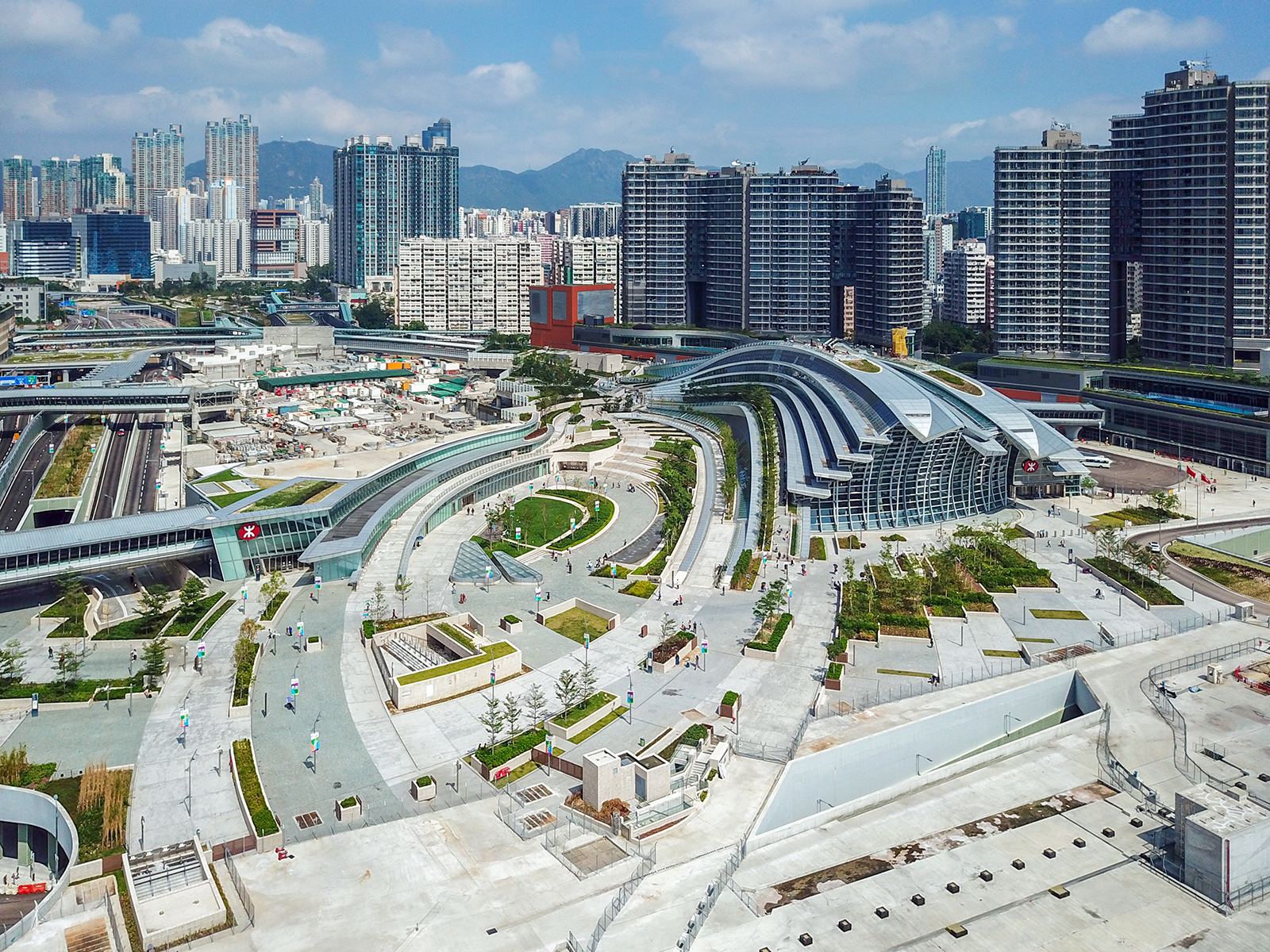
And then there is the station itself, which is the strangest part of the whole journey and the reason this guide exists. West Kowloon is in the middle of Hong Kong — you can walk to it from Tsim Sha Tsui. Yet part of its departure level is, in law, not Hong Kong at all. Under a co-location arrangement approved by the Standing Committee of the National People's Congress on 27 December 2017 and then written into Hong Kong law, a defined slice of the station is the Mainland Port Area: for legal and jurisdictional purposes it is treated as if it were inside the mainland, mainland law applies there, and mainland officers work there — without moving Hong Kong's boundary on any map. So you complete Hong Kong exit formalities, take a few steps, and complete mainland entry formalities, all on one floor, all before you have boarded anything. You enter mainland China without leaving Hong Kong. By the time the train moves, the border is already behind you.
This guide lands the whole crossing properly. It explains the one rule that matters — a Hong Kong visa exemption is never a mainland one — and the three separate doors into the mainland that stand behind it: the 30-day unilateral visa-free list, the web of mutual visa-exemption agreements, and a visa arranged in advance, with the 240-hour transit scheme as a fourth, narrower door that Hong Kong itself helps to open, because Hong Kong counts as a third region for transit purposes. It walks the West Kowloon route step by step, fare by fare. And it gives the alternatives their due: the golden shuttle bus across the Hong Kong-Zhuhai-Macau Bridge, the six land crossings into Shenzhen with their very different closing times, and the airport ferry that lets a connecting passenger skip Hong Kong immigration entirely — including the trap inside that trick, and the bigger trap waiting at the land crossings for anyone planning to use the 240-hour scheme.
The crossing, in the order it actually happens
Landing — Hong Kong immigration stamps you into Hong Kong only; nothing about the mainland has been decided yet
The decision — pick your mainland legal basis before you move: 30-day visa-free list, mutual exemption, a visa in hand, or 240-hour transit
Ticket — buy the West Kowloon train against the passport you will carry; the document is the ticket
B1 level — real-name check and security; the ticket check stops 30 minutes before departure
B3 level, first doors — Hong Kong exit formalities, still under Hong Kong law
B3 level, a few steps on — the Mainland Port Area: mainland entry formalities, legally already inside the mainland
Boarding — gates open 15 minutes before departure and close 5 minutes before; the train itself never stops at a border
14 minutes — Futian, Shenzhen, second class ¥68 · about 20 minutes — Shenzhen North, ¥75 · 47 minutes — Guangzhou South, ¥215
The other doors — bridge shuttle bus to Zhuhai around the clock · six land crossings into Shenzhen, one of them 24 hours · SkyPier ferry from the airport with no Hong Kong entry at all
Do these before you go
Your ticks stay on this page only. No account or personal data is sent.
West Kowloon, step by step — then the other doors
The transit scheme, run by the National Immigration Administration, covers 57 countries since 20 August 2026, when Kyrgyzstan and Vietnam were added — ignore any older page still quoting 54 or 55. Its core condition is movement: you must be passing through China on the way to a third country or region, and Hong Kong, Macau and Taiwan all qualify as that third place. The MTR's own summary of the policy gives the official example shape: Canada to Hong Kong to Shenzhen to Thailand. Read it in both directions. Fly home from Hong Kong after the mainland and Hong Kong is your third region. Fly into Hong Kong first, cross to the mainland, then fly onward to a different country, and the mainland leg is a transit. What does not work is a loop: arrive from Hong Kong and return to Hong Kong, or to the country you started from, and there is no onward third destination, so there is no transit. Your international travel document also needs at least three months of validity, and work, study and journalism are never covered by the scheme.
Cross-boundary trains on the Guangzhou-Shenzhen-Hong Kong express rail link are real-name, and the ticket is electronic: the document you booked with is the document the gates read, so the passport number on the booking must be the passport at the station, character for character. The 12306 platform sells these tickets online and in its app — an English-language 12306 service exists and foreign travellers can register with an email address — and MTR sells them through the West Kowloon ticket counters and machines, its website and app. Online sales for a West Kowloon departure close 30 minutes before the train, the pre-sale window is 15 days, and 12306 accepts international cards including Visa and Mastercard alongside mainland payment methods. If you cannot complete identity verification in the app as a foreign passport holder, MTR's guidance is to verify in person with the original document at West Kowloon or a mainland station. None of this is difficult; all of it is unforgiving of a typo.
Here is our editorial advice, stated as advice rather than dressed up as a rule: treat the station process as a 30-to-45-minute job and build your arrival around that, with more slack at weekends, on holidays, at staffed counters, and above all if you will be applying for 240-hour transit at the port, which MTR warns needs extra time for the on-the-spot assessment. The hard edges underneath the advice are official and they are sharp. Real-name verification and ticket check at the B1 level stop 30 minutes before departure. Boarding gates on B3 close 5 minutes before departure. A traveller who strolls into West Kowloon twenty minutes before a Guangzhou train with a border still to cross has not had bad luck; he has misread the building. The station is an airport wearing a railway station's clothes, and it rewards being treated like one.
West Kowloon works downwards. You enter, find the B1 ticketing level, and pass the real-name check — self-service gates read your document, staffed counters handle the cases the gates cannot — then baggage and security screening. This is the level where the 30-minute cutoff lives, so it is the level that decides whether the rest of the journey happens at all. Keep the booked document in your hand rather than in a zipped pocket inside a suitcase; you will show it again at least twice more before the platform, and the travellers who slow every queue at this station are the ones re-opening luggage to find a passport they packed an hour ago.
On the B3 departure level the co-location arrangement becomes physical. First you clear Hong Kong departure formalities under Hong Kong law. Then you walk into the Mainland Port Area and clear mainland arrival — immigration, customs and quarantine — under mainland law, administered by mainland officers, in a zone that a 2017 decision of the National People's Congress Standing Committee and Hong Kong's own legislation treat, for legal and jurisdictional purposes, as being inside the mainland. The boundary of the Hong Kong Special Administrative Region has not moved; the law inside that room is nevertheless mainland law, and the stamp — or these days the electronic record — you receive there is a genuine mainland entry, as real as one issued at Beijing Capital Airport. The immigration control point at the station operates from 06:30 to 23:30, which quietly defines the first and last useful trains of the day.
Boarding gates on B3 open 15 minutes before departure and close 5 minutes before; platforms are on B4. Once the train leaves, the border is finished — there is no frontier stop, no second inspection, no getting off at Shenzhen to queue again. You arrive at a mainland station and exit through the gates on the same document. The journeys are almost comically short after the paperwork: Futian, in central Shenzhen, is 14 minutes away; Shenzhen North takes about 20 minutes depending on whether your train stops at Futian on the way; Guangzhou South is 47 minutes. And West Kowloon is not only a Shenzhen shuttle: MTR's destination list connects Hong Kong with 114 mainland stations as of late September 2026, from Dongguan and Guangzhou to Xiamen, Shanghai and Beijing — every one of them reachable with the border already cleared before departure.
Cross-boundary fares are priced in renminbi, split between the two railway administrations, and converted for Hong Kong sale at a rate adjusted monthly — which is why the Hong Kong dollar figure on an MTR screen moves a little from month to month while the renminbi figure is the stable one. Second class, adult, from MTR's published renminbi fare chart: Futian is ¥68, Shenzhen North is ¥75 and Guangzhou South is ¥215. Those are the numbers to plan with. A family that budgets Futian at about ¥68 a head will never be surprised; a traveller who memorised a Hong Kong dollar price from a blog written in a different month occasionally is.
If your destination is Zhuhai — or Macau, or the Chimelong Ocean Kingdom resort across the water in Hengqin — the Hong Kong-Zhuhai-Macau Bridge is usually the better door, and it never closes. The shuttle bus everyone calls the golden bus runs 24 hours: every 5 minutes at busy times, every 10 to 15 minutes in the off-peak, every 15 to 30 minutes in the small hours. From the Hong Kong port the full fare is HK$65 during the day, defined as 06:00 to 23:59, and HK$70 at night, with concession fares of HK$33 and HK$35; from the Zhuhai side it is ¥58 by day and ¥63 by night. The crossing itself takes about 40 minutes by the standard guide figure — plan on it as an approximation, and remember it excludes both ends. This is not co-location: you clear Hong Kong exit at the Hong Kong port, ride the bus, get off at the Zhuhai port and clear mainland entry there. The compensation for the extra steps is strategic: that Zhuhai port is itself one of the 65 listed 240-hour entry ports, added in November 2025, so a transit passenger can lawfully make a first mainland entry at the far end of the bridge. Local buses feed the Hong Kong port from the airport and Tung Chung, and on the Zhuhai side shuttle buses run to Zhuhai railway station at Gongbei and towards the Xiangzhou city centre.
For a traveller already based in Hong Kong or Shenzhen, the land crossings are the everyday doors — but they are visa doors only for people who already hold a mainland entry right, and each keeps its own hours. Lo Wu, the classic, pairs the East Rail terminus with Shenzhen's Luohu station and Metro Line 1, open 06:30 to midnight. The Lok Ma Chau Spur Line crossing, to Futian Port on Shenzhen Metro Lines 4 and 10, runs 06:30 to 22:30 — the earliest hard close of the busy crossings. Huanggang, reached from Lok Ma Chau by bus rather than rail, is the night owl: 24 hours, the only round-the-clock land passenger crossing between the two cities, and since 12 October 2026 it works from a brand-new port building under a joint 'one-release' inspection model — one queue, one document check, both sides cleared — the first land control point to run that way. Shenzhen Bay, bus-fed from Yuen Long and Tuen Mun and met on the Shenzhen side by Metro Line 13 since late December 2024, runs 06:30 to midnight for passengers. Liantang, to Shenzhen's Liantang Port station on Lines 2 and 8, and Man Kam To, paired with Wenjin station on Line 9 about a five-minute walk away, both run 07:00 to 22:00. Learn the closing time of the crossing you actually use; the difference between 22:00, 22:30 and midnight strands someone at this border every single night.
The most elegant door is the one where Hong Kong immigration never sees you. SkyPier, the ferry transfer facility inside Hong Kong International Airport's restricted area, exists for same-day connecting passengers only. Land, follow the signs to the ferry ticketing desk at Transfer Area E2 in Terminal 1, and present your same-day arrival flight ticket or boarding pass stub, a valid ferry ticket, your passport and whatever mainland entry right your journey needs. Do not — this is the entire trick — go through Hong Kong immigration, and do not collect your bags: once you have entered Hong Kong you cannot return to the transfer desk, and the ferry option dies on the spot. If you have checked baggage, staff move it using your baggage tag if you reach the desk at least 60 minutes before sailing; hand-baggage passengers need at least 30 minutes. Ferries run from the airport to mainland ports including Shenzhen Shekou, Shenzhen Fuyong by the airport, Dongguan Humen, Zhongshan, Zhuhai, Guangzhou Nansha and Guangzhou Pazhou — and several of those destination ports, Shekou, Nansha, Pazhou and Zhongshan among them, are themselves listed 240-hour entry ports, so a through-designed itinerary can land in Hong Kong, never enter it, and still make a lawful first mainland entry off the boat. Travellers starting from the Hong Kong city side instead use the downtown ferry terminals at Tsim Sha Tsui and Sheung Wan for sailings to ports such as Shekou, Zhongshan, Nansha and Zhuhai Jiuzhou.
Worth one honest paragraph rather than a fanfare: direct cross-border coaches run from points all over Hong Kong — Tsim Sha Tsui, Prince Edward, Kwun Tong, Sha Tin, Tsuen Wan, Tuen Mun, Yuen Long and the airport among them — through Huanggang, Shenzhen Bay, Liantang and the bridge, towards Shenzhen city and its airport, Guangzhou, Zhuhai, Zhongshan, Foshan and Dongguan. You still get off at the port and clear the border on foot; what the coach buys is a city-centre-to-city-centre line and, on the Huanggang route, a vehicle that runs when the railways have stopped. Fares and timetables change too often for a guide to print responsibly, so check the operator for your date. For a first crossing with luggage and a hotel address, the coach is often the least clever and most comfortable answer.
The facts the crossing is built on
Hong Kong maintains its own immigration control with autonomy over immigration policy, and under Articles 116 and 154 of the Basic Law it is a separate customs territory whose government may apply immigration controls to people from all countries and regions, including the rest of China
Checked November 2026On the Immigration Department's official visa-free table, British citizens receive 180 days in Hong Kong — the longest visitor stay listed — while United States passport holders receive 90 days, Indonesia 30 days and India 14 days with pre-arrival registration
Checked November 2026The mainland's 30-day unilateral visa-free policy covers 50 countries as of 17 February 2026 — the United Kingdom and Canada were added in that batch — and the United States is not among them; for 48 of the countries the policy currently runs to 31 December 2026, Brunei being open-ended
Checked November 2026The 240-hour visa-free transit scheme covers 57 countries from 20 August 2026, requires a confirmed onward ticket to a third country or region within 240 hours, and Hong Kong, Macau and Taiwan all qualify as that third region — MTR's policy summary gives the example routing Canada to Hong Kong to Shenzhen to Thailand
Checked August 2026From 5 November 2025 the list of 240-hour entry ports rose to 65, adding five ports facing Hong Kong among others: Guangzhou Pazhou ferry terminal, Hengqin, the Hong Kong-Zhuhai-Macau Bridge Zhuhai port, Zhongshan port and Hong Kong West Kowloon Station
Checked November 2025The Shenzhen land crossings at Huanggang, Lo Wu, Futian, Liantang, Man Kam To and Shenzhen Bay do not appear on the 240-hour entry-port list; Guangdong's listed entry ports with Hong Kong connections are West Kowloon Station, the bridge's Zhuhai port, Shekou, Pazhou, Zhongshan and Shenzhen Bao'an Airport
Checked November 2026At West Kowloon Station, real-name ticket verification on B1 stops 30 minutes before departure, Hong Kong exit and mainland entry are both completed on the B3 departure level, boarding gates open 15 minutes before departure and close 5 minutes before, and the fastest the whole process can run is about 30 to 45 minutes
Checked November 2026The Mainland Port Area at West Kowloon exists under a co-operation arrangement approved by decision of the Standing Committee of the National People's Congress on 27 December 2017: the area is treated as being within the mainland for legal application and jurisdiction, without changing the boundary of the Hong Kong Special Administrative Region
Checked December 2017Published second-class adult fares from West Kowloon, priced in renminbi, are ¥68 to Futian, ¥75 to Shenzhen North and ¥215 to Guangzhou South; fastest published journey times are 14 minutes to Futian and 47 minutes to Guangzhou South, and Hong Kong dollar selling prices are reset monthly against the renminbi fare
Checked November 2026Hong Kong-Zhuhai-Macau Bridge shuttle buses run 24 hours at a full fare of HK$65 from 06:00 to 23:59 and HK$70 from 00:00 to 05:59 from the Hong Kong port, and ¥58 by day and ¥63 by night from the Zhuhai port
Checked November 2026Huanggang is a 24-hour passenger control point; its new port building opened on 12 October 2026 as the first land control point using the joint inspection, one-release model, while Lo Wu and Shenzhen Bay close at midnight, Futian at 22:30 and Liantang and Man Kam To at 22:00
Checked November 2026SkyPier ferry transfer at Hong Kong International Airport is restricted to same-day connecting passengers who must not clear Hong Kong immigration or collect baggage; the desk deadline is at least 60 minutes before sailing with checked baggage and at least 30 minutes without
Checked November 2026Where this crossing catches people out
Say it plainly, because almost nobody believes it the first time: Huanggang, Lo Wu, Futian, Liantang, Man Kam To and Shenzhen Bay are not on the 240-hour entry-port list. None of them. A traveller who lands in Hong Kong, enjoys the evening, and presents himself at Huanggang at midnight — precisely because Huanggang is the famous 24-hour crossing — cannot make a first 240-hour transit entry there. The Guangdong entry ports that work for a Hong Kong-connected journey are West Kowloon Station, the bridge's Zhuhai port, Shekou, Guangzhou Pazhou, Zhongshan and Shenzhen Bao'an Airport. Note the asymmetry this guide can verify: entry must be through a listed port. Rules about exit flexibility after a lawful entry have changed across policy rounds, so treat any source promising you a free choice of exit port as a claim to re-check against the National Immigration Administration's current text before you rely on it.
Hong Kong admits around 170 nationalities visa-free for stays of 7 to 180 days, and that generosity is exactly what misleads people. It is a Hong Kong decision, made under Hong Kong's own immigration autonomy, and it creates no mainland right of any kind. The mainland lists are separate documents kept by separate authorities: the 30-day unilateral list, the mutual-exemption agreements, and the 57-country transit list overlap heavily but are not identical, and the United States is the standing proof — 90 days in Hong Kong, no place on the 30-day mainland list. Check your passport against the mainland document for your route, every time, even if Hong Kong waved you through an hour earlier.
For 48 of the 50 countries on the unilateral list, the policy as published runs to the end of 2026 — Brunei is open-ended and Russia, on a related arrangement, runs to the end of 2027. As of the date this guide was checked, no extension beyond 31 December 2026 had been announced for those 48. A trip in 2027 planned around a 30-day visa-free entry is therefore a booking made against a policy that may or may not be renewed in its current form. That is not a reason to panic; it is a reason to book refundable rates for early-2027 travel and to re-check the list before any non-refundable commitment. The transit door and the ordinary visa route are unaffected by this particular deadline.
Only two fastest times on this line carry an official government or railway statement behind them: 14 minutes to Futian and 47 minutes to Guangzhou South. Shenzhen North timings vary by stopping pattern — trains that call at Futian take longer — and the often-quoted 18-minute figure traces to a single train in a commercial timetable, not to an official fastest-time claim. This guide therefore says about 20 minutes and means it as a planning figure. The same discipline applies at West Kowloon itself: MTR's own documents are not perfectly consistent about how early processing can begin — the process guide works on one figure, the service guide PDF on another — so we give you the hard cutoffs, which agree everywhere, instead of the soft ones, which do not.
Travel writing about this station repeats a 45-minute rule as if it were printed on the wall. It is not — we could not find that number stated as a rule on MTR's official pages. What MTR does state is that the full process can take about 30 to 45 minutes, that ticket verification stops 30 minutes before departure, and that gates close 5 minutes before. Our advice — arrive with the whole process comfortably in hand, and earlier for an on-the-spot transit application — is an inference from those official numbers, labelled as advice. If a source quotes an official-sounding arrival rule for this station without showing you the cutoff times underneath it, it is decorating, not informing.
The roughly 40-minute port-to-port running time for the golden bus is the figure used across reputable traveller guides; the bridge authority publishes the port-to-port distance — about 42 kilometres — rather than a standard journey time. Treat 40 minutes as the centre of a range, not a guarantee, and never build a tight connection on it: the real door-to-door time also includes reaching the Hong Kong port, clearing exit, waiting for a bus at the frequency of the hour you are travelling, and clearing entry at Zhuhai. At festival peaks, the queues at both ends, not the bridge, are the journey.
The airport ferry trick fails in one specific, irreversible way: a connecting passenger who clears Hong Kong immigration — out of habit, following the crowd, or to collect a suitcase — cannot go back airside to the ferry transfer desk. The service is for same-day transfer passengers only and is not sold to travellers starting in Hong Kong. The baggage rule is equally mechanical: checked bags are transferred for you only if you reach the desk in time, 60 minutes before sailing, so a tight inbound connection with luggage is a plan to call the airline about, not a plan to hope through. And the ferry solves only the geography — your mainland entry basis is assessed at the destination port exactly as it would be at an airport.
Four honest gaps. First, downtown ferry frequencies and fares change by season and operator and are not printed here; we assert the port pairs, not the timetables. Second, the mutual-exemption count of 24 countries comes from the visa service centre's summary for full ordinary-passport exemptions; the foreign ministry's master table counts differently because it includes other document types, so compare like with like. Third, the new Huanggang building's Shenzhen-side transport details were still settling in its first weeks of operation — check the current Shenzhen Metro map for your date rather than any blog's station list, ours included. Fourth, MTR's mainland destination count appears as 113 stations in a July 2026 government release and 114 on MTR's own destination page effective from late September 2026; we use the later, operator's figure and date it in the text. None of these gaps touches the border rules themselves — but a guide that hides its gaps will eventually hide a big one, and at a border, big ones are expensive.
Keep the trip moving
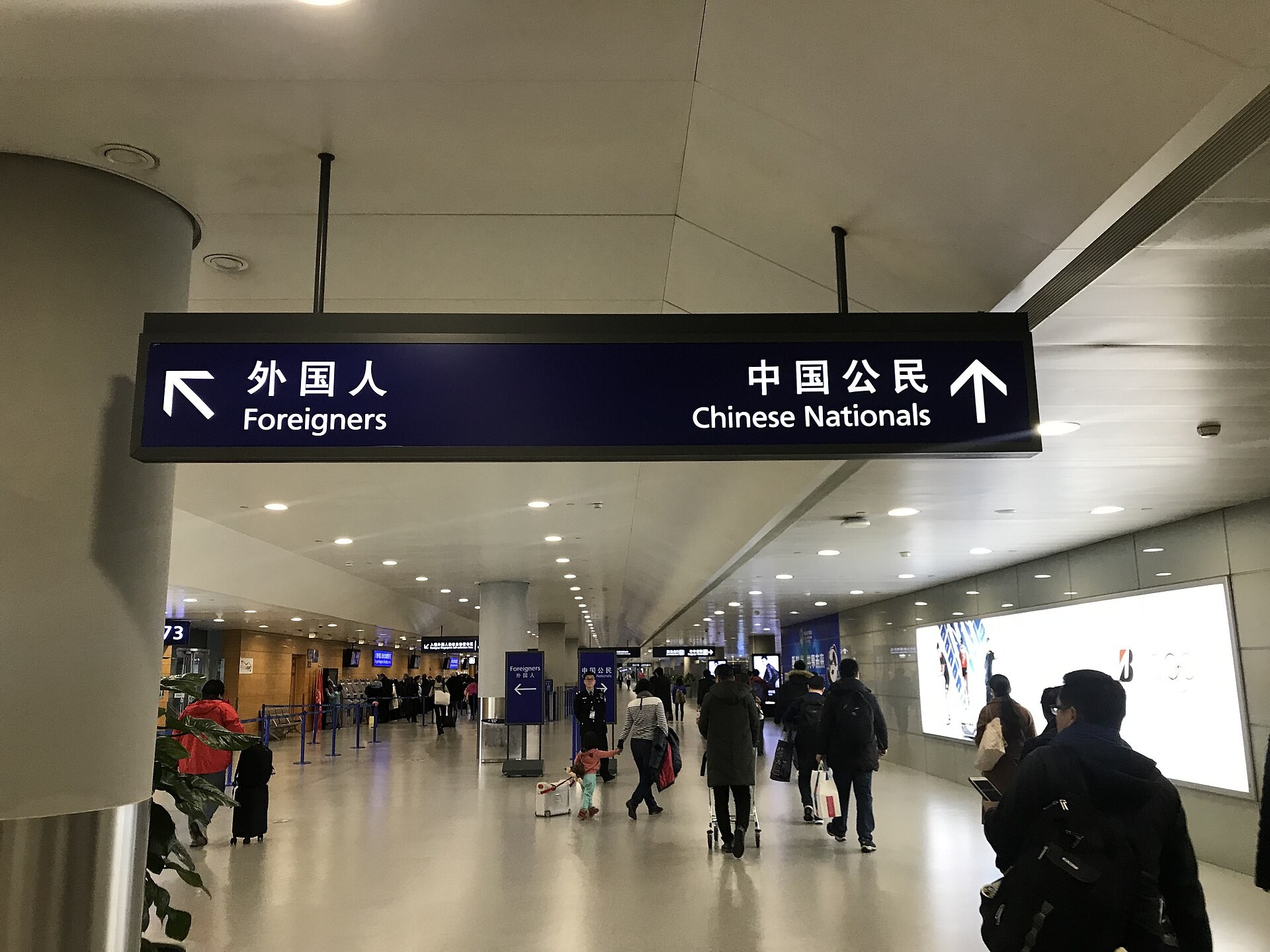 Shanghai · Visa & ArrivalsShanghai 240-Hour Visa-Free Transit (2026): Who Qualifies and How the Clock Really WorksTen days in China without a visa — if your passport is on the list, your route is a real transit, and you count the days the way the border does, not the way your boarding pass suggests.Verified
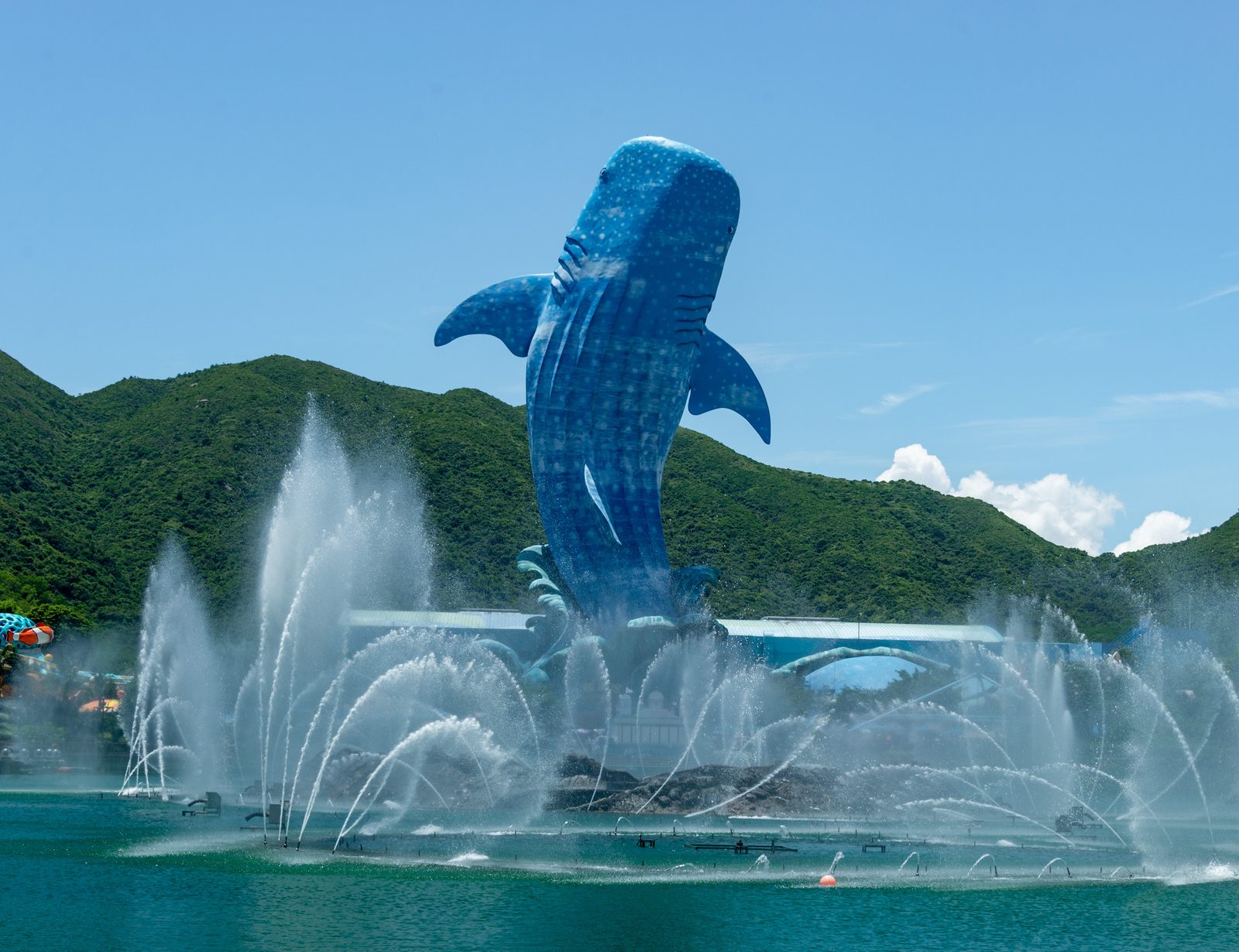 Zhuhai · Attractions & TicketsChimelong Ocean Kingdom, Zhuhai: Five World Records, One Whale Shark Tank — and the Records, DatedFive world records with their dates on, a 22.7-million-litre whale shark tank, passport tickets and an intercity station eight minutes from the gate: the busiest non-Disney, non-Universal park on earth, landed honestly.Reference ~
 China · Visa & ArrivalsThe 30-Day Visa-Free Countdown: Your 2027 Trip Is a Booking Problem, Not a PanicChina's unilateral 30-day visa-free entry is currently set to run until 31 December 2026. If you are planning a 2027 trip, the policy has not ended — your booking strategy just needs a November checkpoint in it.Verified
Sources and status
Prices, schedules and booking channels change. Recheck the details that matter before you travel.
- Hong Kong Immigration Department — Visit Visa / Entry Permit Requirements TableVerifiedOfficial Hong Kong visa-free table checked line by line: British citizens 180 days, United States 90 days, Indonesia 30 days, India 14 days with pre-arrival registration. Checked 2026-11-01
- Hong Kong Immigration Department — Control Points and Opening HoursVerifiedOfficial hours for every Hong Kong control point, including West Kowloon Station 06:30-23:30, Huanggang 24 hours with the joint one-release model, and the 22:00-24:00 closes of the Shenzhen land crossings. Checked 2026-11-01
- Hong Kong Security Bureau — Boundary and Basic Law ProvisionsVerifiedBasic Law Articles 116 and 154: Hong Kong as a separate customs territory whose government applies its own immigration controls. Checked 2026-11-01
- National Immigration Administration — Unilateral Visa-Free Policy Country List (English)VerifiedThe 50-country 30-day unilateral visa-free list as of 17 February 2026, including the United Kingdom and Canada and excluding the United States. Checked 2026-11-01
- National Immigration Administration — 240-Hour Visa-Free Transit PolicyVerifiedCore transit policy text: third country or region movement, 24 provinces, and the 57-country scope naming the United States, Russia and the United Kingdom. Checked 2026-11-01
- National Immigration Administration — Announcement Adding Five 240-Hour Transit Entry Ports (November 2025)VerifiedThe announcement taking entry ports to 65 and adding West Kowloon Station, the bridge Zhuhai port, Pazhou, Hengqin and Zhongshan. Checked 2026-11-01
- National Immigration Administration — Announcement Expanding the Transit Scheme to 57 Countries (August 2026)VerifiedAnnouncement No. 4 of 2026: Kyrgyzstan and Vietnam added from 20 August 2026, taking the transit scheme from 55 to 57 countries. Checked 2026-11-01
- MTR High Speed Rail — 240-Hour Visa-Free Transit Policy for Foreign Visitors (English)VerifiedOperator's restatement of the transit policy: Hong Kong, Macau and Taiwan qualify as the third destination, the example routing via Shenzhen, and the warning to allow extra time for on-the-spot assessment at West Kowloon. Checked 2026-11-01
- MTR High Speed Rail — Departure Process at Hong Kong West Kowloon StationVerifiedOfficial step-by-step: B1 real-name verification stopping 30 minutes before departure, security, B3 Hong Kong exit then mainland entry, gates closing 5 minutes before departure, full process about 30 to 45 minutes. Checked 2026-11-01
- MTR High Speed Rail — Published Fare Chart in Renminbi (PDF)VerifiedOfficial renminbi fare chart: second class Futian ¥68, Shenzhen North ¥75, Guangzhou South ¥215. Checked 2026-11-01
- Hong Kong Department of Justice — NPCSC Decision on the Co-operation Arrangement, 27 December 2017VerifiedThe legal basis of the Mainland Port Area: approval of the co-operation arrangement under which the area is treated as within the mainland for legal application and jurisdiction. Checked 2026-11-01
- Hong Kong-Zhuhai-Macao Bridge Shuttle Bus — Official Fare PageVerifiedOfficial shuttle fares: from Hong Kong HK$65 day and HK$70 night full fare, HK$33 and HK$35 concession; from Zhuhai ¥58 day and ¥63 night; day defined as 06:00-23:59. Checked 2026-11-01
- Hong Kong Airport Authority — Ferry Transfer (SkyPier) ServiceVerifiedOfficial transfer rules: same-day connecting passengers only, do not clear Hong Kong immigration or collect baggage, desk deadlines of 60 minutes with checked baggage and 30 minutes without, and the list of mainland ferry ports served. Checked 2026-11-01
- Shenzhen Port Office — New Huanggang Port Opening AnnouncementVerifiedAnnouncement that the new Huanggang port building opened on 12 October 2026 providing 24-hour passenger clearance, replacing the temporary hall and the Hong Kong-side Lok Ma Chau passenger service. Checked 2026-11-01