What to Bring Home From Wuhan: Bells You Can Carry, Noodles You Can Pack, Meat You Mostly Can't
Updated November 2026 · Border rules checked against US, UK, EU and Australian official sources
Keep it in your favorites
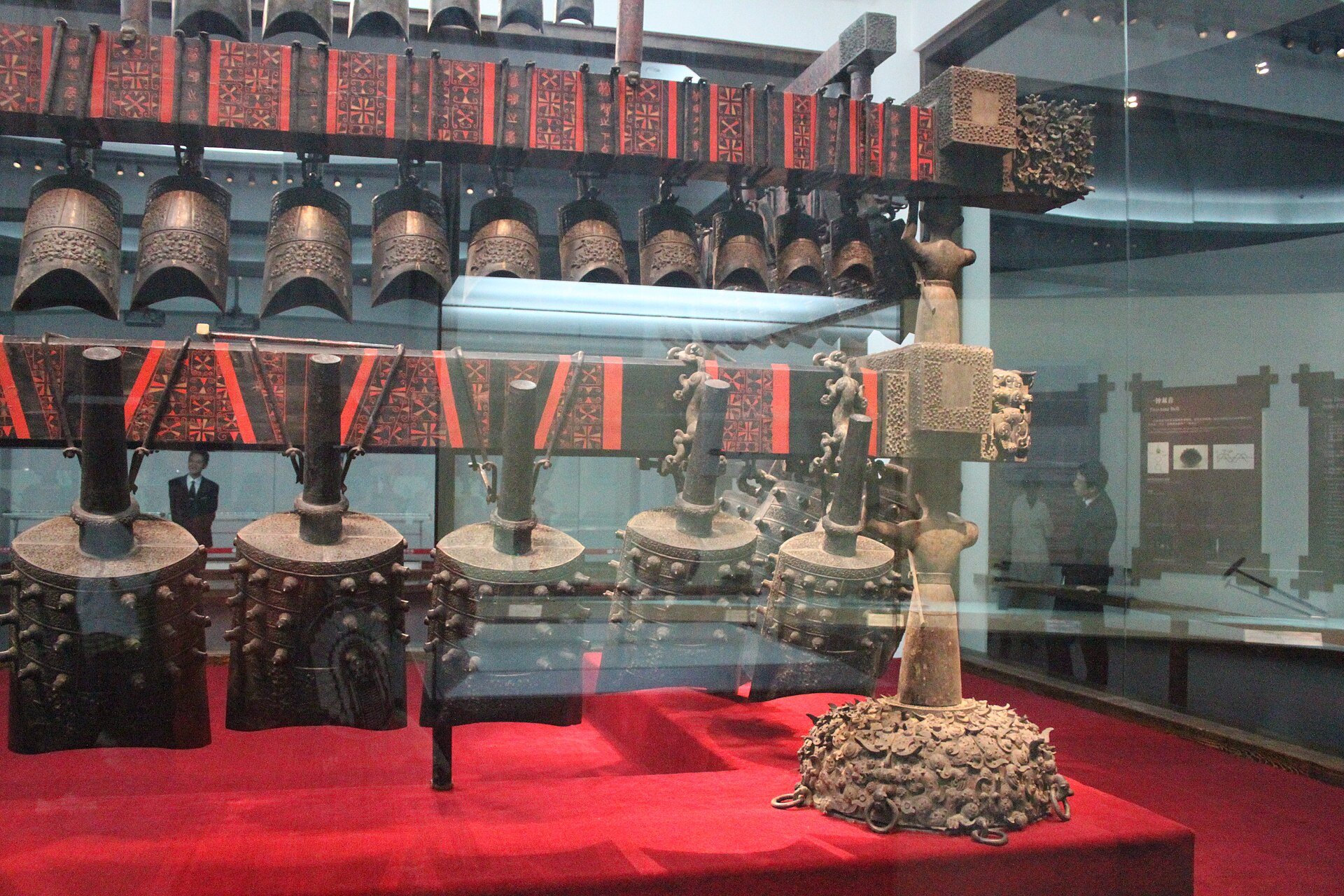
Sixty-five bronze bells on a lacquered frame, cast in 433 BC for the Marquis Yi of Zeng — the single most famous object in Wuhan, and the one its souvenir industry quite rightly revolves around. · Image source
Every Chinese city has a souvenir it is proud of and a souvenir it is famous for, and in Wuhan they are separated by about 2,400 years. The proud one is an orchestra: sixty-five bronze bells, cast for a marquis who died in 433 BC, still playable, still in the provincial museum. The famous one is a spicy duck neck in a vacuum bag. This guide exists because the first of those turns out to be wonderfully portable, and the second — for most of the people reading this page — is illegal to carry home.
Here is our honest verdict up front: Wuhan is an easy city to shop for, if you buy in the right order. The museum's folding bell magnet is the best-designed souvenir in central China. The noodle gift boxes are a national-prize-winning echo of the city's breakfast. And the duck neck is a superb snack with a border problem that no vacuum seal fixes — so we will give you the border rules country by country, from the customs authorities themselves, and then tell you to eat it here instead.
What follows is the whole haul, in the order to buy it: the bells at the museum (with one honest correction about what the shop actually sells), the noodles anywhere in the city, and the meat — read that section before Jingwu Road, not after the airport.
Buy · The bells & the noodlesHubei Provincial Museum shop: the folding bianzhong magnet, ¥48 (≈$7.2) → Cailinji reganmian gift boxes, anywhere in the city, bought last
Check · The meat rulesVacuum duck neck: banned for the UK and EU, 'do not bring' for Australia, declare-and-inspect for the US — eat it in Wuhan instead
Buy these first, in this order
The bells, at the museum, before anything else. Hubei Provincial Museum's shop is the first stop because its best line genuinely sells out: the bianzhong fridge magnet that folds open into a standing miniature bell rack, ¥48, (≈$7.2) a fixture at the top of the museum's sales chart for a year and a half. Buy it on your museum day — the shop sits on the visitor route, and peak-season crowds clear the shelves.
The noodles, anywhere in the city. Cailinji's hot dry noodle gift boxes need no pilgrimage: brand stores, supermarkets and the airport all stock them, in several flavours and box sizes. Buy them last, on the way out of town, so the boxes travel uncrushed on top of the bag.
No affiliate button in this box: the museum shop and the noodle brand's own stores are the channels, and both are priced for the domestic market. Prices as listed in November 2026.
Eat this in Wuhan, not at home
The stall bowl of reganmian. Before any gift box: breakfast at a street stall, noodles dressed to order, eaten standing among commuters. This is the flavour the souvenir is quoting — hear the original first.
Duck neck, fresh, tonight. From a Jingwu Road shop, eaten in Wuhan with something cold. The next section explains why this is not a suggestion but a border strategy.
Doupi for the road. The three-delicacy bean-skin — a crisp mung-bean crêpe over glutinous rice and savoury filling — is Wuhan's other breakfast monument. It does not travel at all, which makes eating it here a duty.
The bells — what the museum shop actually sells
Fridge magnets and desk ornaments, not instruments · The folding set is ¥48 (≈$7.2) · Buy on the museum day
First, the original, because the souvenir only makes sense against its scale. In 1978, archaeologists opened the tomb of the Marquis Yi of Zeng, who died in 433 BC, and found his orchestra intact: sixty-five bronze bells on a red-and-black lacquered frame, each bell cast to sound two different tones, the whole set still playable after 2,400 years. It sits in Hubei Provincial Museum like a wall of bronze music, and it is the reason half of Wuhan's visitors are in the building.
Now the correction this guide exists to make: the museum shop does not sell you a miniature working bianzhong. What it sells — to the tune of some 600 product lines, with the bell designs at the front — is the instrument's likeness: fridge magnets and desk ornaments patterned on the bells. The star is a set that folds flat as a magnet and opens out into a standing miniature bell rack: ¥48, (≈$7.2) and such a phenomenon that Hubei Daily reports it topping the museum's sales for a year and a half, moving up to 15,000 in a peak month. It is light, flat, unbreakable in any practical sense, and it carries the real object's silhouette rather than a cartoon of it. As souvenirs go, it is close to perfect.
Buy it in the museum, on the day. The shop is on the visitor route, the museum itself is free with a passport reservation, and the bell gallery deserves the hour before the shop gets your money — a magnet bought after standing in front of sixty-five bronze bells means something different from the same magnet bought cold.
Hubei Provincial Museum — free entry, passport reservation, the Marquis Yi gallery firstThe shop on the visitor route: folding bianzhong magnet set, ¥48 (≈$7.2)Also on the shelves: bell-pattern magnets and desk ornaments across the rangeHand luggage, flat, done — the easiest souvenir in this guide
The noodles — breakfast, gift-boxed
Cailinji gift boxes · Instant, four flavours · No border issues anywhere
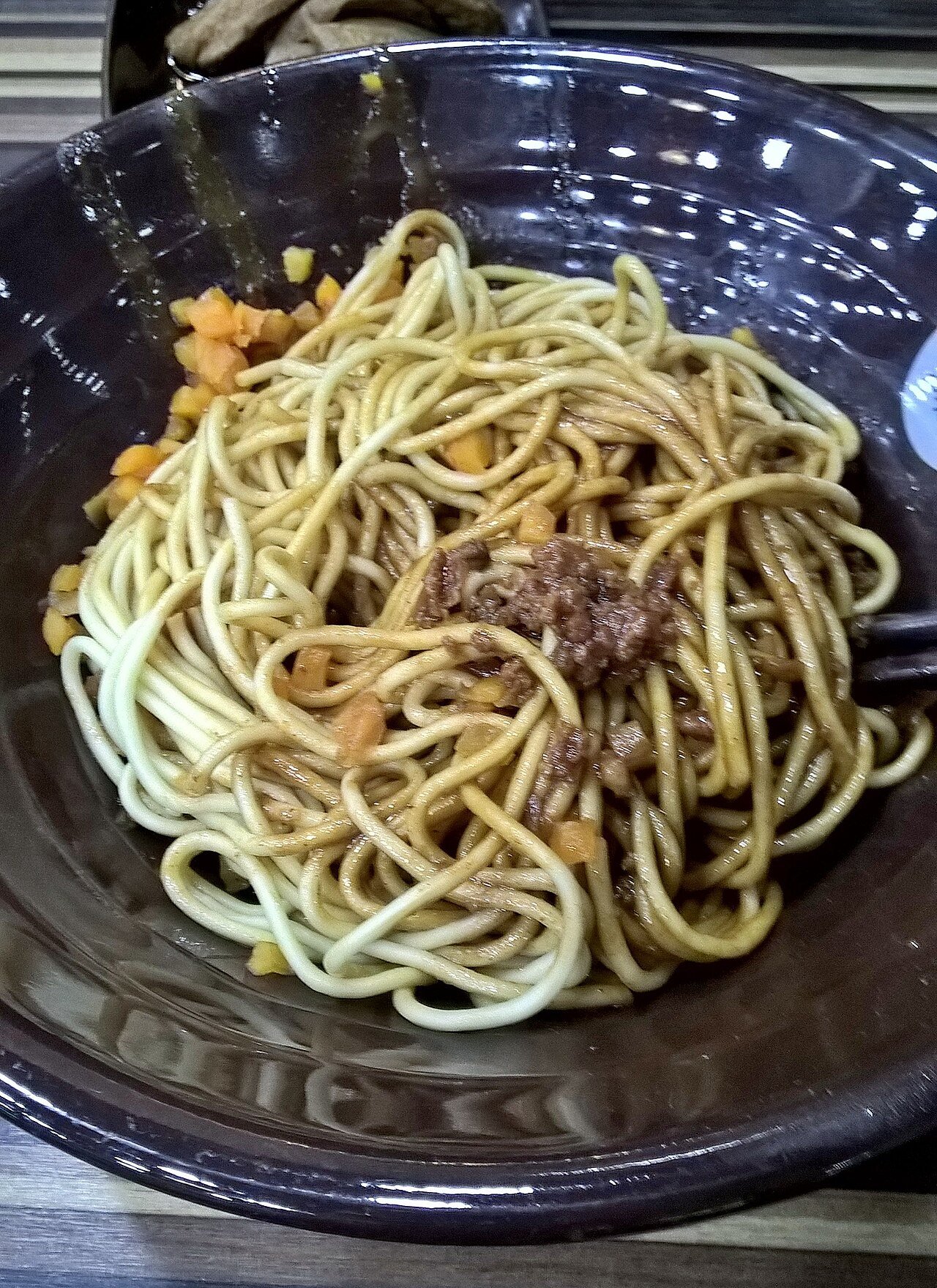
Reganmian in its natural habitat: a Wuhan breakfast bowl, sesame-rich and eaten standing. The gift box is this, engineered to survive a suitcase.
Reganmian — hot dry noodles — is Wuhan's breakfast and its argument with the rest of China about what noodles are for. No broth at all: springy alkaline noodles blanched, cooled, then dressed at the moment of eating with sesame paste, soy, chilli and pickles into something glossy and dense. You eat your first bowl at a street stall, standing, the way the city does. The gift box is the echo you take home.
The echo is better engineered than you might expect. Cailinji, the city's century-old noodle house, sells gift-boxed instant versions — just add boiling water, ready in about a minute — in flavours running from classic to crayfish, and the line is taken seriously enough as a souvenir to have won silver at the 2024 China Tourist Souvenir Competition. Boxes come in several sizes, are sold in Cailinji stores and supermarkets across the city, and survive checked luggage without complaint.
Two honest notes. First, the box is an echo, not the original: sesame paste in sachets gets you most of the way, but the stall's theatre — the blanching, the wrist-flick of the dressing — stays in Wuhan. Second, of everything in this guide, this is the item with no border drama at all: dry goods, declared where the arrival card asks, waved through everywhere. Buy the big box.
Eat the original first: a stall bowl at breakfast, standing, sesame-heavyCailinji gift boxes: instant, about a minute in boiling water, several flavoursBuy last, pack on top of the case, declare as food where askedHome: the echo of the stall, close enough to start an argument about Wuhan
The meat — read this before the duck neck
Four destinations, three answers · The vacuum seal changes nothing
And now the section that will make us unpopular in the Jingwu Road duck-neck shops. Wuhan's vacuum-packed duck neck — spicy, chewy, engineered to survive any journey — is the city's most portable-tasting souvenir, and for most of the readers of this page it is also contraband. The vacuum seal that makes it look so travel-ready is legally irrelevant: to a border biosecurity officer, it is meat, from a country whose disease status drives the rules, and the rules are these.
The United Kingdom and the European Union are absolute: travellers from China may not bring in meat or meat products at all — not a kilo, not a gift pack, not vacuum-sealed. Australia is a sentence nearly as short: the agriculture department's official advice is do not bring meat products; anything brought must be declared on the incoming passenger card and faces inspection, paid treatment or destruction, and 'I declared it' is a defence against a fine, not a promise of entry. The United States is the one nuanced door: everything agricultural must be declared (undeclared goods are seized, with fines up to $1,000 for a first offence), and within that, commercially packaged, cooked, shelf-stable poultry — which a sealed duck-neck pack is — can be admitted at the inspecting officer's decision. Pork and beef products from China sit under disease restrictions that make them a practical no.
So the duck neck's real itinerary is: eat it in Wuhan. Fresh from the shop, with the city's own辣 and a cold drink, it is one of China's great snacks. In your suitcase, bound for London, Frankfurt or Sydney, it is a confiscation with a story attached — and the story is the only part you'll be allowed to keep.
UK → No. EU → No. Meat and meat products from China are banned for travellers, full stopAustralia → Don't. Official advice is not to bring meat; anything brought must be declared and may be destroyedUS → Declare, always. Cooked, sealed, shelf-stable poultry may be admitted at inspection; pork and beef, treat as noEverywhere → The fine is for not declaring. Declared-and-confiscated costs you a snack; undeclared can cost you money
Our call: bells and noodles travel; the duck neck stays
If you buy three things in Wuhan, make it the folding bell magnet for the person who loves objects, the big noodle box for the person who loves breakfast, and a fresh bag of duck neck for yourself, tonight, in the city that invented it. That is not a compromise version of the souvenir list — it is the list, correctly sorted by what the world's borders will wave through and what Wuhan does better fresh anyway.
Final checks
Pack in the order of fragility and law. The noodle boxes ride on top, uncrushed. The bell magnet goes in hand luggage, where its flat bronze-coloured charm offends no scanner and no rule on earth. Receipts stay in the same pocket as your passport until you are home — for declared food in the US or Australia, a receipt showing a sealed commercial product is the difference between a wave-through and a long conversation.
And if you ignored the duck-neck section and bought it anyway, there is still an honourable exit: eat it in Wuhan, tonight, with something cold, the way the city intended. The best version of that souvenir was never the one in the suitcase. It was the evening itself — and evenings, unlike vacuum-packed poultry, cross every border in the world without inspection.
Prices, schedules and booking channels change. Recheck the details that matter before you travel.
Hubei Daily — the museum's folding bianzhong magnetVerifiedThe folding bianzhong fridge-magnet set at ¥48, (≈$7.2) a top seller at the museum for a year and a half, up to 15,000 a month in peak season. Checked 2026-11-23.
Australian Department of Agriculture — advice to travellersVerifiedOfficial advice is not to bring meat products to Australia; anything brought must be declared on the incoming passenger card and is subject to inspection, treatment or destruction. Checked 2026-11-23.