14 cities · Shopping · The gift list

What to Bring Home From China: The Gift List With Addresses

Keep it in your favorites
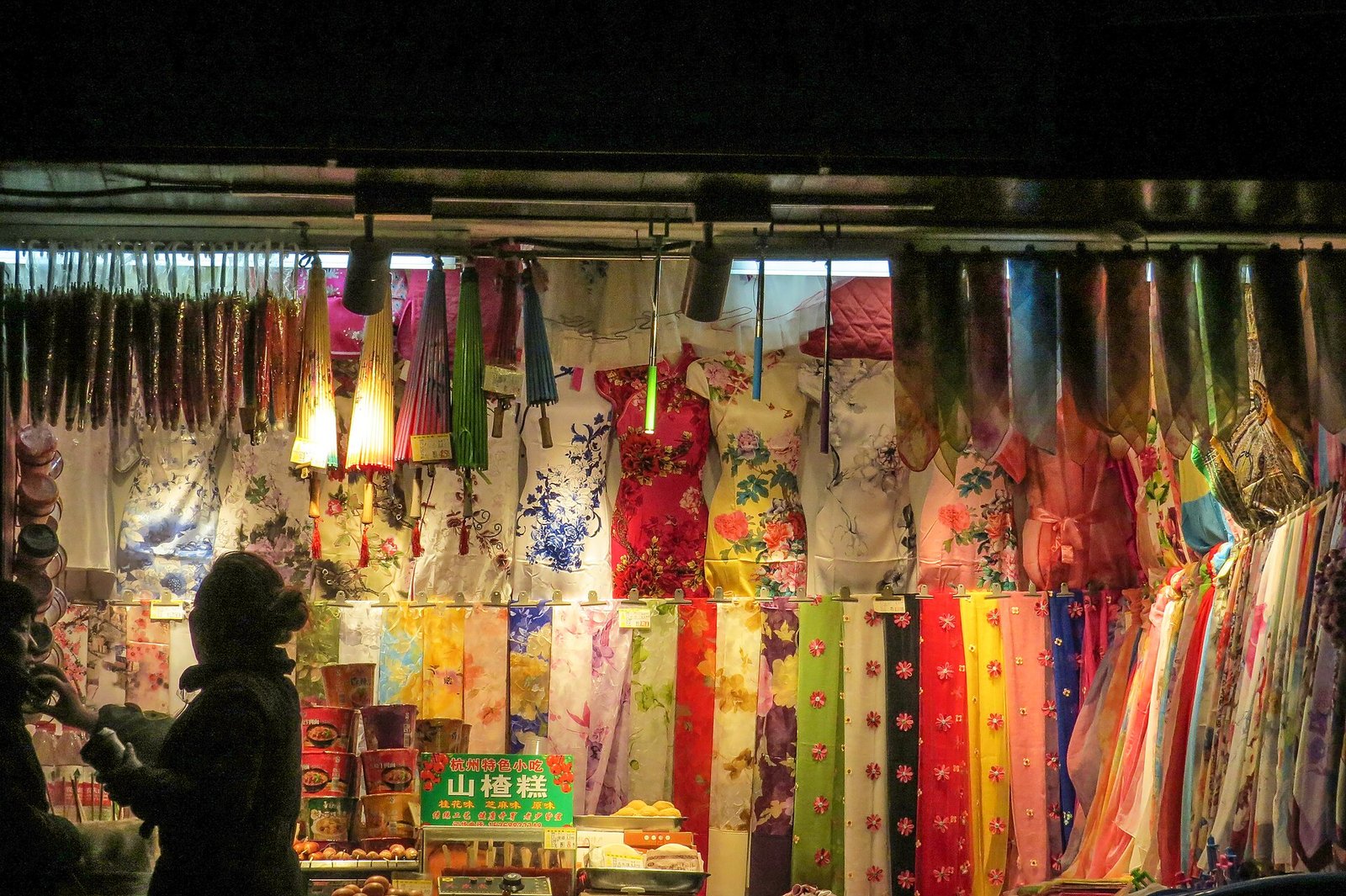
A souvenir stall near Hangzhou's Su Causeway at night, hung with qipao, silk scarves and gift goods
A souvenir stall near Hangzhou's Su Causeway at night, hung with qipao, silk scarves and gift goods — cheerful, colourful, and exactly what this list is not. Every gift below belongs to one city, one maker and one right shop. · Image source

It usually arrives on a phone screen first: Jackie Chan unboxing, this November, a red hamper of specialties gathered from across China — a Jingdezhen tea set, a Suzhou silk scarf, Sichuan panda embroidery — chosen from more than 5,000 recommendations sent in by the public.

Here is our honest verdict up front: the gifts are real, but the box names almost none of the shops, and a gift without its address is only half a gift. Buy the airport version and you have bought a souvenir of nowhere. Buy the same object where it is made, and you have bought a place.

So consider this the shopping cut: 33 gifts from 14 cities, each with the shop that sells the real one, the price it should cost and the mark that proves it — plus two honest warnings about famous foods that cannot legally fly home with most visitors.

The craft shelf16 gifts — enamel, embroidery, porcelain and combs, bought where they are made
The food shelf12 gifts — supermarket jars, aged peel and a pastry on a countdown; two stay in China
The tech shelf5 gifts — Shenzhen's pocket cameras, cinema glasses and a self-calibrating printer

Booking priorities

The meat cannot fly. Guangzhou's celebrated cured meats and Aba's yak jerky are prohibited for travellers by the United States, which bans meat products from China, and by the European Union, which bans travellers from bringing in meat from third countries — Australia and New Zealand are stricter still. A vacuum seal changes none of it, and seized items are destroyed. Eat both where they are made; they are better there anyway.

The power bank needs its mark. Since 28 June 2025, China's domestic flights accept only power banks carrying a clear CCC (3C) certification mark, under a Civil Aviation Administration emergency notice — and recalled models or batches are confiscated at security. Buy the current model from an official store, keep the mark legible, and carry it in the cabin, never in a checked bag.

This is not a reason to skip the food shelf. In the full list, every can't-fly item is paired with the version that travels: wife cakes and chicken biscuits from the same Guangzhou shops, sealed jars of hotpot base and doubanjiang, labelled tea.

The food shelf: start with these three

Pixian doubanjiang The fermented broad-bean chilli paste Sichuan cooking stands on. A supermarket jar of the heritage Juancheng brand costs about ¥10–19 (≈$1.5–2.9) and quietly upgrades a year of home cooking. Checked bag, sealed twice.

Xinhui chenpi Tangerine peel aged at least three years, under the saying that an ounce of chenpi is worth an ounce of gold. Branded under-five-year boxes run roughly ¥100–300 (≈$15–45) — dry, light, unbreakable, and unlike anything in a Western kitchen.

Shanghai butterfly pastry Thirty-two layers of palmier, baked daily at the Park Hotel bakery since 1934, about ¥32 (≈$4.8) a bag — on a shelf life of roughly ten days that starts fading after four. It is the last thing you buy, and the first thing you open.

The craft shelf — made by hand, bought at the source

16 gifts · Factories, institutes and museum shops · ¥35 (≈$5.3) painted combs to five-figure master vessels

Start in Beijing, standing at a workbench. At the Beijing Enamel Factory, outside Yongdingmen, you can watch cloisonné being made before you pay for it — copper wire bent into patterns by hand, enamel dotted into the cells, the same technique that peaked under the Ming emperor Jingtai. Small vases and bangles sit between roughly ¥50 (≈$7.5) and ¥500, (≈$75) the prices are printed, and the making you just watched is the certificate of authenticity. No gift wall in any airport offers that.

That is the pattern in every city on this shelf: the reliable shop is the one attached to the making. The Datang Xishi Museum in Xi'an prices its Tang sancai replicas in plain sight — about ¥200 (≈$30) for a blue-glazed horse, ¥500 (≈$75) for a sancai horse — because the genuine articles are cultural property that cannot leave the country, and the honest replica is the legal way to take the Tang dynasty home. Suzhou's embroidery comes from its research institute or from Zhenhu, the craft's home town, where a single silk thread is split into a hundred strands. Nanjing's Yunjin is woven with real gold thread, a few centimetres a day on a two-person loom — buy it at the institute and ignore the few-dozen-yuan imitations in the temple markets.

And the shelf's best stories cost the least. The Changzhou comb — palace tribute by the Ming, painted versions from about ¥35 (≈$5.3) — is the one item on this list that also sits in Jackie Chan's own box, bought in a city most travellers cross at full speed, twenty-five minutes from Suzhou by high-speed rail. A small framed piece of Qiang embroidery from the Aba mountains carries the rebuilding of more than 2,300 women's livelihoods after the 2008 earthquake. In Jingdezhen, the city that gave the ceramic its English name, young studio potters sell hand-painted cups for roughly ¥100–600 (≈$15–90) at a weekend market inside a converted imperial-era factory. The craft shelf is not the expensive shelf. It is the shelf where the price is attached to a pair of hands.
Cloisonné at the Enamel FactoryTang sancai replicas, museum shopA framed Huazhou shadow puppetChangzhou painted combsJingdezhen cups at Taoxichuan

The food shelf — half of it is dinner

12 gifts · Supermarkets beat gift shops · Two famous items are eaten in China, not packed

The food shelf begins, unglamorously, in a supermarket — and that is its glory. The jar of Pixian doubanjiang that Sichuan cooking is built on costs about ¥10–19 (≈$1.5–2.9) if you buy the heritage Juancheng brand where locals buy it. A 500 g brick of Qiaotou hotpot base, from a brand that claims a 1908 origin at Chongqing's bridgeheads, runs about ¥23 (≈$3.5): melt it, add stock, and your table at home is briefly, vividly in Chongqing. These are not souvenirs of a trip. They are the trip, extended by a year of dinners.

The shelf has a delicate end, too. Xinhui chenpi is tangerine peel aged like wine, at least three years in the peel sheds of Jiangmen. Old Beijing's own tea is not Dragon Well but jasmine — Zhang Yiyuan, on Dashilan Street since 1900, still sells it by weight, and a three-bag set of 50 g bags goes for about ¥51, (≈$7.7) the easiest quality gift on the whole list to carry. Even the famous Longjing can be bought safely: since 2023 the genuine article carries an official traceability label you scratch and check at the counter.

What the food shelf asks of you is timing. Shanghai's butterfly pastry fades after about four days of its ten-day life, and the Park Hotel's own bakery on Huanghe Road is the only counter worth trusting — investigative reporting has found around ten copycat shops online. Chongqing's Chen Changyin mahua, hand-twisted in Ciqikou, is a last-day purchase from the longest queue, carried by hand. And two of the shelf's most famous names are not purchases at all, in the packing sense: Guangzhou's cured meats and the plateau's yak jerky are eaten where they are made, for the legal reasons in the box above. The food shelf rewards the traveller who treats it as a menu first and a cargo manifest second.

Juancheng doubanjiang, supermarket aisleQiaotou hotpot brickXinhui chenpi, branded boxZhang Yiyuan jasmine teaButterfly pastry, last day

The tech shelf — the shelf Shenzhen sends the world

5 gifts · Four designed in Shenzhen, one from Changsha · ¥299 (≈$45)–¥3,799 (≈$571) at official-store prices

Every big mall in China now has the easy version of this shelf: flagship stores with demo tables and staff who will let you play. The pilgrimage version is Huaqiangbei, Shenzhen's sprawling electronics market district, in the city where four of these five products were designed. Either way, the prices are the official ones, the stock is current, and you are buying at the source — the way this guide buys everything else.

The two cameras first. DJI's Osmo Pocket 4 is the pocket gimbal half the travel creators in China seem to carry: a 1-inch sensor, 4K/240fps slow motion and subject tracking, ¥2,999 (≈$451) for the standard kit and ¥3,799 (≈$571) for the creator combo — activate it in the DJI Mimo app before you leave the shop, and carry it in the cabin, because its battery is built in. Insta360's GO Ultra is the opposite philosophy: 53 grams that clip to your chest and shoot the market walkthrough hands-free, listed at ¥2,598, (≈$391) recording to a microSD card you should budget for at the till. Between them sits RayNeo's Air 4 Pro, a cinema that plugs into your phone — a big HDR10 screen and Bang & Olufsen-tuned audio on the flight home, ¥1,899, (≈$286) with two honest notes attached: it is a screen only, no camera and no apps of its own, and there is no diopter dial, so try a pair in-store before paying.

Then the maker and the workhorse. Bambu Lab's A1 mini is a desktop 3D printer that calibrates itself before every print and, with its AMS lite feeder, prints in four colours; flagship prices sit around ¥1,500, (≈$226) it weighs 5.5 kg boxed, and you should add a spool of PLA and check the voltage plate against your home supply before it goes in the checked baggage. And the least glamorous, most-used gift on the entire list: Anker's Zolo power bank, 20,000 mAh with the cable built in, ¥299 (≈$45) from the Changsha company that taught the world to buy Chinese chargers. Its paperwork is part of the product — the CCC mark in the box above is what gets it onto your domestic flights.

DJI Osmo Pocket 4 — ¥2,999 (≈$451)Insta360 GO Ultra — ¥2,598 (≈$391)RayNeo Air 4 Pro — ¥1,899 (≈$286)Bambu Lab A1 mini — about ¥1,500 (≈$226)Anker Zolo power bank — ¥299 (≈$45)

Recommendation: buy it where it is made

A gift's value is its address. The ¥10 (≈$1.5) supermarket jar with the right maker's mark will be opened, cooked with and talked about for a year; the anonymous luxury box from an airport gift wall is forgotten by the next flight. If you can watch the thing being made — wire bent, silk split, cups painted, peel aged — you are in the right shop, and the price printed beside the workbench is the honest one. When in doubt, choose the object whose maker you could point to on a map.

Final checks

Verification: Every price in this guide comes from the shop floor, a museum shop or the brand's official store, checked November 2026; customs and flight rules are taken from the authority that enforces them — the CAAC notice for power banks, US and EU traveller guidance for meat. Sources are listed below. Facts checked November 2026.

Some links in this guide are affiliate links. If you buy through them, ChinaMate may earn a commission at no extra cost to you.

Read properly, this list is not really a shopping list. It is an itinerary in disguise: a factory floor in Beijing, a museum shop in Xi'an, a twenty-five-minute train ride to Changzhou for a comb, a supermarket aisle in Chengdu, a market district in Shenzhen. The gifts are what those detours leave in your hands — proof, in enamel and silk and chilli oil, that you went to the places themselves and not just past them. The trip gives every object its story; the story is most of the gift.

The practical details, briefly: keep the receipts and photograph the paperwork before you pack — receipts shorten customs conversations, support a departure tax refund (¥200 (≈$30) spent in one store on one day is the threshold, the headline rate is 11%), and remain your only proof of provenance once the shop is 10,000 kilometres away. Fragile things ride in hand luggage, in their original padding. Then go back outside. The best of these 33 will not be the most expensive one; it will be the one whose shop you can still picture — and China, where you found it, is still happening on the other side of the door.

Related guides

Sources and status

Prices, schedules and booking channels change. Recheck the details that matter before you travel.

Keep it in your favorites
Something changed? Email a correction ↗

Questions, answered from the guides

Answers are drawn from published ChinaMate guides and cite the guide used. Where no guide covers a question, the result states that and links the relevant community discussion.

Request a written proposal

Send your dates, party size and priorities. You receive a costed itinerary and a final price in writing before anything is booked.

No payment now · Nothing is booked until you accept a written proposal

Answered by a person — Jacob, founder · hello@gochinamate.com · Replies within 24 hours on business days

Plan your trip →