Shanghai · First trip · One day, metro only

Zhujiajiao and the Bund in One Day: Leave the Water Town by Sunset Minus Two and a Half Hours

Keep it in your favorites
Fangsheng Bridge, the five-arch stone bridge over the Dianpu River at Zhujiajiao water town, Shanghai
Fangsheng Bridge, five stone arches over the Dianpu River — the largest stone bridge in the Shanghai region, and the natural start of any walk through the town. · Image source

There is a particular pleasure in a day with no car in it. You board a metro train in the middle of Shanghai in the morning, ride it until the city runs out, and step down into a town of canals and stone bridges that was old when the Bund was farmland. Then, hours later, the same railway hands you back to the city at the exact moment its famous riverfront lights up. Two Shanghais, one fare card.

Here is our honest verdict up front: the day is easy, and the only way to break it is greed. The town tempts you to add one more sight, one more boat, one more lane — and every addition is paid for out of the evening. So this plan keeps two anchors (the town by day, the Bund at dusk) and allows exactly one add-on. And it sets your leaving time the way sailors set sail: not by mood, but by the sun. Sunset, minus two and a half hours. That is when you walk to the station, whatever the lanes are whispering.

What follows is the whole machine: the metro legs with their real durations — including the 1.3 kilometres between Zhujiajiao station and the town that most guides forget to mention — the choice between the garden and the boat, and the arithmetic that lands you on the promenade half an hour before the light goes, in any season.

The day · The water town08:00 out → Line 17 to Zhujiajiao → Fangsheng Bridge and the lanes → ONE add-on: Kezhi Garden or a hand-rowed boat → lunch in the town
The evening · The BundLeave at sunset minus 2.5 hours → Line 17 + Line 2 to Nanjing East Road → promenade 30 minutes before sunset → lights at 18:00 or 19:00

Nothing here needs booking ahead — except your leaving time

The town has no gate ticket. Zhujiajiao is an open town, free to wander all day. The paid pieces are individual sights — Kezhi Garden at ¥20, (≈$3) a three-sight pass at ¥60 (≈$9) — and the boats. The one-add-on rule below means most first-timers should buy exactly one of those, or none.

The metro is the booking. Line 17 to Zhujiajiao, Line 2 back to Nanjing East Road — about ¥6 (≈$0.9) each way on the fare card or transit code you already use in Shanghai. Trains run about every ten minutes; the last Line 17 back toward the city leaves Zhujiajiao around 22:35, though if this plan works you will be long gone by then.

Zhujiajiao day tours from Shanghai on Klook →

Affiliate link — booking through it supports ChinaMate at no extra cost to you. This plan is built for the metro; the tour is the fallback for days when you'd rather be driven.

Eat this, in this order

Zongzi in the lanes. Zhujiajiao is a rice-dumpling town — the stalls along North Street wrap them fat and fragrant in bamboo leaves. Buy one hot, eat it on a bridge, and let that count as the morning's second breakfast.

A canal-side lunch, unhurried. Small restaurants line the canals serving river fish, braised pork and whatever greens came off the fields that morning. This is the day's one slow meal; the evening has no time for it.

Dinner after the lights, back in the city. You will be standing on Nanjing Road at the dinner hour with half of Shanghai's restaurants in walking distance. In winter, use the dark hour before the 18:00 lights for exactly this.

Out — Line 17 to the end of the city

Line 2 → Line 17 · About 1.5–2 hours door to door · The station is 1.3 km from the town — budget it

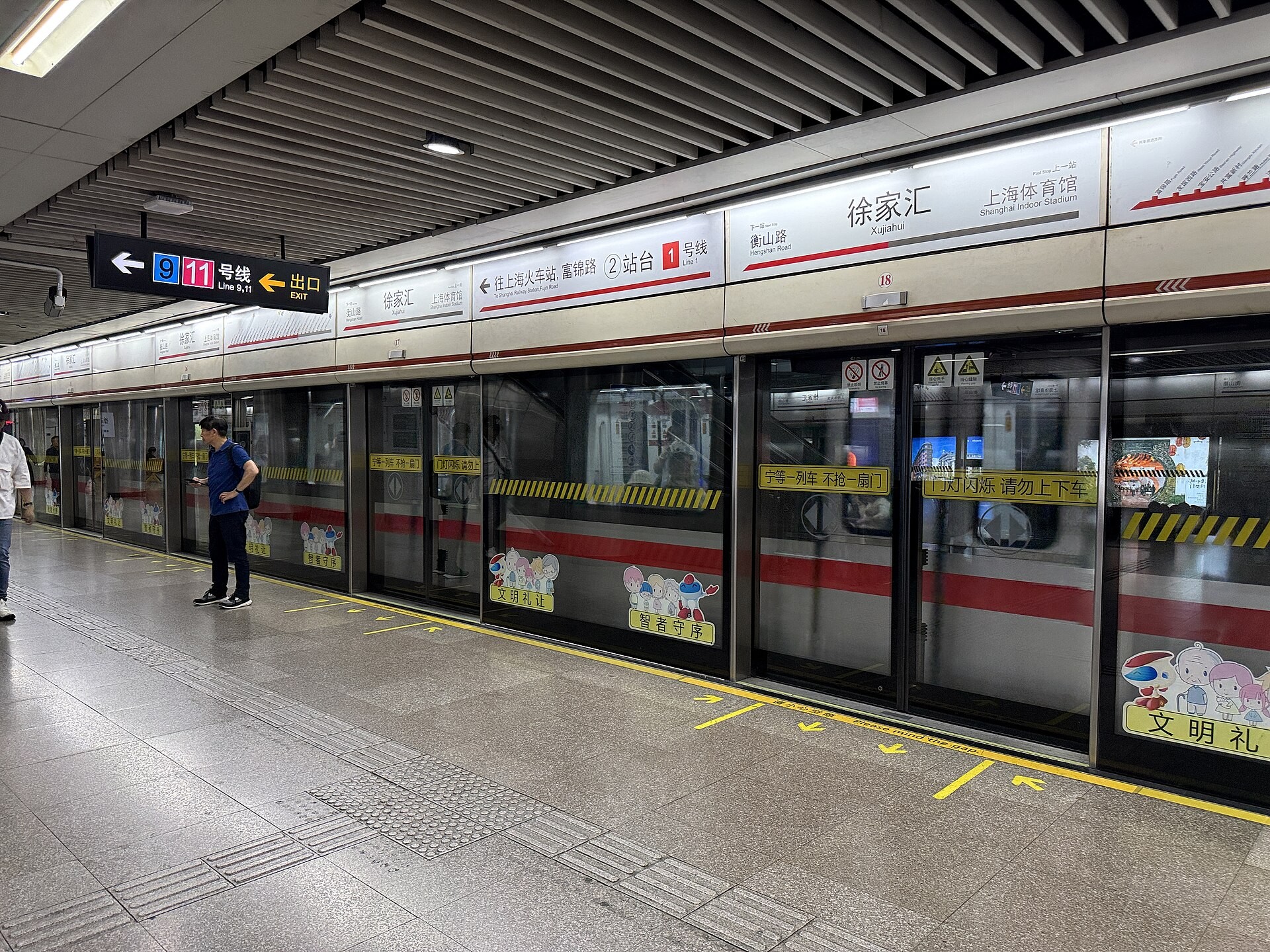
You leave the centre at eight or half past, and Shanghai unspools behind you in the most literal way: Line 2 west to Hongqiao Railway Station, then the change onto Line 17 toward Xicen, the line that exists largely to serve the water towns. Thirty-seven minutes of suburbs thinning into fields and fish ponds, and the train sets you down at Zhujiajiao station — which is where the one piece of fine print in this plan lives. The station is not the town. Between them lie 1.3 kilometres, fifteen to twenty minutes on foot through ordinary streets, and every version of this day that goes wrong starts with someone discovering that at a run, at dusk, in the wrong direction.

So walk it in the morning, when it costs nothing: out of the station, along the signed route, and the town announces itself the way water towns do — a canal, a stone bridge, the smell of something steaming. Or shorten it: the 1510 shuttle bus from the station costs ¥1 and drops you near the visitor centre, and an electric boat runs from the station dock straight to Fangsheng Bridge for ¥40 (≈$6) if you want the town to arrive the way it was meant to, by water. Any of the three is fine. What matters is that you budget the leg, in both directions, every time you do the day's arithmetic.
08:00–08:30 — Leave the centre: Line 2 toward Hongqiao Railway StationChange to Line 17 toward Xicen — about 37 minutes to Zhujiajiao stationThe last 1.3 km: walk 15–20 min, 1510 bus ¥1, or e-boat ¥40 (≈$6) to Fangsheng BridgeAbout 10:00 — In the town, with the whole day priced and timed

The town — canals first, one add-on only

Free to enter · Sights and boats 08:30–17:00 · One add-on, not two

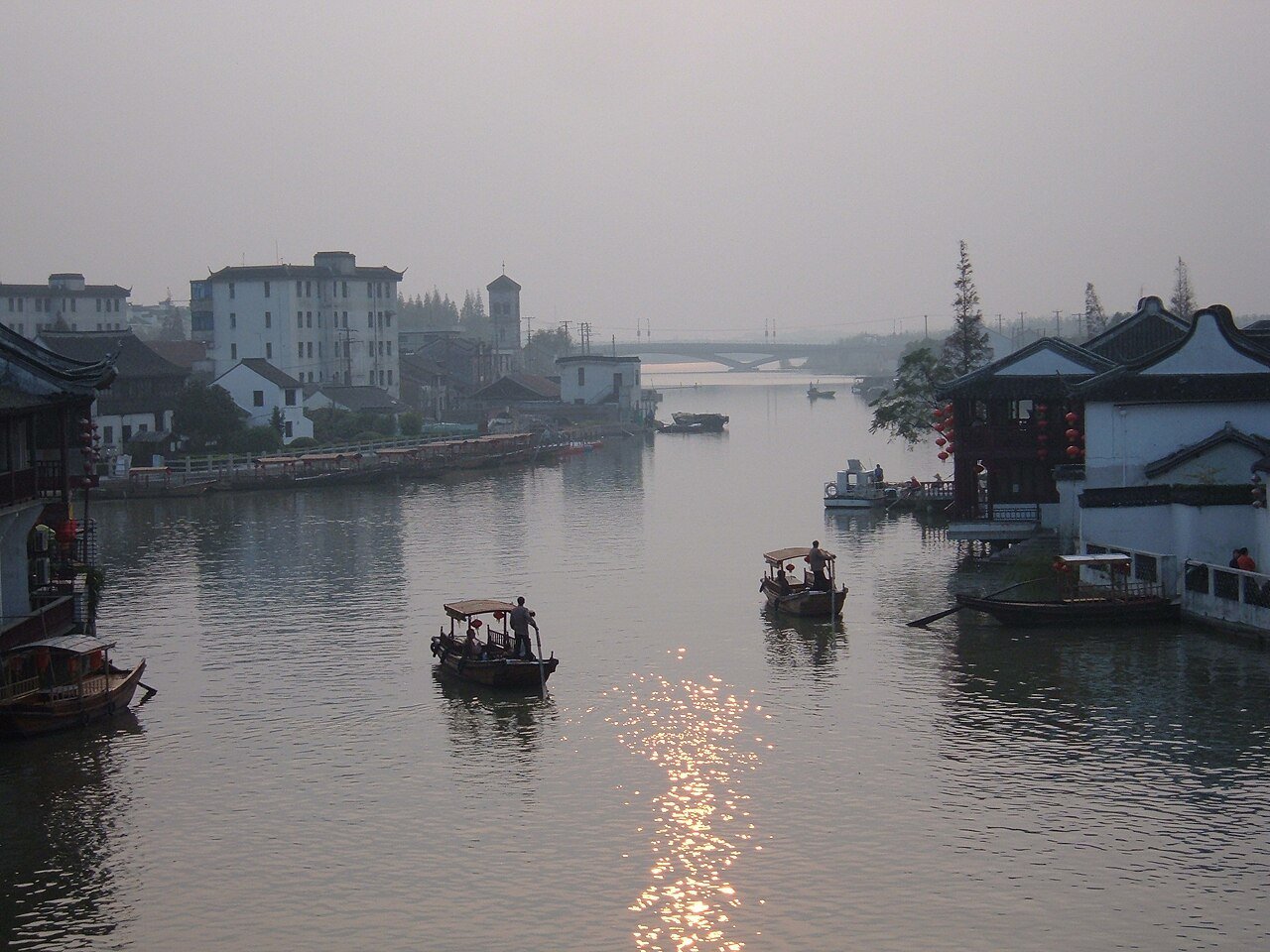
A canal in Zhujiajiao water town, stone banks, houses and a small boat
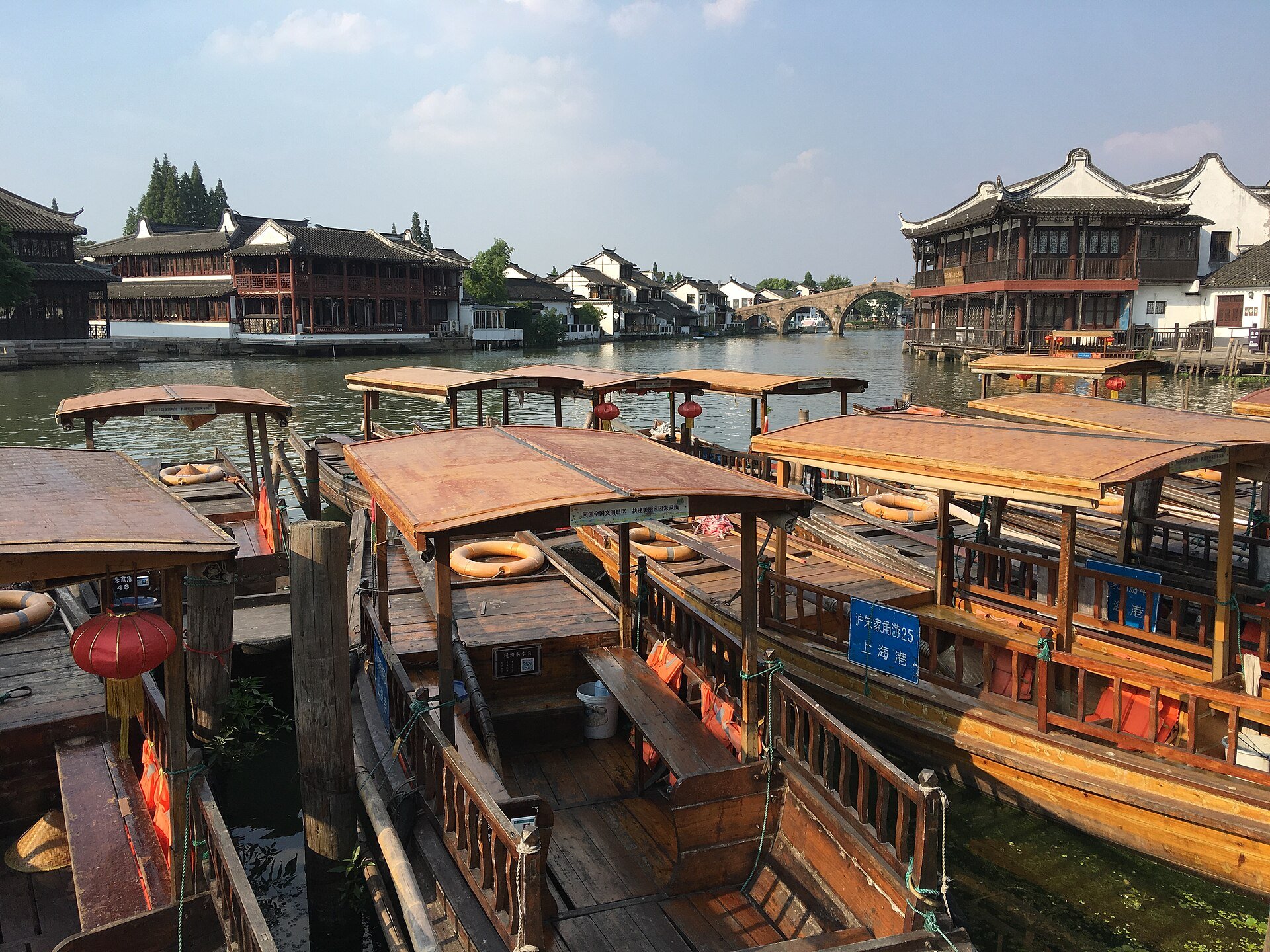
The canals are the sight. Everything else in Zhujiajiao — the garden, the boats, the snacks — is an argument about how to look at them.

Start at Fangsheng Bridge, the five-arched stone span over the Dianpu River — the largest of its kind in the Shanghai region and the town's front door since the Ming dynasty lanes were young. From its crest the whole geography explains itself: the river in front, the canal grid behind, and North Street running off into the old commercial heart of the town. Walk the lanes first, while the morning is cool and the day-trip groups are still on their buses. Zhujiajiao rewards wandering more than it rewards sights: a temple courtyard here, a lane of snack stalls there, washing in the canal, mahjong in a doorway.

Then, and only then, choose your one add-on — this is the rule that keeps the day intact. Option A is Kezhi Garden, at the town's northern edge: a 1912 merchant's estate of pavilions, ponds and a five-storey tower, the grandest private garden in this corner of Shanghai, ¥20 (≈$3) and worth an unhurried hour. Option B is the water itself: a hand-rowed boat from the Kezhi Garden or City God Temple dock, priced per boat rather than per person — ¥200 (≈$30) for the short loop of about fifteen minutes, ¥300 (≈$45) for twenty, up to six passengers — which makes it a bargain for a group and a splurge for a solo traveller. Pick one. Doing both is how the afternoon quietly eats the evening.

Lunch belongs in the town, unhurried, because the schedule has room for exactly one unhurried thing and this should be it. Then watch the clock with new respect: the sights and boats stop at 17:00, but you will be gone well before that — not because the town is finished, but because the Bund is waiting, and the metro does not care about your sunset.

Fangsheng Bridge — the view that explains the townNorth Street lanes — snacks, stalls, temple courtyardsONE add-on: Kezhi Garden (¥20 (≈$3)) or a hand-rowed boat (¥200–300 (≈$30–45) per boat)Lunch in the lanes — the day's one unhurried hourWalk back to the station at your formula time — see the next section

Back — the Bund as the lights come on

About 105 minutes back · Arrive 30 minutes before sunset · Lights on a published schedule

The return is the outbound journey in mirror: walk or ride back to Zhujiajiao station, Line 17 to Hongqiao, Line 2 across the city to Nanjing East Road, then ten minutes east on foot past the Peace Hotel to the promenade. In a smooth run it takes about 105 minutes; plan it at 120. Which produces the only formula this guide really needs. Your leaving time — the moment you turn toward the station — is the sunset minus two and a half hours: thirty minutes to be standing on the Bund before the light goes, two hours to get there. Mid-December, sunset about 16:51: leave the town at 14:20. Mid-June, sunset about 18:59: leave at 16:30. March and September, sunset around 18:00: leave at half past three.

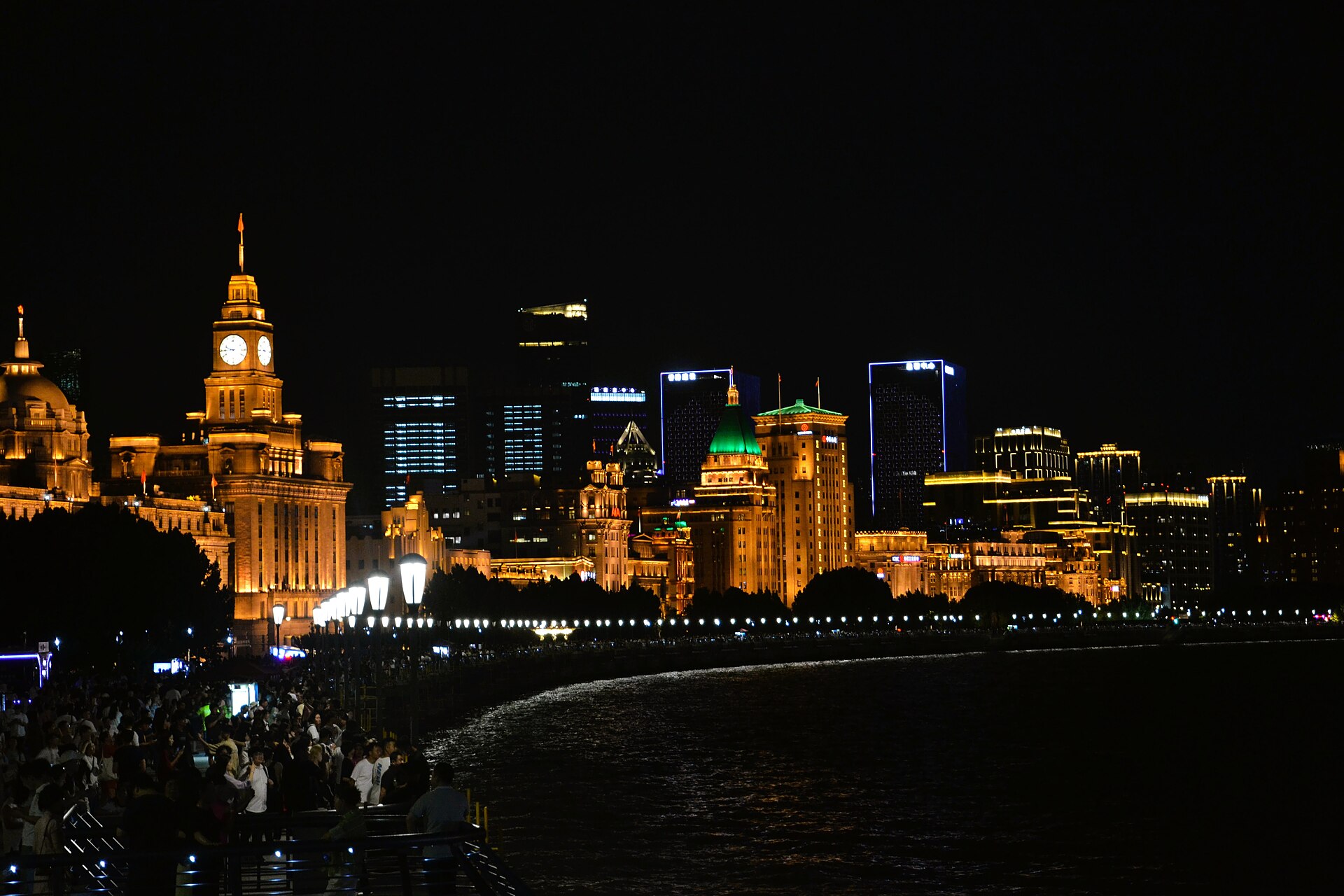
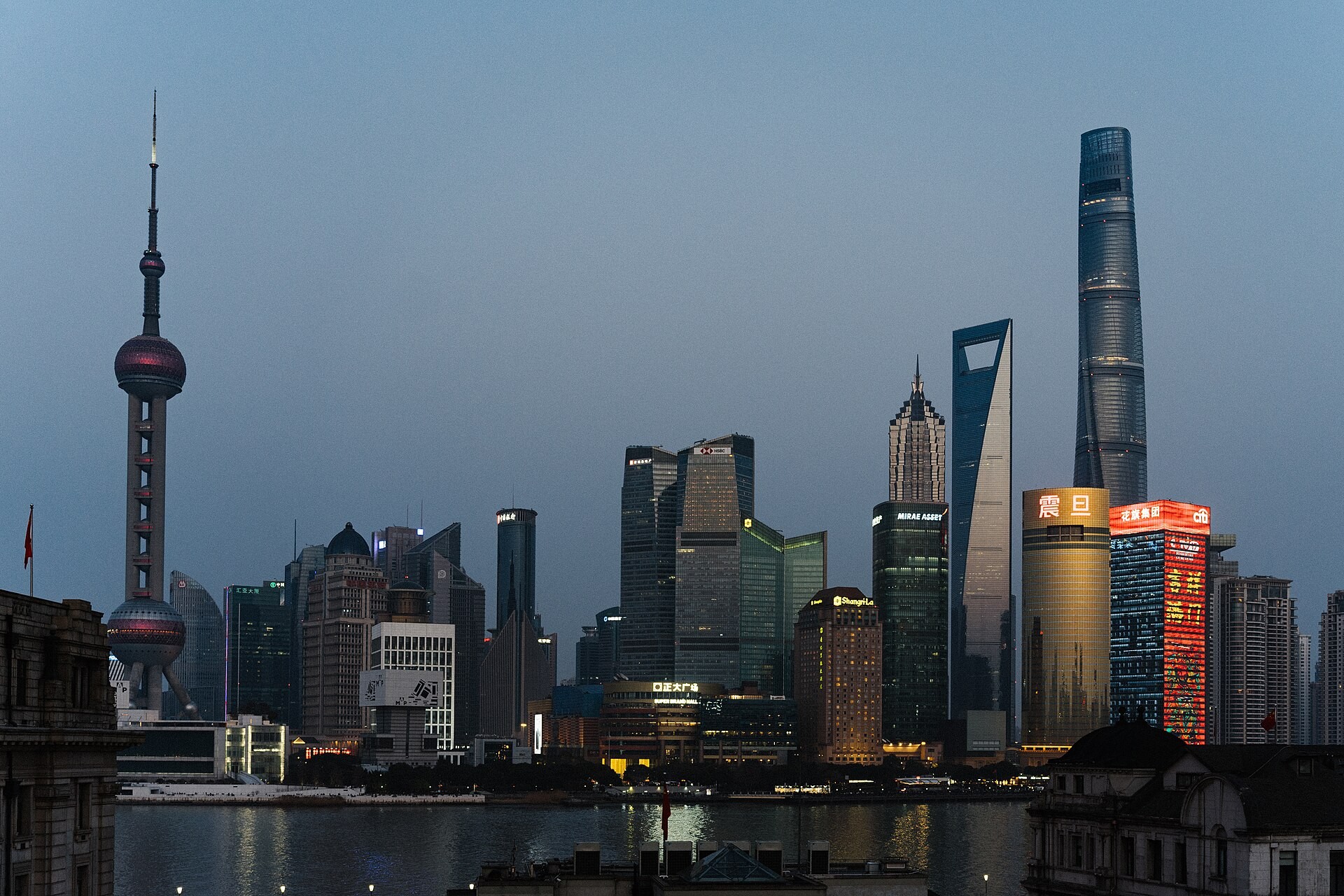
Arrive half an hour before sunset and the Bund performs its full sequence. First the daylight version — the 1920s banking palaces along Zhongshan Road behind you, Pudong's towers across the water in front. Then the blue minutes, when the river takes the colour out of the sky. Then the lights: on a published municipal schedule, 18:00 to 22:00 from October to April, 19:00 to 23:00 from May to September. Note the winter wrinkle, because it catches people out: in December the sun sets near 17:00 but the lights wait for 18:00, so there is an hour of full dark in between — spend it at dinner nearby and come back out, rather than freezing on the promenade out of stubbornness.

Stay as long as the river keeps you. The metro home runs late, the crowds thin after nine, and the day closes with the pleasant sense of a sum that came out exactly even: a Ming-dynasty water town in the morning, the most famous skyline in Asia at night, and nothing in between but two metro lines and one kept appointment with the sunset.

Leave town at sunset minus 2.5 hours (Dec ≈14:20 · Mar/Sep ≈15:30 · Jun ≈16:30)Line 17 → Hongqiao → Line 2 → Nanjing East Road, then 10 minutes east on footArrive about 30 minutes before sunset — daylight view firstLights on: 18:00 (Oct–Apr) or 19:00 (May–Sep), until 22:00 / 23:00

Our call: the metro version beats the tour version

A packaged day tour will sell you this exact pairing with a bus and a guide, and for a traveller who hates arithmetic it is a fair trade. But the metro version is cheaper, leaves when you decide, and its one hard rule — sunset minus two and a half hours — is easier to keep than a bus schedule is to change. Take the tour only if the group includes someone for whom three metro legs and a 1.3 km walk is a genuine burden; in that case, confirm the tour's Bund timing before paying, because a tour that leaves the town at five has already spent your sunset.

Final checks

Verification: metro routing, walk distances, entry and boat prices are from the Zhujiajiao town administration's official site; Bund lighting hours from the Shanghai municipal bureau that runs them; sunset times are standard astronomical values for Shanghai. All re-checked November 2026. Sources are listed below.

Some links in this guide are affiliate links. If you book through them, ChinaMate may earn a commission at no extra cost to you.

The night before, do the sum out loud: tomorrow's sunset, minus thirty minutes, minus two hours — that is your leaving time, and it goes in the phone as an alarm, not as an intention. Screenshot the metro map; the Hongqiao change between Lines 2 and 17 is the one place a tired traveller loses ten minutes to signage. Check the visibility forecast as well as the rain: the Bund on a murky evening is a fine city walk, but it is not the photograph, and on a genuinely fogged night the better trade is a slower Zhujiajiao and dinner in the old town.

One last piece of housekeeping. Keep the two halves of this day in the order given. The Bund at dusk works because the town gave you the daylight; travellers who reverse it — Bund by day, water town in the evening — meet a Zhujiajiao whose sights have closed at 17:00 and whose lanes have gone home. Day town, dusk river. That is the whole recipe.

Related guides

Sources and status

Prices, schedules and booking channels change. Recheck the details that matter before you travel.

Keep it in your favorites
Something changed? Email a correction ↗

Questions, answered from the guides

Answers are drawn from published ChinaMate guides and cite the guide used. Where no guide covers a question, the result states that and links the relevant community discussion.

Request a written proposal

Send your dates, party size and priorities. You receive a costed itinerary and a final price in writing before anything is booked.

No payment now · Nothing is booked until you accept a written proposal

Answered by a person — Jacob, founder · hello@gochinamate.com · Replies within 24 hours on business days

Plan your trip →