
Sleeping in Daixian puts you 30 minutes from the gate and inside a real county town for the evening; basing in Datong makes the pass a day trip bolted onto the Yungang Grottoes. Both work. The mistake is basing in neither and trying to 'pass through' — the transport is too thin for improvisation.
GUIDES / ITINERARIES
Daixian First Time: Yanmen Pass, the First Pass Under Heaven
A small Shanxi county town with an outsized gate: 20 km north, the Great Wall crosses the road it has guarded for two thousand years — and that road still runs all the way to Mongolia.
City Daixian11 min read6 facts labeledChecked 2026-11-07
Keep it in your favorites
The day the riders got lost, they still made the pass
A small Shanxi county town with an outsized gate: 20 km north, the Great Wall crosses the road it has guarded for two thousand years — and that road still runs all the way to Mongolia.
Fifteen days into the great no-maps motorcycle ride across China, the episode is simply titled 'We Got Lost in China'. Ludwig and Michael Reeves had crossed Guangdong, Guangxi, Hunan, Hubei, Henan and half of Shanxi on county roads, navigating by asking strangers — and on the fifteenth day the road delivered them, lost or not, to the one gate that has organised north–south travel in these mountains for two millennia: Yanmen Pass, the 'Wild Goose Gate', in the ridge above the small county town of Daixian.
Every Chinese schoolchild knows the name. Yanmen is counted the foremost of the Nine Passes under heaven, first fortified by the Zhao state in the Warring States period, rebuilt by the Ming on its present site in 1374, and held in story by the Yang family generals who were said to have guarded it for the Song. The pass is the sight; Daixian town, 20 km south in the valley, is the base — an ordinary, noodle-fuelled Shanxi county seat that wakes up early and points its visitors at the mountain. Half a day at the pass, a night in town, and the geography of northern China suddenly reads clearly: farmland behind you, steppe ahead.
20 kmYanmen Pass stands on Yanmen Mountain about 20 km north of the Daixian county…
150 kmDatong is roughly two hours away by road (the sources give 97–150 km by…
A first Yanmen Pass visit, in running order
01
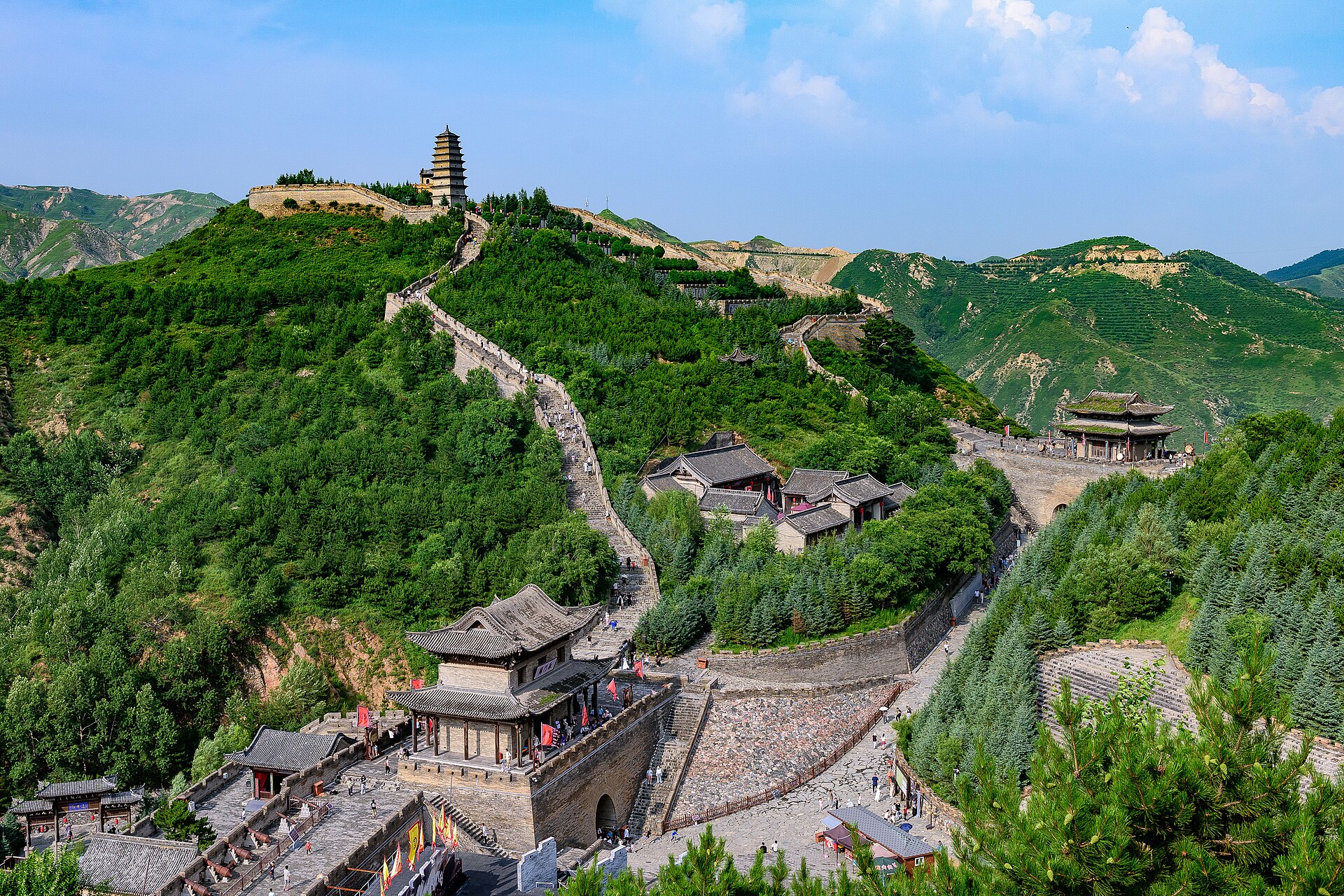
Yanmen Pass — the fortress complex on the ridge 20 km north of Daixian: gates, barbican, shrine and the wall running away along both ridgelines
02
Tianxian Gate — the main gate tower at the heart of the pass, under the name board that has announced this doorway for centuries
03
Zhenbian Shrine — the hall of the pass's generals: Li Mu of Zhao, Huo Qubing of Han, and the Yang family generals of Song legend
04
The wall climb — walk the restored wall up from the pass for the view south over the Daixian plain and north into the dry hills toward Shuozhou
05
Dili Gate — the second gate on the south approach, smaller and quieter, where the valley narrows into the pass road
06
The old pass road — the ancient roadbed dropping away north, the track the caravans, armies and salt traders actually walked
07
Daixian county town — the base in the valley: courtyard lanes, noodle shops and the early-evening street market of a working Shanxi town
08
The G208 north — the national highway that threads the pass and runs on through Datong toward Ulanqab, ending at the border gate in Erenhot
Do it like someone who arranged the ride back
Your selections stay on this page only. No account or personal data is sent.
How to run Daixian and Yanmen Pass, step by step
Train into Daixian or bus from Datong in the morning, taxi up to the pass with the return leg agreed on the spot. Aim to walk through the gate by 09:00, ahead of the tour groups and the midday glare on the ridge.
Enter from the south side: Zhenbian Shrine first for the cast of generals, then Tianxian Gate and the barbican, then climb the wall a stretch in either direction. Finish standing on the north side looking down the old road toward Shuozhou — the moment the pass explains itself.
Back in Daixian for a late lunch, then the afternoon train or road north to Datong or south to Taiyuan. Riders of the long road, take note: from the pass, the G208 simply continues — the border at Erenhot is the same road's end.
The facts this guide leans on
Yanmen Pass stands on Yanmen Mountain about 20 km north of the Daixian county seat, in Xinzhou prefecture, Shanxi
Checked 7 November 2026With Ningwuguan and Pianguan, Yanmen forms the 'Three Outer Passes' of the Great Wall, and is traditionally ranked the foremost of the Nine Passes of China
Checked November 2026The site was first fortified under King Wuling of Zhao in the Warring States period; the pass was rebuilt at its present location in 1374, early in the Ming dynasty
Checked 7 November 2026Yanmen Pass was declared a national priority cultural relic protection site in 2001
Checked November 2026Admission is CNY 90 in the April–October season and CNY 60 in winter; opening is about 08:00–17:30 in season, shorter in winter
Checked 7 November 2026Datong is roughly two hours away by road (the sources give 97–150 km by different routes); National Highway 208 runs through the pass
Checked 7 November 2026Where a Yanmen Pass trip goes wrong
The return ride, assumed
Buses past the pass are infrequent and taxis at the scenic-area car park are few. If you did not arrange the way back before you arrived, your afternoon belongs to negotiation.
One pass, two gates, changing prices
The scenic area is entered from the south or the north side, and ticket boards, prices and shuttle arrangements are revised between seasons. Treat the figures here as the shape of the truth (checked November 2026) and read the board at the gate.
Exposure on the ridge
There is no shade on the wall and the wind is structural. Summer means sun and a hat; winter means a genuinely bitter, if empty and photogenic, fortress — and earlier closing.
Chinese-first interpretation
Most panels and the shrine's storytelling are in Chinese. A translation app is not optional equipment here; the pass is a history sight, and the history is the exhibit.
Budgeting a full day
The pass is a rich half-day, not a full one. Trips go wrong by padding — pair it with Datong or with the ride onward rather than stretching it.
Common questions
Is Yanmen Pass part of the Great Wall?
Yes — it is one of the Great Wall's great fortified passes, where the wall crosses the road through the mountains between the Shanxi farmland and the steppe. The standing gates are Ming dynasty work on a site fortified since the Warring States period.
Should I base in Datong, Taiyuan or Daixian?
Datong if you are pairing the pass with the Yungang Grottoes (about two hours by road), Taiyuan if you are travelling the length of Shanxi toward Pingyao. Daixian town itself is the closest base — 20 km, half an hour by taxi — and the most local evening of the three.
How long do I need at Yanmen Pass?
Two to three hours at the pass itself: the shrine, both gates, and a stretch of wall in each direction. From Daixian town that is a comfortable half-day; from Datong, a full day with the drive.
Related guides
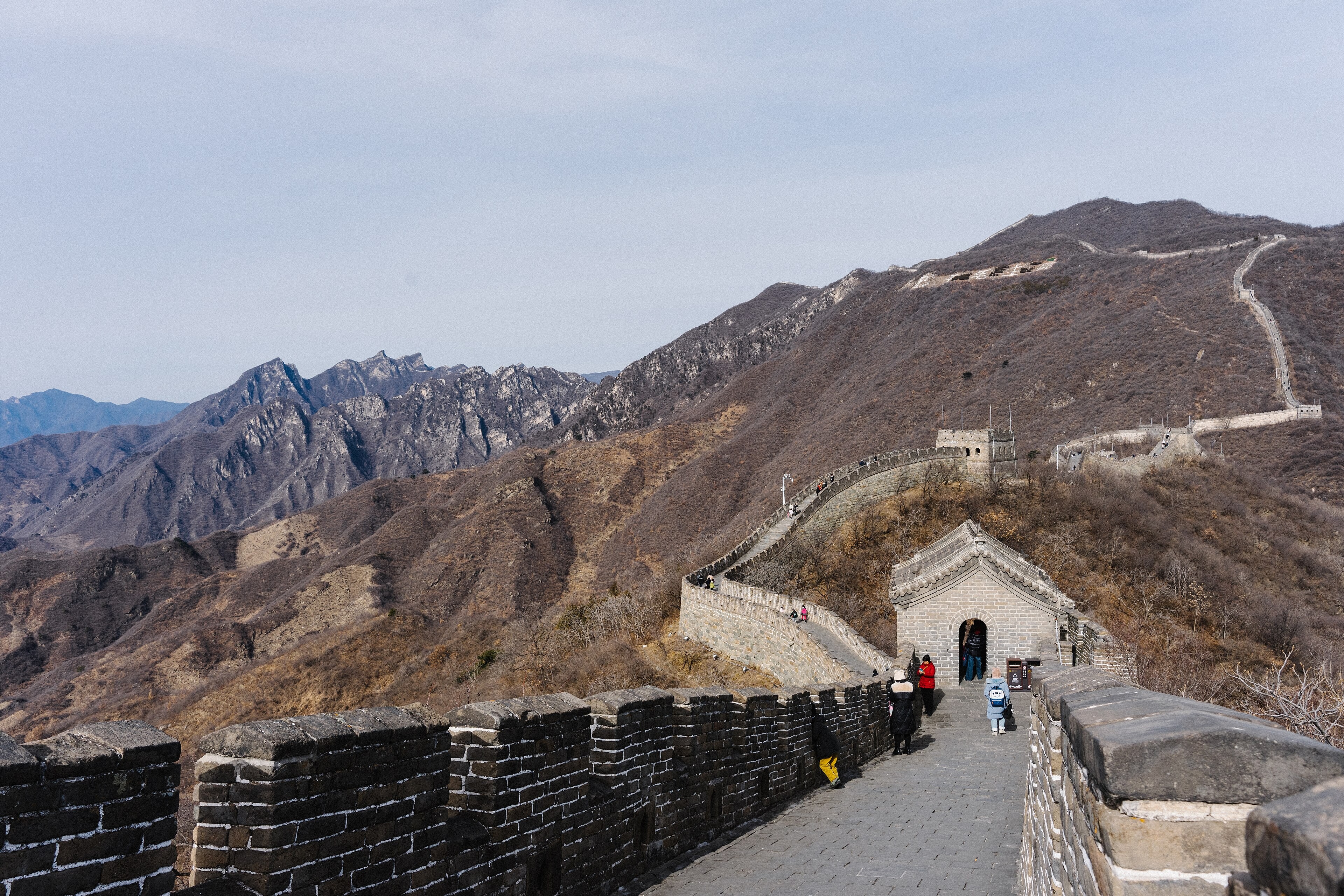 Beijing · Attractions & TicketsMutianyu Great Wall: The Low-Stress Way UpMutianyu is the first-timer's wall — if you get the transport and the timing right. Here is the version of the day where you are on the stone before the crowds, not behind them.Estimate ≈
 China · TransportChina Trains: Your Passport Is the TicketNo paper, no ticket window — book on 12306, verify your identity once, and board on the document in your pocket. The system is simpler than the stations are big.Verified
 Erenhot · ItinerariesErenhot First Time: The National Gate, the Bogie Shed, and the Kissing DinosaursChina's northern gate is a Gobi border town where international trains stop to change their wheels, sauropods kiss over the highway, and the road south is the one the caravans — and two motorcyclists — came up.Reference ~
Sources and status
Prices, schedules and booking channels change. Recheck the details that matter before you travel.
- ChinaTour360 — Yanmenguan Pass Great Wall in ShanxiReference ~History, the Three Outer Passes, admission and location — checked 2026-11-07
- Trip Moments — Yanmen Pass travel guide (Tianxian Gate)Reference ~Current ticket and hours bands, gate-by-gate route — checked 2026-11-07
- Wikimedia Commons — Yanmen Pass (hero photograph)Reference ~Hero image, CC BY-SA 4.0
Keep it in your favorites
Something changed? Email a correction ↗