
Huangshan's park ticket costs ¥190 in the regular season (21 January to 19 December in 2026) and ¥150 in the winter season (20 December to 20 January); the same ticket allows a second entry within three days of first use
Checked 31 October 2026GUIDES / ITINERARIES
Huangshan and Hongcun: The Yellow Mountain and the Village in the Painting
In October 2026 a German president detoured mid-state-visit to see them: the white-walled village arranged around a moon-shaped pond, and the granite mountain that taught China how to paint. Hongcun and Huangshan are one trip — this guide puts them in the right order, with the tickets, the traverse and the full price stack counted before you commit.
City Huangshan13 min read8 facts labeledChecked 2026-10-31
Keep it in your favorites
The president skipped the banquet circuit for a village pond
In the last week of October 2026, in the middle of a five-day state visit, Germany's president Frank-Walter Steinmeier did something state visits are not designed to allow: he went to look at a pond. After the factories and city showcases of Hefei, his route turned south into the hills of Yi County — to Hongcun, a white-walled Huizhou village arranged around a half-moon pond — and then up Huangshan, the Yellow Mountain, before the programme reclaimed him in Beijing. Presidential schedulers are ruthless editors; they cut almost everything. What survived the cut, on consecutive days, was landscape: the village that looks like a Chinese painting, and the mountain that taught China how to paint.
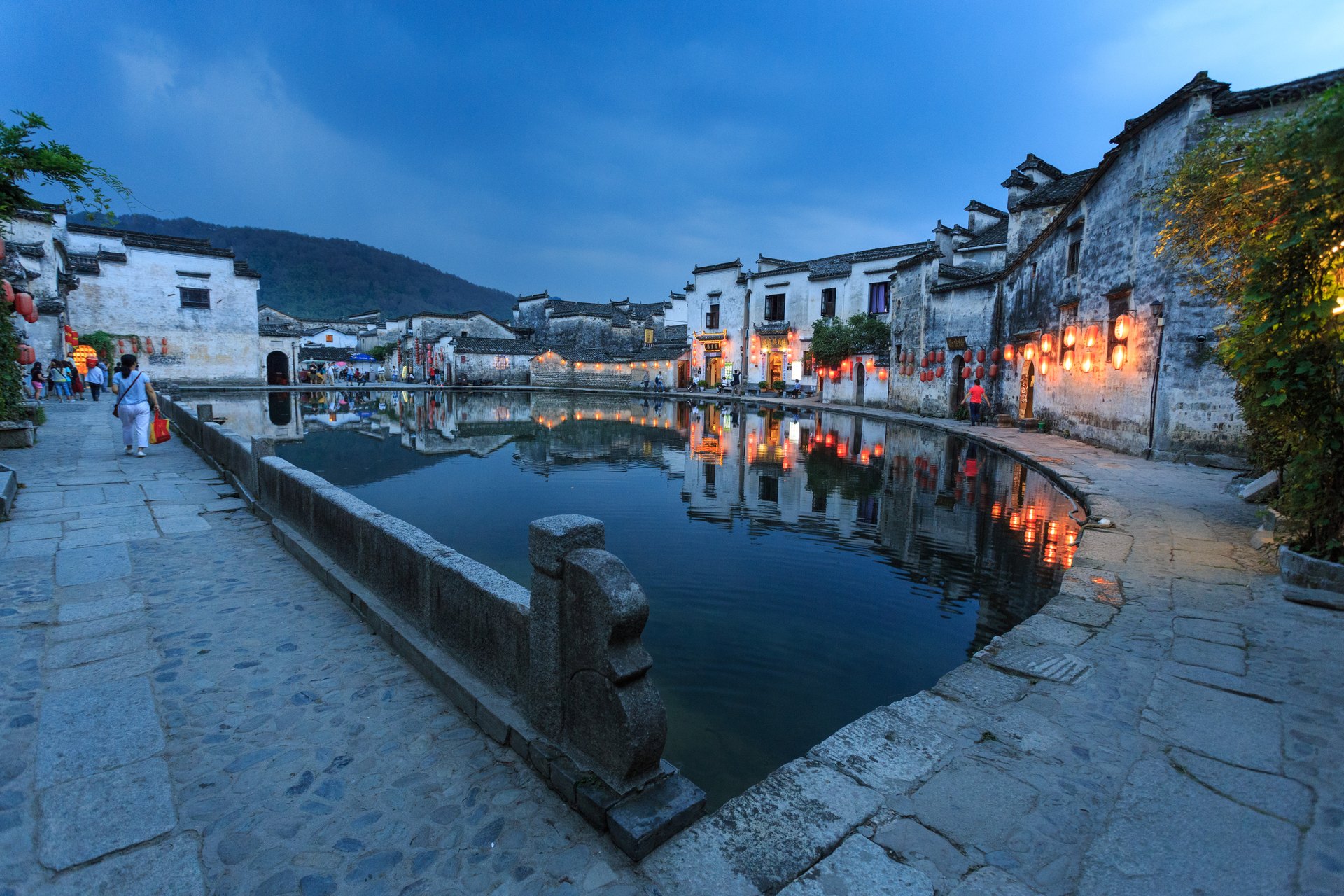
Hongcun first. UNESCO listed it in 2000 with its neighbour Xidi as the Ancient Villages in Southern Anhui, and Ang Lee filmed Crouching Tiger, Hidden Dragon among these lanes — the village in the film's early scenes, whitewash and black tile doubled in still water, is this one, barely dressed for the camera. Hongcun was laid out, in the traditional description, in the shape of an ox: a hill for its head, water channelled down from the hills through every courtyard to the Moon Pond at its centre and out to South Lake, so that a rich Ming- and Qing-dynasty merchant village could be plumbed, drained and beautiful at the same time. All day, along the pond, art students sit on small stools and paint it — because that is what Hongcun is for.
Then the mountain. Huangshan is not one peak but a granite range whose pines grow straight out of the rock, whose summits stand above a sea of cloud, and whose likeness — vertical stone, improbable trees, drifting mist — became the template for Chinese landscape painting itself: a whole school of painting carries its name, Shitao made some of its defining images here in the seventeenth century, and poets left more than 20,000 verses trying to describe it. Put village and mountain together and you have the complete grammar of the classical Chinese landscape — water, rooftops, pine, peak, cloud — inside one short trip. The catch is logistics: two heritage sites, three separate ticket systems, a compulsory shuttle, cableways that sell out, and weather that rewrites plans. This guide runs the trip in the order that works: the villages first, then the mountain crossed in one direction, with every price in the stack counted up front.
The trip in running order — villages first, then the traverse
| Arrival | Huangshan North HSR station; bases are Tunxi city, Tangkou gate town, or a village stay |
|---|---|
| Day 1, dawn | Hongcun's Moon Pond before the tour buses: the reflection the painters come for |
| Day 1, later | Xidi's archways and merchant courtyards; the two villages are separate ¥104 tickets |
| Day 1, evening | Sleep in Tangkou, the South Gate town, with the mountain booked for the morning |
| Day 2, up | Compulsory shuttle to Yungu, then the ¥80 cableway up the quieter back mountain |
| Day 2, ridge | Beginning-to-Believe Peak, Beihai and Bright Summit (1,860 m), walked one-way |
| Day 3, down | The Guest-Greeting Pine, then the ¥90 Yuping cableway down the front mountain |
| The stack | ¥190 gate + ¥19 shuttle + ¥80 up + ¥90 down comes to about ¥398 before food |
Do it the way the place rewards
Your ticks stay on this page only. No account or personal data is sent.
How to run the trip, step by step
- Step 1 — Fix the order: villages first, mountain second, and keep the mountain movable
The two halves of this trip behave differently. The villages keep village hours and forgive village weather: a grey morning in Hongcun is still a good morning, because the water, the lanes and the carved halls do not need a view. The mountain is the opposite — its whole value is visibility, and its cloud can close in for a day at a time. So build the trip with the villages fixed and the mountain floating: arrive, give Hongcun and Xidi the first full day, and hold the traverse for the best forecast window inside your stay, using the park ticket's three-day validity as insurance. What does not work is locking the mountain to a single non-negotiable date weeks ahead and then climbing into fog out of obligation.
- Step 2 — Choose your base by what it is for
Almost everyone arrives at Huangshan North high-speed rail station, and from there the trip has three possible bases, each with a distinct job. Tunxi, the old town of Huangshan City, is the all-rounder: hotels at every level, Tunxi Old Street for food and tea, and buses out to both the mountain and the villages. Tangkou, the town at the South Gate, exists for one purpose — a short, early transfer to the trailheads — and is the right base on the night before the traverse. Sleeping inside Hongcun or Xidi, in a converted merchant courtyard, buys the dawn: you are standing at the Moon Pond before any day-tripper can be. A clean pattern is Tunxi or a village for the village day, Tangkou for the mountain night, and out through Huangshan North at the end.
- Step 3 — Book the mountain as one reservation with three separate tickets
Huangshan runs on real-name, time-slotted, direction-specific reservation, sold through the official Huangshan Tourism Platform mini program. Understand the stack before you pay. The park ticket — ¥190 in the regular season, ¥150 in the winter window — is only the first purchase. The shuttle from the transfer centre to your trailhead is a second, compulsory ticket at ¥19 one-way, because private cars go no further than the centre. Each cableway ride is a third, separate fare. Book the gate direction you actually intend — the South Gate for the classic route — because you enter through the gate named on the booking, and in the busy season the good slots and the cableways go first. One mercy: the park ticket allows a second entry within three days, so a weather-ruined first attempt is not automatically a total loss.
- Step 4 — Walk Hongcun slowly, from the water inwards
Enter Hongcun early and start where the village starts: at South Lake, where the white walls double themselves in the water and the causeway gives you the whole settlement in one frame. Then follow the water inwards — that is the village's design, a channelled system in the traditional shape of an ox, with the Moon Pond at its centre as the still point every lane eventually returns to. The pond at dawn is the Hongcun of the paintings and of Ang Lee's camera; give it the quiet hour before the groups arrive. Only then go into the houses: the great merchant halls with their carved beams and sky-lit courtyards, built by Huizhou salt and tea money coming home. Hongcun is a working village as well as a film set — people cook, wash and dry vegetables in these lanes — so treat doorways as homes first and photographs second.
- Step 5 — Use Xidi as the architectural counterweight
Xidi, a short drive away in the same county, is the second half of the UNESCO listing and the natural counterweight: where Hongcun is water, Xidi is wood and stone — a dense fabric of Ming and Qing merchant houses, clan halls and memorial archways. The two villages are separate ¥104 tickets with no combined pass, so decide by appetite rather than obligation. With a full day for the pair, Hongcun at dawn and Xidi after lunch is the classic rhythm, and Xidi's lanes are usually the quieter of the two. With only a spare morning, choose Hongcun for the reflection and the film-set familiarity, or Xidi if carved architecture interests you more than water. Either way, one night inside a village's walls repays more than two hurried entries.
- Step 6 — Climb the classic traverse: Yungu up, Yuping down
From Tangkou's transfer centre the shuttle takes you to the Yungu trailhead, and the Yungu cableway (¥80 one-way) lifts you to the back mountain, the quieter side of the range. Walk the northern ridge in one direction: Beginning-to-Believe Peak — the aptly named first summit, made for sceptics — then the Beihai area's named pines and rock formations, and on to Bright Summit at 1,860 metres, the range's second-highest point and its natural crossroads. From there the route turns south to the front mountain: the edge of the West Sea canyon if legs and time allow, then down toward Yuping and the Guest-Greeting Pine, the ancient one-armed tree that fronts every poster of this mountain. The Yuping cableway (¥90) returns you to the front-mountain trailhead and a shuttle back to Tangkou. One direction, no retracing: that is the whole trick, and it is why the two cableway tickets are bought for different lines.
- Step 7 — Decide the sunrise question honestly, in money
Sunrise above the sea of clouds is Huangshan's signature promise, and it cannot be done from the valley: the first shuttle from Tangkou runs only shortly before the first cableway, which is long after dawn. Seeing it means sleeping on the summit, in one of the mountain hotels near Bright Summit or Beihai — at prices far above Tangkou's, for rooms whose real product is the pre-dawn viewpoint rather than luxury. If you pay it, put the summit night in the middle of your mountain window, so a cloudy first morning still leaves a second chance inside the ticket's validity. And be honest about the odds: the cloud sea is weather, not programming. A clear sunset followed by a fogged sunrise is a normal Huangshan outcome, and the traverse in Step 6 is built to be worth the trip either way.
- Step 8 — Count the stack, keep the slack, and leave cleanly
Before you commit, count the classic day's fixed costs per person: ¥190 park ticket, ¥19 shuttle up and ¥19 back down, ¥80 Yungu cableway up and ¥90 Yuping cableway down — about ¥398 before food, water and a bed, with the winter season trimming the same stack noticeably. Add ¥104 for each village. None of it is hidden, but it arrives in five separate transactions, which is why Huangshan surprises budgets that only priced the gate. Build half a day of slack into the itinerary as well: cableways close for wind and maintenance, and the last car down in the regular season leaves at about 17:10 — a deadline to plan around, not to discover. Leave the way you came in: shuttle to Tangkou, bus or taxi to Huangshan North, and a train out with the peaks, weather permitting, still in the window.
The facts this guide leans on
Entry runs on three separate purchases: the park ticket, a compulsory shuttle bus from the transfer centre to the trailhead — ¥19 one-way from the South Gate centre, and private cars go no further than the centre — and each cableway ride, billed individually
Checked 31 October 2026Cableway fares are one-way: Yungu ¥80, Taiping ¥80, Yuping ¥90 and the West Sea Grand Canyon funicular ¥100 in the regular season; ¥65, ¥65, ¥75 and ¥80 respectively in the winter season
Checked 31 October 2026Xidi and Hongcun were inscribed by UNESCO in 2000 as the Ancient Villages in Southern Anhui: surviving Ming- and Qing-era merchant villages whose layouts, water systems and clan architecture preserve a type of settlement that has largely disappeared elsewhere in China
Checked 31 October 2026Hongcun and Xidi each charge ¥104 per adult and are sold as two separate products; the operator's official price list contains no combined village ticket
Checked 31 October 2026The Huangshan range is a UNESCO World Heritage Site in its own right, inscribed in 1990; its best-known summits are Lotus Peak (1,864 m), Bright Summit (1,860 m) and Celestial Capital Peak (1,829 m), and the Guest-Greeting Pine beside the Yuping cableway is traditionally said to be more than 1,500 years old
Checked 31 October 2026Huangshan North station is about two and a half hours by high-speed train from Shanghai and about one hour from Hefei; the bus from the station to Tangkou, the South Gate town, takes about one hour and costs roughly ¥20–30
Checked 31 October 2026In the regular season the last cableway down leaves at about 17:10, and because the first shuttle from Tangkou runs only shortly before the first cableway, the only way to be at a summit viewpoint for sunrise is to sleep in a summit hotel
Checked 31 October 2026Where the Huangshan trip goes wrong
The weather owns this mountain
Huangshan's fame is a fair-weather phenomenon. The sea of clouds, the sunrise and the long ridge views all depend on conditions that can close in for a full day, and cableways stop for high wind and scheduled maintenance with little notice. No itinerary can guarantee the postcard. The defences are structural: the ticket's three-day validity, a floating mountain day, and a villages-first order that keeps a fog day from becoming a lost day.
Three tickets, not one — and the stack is the budget
First-timers routinely budget the ¥190 gate and discover the rest at the turnstiles: compulsory shuttles both ways, two different cableways, then village tickets at ¥104 a head, until the classic traverse stands at about ¥398 per person before food or beds. None of the components is unreasonable — porters carry every bottle of water you will buy at the top — but the total has to be counted in advance, not assembled in surprise.
Direction-specific booking punishes improvisation
Your reservation names a gate and a time slot, and the system means it: arriving at a different gate, or hours outside your slot in a sold-out season, is a rebooking problem rather than a negotiation. Golden Week and autumn weekends sell out the popular slots and cableways days ahead. Book the mountain first and the trains second, and treat the confirmation as the fixed point the rest of the trip bends around.
There is no cheap sunrise
Because the first shuttle and cableway run after dawn, a Tangkou start cannot reach a summit viewpoint in time. The only route to the cloud-sea sunrise is a summit hotel bed, at a steep premium over valley prices, in rooms that book out in season. Visitors unwilling to pay it should plan for a ridge sunset instead and take the traverse's daytime views as the main event — which, honestly, they are.
The steps are the real price of admission
The cableways remove the two big climbs, not the mountain. The traverse between them is hours of carved stone stairway — steep, sometimes wet, and harder on knees going down than coming up. Travellers with knee or mobility problems should shorten the ridge, skip the West Sea extension, and treat the cableway-to-cableway minimum as the full achievement. In winter, rotating cableway maintenance closures can remove a leg of the route entirely, so check the platform's notices in the week of travel.
Hongcun at noon is not Hongcun
The village that presidents detour for exists at dawn and at dusk. Between roughly ten and four its lanes carry tour groups and its pond is ringed with easels — the art students are charming, and the crowds are real. Judge the villages by the edges of the day: sleep inside the walls, be at the water early, and let the middle of the day belong to interiors, lunch and the drive. The same applies, one degree less, to Xidi.
Keep the trip moving
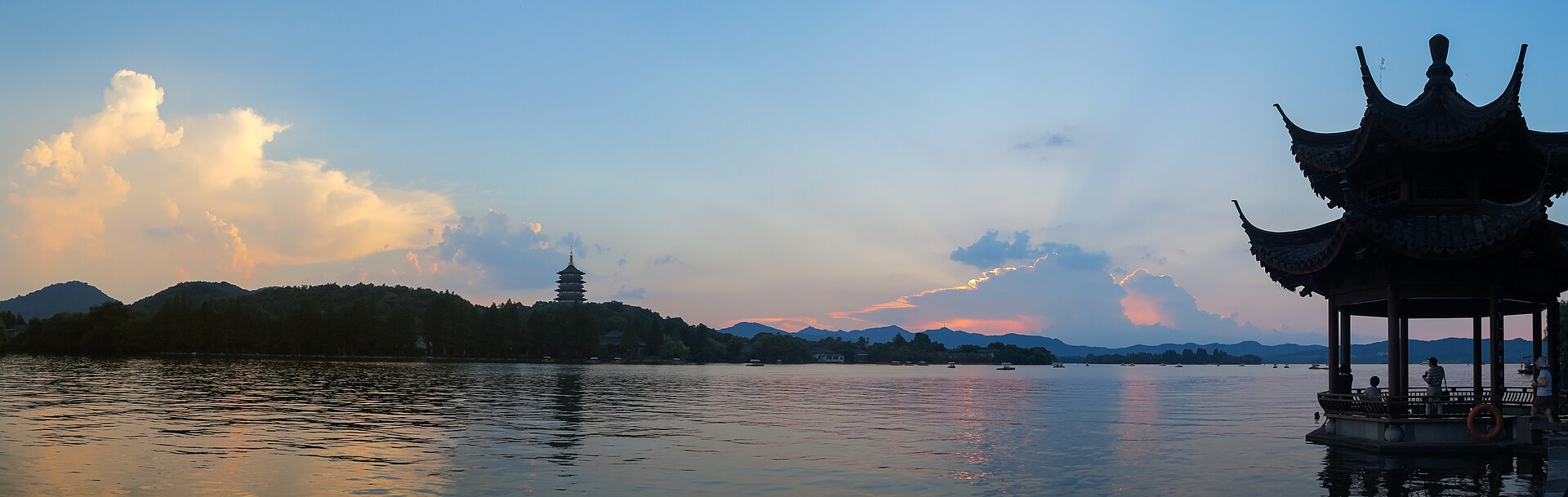 Hangzhou · DoHangzhou First Time: West Lake Without the Crowd MathThe lake has no gate and no entrance ticket — it has a ring, two crowded doors and one temple that now runs on reservations. Walk the ring against the flow, give Lingyin its own morning, and the crowd maths stops mattering.Verified
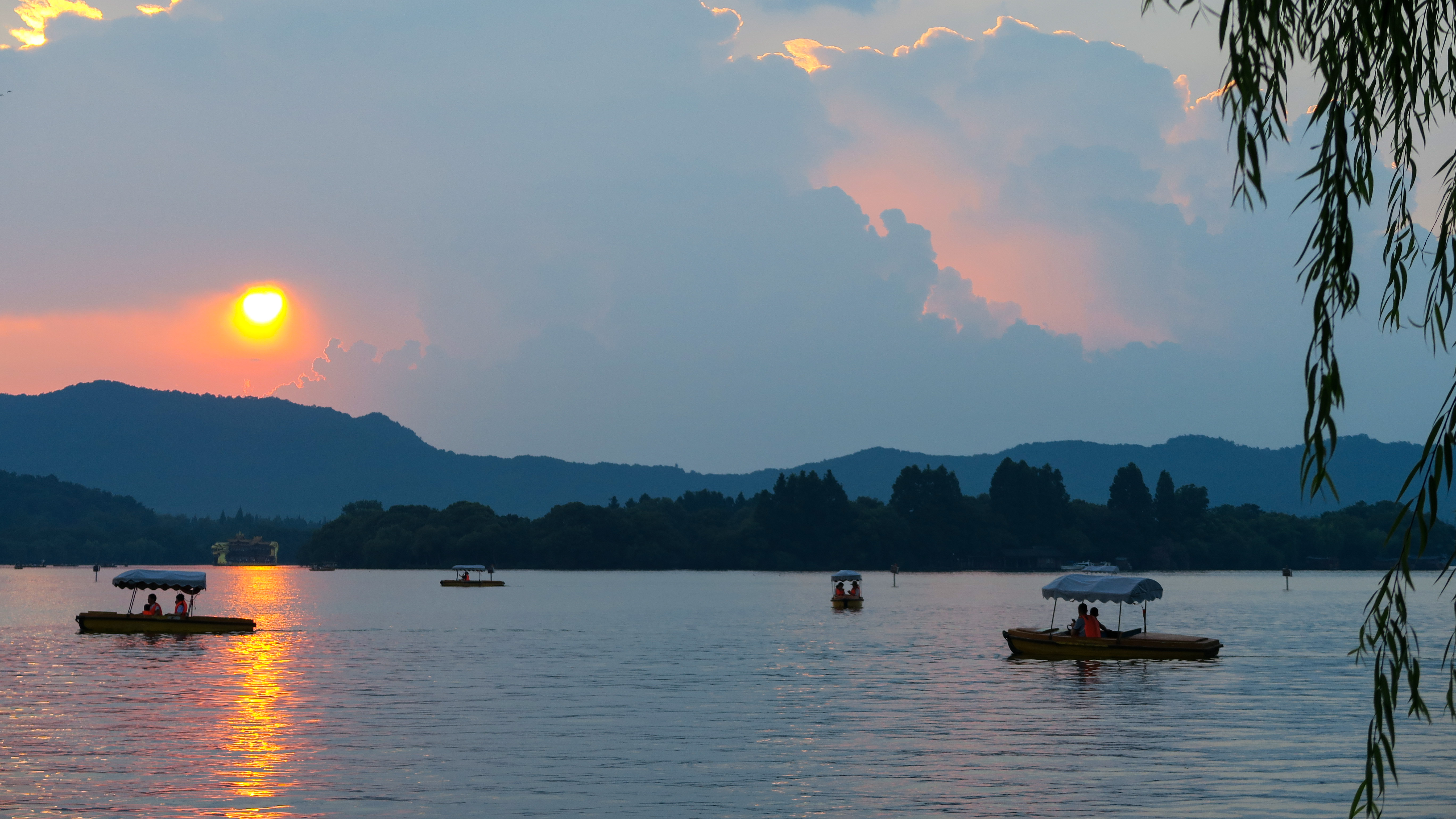 Hangzhou · DoWest Lake by Boat, Bike and Foot: The Three Ways ComparedOne lake, three speeds. A rowed boat buys you the middle of the water, a bicycle buys you the shore roads but not the causeways, and your feet buy you all fifteen kilometres — slowly. How each mode is actually booked, priced and ruled, dock by dock.Verified
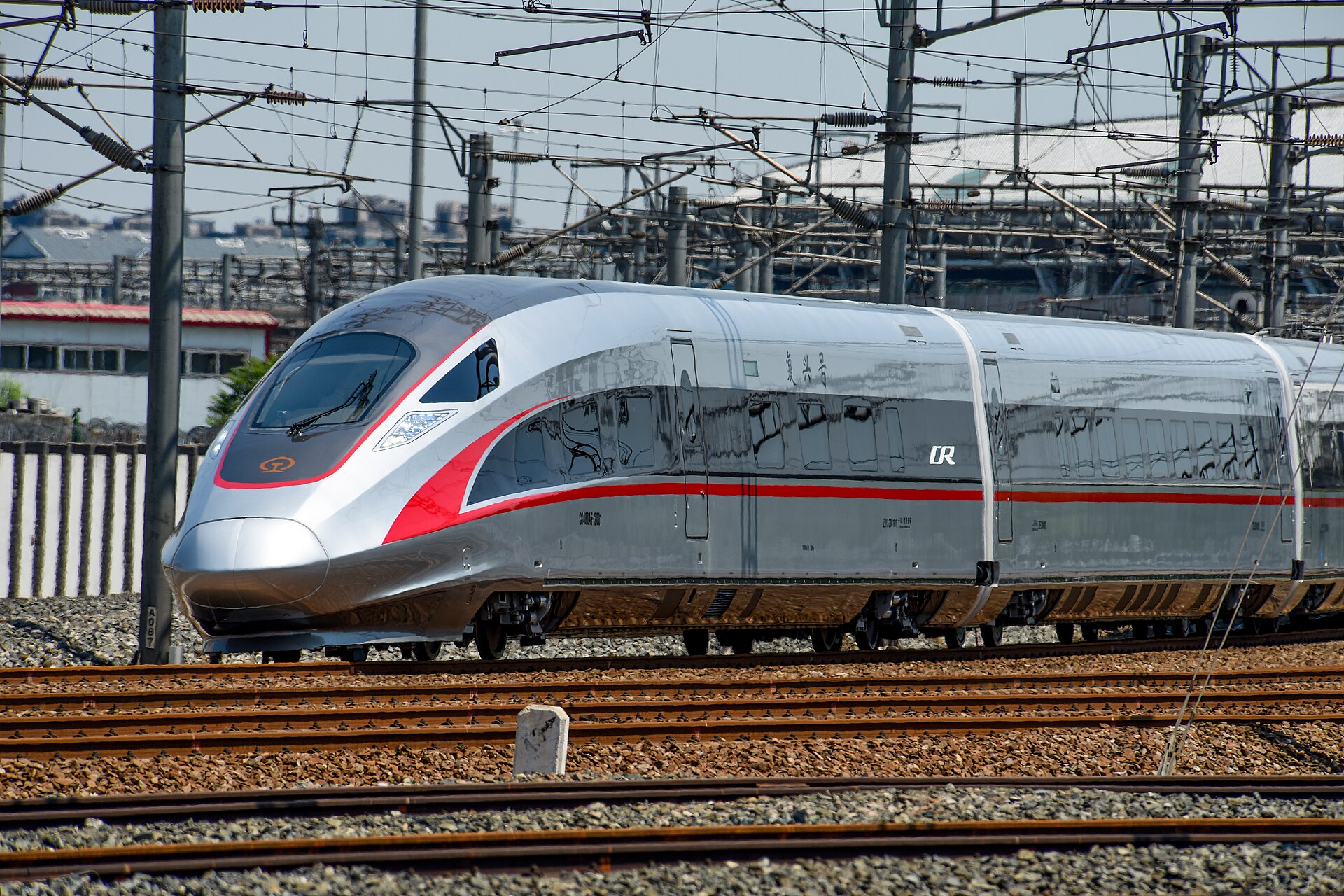 China · PrepareChina Trains: Your Passport Is the TicketNo paper, no ticket window — book on 12306, verify your identity once, and board on the document in your pocket. The system is simpler than the stations are big.Verified
Sources and status
Prices, schedules and booking channels change. Recheck the details that matter before you travel.
- UNESCO World Heritage Centre — Ancient Villages in Southern Anhui – Xidi and HongcunVerifiedThe 2000 inscription: layout, water systems and clan architecture of both villages — checked 2026-10-31
- ChinaPass — Huangshan Travel Guide: Granite Peaks, Cableways & How to BookVerifiedPrice tables for the park ticket, compulsory shuttles and cableways, and the Hongcun/Xidi operator price list — checked 2026-10-31
- Wikipedia — HuangshanReference ~The range's geography, peaks, painting tradition and the Guest-Greeting Pine — checked 2026-10-31
Keep it in your favorites
Something changed? Email a correction ↗