Spring Festival 2027: When China's Factories Really Stop — a Buyer's Countdown
Updated November 2026 · Official holiday dates from the State Council's 2027 notice
Keep it in your favorites
The State Council has published the holiday. Your factory's real calendar is longer, earlier and slower to restart — and it is the real one your shipment will obey. · Image source
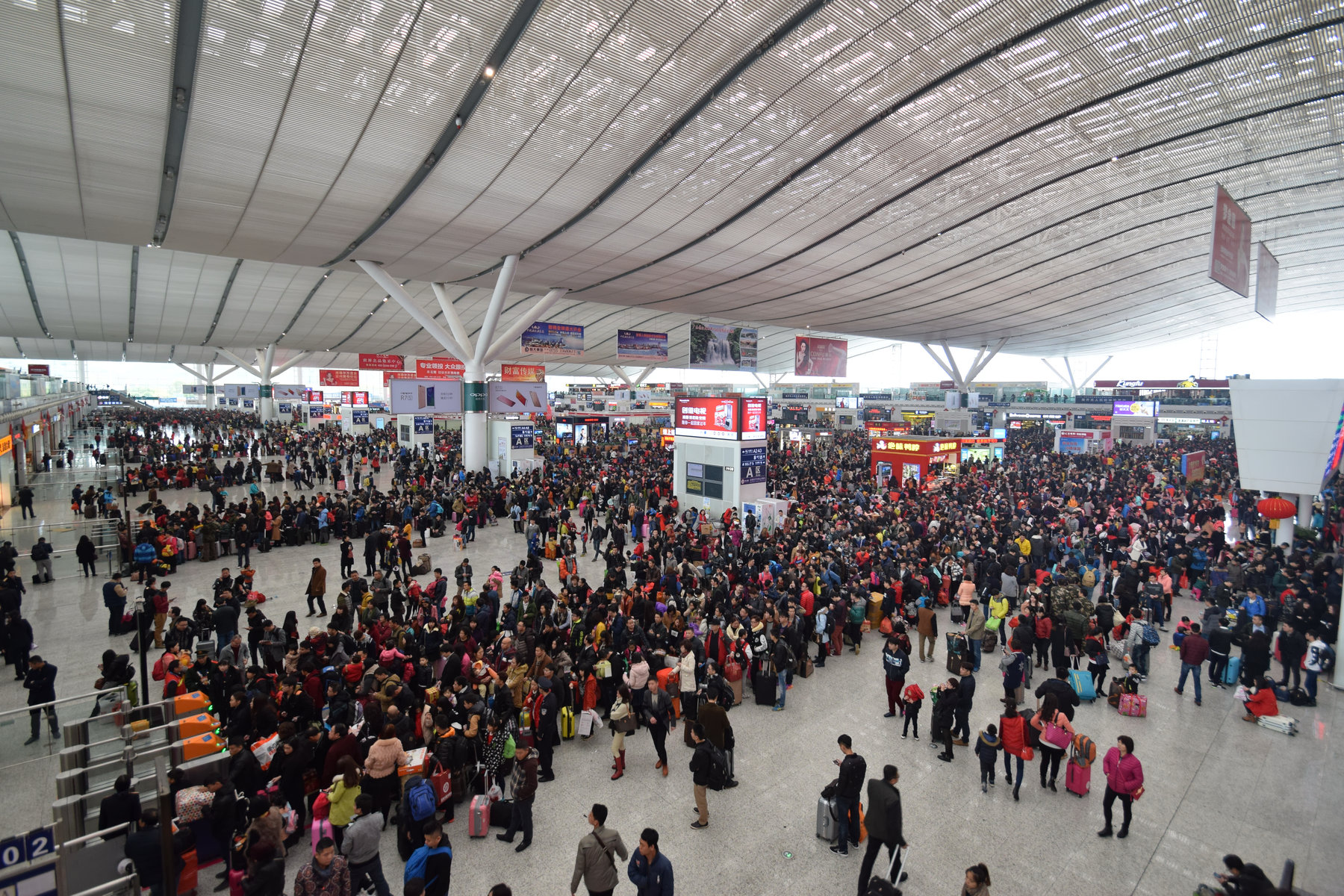
In late January your supplier will send the message every China buyer learns to dread, phrased as a pleasantry: 'We will ship after the holiday.' The holiday, officially, is nine days. The shipment, in reality, may be five weeks away — because between the last production run and the first one there is not a holiday but a migration: hundreds of millions of journeys home, a workforce that leaves in waves, freight that stops accepting cargo, and a restart that staggers in long after the office lights come back on.
Here is the verdict first: for Spring Festival 2027, the official break runs from Friday 5 February (New Year's Eve) to Saturday 13 February, with the whole country working the Sundays of 31 January and 14 February to pay for it. But orders, inspections and freight each have their own earlier last call — and the factories that serve export buyers typically run their last full production one to two weeks before New Year's Eve, not the day before it. Plan against the factory calendar below, and the official one becomes a footnote.
This page is the buyer-side version of the festival: the three deadlines counted backwards, week by week, and what to do in each — when to place, when to inspect, when to ship, and when to stop believing 'before the holiday' promises. Travellers coming for the festival itself want our holiday guides; this one is for the people whose cargo is trying to leave before it starts.
Deadline one · OrdersStandard goods: production slots are realistically gone by mid-January — after that you are buying a promise, not a schedule
Deadline two · InspectionFinal QC and loading supervision in the last week of January at the latest — inspectors take the same trains home
Deadline three · FreightForwarders stop accepting and warehouses fill one to two weeks out — a finished order that misses the boat is a February order
The official dates, exactly as published
5–13 February 2027, nine days. The State Council's notice for 2027 (issued 5 November 2026) sets the Spring Festival holiday from New Year's Eve, Friday 5 February, through Saturday 13 February. Sunday 31 January and Sunday 14 February are working days. New Year's Day itself is Saturday 6 February, and the Lantern Festival — the traditional end of the season — falls on 20 February.
Why the factory calendar runs longer. The official dates bind offices and government. Production runs on people: migrant workers travel home in waves starting well before New Year's Eve, many factories release staff a week or more early, and the return is staggered — a factory 'open' on 14 February may not be fully staffed until after the Lantern Festival on the 20th. Treat the dates in this box as the frame, and the week-by-week countdown below as the picture.
No affiliate links in this box. Holiday dates are from the State Council General Office notice 国办发明电〔2026〕10号, published on gov.cn and checked November 2026. Factory and freight timings are stated as the typical pattern across export manufacturing, not as any one supplier's promise — confirm your own supplier's dates in writing.
If you are in China for the shutdown
New Year's Eve dinner is a family table, not a restaurant booking. On 5 February the country's kitchens turn inward. If you are in a factory city that week, eat early, expect closures, and accept any invitation to a home table as the honour it is.
The restaurants that stay open are the big ones. Through the holiday, large city restaurants and hotel dining rooms trade; the small places your supplier took you to will be dark until the staff return. Book the banquet for the negotiation before the break, not during it.
Temple fairs are the public festival. From New Year's Day the temple fairs and lantern displays are where the holiday is performed in public — worth a buyer's afternoon, if only to understand what your workforce is travelling home for.
The countdown, week by week
Counted back from New Year's Eve, Friday 5 February 2027 · Patterns, not promises
Read this as the typical rhythm of an export factory in the Pearl River or Yangtze deltas; your supplier's version will differ by days, and the only version that binds is theirs, in writing. Four to five weeks out — early January — production is still normal but the order book is closing: this is the last honest moment to place an order and still call it a pre-holiday order. Three weeks out, the lines are running down raw materials rather than reordering them, and anything not already scheduled starts to slip.
Two weeks out — the week of 18 January — is when the system begins to visibly thin: some lines stop, the first workers leave, freight forwarders raise cut-offs and warehouses near the ports fill. In the final week, what remains is finishing, packing and loading what already exists. Then the nine official days, in which the industrial country simply stops — and after them, the restart nobody puts in the brochure: offices return on 14 February, production crews rebuild through the following week, and full, reliable output is a late-February fact, sealed by the Lantern Festival on the 20th.
By early January: last realistic order placement for pre-holiday production of standard goodsMid-January: production slots effectively close; late orders are post-holiday orders wearing a costumeWeek of 18 January: last inspections, last loadings; freight cut-offs begin to biteWeek of 25 January: finishing and packing only — nothing new starts1–4 February: skeleton staff; the country is travelling, not producing5–13 February: official holiday — factories dark14–20 February: staggered restart; full staffing typically after the Lantern Festival (20 Feb)
Where buyers actually get hurt
The inspection that never happened · The cargo that missed the season · The restart that wasn't
The classic losses are not dramatic; they are administrative. The inspection booked for the last week collides with the inspector's own journey home, the goods ship unexamined, and the quality argument happens in March with no evidence. The finished order that misses the freight cut-off sits in a warehouse for three weeks and arrives after the selling season it was made for. And the March delivery promise, made in good faith in January, quietly assumed a factory at full strength on 15 February — a factory that, in reality, is still waiting for a third of its line workers to drift back from Sichuan and Hunan.
The defences are equally unglamorous. Pull every deadline a week earlier than the countdown above if the goods are seasonal. Inspect on completion of production, not on the eve of loading. Split shipments so a partial quantity sails before the break rather than the whole order after it. And price the holiday into the contract — a delivery date that ignores the festival is not a date, it is a hope with a signature on it.
Inspect at production completion — never in the final weekSplit the shipment: what is finished before the break, sails before the breakWrite the festival into the delivery clause, with the restart week namedHold the balance of payment against documents you have actually seen
Our call: the holiday is nine days; the shutdown is a season
Buyers who treat 5–13 February as the event get surprised every year by the same five weeks. The official calendar is real — but it governs offices. Your goods obey the factory calendar: orders by early January, inspections by the third week, freight before the cut-offs, and no faith in full production before the Lantern Festival has passed. Plan on that calendar and Spring Festival becomes what it should be — a known, dated, entirely manageable hole in the year.
Final checks
Before December ends: confirm your supplier's last production day, last loading day and full-staff return day in writing; move the inspection to production completion; and check your freight forwarder's actual cut-off dates for your port pair, which are set earlier than the factories' own stops. If any answer comes back as 'should be fine', treat it as a no and plan around it.
Then, a word the countdown cannot contain: the shutdown is not an obstacle course laid for buyers. It is the one week of the year when the people who make the world's goods go home — the concourse in the photograph above is the same workforce, travelling. The buyers who plan around it with a little grace tend to find, in February, that their suppliers remember it.