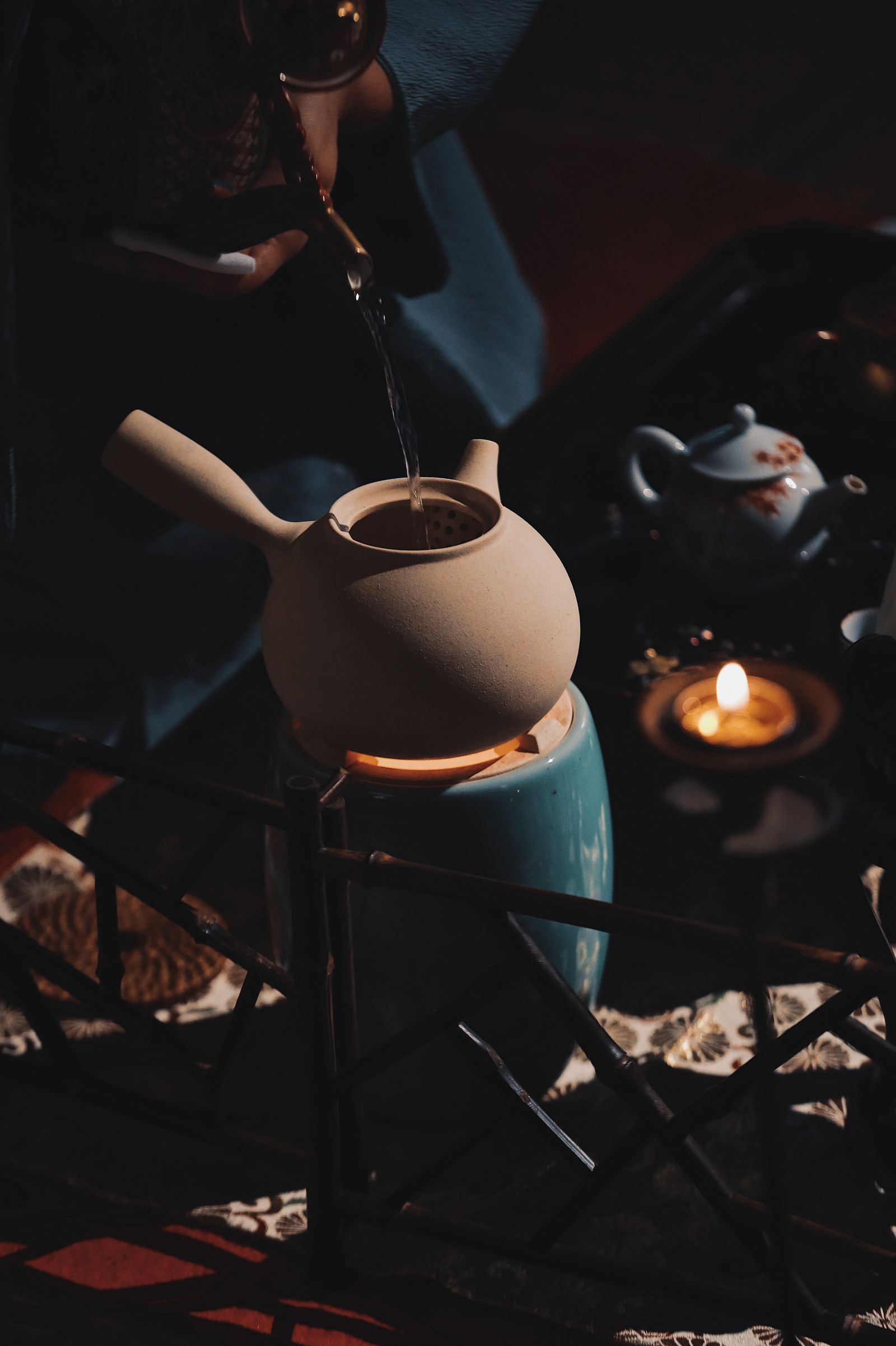
The scene repeats across China every winter afternoon now: a low table in a courtyard or a teahouse garden, a small charcoal stove at its centre, a clay pot of tea coming to the boil on top — and around the stove's rim, arranged like offerings, oranges, sweet potatoes, chestnuts, peanuts and red dates, roasting slowly in the radiated heat. Nobody is in a hurry. The pot boils; somebody turns the sweet potatoes; the conversation does the rest.
The verdict for the visitor: of all China's recent lifestyle fashions, 围炉煮茶 (wéilú zhǔchá, 'boiling tea around a stove') is the easiest to join and the most rewarding per hour. There is no performance to watch and no skill to fake — you sit, you pour, you roast, you eat. Teahouses sell it as a set, booking takes five minutes on a phone, and the whole thing is engineered, with great precision, to make two hours feel like an afternoon in another century.
This page explains what is actually in a set, how to find and book one in any Chinese city, the small etiquette of the circle — who tends the fire, what goes in the pot, when to peel the orange into the tea — and the one safety rule that matters, which the fire services repeat every winter and which any good venue already obeys.
The setOne stove + one pot of tea + the roasting ring (oranges, sweet potato, chestnuts, peanuts, dates) + cups for the circle
The sessionBooked by the set, usually sized for 2–4 people · Around two hours · Afternoons are the classic slot
How to book a stove of your own
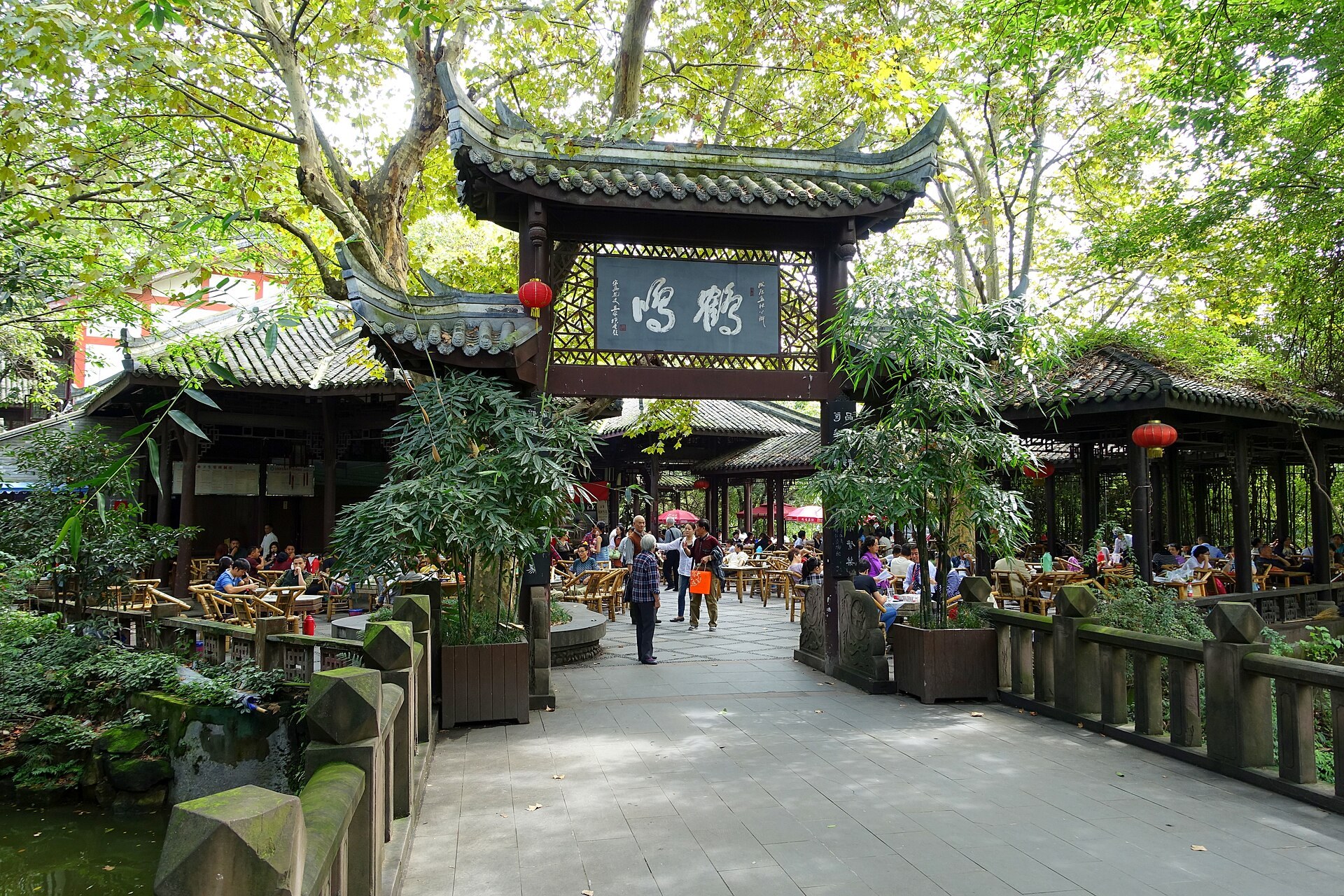
Search the four characters: 围炉煮茶. The ritual is sold under its Chinese name everywhere. Paste 围炉煮茶 into Dianping or Meituan (or your map app) in any Chinese city and the nearby teahouses, courtyard cafés and garden restaurants offering it will surface, with set menus, photos and prices. In smaller cities, hotel teahouses and the old-town courtyard cafés are the usual hosts.
Buy the set, not the seat. Pricing is normally per set (per stove), sized for a small group, with the tea and the roasting basket included; extra baskets and extra teas are the upsell. Reserve the afternoon slot on weekends — the courtyards fill — and ask for an outdoor or open-sided setting, which is both the classic arrangement and the safe one (see the safety note in this page's final section).
Browse tea experiences in ChinaThe button is an affiliate link to a Klook search for tea experiences; most stove-tea bookings in China happen on Dianping or Meituan as described above, and we say so because it is true.