
Tongli is part of Suzhou itself — a canal town in Wujiang district, 18 kilometres from the old city by the town's own official reckoning. The historic core covers well under a square kilometre and still houses more than ten thousand permanent residents, which is why its lanes feel lived-in rather than staged
Checked 31 October 2026GUIDES / DAY TRIPS
Day Trips from Suzhou: Tongli, Zhouzhuang and the Lake Country Between
Two famous water towns sit within an hour of Suzhou's old city, and they are not the same day out. How to choose between Tongli and Zhouzhuang, when the lake beats both, and whether to sleep in the town or come home for dinner.
City Suzhou13 min read10 facts labeledChecked 2026-10-31
Two coaches, two different days
At eight in the morning, the tourist coaches loading beside Suzhou Railway Station present a small, perfect dilemma. One fills for Tongli — eighteen kilometres away, a town of canals that still keeps ten thousand residents and one great garden built by a dismissed official to think his career over. The other fills for Zhouzhuang — twice the distance, ten times the fame, the town a single painting carried all the way to New York and back in 1984. Both leave within the half hour. Both cost roughly the same. They are not the same day out, and picking by whichever queue looks shorter is how travellers end up in the wrong one.
So this guide makes the argument properly: what each town actually gives you, what its ticket really buys, how the journey runs from a Suzhou base, and when to skip both for the lake country west of the city. Underneath all of it sits the decision that matters most — whether to come back to Suzhou for dinner, or to sleep inside the water town and claim the two hours of the day that day-trippers never see.
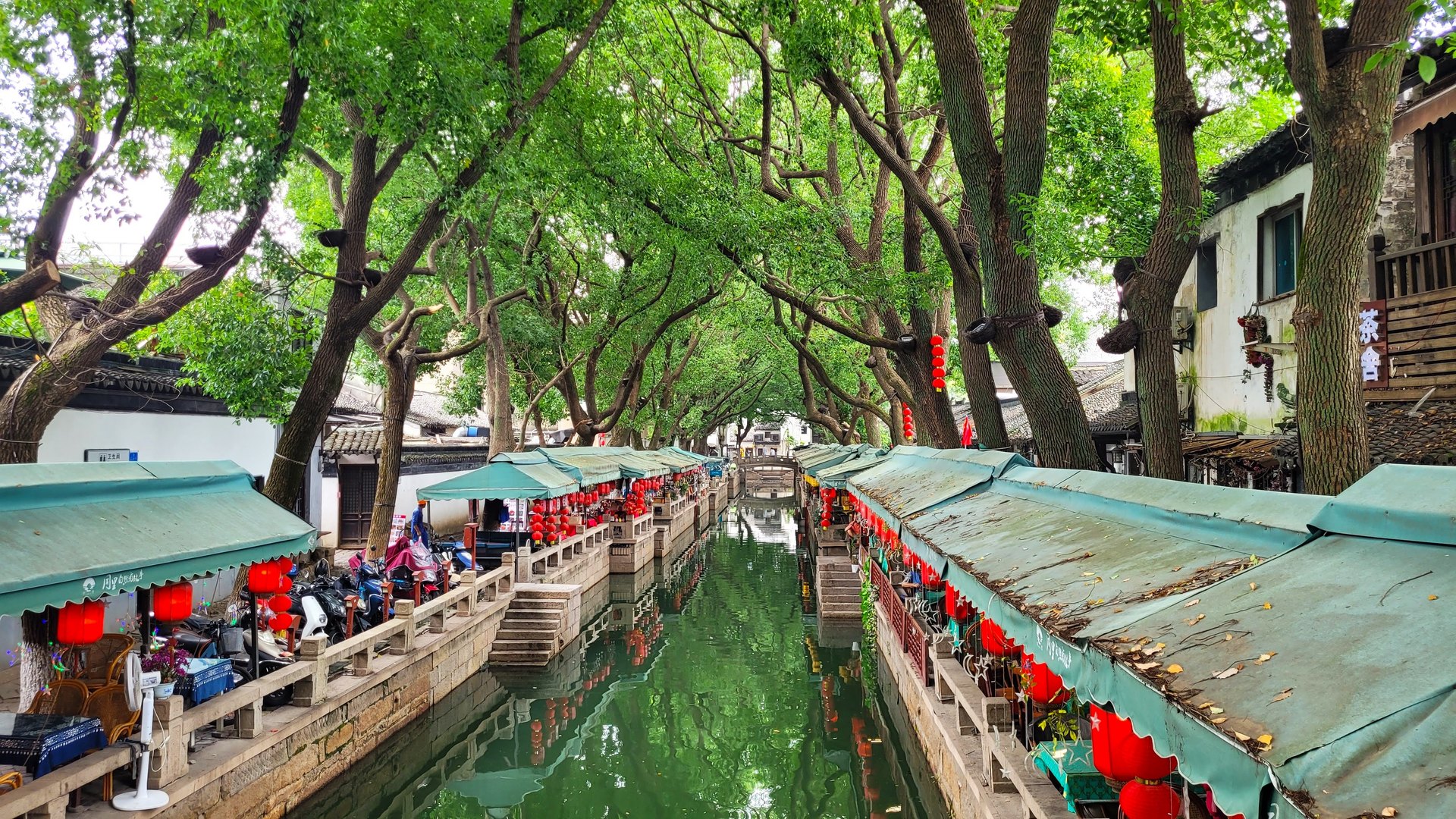
The contenders at a glance
| Day trip — Tongli | 18 km southeast, inside Suzhou's own Wujiang district — canals crossed by dozens of small stone bridges, a town that still houses its residents, and one garden of world rank · getting there: metro plus a short hop · pace: unhurried |
|---|---|
| Day trip — Zhouzhuang | 30 km southeast, over the border in Kunshan — the most famous water town in the country, organised around the Twin Bridges and two great merchant houses · getting there: direct coach, or rail and bus · pace: full, and busy by late morning |
| Day trip — Jinji Lake | Not a trip out at all — the modern lakefront in the east of the city, reached by metro · go for: an easy evening of skyline and water, no ticket, no early start, dinner after |
| Day trip — Xishan Island, Taihu | The big island out in Lake Tai, tied to the mainland by long bridges · go for: orchards, tea slopes, villages and open water instead of lanes and halls · transport: honestly a car day |
| Day trip — Mudu | The quiet old town at the end of Metro Line 1, with its own gardens and a canal high street · go for: a half day that asks almost nothing of your planning |
| Typical trip length | Half a day covers Mudu, or an evening at Jinji Lake. Tongli wants five to six hours door to door. Zhouzhuang and Xishan are full days, and reward anyone who gives them one |
| Best months | March to May, and mid-October into November — soft light, working weather. Both water towns are at their worst in national-holiday weeks |
| Best for | A first water town, done gently: Tongli. The famous name at full strength: Zhouzhuang. Nothing left to plan with: Jinji Lake. A driver and a free day: Xishan |
| Pace | Slow in Tongli, brisk in Zhouzhuang, self-directed out on the lake |
| Transport | Metro and coach between them cover Tongli and Zhouzhuang comfortably. Xishan is the one destination in this guide that honestly wants a car |
Set up before you leave the old city
Your ticks stay on this page only. No account or personal data is sent.
Running the day out
- First decision: famous, or quiet?
Strip the choice to its real axis. Tongli is the quieter, more residential town: fewer marquee sights, a gentler commercial skin, and one garden of genuine world rank. Zhouzhuang is the famous one: bigger set pieces — the Twin Bridges, the Shen family's sprawling hall, a whole evening economy of lit canals and waterside restaurants — and a crowd machine to match. If your trip already includes Suzhou's gardens, Tongli doubles down on the same mood at village scale. If this is your one water town of the whole China trip and you want the postcard at full strength, that is Zhouzhuang's case. Neither is the 'authentic' one; they are different products, and the honest decider is whether you would rather have space or spectacle.
- The Tongli run: metro out, garden first
From the old city, take Metro Line 4 south to its terminus — about forty-five minutes from Suzhou Railway Station — then close the last three kilometres by smart rail, bus 725 or a short taxi ride to the town gate. Buy the combined pass and go straight to the Retreat & Reflection Garden while the morning is young; it is small, dense and best before the midday groups reach it. After the garden, let the town do the work: cross the Three Bridges the way locals treat them — as a small circuit of good fortune rather than a photo stop — eat noodles or a bowl of the local wontons on a side lane, and hire a rowing boat only if the canal light is good, since the boat is priced per vessel and rewards a full bench. A relaxed Tongli day is five to six hours door to door; hurrying it into three wastes the town's one advantage, which is calm.
- Reading the Tongli ticket before you pay for it
Tongli's ticket confuses first-timers because the town itself is open — residents come and go, and plenty of lanes can be walked without showing anything. What the pass buys is the interiors: the garden, the halls, the small museums, the ticketed bridge quarter. That means two legitimate strategies. If the garden and halls are the point, buy the pass and use its two-day validity without rushing. If you only want canal air and a slow lunch, you can walk the free lanes and spend the ticket money on the boat — just know you are skipping the one sight that puts Tongli on the World Heritage map, and decide that on purpose.
- The Zhouzhuang run: one seat there, sights against the grain
Take the direct coach from the bus station by Suzhou Railway Station and treat the ride as part of the admission price — about an hour, longer when the ring roads clog. Inside, work against the crowd's grain: walk to the Twin Bridges first, before the tour groups finish their opening ceremony elsewhere, then do the Shen Hall — a merchant prince's house of more than a hundred rooms — and the Zhang Hall, with its own private stretch of canal running through the grounds. Lunch is the town's signature, Wansan pork knuckle, rich enough to share between two. Keep expectations calibrated for the main streets between ten and three; the side lanes off the water grid stay noticeably emptier, and the town's scale means you are never more than a few minutes from a quieter one.
- When the lake beats both towns
Some days the right answer is neither town. West of the city, Taihu opens out, and Xishan Island — orchards, low hills, fishing villages, the Biluochun tea slopes — gives you the same water country at landscape scale instead of lane scale. It is a car day: hire a driver, cross the long bridges, pick two stops rather than six, and time the return for the light over the lake. No car and only half a day? Shrink the ambition, not the map: Mudu, the old town at the end of Metro Line 1, delivers gardens and a canal high street with almost no logistics. And if the day has simply run out, Jinji Lake in the east of the city is the zero-planning evening — promenade, skyline, dinner — with a metro ride home.
- The sleeping decision, made properly
Both towns sell you a ticket that lasts for days, and that is the hint: they are built to be slept in. Stay inside the old-town boundary and you inherit the two best shifts — the evening, when the lanterns come on and the day coaches leave, and the early morning, when the canals belong to residents, deliveries and mist. The costs are real: inn rooms are smaller, breakfast is local, and your luggage crosses cobbles and bridges by hand. Sleeping back in Suzhou wins when the next day holds gardens or the museum, when you want a proper hotel, or when the water town was a chapter rather than the book. The error is deciding by default; decide by which hours of the town you actually want to own.
- Getting back without the scramble
Protect the return the way you would a train booking. From Tongli, the metro runs late and the last leg is short — the risk is low. From Zhouzhuang, the direct coaches thin out in the early evening; know your last one before you sit down to dinner, and keep the fallback warm: bus or taxi to Kunshan South, then a high-speed train to Suzhou in under twenty minutes. From Xishan, leave before the lakeside road darkens into a single-file drive. In all three cases the rule is the same — the day ends at a departure you have already confirmed, not at the moment you start wondering.
What the choice rests on
Tongli's headline sight, the Retreat & Reflection Garden, was built in the 1880s for Ren Lansheng, an official who had just been dismissed from his post — the garden's very name is his apology and his plan. It was added to UNESCO's Classical Gardens of Suzhou World Heritage listing in 2000
Checked 31 October 2026Tongli's combined day pass lists at ¥100 bought on the day and ¥80 booked a day ahead, runs for two consecutive days, and covers the Retreat & Reflection Garden, the historic halls and the Three Bridges quarter. The rowing boats are a separate hire, priced per boat rather than per person
Checked 31 October 2026Metro Line 4 ends at a station named Tongli, but the platform stands roughly three kilometres from the old-town gates. The gap is closed by the Wujiang smart-rail hop, local bus 725, or a taxi ride of about ten minutes — the transfer is short, but it is a transfer, and it belongs in the plan
Checked 31 October 2026Zhouzhuang belongs to Kunshan and sits about 30 kilometres southeast of central Suzhou. Direct coaches from the bus station beside Suzhou Railway Station cover the distance in roughly one to one and a half hours depending on traffic, and are the only single-seat public option from the city
Checked 31 October 2026Zhouzhuang's day ticket also lists at ¥100, covers the Shen and Zhang merchant halls among its interiors, and — unusually — stays valid for three days once you register it for re-entry at the ticket office. A cheaper night ticket covers the evening hours only
Checked 31 October 2026Zhouzhuang's fame is datable. Its Twin Bridges — one arched, one flat, meeting at a right angle — became the town's emblem after the painter Chen Yifei exhibited his canvas of them in New York in 1984; the 'No. 1 water town' billing and the tour-group industry followed from that exposure
Checked 31 October 2026Kunshan South station gives Zhouzhuang a working rail fallback: high-speed trains from Suzhou make the hop in under twenty minutes, from where buses and taxis cover the remaining distance to the town. It is the escape route when the last direct coach has gone
Checked 31 October 2026Xishan, the largest island in Lake Tai, is tied to the mainland by a chain of bridges, but its villages, orchards and viewpoints are spread across the whole island. A car turns it into a comfortable loop; the bus network serves residents first and sightseers second
Checked 31 October 2026Both water towns hit their crowd peak in the same window — from about ten in the morning, when the day coaches arrive, until mid-afternoon. The same streets at eight in the morning or after five in the evening are measurably calmer, which is the whole argument for early starts and overnight stays
Checked October 2026When this plan breaks — and the questions everyone asks
Two water towns in one day
It looks efficient on a map and fails in person: the two towns point in different directions, each wants half a day at minimum, and the transfer between them eats the middle of it. One town, done properly, plus an evening back in Suzhou beats both towns done as evidence.
Does Tongli station drop me at the old town?
No — plan for the gap. The terminus stands about three kilometres from the gates; the smart-rail hop, bus 725 or a ten-minute taxi closes it. The travellers who lose time here are the ones who start walking because the station shares the town's name.
Which town draws the smaller crowd?
There is no standing answer — it swings with the date, the weather and the hour, and any guide that promises you one is guessing. Structure beats prediction: be inside either town before ten, or after five, and the question mostly answers itself.
Can I walk Tongli without buying the pass?
Partly. The lanes, bridges and waterfront outside the ticket points are ordinary town streets and cost nothing to wander. The garden, the halls and the museums sit behind the pass. Know which visit you are making before you reach the gate — both are legitimate, they are just different days.
Is Zhouzhuang worth it if crowds bother me?
Judge it by its evenings and its far lanes rather than its noon main street. Go early, take the big sights first, eat slightly off the main drag, and give the town until the light drops — Zhouzhuang after the day coaches leave is a different and much better place. If you can only be there at midday on a holiday, choose Tongli instead and do not litigate it further.
What if the day is half gone already?
Then the calculus flips: Jinji Lake and a Suzhou garden day ask almost nothing of you and lose almost nothing to a missed connection. The lake trip is the one to protect for a clear forecast — Xishan's viewpoints are the whole product, and they are what rain takes away.
Are the water towns a bad idea in the rain?
Wet stone and low cloud flatter both towns, and the crowds thin — the costs are slick bridges and boats that may pause. The towns still work; the island trip is the one to postpone, and a garden in Suzhou city becomes the natural substitute.
Can Xishan be done without a car?
Possible, and residents do it daily — but the island's stops are spread over real distances and the buses are timed for local life, not for a visitor's loop. A car and driver, hired for the day, is the version this guide can honestly recommend.
The last-coach trap at Zhouzhuang
Direct coaches from Zhouzhuang finish in the early evening, earlier than most visitors assume when they book a late waterside dinner. Either eat with the last coach in mind or pre-plan the Kunshan South rail fallback — a missed coach is a taxi fare, not a disaster, but only if you knew it was coming.
Where can I read the slower version of these towns?
We keep the slower versions of both towns in the Stories library: Tongli told through the disgraced official and the garden he built to reflect, and Zhouzhuang through the painting, the first ticket and everything that followed. Read them the night before — they change what you look at once you are standing on the bridges.
Do I need both a Suzhou garden day and a water town?
Strictly, no — but count the tickets as one budget, not two. Between the gardens in the city and a water town, the gardens carry the World Heritage weight per yuan; the town adds the living-canal half of the picture. If something must give, drop the second city garden, not the town.
Keep the trip moving
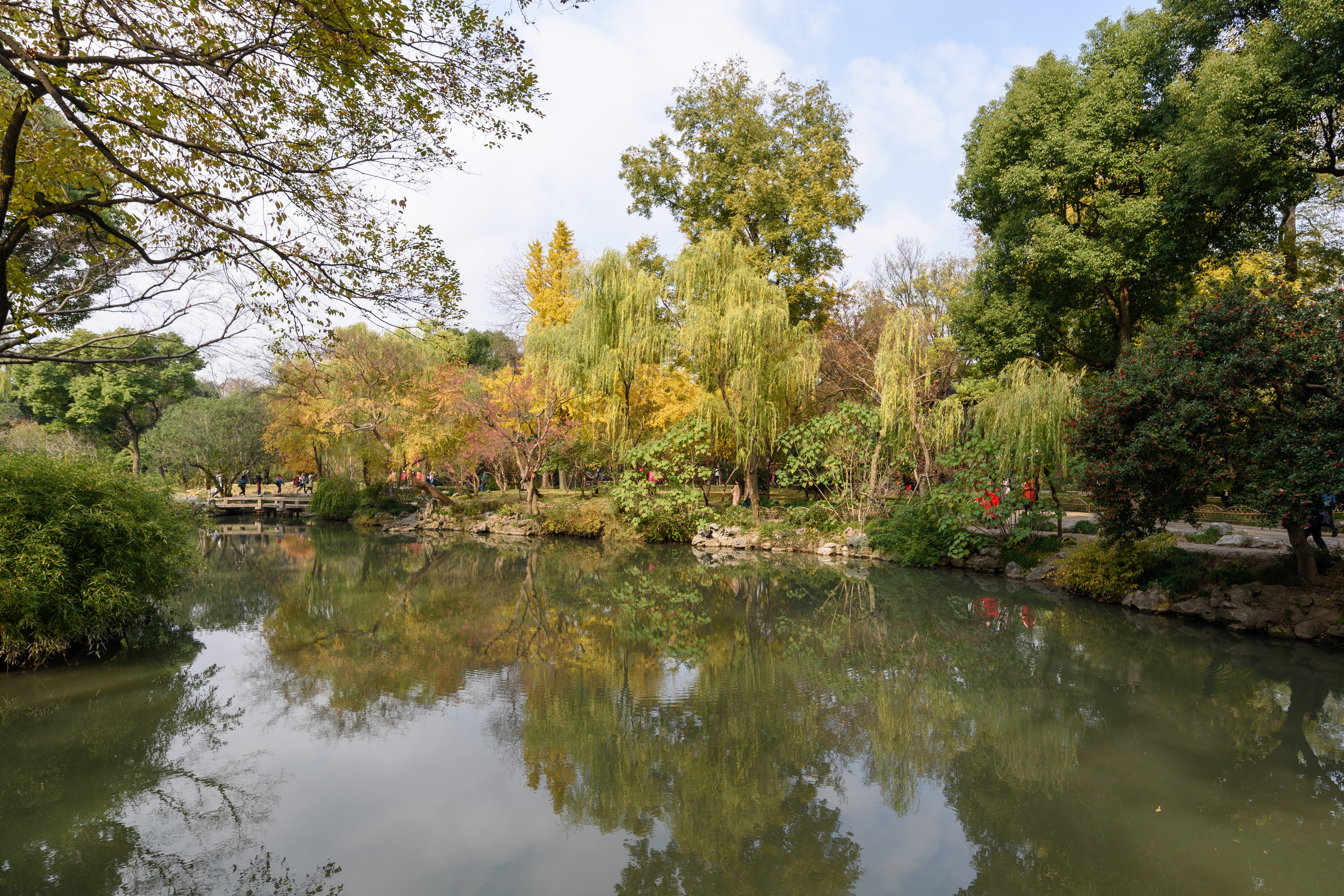 Suzhou · DoSuzhou as a Day Trip from Shanghai: One Garden, One Canal, Home by DinnerA garden, a canal street and one of China's great museums, twenty-seven minutes from Shanghai — if you book the three things that sell out and catch a specific train home.Reference ~
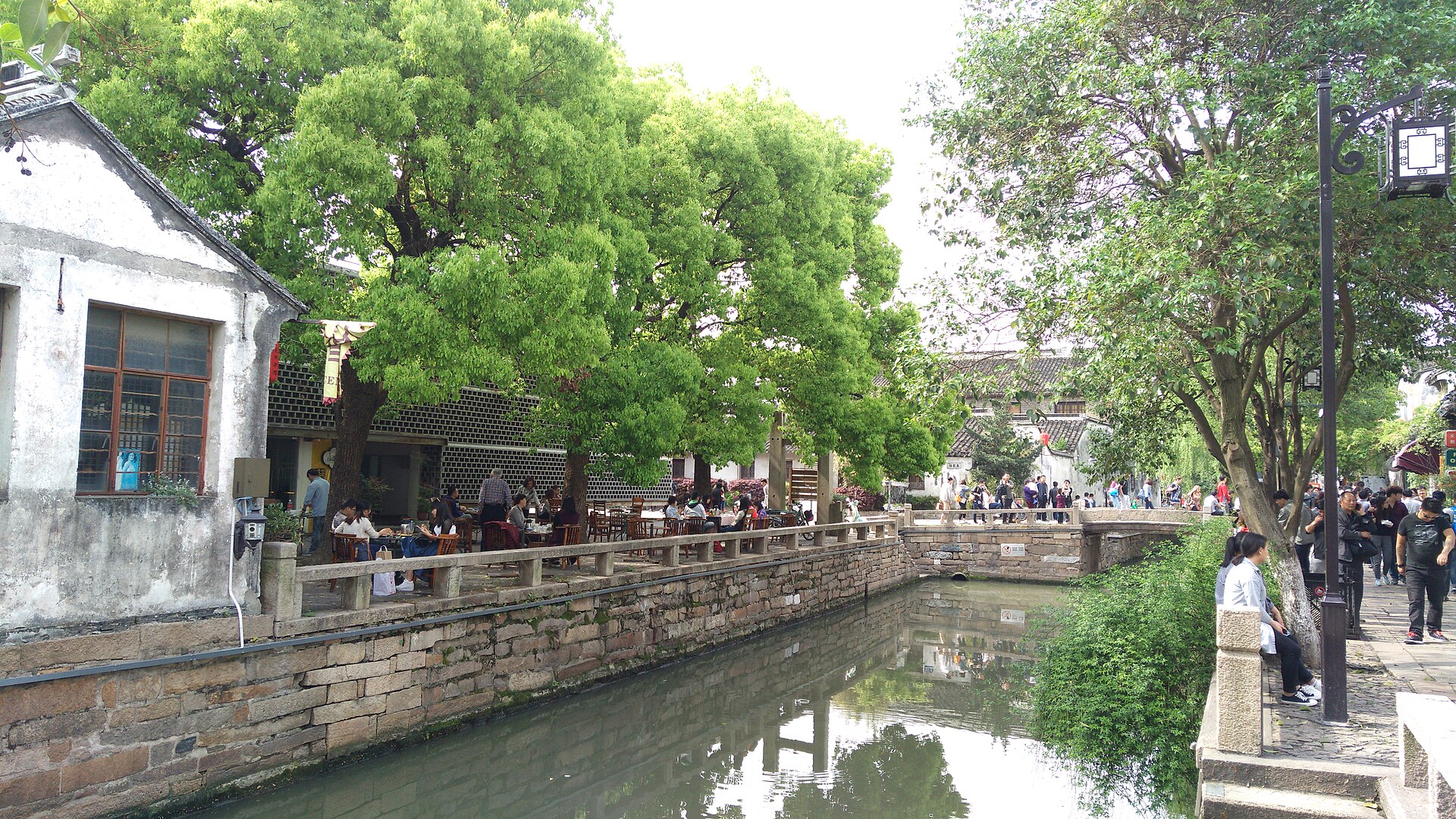 Suzhou · DoSuzhou City Walk: Pingjiang Road to the Canal RingOne canal street walked properly: a working market at its foot, a garden and a museum at its head, and a second canal street saved for the lanterns — with the two bookings, the one ride and the distances all settled in advance.Verified
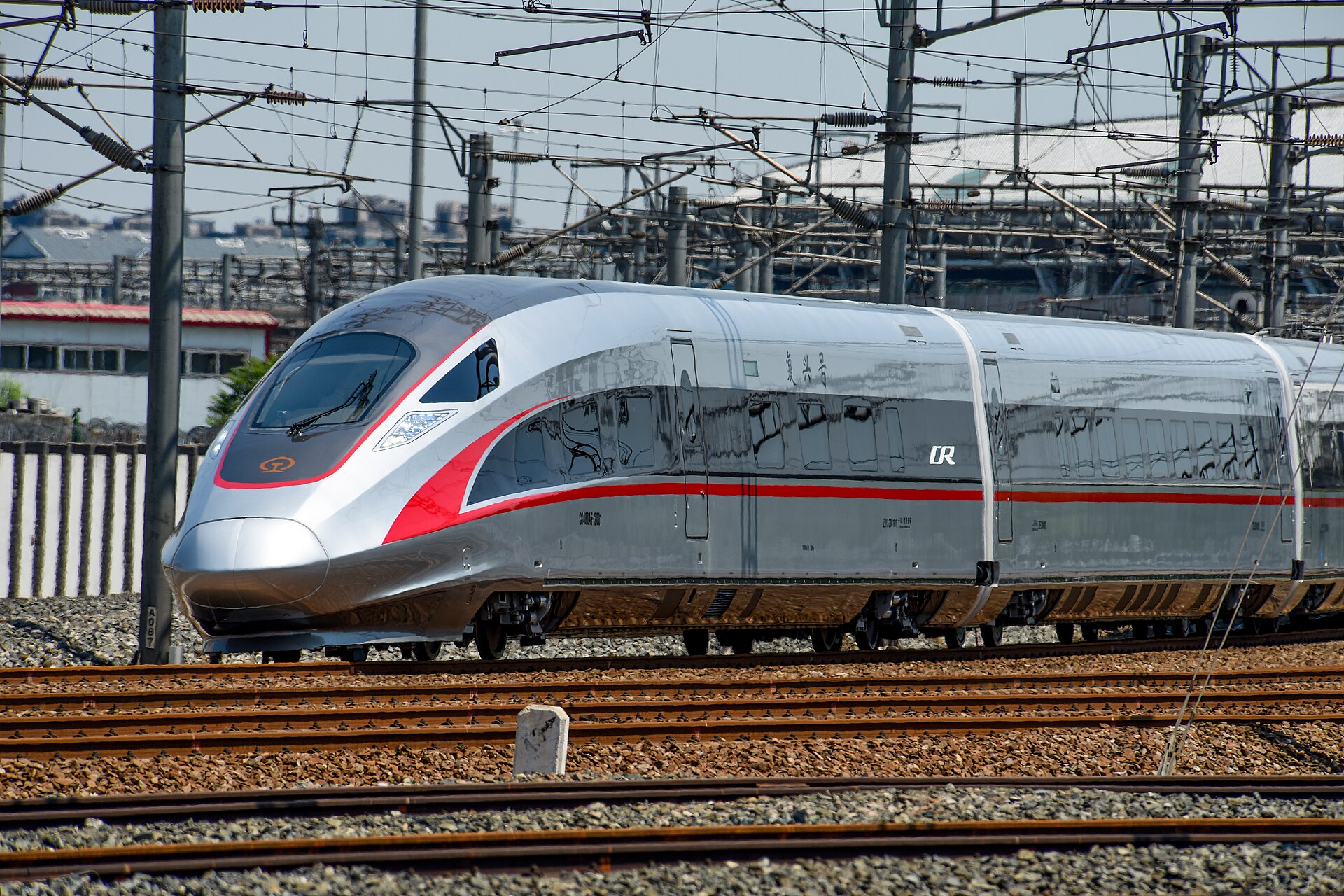 China · PrepareChina Trains: Your Passport Is the TicketNo paper, no ticket window — book on 12306, verify your identity once, and board on the document in your pocket. The system is simpler than the stations are big.Verified
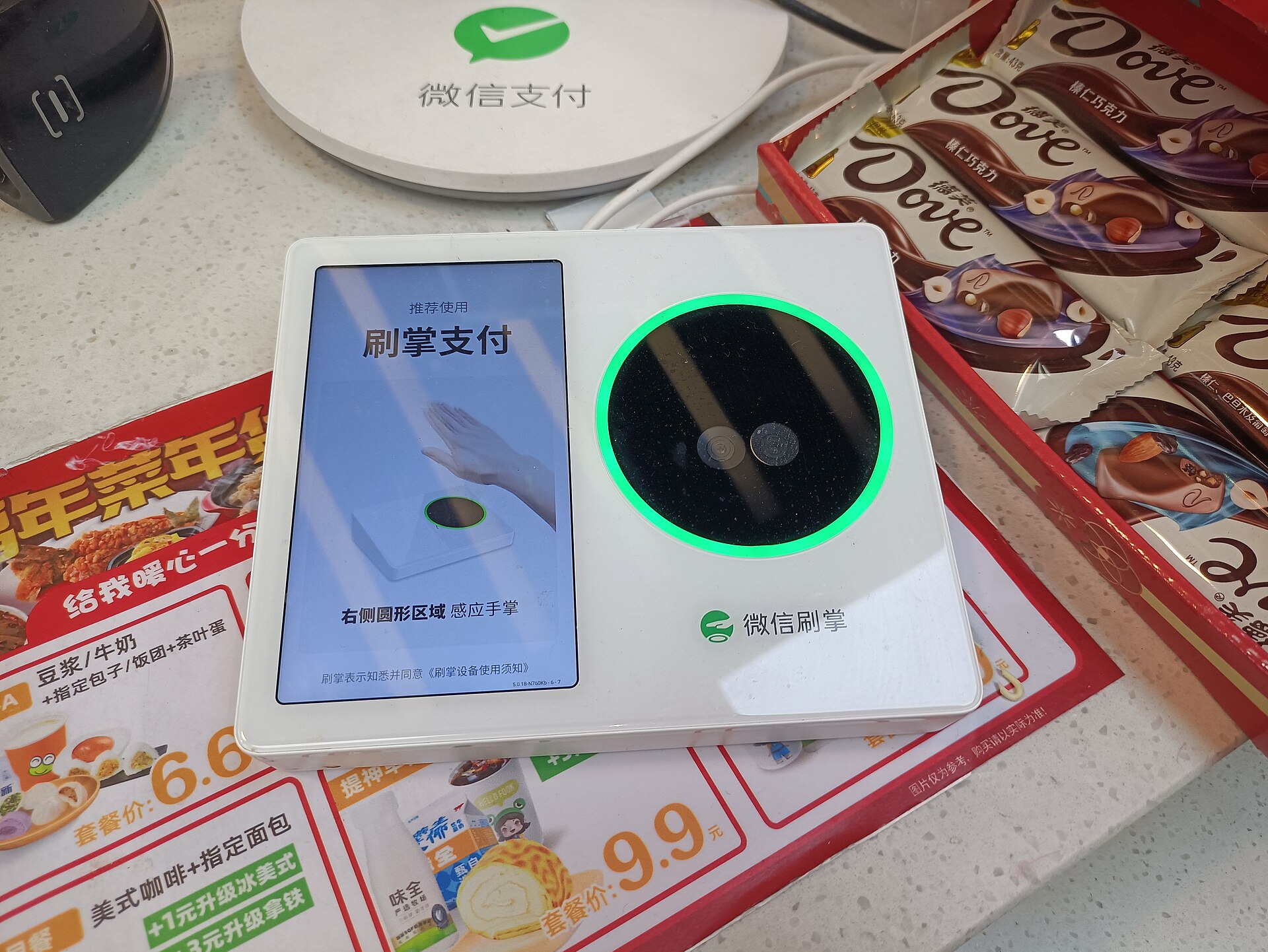 China · PrepareHow to Pay in China (2026): Alipay, WeChat Pay, TenPayGo, Cards and CashSet up one wallet before you fly, add a second as backup, and understand the two numbers that explain most payment confusion.Reference ~
Sources and status
Prices, schedules and booking channels change. Recheck the details that matter before you travel.
- Tongli Ancient Town — official siteReference ~Official town portal; distance from Suzhou, town profile and the Retreat & Reflection Garden's World Heritage status (checked 2026-10-31)
- Zhouzhuang Tourism — official siteReference ~Official Zhouzhuang tourism site; town profile, sights and visitor guidance (checked 2026-10-31)
- UNESCO World Heritage Centre — Classical Gardens of SuzhouReference ~Listing 813, Classical Gardens of Suzhou — the inscription the Retreat & Reflection Garden joined in 2000 (checked 2026-10-31)
- China Railway 12306 — official bookingReference ~Official rail booking; Suzhou to Kunshan South services behind the Zhouzhuang rail fallback — verify times on the travel date